Basenji
Summary
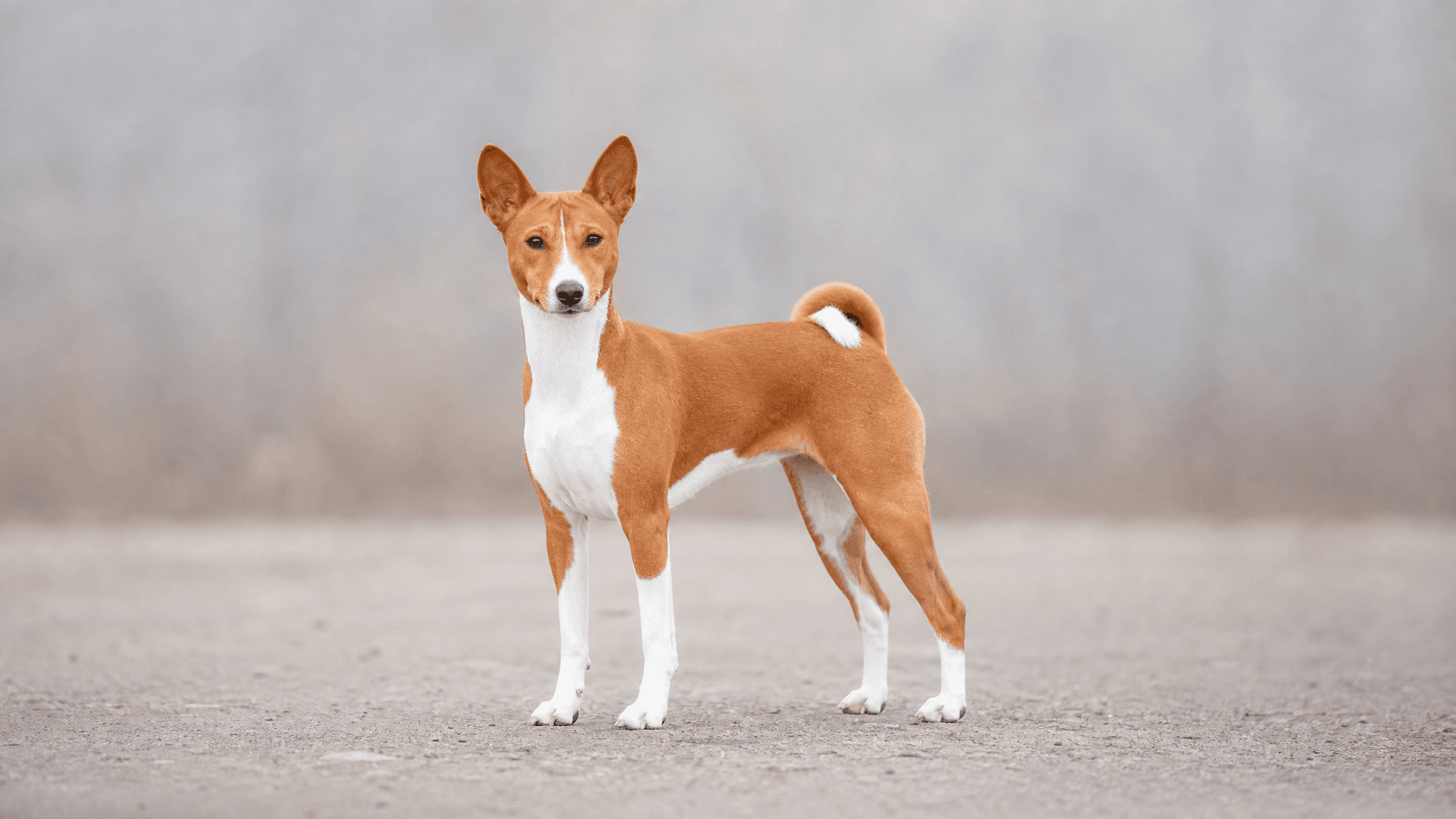
The Basenji is an African hunting breed of very ancient origin, from the Congo Basin. It is worldwide known as the "barkless dog" — instead of barking, it emits a unique sound similar to a yodel or laugh. Genetically, the Basenji is considered one of the most primitive breeds, very close to the first domesticated dogs. Representations of this breed can be found in paintings from the Egyptian pharaohs' tombs.
Physical Characteristics
- Size
- Small to medium
- Height (male)
- 43 cm
- Height (female)
- 40 cm
- Weight (male)
- 11 kg
- Weight (female)
- 9.5 kg
- Life Expectancy
- 13–14 years
- Coat
- Short, fine, dense, and glossy; no pronounced undercoat
- Common Colors
- Red, black, tricolor (black, red, and white), brindle; always with white paws, chest, and tail tip
Temperament & Personality
The Basenji has a temperament frequently compared to that of a cat: independent, curious, intelligent, and extremely clean. It is affectionate with the family but reserved with strangers. It has a highly developed hunting instinct and a remarkable escape ability. Its independence makes training challenging — it is not a dog that aims to please its owner, but rather one that collaborates when it suits it.
Activity & Exercise
- Energy Level
- High
- Recommended Daily Exercise
- 60–90 minutes
- Suitable for Apartment
- Yes with exercise
Grooming & Care
- Grooming Needs
- Minimal
- Shedding
- Minimal
- Bathing Frequency
- Every 4–6 weeks
Health
- Common Health Issues
- Fanconi syndrome (tubular nephropathy)
- Hip dysplasia
- Hypothyroidism
- Immune-mediated hemolytic anemia
- Progressive retinal atrophy (PRA)
- Recommended Health Tests
- Eye examination
- Genetic test for Fanconi syndrome (mandatory)
- Hip evaluation
Compatibility
- With Children
- Moderate
- With Other Dogs
- Moderate
- With Cats
- Can be difficult
- For First-Time Owners
- Not recommended
Is a Basenji right for you?
A Basenji may suit you if:
- You are ready for 60 to 90 minutes of daily exercise and enjoy engaging your dog's keen mind with puzzles and activities.
- You enjoy an active lifestyle, perhaps with scent work or agility, to satisfy their natural hunting instincts and high energy.
- You appreciate an independent, intelligent, and cat-like companion who is deeply affectionate with their family.
- You are prepared for a consistent and creative training approach, understanding they collaborate rather than simply obey.
- You prefer a low-maintenance dog, as Basenjis require minimal grooming and shed very little, needing baths only every 4-6 weeks.
- You are amused by unique vocalizations like yodels and are prepared for a dog with remarkable escape artistry.
Think twice if:
- You expect a highly biddable dog eager to please, as Basenjis are known for their independent and primitive nature.
- You need a dog comfortable being left alone for long periods, as Basenjis thrive on companionship and can become destructive if bored.
- You have very young children or cats, as Basenjis can be difficult with felines and are only moderately good with kids.
- You are unwilling to commit to their daily high-energy exercise needs, even if they live in an apartment.
- You cannot provide a securely fenced yard or are unprepared for their impressive climbing and jumping abilities.
- You are a first-time dog owner looking for an easy-to-manage companion, as this breed is not recommended for beginners.
Living with a Basenji is a unique adventure, blending deep affection with a spirited independence. They offer endless entertainment and loyalty to the right home, but their ancient instincts and clever minds demand a patient, dedicated owner ready for a true partnership that lasts their 13-14 year lifespan.
Training a Basenji
Basenjis are incredibly intelligent and curious, often described as having a cat-like independence. They aren't inherently driven to please, so successful training hinges on making it a collaborative and rewarding experience for them. Short, engaging sessions filled with positive reinforcement, especially using high-value treats and play, work best to capture their interest. If training becomes repetitive, harsh, or unmotivating, a Basenji will quickly disengage, become bored, or simply decide there are more interesting things to do, making progress incredibly difficult. Patience and creativity are key to unlocking their potential.
Begin with:
- Attention and response to name around distractions
- Recall on a long line
- Loose-leash walking
- Leave it and drop it
- Calm greetings without jumping
- Settling on a mat or bed
- Cooperative handling for grooming, ears, feet and teeth
- Waiting at doors and gates
Recall and prey drive
Basenjis possess a highly developed hunting instinct, which means a squirrel or a bird can instantly become more compelling than your voice. Off-leash reliability, especially in unfenced areas, is extremely difficult to achieve and maintain. Always prioritize safety by using a long line in open spaces where you want to give them more freedom, and practice recall in increasingly distracting environments.
Focus on making coming back to you the most exciting and rewarding thing they can do, using their favourite treats or toys. Their escape ability is also remarkable, so ensure your garden is truly secure.
Loose-leash walking
Despite their small to medium size (males around 11 kg, females 9.5 kg), Basenjis have high energy and can pull surprisingly hard on the leash, especially when their curiosity or prey drive kicks in. This isn't just uncomfortable for you; it can be frustrating for them too.
Start teaching loose-leash walking early, using positive reinforcement to reward them for walking calmly by your side. Consistency is crucial, as is ensuring they get their recommended 60-90 minutes of daily exercise to help manage their energy levels before walks.
Preventing destructive behaviour
A Basenji's high energy and intelligence mean they need significant mental and physical stimulation. If under-exercised, under-stimulated, or left alone for too long, they can become bored and channel their energy into destructive behaviours like chewing, digging, or even attempting impressive escapes.
Ensure they receive their full 60-90 minutes of daily exercise, split into walks, playtime, and engaging activities. Incorporate puzzle toys, scent work, and short training sessions throughout the day to keep their minds busy. A well-exercised and mentally stimulated Basenji is a happy Basenji, and much less likely to redecorate your home!
Basenji — Frequently Asked Questions
Do Basenjis bark?
Basenjis are famously called the "barkless dog" — they have a uniquely shaped larynx that prevents them from producing a typical bark. However, they are far from silent. Basenjis yodel, howl, whine, and make a variety of other vocalisations — including a distinctive sound called a "baroo" that is both charming and surprising to first-time Basenji owners. Their relative quiet compared to other breeds can be an advantage in apartments or noise-sensitive settings.
Are Basenjis good with children?
Basenjis can be good companions for older, calm children who respect their boundaries, but they are generally not recommended for homes with young children. They are independent, quick-moving, and can be intolerant of rough handling or unwanted interaction. They are not naturally patient in the way that some other breeds are. With children who understand dogs and treat them gently, a Basenji can form a strong, playful bond. Always supervise interactions.
Are Basenjis difficult to train?
Basenjis are highly intelligent but also extraordinarily independent and cat-like in their attitude toward training. They understand commands perfectly but will comply only when they feel it's in their interest to do so. Traditional obedience training using harsh methods fails completely with Basenjis. Positive reinforcement, short sessions, high-value rewards, and a sense of humour are essential. They respond best when training feels like play. Many Basenji owners find clicker training very effective.
Do Basenjis have a strong prey drive?
Yes — Basenjis have an extremely strong prey drive. They were bred in Central Africa as hunting dogs that chased game into nets, and their instinct to pursue small, fast-moving animals is deeply ingrained. Off-leash time should only happen in fully enclosed, escape-proof areas. A Basenji that spots a squirrel or rabbit may not come back for hours — or at all. Recall training is challenging due to this drive. Cats and small animals in the household are at risk without very careful, managed introductions.
Do Basenjis like to be alone?
Basenjis are social animals that do not thrive when left alone for long periods. Despite their independent nature, they form strong attachments to their families and can develop separation anxiety, which manifests as destructive behaviour. Many Basenji owners find that having two Basenjis helps, as they entertain each other. If you work long hours, a Basenji may not be the best fit — or you'll need a dog walker or doggy daycare to break up the day.
What health conditions affect Basenjis?
Basenjis have several breed-specific health concerns. Fanconi Syndrome is perhaps the most well-known — a kidney disorder that impairs the ability to reabsorb nutrients; a DNA test is available to identify affected dogs and carriers. Progressive Retinal Atrophy (PRA) causes gradual vision loss. Hip dysplasia and Hypothyroidism also occur. Basenji Enteropathy is an inflammatory bowel condition unique to the breed. Responsible breeders DNA-test for Fanconi and PRA before breeding.
Are Basenjis good for apartment living?
Basenjis can adapt to apartment living surprisingly well, given their small-to-medium size and the fact that they don't bark (though they do make other sounds). They are clean dogs that groom themselves like cats. However, they are active and need daily exercise — they can't simply lie around in a small space. A Basenji that doesn't get adequate exercise and mental stimulation will redecorate your apartment in ways you won't appreciate. With proper outlets, though, they make tidy, compact flat companions.
How long do Basenjis live?
Basenjis typically live 12–16 years, making them one of the longer-lived medium-sized breeds. Their active lifestyle and lean body condition contribute to their longevity. Proper management of hereditary conditions — particularly Fanconi Syndrome through early DNA testing and monitoring — is essential to maintaining quality of life. Regular veterinary check-ups, a balanced diet, and consistent exercise all play a role in helping Basenjis reach the upper end of their expected lifespan.
Community
Talk to real Basenji owners
This guide covers the breed on paper. In the app, the Basenji community covers it in real life: photos from other owners, questions answered by people who live with the breed, and a directory of dogs you can browse.
- Photos & pollsSee what Basenji owners are sharing today.
- Questions & answersAsk anything and hear from people who own one.
- Dog directoryBrowse Basenjis from around the world.
You join automatically when you add a Basenji to your profile.