Austrian Black And Tan Hound
Summary
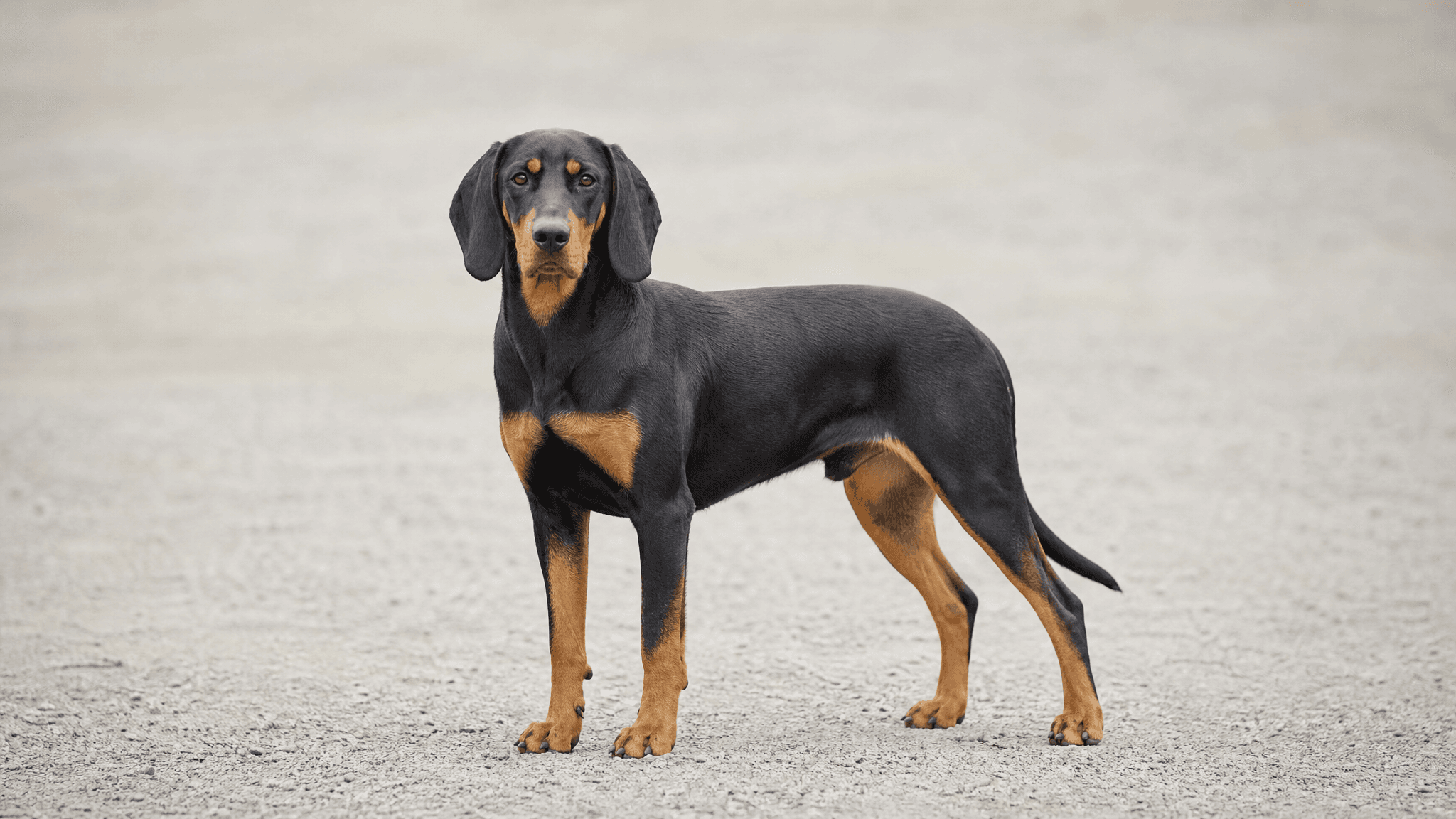
The Brandlbracke, or Austrian Black and Tan Hound, is one of the oldest scent hound breeds in Austria, with probable descent from the ancient St. Hubert Hounds. It is a hardy working scent hound, used for hunting hare, fox, and wild boar in the Austrian alpine forests. It is recognized by its classic black and tan coloring, similar to the Rottweiler but in a scent hound's body.
Physical Characteristics
- Size
- Medium
- Height (male)
- 50–56 cm
- Height (female)
- 48–54 cm
- Weight (male)
- 15–22 kg
- Weight (female)
- 13–20 kg
- Life Expectancy
- 12–14 years
- Coat
- Short, dense, and glossy
- Common Colors
- Black with tan markings over the eyes, on the cheeks, legs, and chest
Temperament & Personality
The Brandlbracke is a calm, well-balanced dog that is very faithful to its owner. It is docile enough to be a good family companion, but its hunting instincts always require adequate space and exercise.
Activity & Exercise
- Energy Level
- High
- Recommended Daily Exercise
- 60–90 minutes
- Suitable for Apartment
- Not recommended
Grooming & Care
- Grooming Needs
- Low
- Shedding
- Moderate
- Bathing Frequency
- Every 4 weeks
Health
- Common Health Issues
- Hip dysplasia
- Otitis
- Recommended Health Tests
- Orthopedic evaluation
Compatibility
- With Children
- Good
- With Other Dogs
- Excellent
- With Cats
- Moderate
- For First-Time Owners
- Acceptable
Is an Austrian Black and Tan Hound right for you?
An Austrian Black and Tan Hound may suit you if:
- You can provide 60 to 90 minutes of vigorous daily exercise, embracing their high energy.
- You enjoy outdoor adventures like tracking or hiking, allowing them to use their keen scenting abilities.
- You appreciate a calm, faithful, and well-balanced companion who is docile within the family.
- You are prepared for consistent training, guiding their intelligence and strong hunting instincts.
- You are comfortable with low grooming needs, including moderate shedding and bathing every four weeks.
- You are willing to manage their natural hunting drive, providing adequate space for exploration.
Think twice if:
- You expect unwavering obedience, as their independent scent hound nature can lead to selective hearing on a trail.
- You need a dog that can comfortably spend long hours alone while you are away from home.
- You have cats and are not prepared to manage a dog with a moderate prey drive towards them.
- You are unable to commit to at least 60 minutes of daily exercise for a high-energy breed.
- You live in an apartment or do not have a securely fenced outdoor space for a medium-sized hound.
- You are not prepared for the consistent guidance and firm, kind handling a spirited adolescent hound requires.
The Austrian Black and Tan Hound offers devoted companionship, yet their deep-rooted hunting instincts demand an active lifestyle and thoughtful management. Living with this loyal breed means embracing their drive to explore while cherishing their calm presence at home; it's a rewarding balance for the right family.
Training an Austrian Black and Tan Hound
Your Austrian Black and Tan Hound, a loyal and intelligent scent hound, thrives on positive reinforcement and clear, consistent guidance. They learn best in short, engaging sessions that keep their keen minds stimulated. Motivation comes from praise, treats, and the joy of working alongside their beloved owner. Inconsistency or harsh methods can quickly lead to disengagement or a stubborn refusal to cooperate, as these sensitive dogs respond poorly to confusion or fear. Building a strong bond through fair and fun training is key to unlocking their full potential.
Begin with:
- Attention and response to name around distractions
- Recall on a long line
- Loose-leash walking
- Leave it and drop it
- Calm greetings without jumping
- Settling on a mat or bed
- Cooperative handling for grooming, ears, feet and teeth
- Waiting at doors and gates
Prey Drive and Recall
As a true Scent Hound, your Austrian Black and Tan possesses an incredibly powerful nose and a strong prey drive. Once they catch an interesting scent, their instinct to follow it can override everything else, making recall extremely challenging. It's crucial to build a rock-solid recall foundation in low-distraction environments first.
Practice consistently, rewarding enthusiastically when your hound returns. Always use a long line in unfenced areas until their recall is absolutely reliable, as their instinct to hunt can lead them far astray. For detailed steps, check out our guide on teaching recall.
Pulling on Leash
Given their medium size (males 15-22 kg) and high energy, coupled with their scent-driven nature, an Austrian Black and Tan Hound can be a strong puller on the leash. Their desire to investigate every fascinating smell can make walks a struggle if not addressed early and consistently.
Start loose-leash training from puppyhood, using positive reinforcement to reward walking calmly by your side. A front-clip harness can be a helpful tool to manage pulling without causing discomfort. Remember, consistent daily exercise of 60-90 minutes is vital to help manage their energy and reduce the urge to pull. You can find more tips in our guide to stopping leash pulling.
Boredom and Destructive Habits
This high-energy breed, with its strong hunting instincts, needs significant mental and physical stimulation. If an Austrian Black and Tan Hound is under-exercised (less than the recommended 60-90 minutes daily), under-stimulated, or left alone for long periods, they can quickly develop undesirable behaviours.
These might include excessive chewing, digging, or persistent barking as they seek outlets for their energy and intelligence. Ensure they have plenty of structured exercise, engage them with scent work games, and provide puzzle toys to keep their minds active. If you notice persistent behavioural issues, our Behaviour AI feature can help you understand and address them.
Austrian Black And Tan Hound — Frequently Asked Questions
What is the Austrian Black and Tan Hound?
The Austrian Black and Tan Hound — known in German as the Brandlbracke or Vieräugl ('four-eyes', referring to the tan spots above the eyes) — is an ancient Austrian scent hound with roots stretching back to medieval Celtic hunting hounds. It is a medium-sized, robust, hardy hound developed for hunting in the challenging mountainous terrain of the Austrian Alps and surrounding regions, primarily tracking wounded game on blood trails (Schweisshund). It is recognised by the FCI (Group 6) and is Austria's indigenous scent hound. Despite its long history, it remains a rare breed outside Austria. Its exceptional cold-nose tracking ability and robust constitution are its defining characteristics.
What is the Austrian Black and Tan Hound's temperament like?
The Austrian Black and Tan Hound has a calm, reliable, and even-tempered character — it is neither nervous nor aggressive, and is known for its steady, trustworthy demeanour. It is loyal and affectionate with its family but tends to be reserved with strangers. At home it is a gentle and sociable companion. On the hunt — particularly on a blood trail — it becomes entirely focused and shows remarkable persistence and determination. It gets along well with other dogs given its hound heritage. It needs regular human contact and does not thrive when left alone for long periods. Early socialisation ensures a well-rounded, confident adult.
How much exercise does an Austrian Black and Tan Hound need?
The Austrian Black and Tan Hound is a working hunting hound with real stamina and needs at least 1–1.5 hours of vigorous exercise per day. It was developed for long tracking sessions across mountainous terrain and has the endurance to match. Long walks, hiking through varied terrain, and safe off-lead exercise in securely fenced areas are ideal. As with all scent hounds, it must be exercised in enclosed areas — once on a blood trail or interesting scent, it will follow single-mindedly. It also benefits from mental stimulation through nose work and tracking games that tap into its formidable scenting abilities. Without adequate exercise, it becomes restless and vocal.
What health issues are common in the Austrian Black and Tan Hound?
The Austrian Black and Tan Hound is a generally healthy and hardy breed. Hip dysplasia is possible in medium to large hound breeds and responsible breeders screen for it. Ear infections are a recurring concern — the breed's drooping ears create warm, humid conditions ideal for bacterial infections; weekly ear inspection and cleaning after outdoor activity are essential. Bloat (gastric dilatation-volvulus) is a moderate risk for deep-chested breeds. As a rare breed with limited genetic diversity, responsible breeding practices that maintain health are particularly important. Eye examinations and routine veterinary care from puppyhood support long-term health. There are no known severe breed-specific conditions beyond those common to hound breeds generally.
Is the Austrian Black and Tan Hound easy to train?
The Austrian Black and Tan Hound is intelligent and willing but has the typical hound tendency to follow its nose over handler commands when working. In a domestic setting, it responds well to positive reinforcement training with food rewards. It is sensitive and does not respond well to harsh methods. Basic obedience is achievable with patience and consistency; it is important to establish reliable recall and leash manners early. Its primary talent is tracking, and activities such as nose work, blood-tracking trials, and scent games give it a productive and fulfilling outlet. An experienced owner who understands scent hound psychology will find it a rewarding, cooperative, and capable training partner.
What is the Austrian Black and Tan Hound's coat like?
The Austrian Black and Tan Hound has a short, dense, hard, and flat-lying coat that is well suited to outdoor work in all weather conditions. The distinctive colouring is black and tan — a rich black saddle covering most of the body with tan (red-brown) markings on the cheeks, above the eyes (giving the 'four-eyed' appearance), on the legs, chest, and under the tail. Coat maintenance is minimal: weekly brushing with a rubber grooming mitt or firm bristle brush removes dead hair and keeps the coat in good condition. The breed sheds moderately year-round. Bathing every 4–6 weeks or when needed after working is sufficient. Regular ear, nail, and dental care complete the grooming routine.
Is the Austrian Black and Tan Hound good with children and other dogs?
The Austrian Black and Tan Hound is generally gentle and reliable with children, particularly when raised alongside them. It is a calm, even-tempered breed that rarely displays aggression. Due to its pack hound heritage, it is typically sociable and cooperative with other dogs — it was bred to work in close harmony with other hounds in hunting groups. Its prey drive can extend to cats and small animals, so careful management and early introduction are advisable with non-canine pets. It is a reserved breed with strangers, so supervised introductions and early socialisation ensure a well-rounded, confident temperament. For an active family that includes outdoor activities, it makes a loyal and steady companion.
What is the typical lifespan of an Austrian Black and Tan Hound?
The Austrian Black and Tan Hound typically lives between 12 and 14 years — solid longevity for a medium-sized working hound. Its hardy constitution, developed over centuries for challenging alpine hunting conditions, contributes to its overall health resilience. The main longevity factors are maintaining a healthy body weight, providing vigorous daily exercise, proactive weekly ear care to prevent infection, appropriate feeding practices to reduce bloat risk, and routine veterinary check-ups. As a rare breed, participating in available health monitoring programmes and choosing health-tested breeding dogs are important for preserving the breed's long-term health. A well-exercised, attentively cared-for Austrian Black and Tan Hound ages well and maintains its steady, devoted character into its senior years.
Community
Talk to real Austrian Black And Tan Hound owners
This guide covers the breed on paper. In the app, the Austrian Black And Tan Hound community covers it in real life: photos from other owners, questions answered by people who live with the breed, and a directory of dogs you can browse.
- Photos & pollsSee what Austrian Black And Tan Hound owners are sharing today.
- Questions & answersAsk anything and hear from people who own one.
- Dog directoryBrowse Austrian Black And Tan Hounds from around the world.
You join automatically when you add a Austrian Black And Tan Hound to your profile.