Australian Stumpy Tail Cattle Dog
Summary
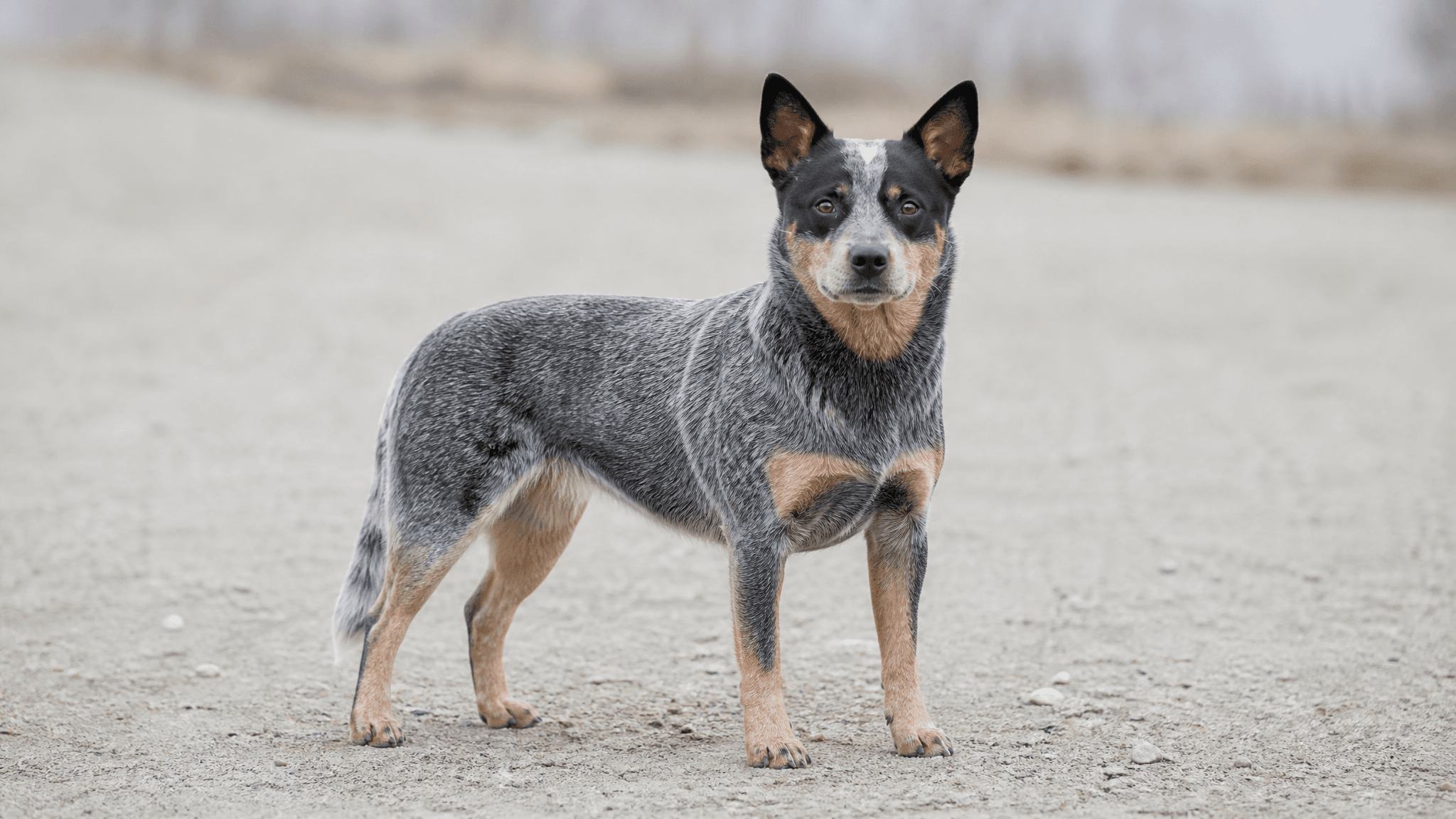
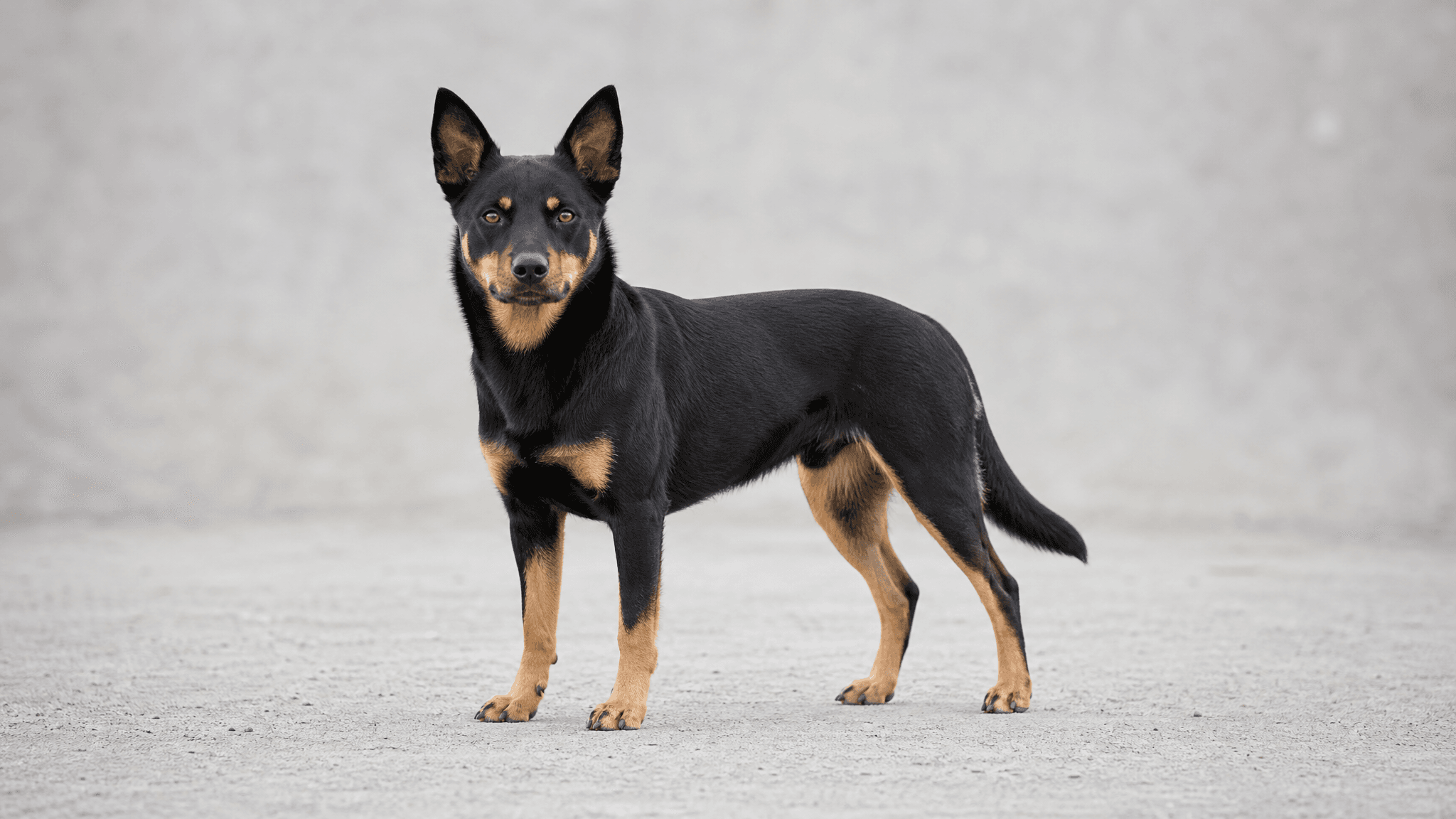
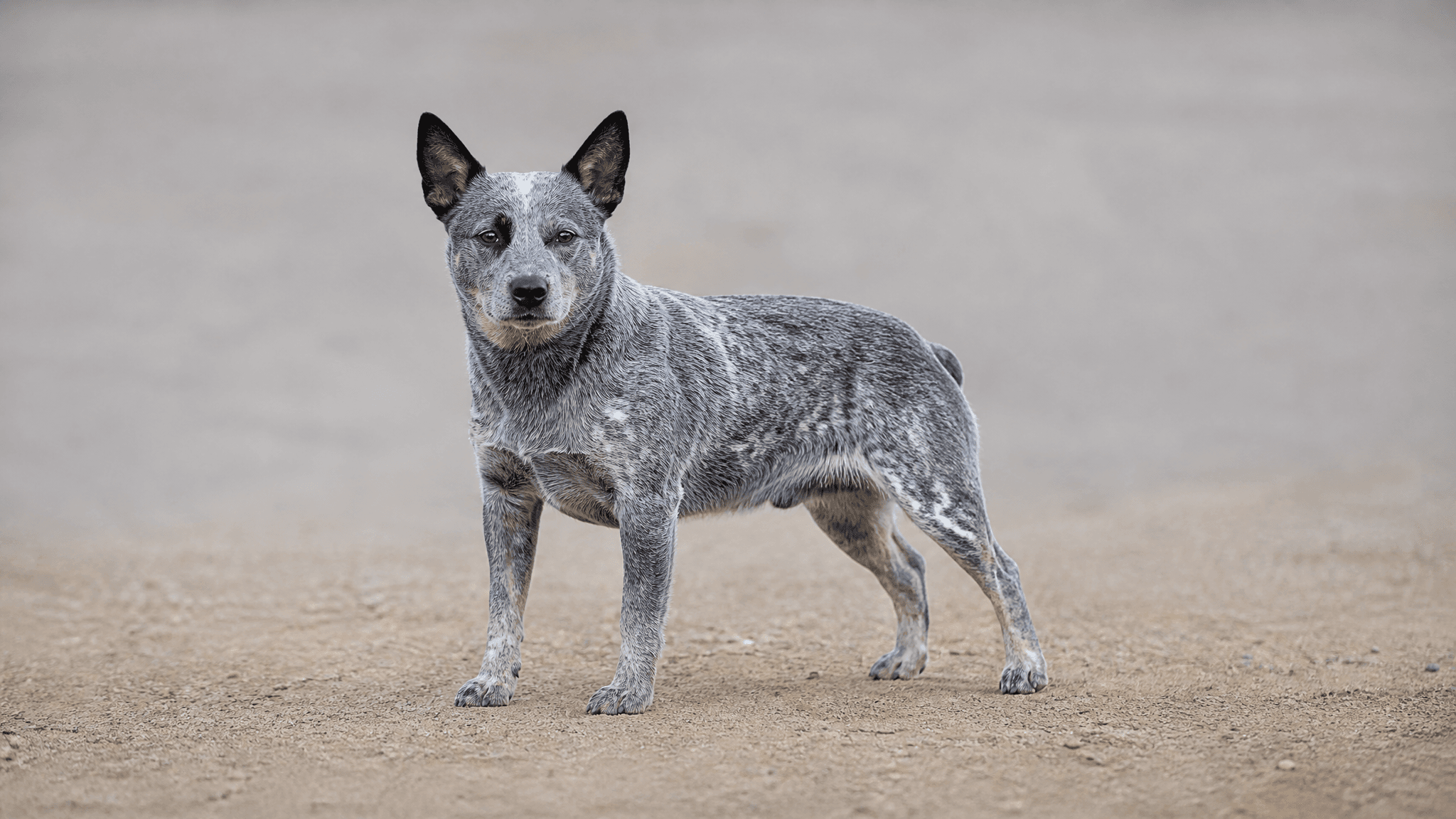
The Australian Stumpy Tail Cattle Dog is often confused with a docked-tail Australian Cattle Dog, but it is a completely distinct breed — its short tail is natural (natural bobtail) and not the result of docking. It is probably the oldest Australian breed, even predating the Australian Cattle Dog in historical development. It has a more square profile and relatively longer legs than its full-tailed cousin.
Physical Characteristics
- Size
- Medium
- Height (male)
- 46–51 cm
- Height (female)
- 43–48 cm
- Weight (male)
- 17–20 kg
- Weight (female)
- 15–18 kg
- Life Expectancy
- 12–15 years
- Coat
- Short, dense, harsh; with undercoat
- Common Colors
- Blue speckled or mottled; red speckled; without the tan head markings that characterize the ACD
Temperament & Personality
The Stumpy Tail is similar to the Australian Cattle Dog in temperament — active, intelligent, dedicated and courageous — but is generally described as slightly calmer and less intense. It continues to be a high-drive working breed, with significant need for physical and mental activity. It is loyal to its owner and family group, and can be territorial with strangers.
Activity & Exercise
- Energy Level
- High
- Suitable for Apartment
- Not recommended
Grooming & Care
- Grooming Needs
- Low
- Shedding
- Moderate
- Bathing Frequency
- Every 6–8 weeks
Health
- Common Health Issues
- Congenital deafness
- Hip dysplasia
- Progressive retinal atrophy (PRA)
- Recommended Health Tests
- BAER test (hearing)
- Eye examination
- OFA orthopedic evaluation
Compatibility
- With Children
- Moderate
- With Other Dogs
- Moderate
- With Cats
- Moderate
- For First-Time Owners
- Not recommended
Is an Australian Stumpy Tail Cattle Dog right for you?
An Australian Stumpy Tail Cattle Dog may suit you if:
- You are prepared to provide daily vigorous exercise and engaging mental challenges for an intelligent, active companion.
- You enjoy an active lifestyle that includes activities like herding, agility, or long hikes.
- You appreciate a dedicated and courageous companion who forms a strong, loyal bond with you.
- You are committed to consistent, positive training and early socialization to shape a well-behaved dog.
- You are comfortable with moderate shedding and minimal grooming needs, requiring only occasional bathing and brushing.
- You are willing to manage their natural herding instincts and territorial tendencies with patience and guidance.
Think twice if:
- You expect a dog that is always immediately compliant and easily managed without consistent effort.
- You have a routine that leaves a dog alone for long stretches, leading to boredom and potential destructive behaviors.
- You have young children or other small pets who may not thrive with a dog possessing strong herding instincts.
- You are unwilling to commit to daily vigorous exercise and mental stimulation for a highly active breed.
- You live in an apartment or lack a securely fenced yard for a medium-sized, active dog to safely play.
- You are unprepared for the consistent guidance and firm, yet gentle, handling an intelligent and independent adolescent dog requires.
Living with an Australian Stumpy Tail Cattle Dog is a rewarding journey, but it's not without its specific demands. While their loyalty and intelligence are boundless, they thrive with owners who truly understand and embrace their working heritage. They offer deep companionship to those who can meet their needs for activity and purpose, making them a truly special, albeit demanding, member of the family for 12 to 15 years.
Training an Australian Stumpy Tail Cattle Dog
Your Australian Stumpy Tail Cattle Dog is a bright spark, eager to learn and driven by purpose. These intelligent, high-energy dogs thrive on consistent, positive reinforcement training that engages their minds as much as their bodies. Short, frequent sessions, packed with fun and rewards, will keep them focused and prevent boredom. If training is inconsistent, too harsh, or lacks sufficient mental and physical challenge, your Stumpy Tail may become frustrated, territorial, or develop unwanted herding behaviors, making clear communication essential.
Begin with:
- Attention and response to name around distractions
- Recall on a long line
- Loose-leash walking
- Leave it and drop it
- Calm greetings without jumping
- Settling on a mat or bed
- Cooperative handling for grooming, ears, feet and teeth
- Waiting at doors and gates
Herding instinct and recall
Your Stumpy Tail's strong herding instinct and high prey drive mean that a running child, a bicycle, or a squirrel can be incredibly tempting. This makes reliable recall a top priority, especially given their medium size and speed. Start recall training in a low-distraction environment and gradually introduce more exciting surroundings, always using a long line for safety. Reward generously when they choose to return to you, even if they were distracted for a moment. Consistent practice and making yourself more interesting than the distraction are key to building a rock-solid 'come' command. For more detailed steps, check out our guide on teaching recall.
Their natural inclination to herd can also manifest as nipping at heels, particularly with children or other pets. Redirect this instinct into appropriate outlets like herding balls or structured training games, rather than allowing them to practice it on family members. Early socialization and consistent boundaries are crucial.
Pulling on the leash
With their high energy and strength, an Australian Stumpy Tail Cattle Dog can become quite the puller on walks if not taught otherwise. Their natural drive to move and explore means they'll often want to lead the way. Focus on positive reinforcement techniques for loose-leash walking from day one. Use a comfortable harness that discourages pulling, and reward every moment they walk beside you with a slack leash. If they pull, stop walking until the leash slackens, then continue. Consistency is vital for teaching them that a loose leash gets them where they want to go. You can find more tips in this article on stopping leash pulling.
Given their territorial nature, they might also pull towards or react to strangers or other dogs. Early and positive exposure to various people, places, and well-behaved dogs is essential. Continue to reward calm behavior on walks, especially when encountering potential triggers.
Boredom and mischief
A Stumpy Tail with insufficient physical and mental stimulation is a recipe for trouble. Their high energy level and intelligence mean they need a 'job' to do, even if it's just learning new tricks or engaging with puzzle toys. Without adequate outlets, they may resort to destructive chewing, excessive barking, or even trying to 'herd' family members. This breed is not recommended for apartment living precisely because of their significant need for activity.
Ensure they get plenty of vigorous exercise daily, beyond just a short walk. Incorporate mental games, training sessions, and puzzle feeders to keep their sharp minds engaged. A tired Stumpy Tail is a well-behaved Stumpy Tail, and providing appropriate outlets for their energy and intelligence will lead to a happier home for everyone.
Australian Stumpy Tail Cattle Dog — Frequently Asked Questions
What is the Australian Stumpy Tail Cattle Dog?
The Australian Stumpy Tail Cattle Dog is one of Australia's oldest native breeds — distinct from the Australian Cattle Dog (Blue/Red Heeler) and often confused with it. The most striking difference is its natural bobtail: the Stumpy is born without a tail or with a very short natural stub, not a docked tail. It was developed in the mid-19th century by crossing Dingoes with Smooth Collies and other herding breeds to produce a tough, heat-resistant drover's dog for mustering cattle across Australia's vast inland stations. It is recognised by the ANKC and the FCI, and is considered a national heritage breed of significant historical importance to Australia.
How does the Australian Stumpy Tail Cattle Dog differ from the Australian Cattle Dog?
While they share common ancestry and similar working roles, the Australian Stumpy Tail Cattle Dog and the Australian Cattle Dog are two distinct breeds. The most visible difference is the natural bobtail of the Stumpy — born without a tail or with a short natural stub — compared to the full tail of the Cattle Dog. The Stumpy is also typically taller and leggier in build, with a squarer body profile. Temperamentally, the Stumpy is generally considered more alert, reactive, and independent compared to the somewhat more biddable Cattle Dog. Both breeds share the extreme working drive and intelligence that makes them outstanding herding dogs, but the Stumpy retains stronger dingo characteristics in both appearance and temperament.
How much exercise does an Australian Stumpy Tail Cattle Dog need?
The Australian Stumpy Tail Cattle Dog is a high-energy working breed that needs substantial daily exercise — at least 1.5–2 hours of vigorous activity per day. It was developed to work all day in hot, demanding conditions across vast distances, and this exceptional stamina is deeply ingrained. Long runs, cycling alongside, agility, herding trials, and safe off-lead work in enclosed areas are ideal. It also needs significant mental stimulation — it is highly intelligent and needs a job or structured challenge to prevent destructive boredom behaviours. Without adequate daily exercise and mental engagement, Stumpy Tail Cattle Dogs become restless, anxious, and destructive. They are not suitable for sedentary or apartment lifestyles.
Is the Australian Stumpy Tail Cattle Dog a good family dog?
The Australian Stumpy Tail Cattle Dog can be a loyal and devoted family companion, but it requires an experienced, active owner who understands working dog psychology. It is intensely loyal to its primary family but can be reserved or wary with strangers — early socialisation is essential. It has strong herding instincts and may attempt to herd children and other pets, including nipping at heels. It may not be suitable for households with very young children. It generally gets along with other dogs when socialised from puppyhood. For experienced, active families in rural or semi-rural settings who can meet its considerable exercise and mental stimulation needs, it is a dedicated, highly capable companion.
Is the Australian Stumpy Tail Cattle Dog easy to train?
The Australian Stumpy Tail Cattle Dog is extremely intelligent — one of the most mentally capable herding breeds — but its intelligence comes paired with strong independence and the capacity to out-think an inexperienced handler. It learns commands quickly, but will test limits and find workarounds if training is repetitive or boring. It responds best to varied, challenging training sessions using positive reinforcement. Early obedience and socialisation training from puppyhood is essential. It excels in advanced dog sports including agility, obedience, herding trials, and tracking. An experienced trainer who understands high-drive working dogs and can channel its intelligence productively will find it an outstanding training partner.
What health issues are common in the Australian Stumpy Tail Cattle Dog?
The Australian Stumpy Tail Cattle Dog is generally a robust breed, but several conditions merit attention. Progressive Retinal Atrophy (PRA) — causing gradual vision loss — has been identified in the breed and responsible breeders test for it. Deafness, linked to the merle colouring gene, can occur in some individuals — reputable breeders test for BAER (brainstem auditory evoked response). Hip dysplasia can occur at moderate rates. The natural bobtail gene can occasionally be associated with spinal issues in some dogs — responsible breeding practices minimise this risk. Regular veterinary check-ups including eye and hearing examinations support proactive health management throughout the dog's life.
What is the Australian Stumpy Tail Cattle Dog's coat like?
The Australian Stumpy Tail Cattle Dog has a short, dense double coat with a hard, straight outer coat and a short, dense undercoat. The coat comes in two colour patterns: blue (a blue or blue-mottled pattern, with or without black, blue or tan markings) or red speckle (a red speckle all over the body, with or without darker red markings). The coat is weather-resistant and designed for working in harsh outdoor conditions. Grooming is straightforward: weekly brushing with a rubber mitt or bristle brush removes dead hair. The breed sheds moderately year-round and more heavily during seasonal coat changes. Bathing as needed every 6–8 weeks is sufficient. Ear, nail, and dental care complete the routine.
What is the typical lifespan of an Australian Stumpy Tail Cattle Dog?
The Australian Stumpy Tail Cattle Dog typically lives between 12 and 15 years — excellent longevity for a medium-sized working breed. Its robust working constitution, developed for demanding outback conditions, contributes to overall health resilience. The main longevity factors are maintaining a lean body weight, providing vigorous daily exercise and mental stimulation, scheduling eye and hearing check-ups given its documented predispositions, monitoring for hip dysplasia as the dog ages, and routine veterinary care. An active, working Stumpy Tail Cattle Dog with purposeful daily exercise and attentive care typically ages very well, maintaining its characteristic intelligence, energy, and devotion throughout its senior years.
Community
Talk to real Australian Stumpy Tail Cattle Dog owners
This guide covers the breed on paper. In the app, the Australian Stumpy Tail Cattle Dog community covers it in real life: photos from other owners, questions answered by people who live with the breed, and a directory of dogs you can browse.
- Photos & pollsSee what Australian Stumpy Tail Cattle Dog owners are sharing today.
- Questions & answersAsk anything and hear from people who own one.
- Dog directoryBrowse Australian Stumpy Tail Cattle Dogs from around the world.
You join automatically when you add a Australian Stumpy Tail Cattle Dog to your profile.