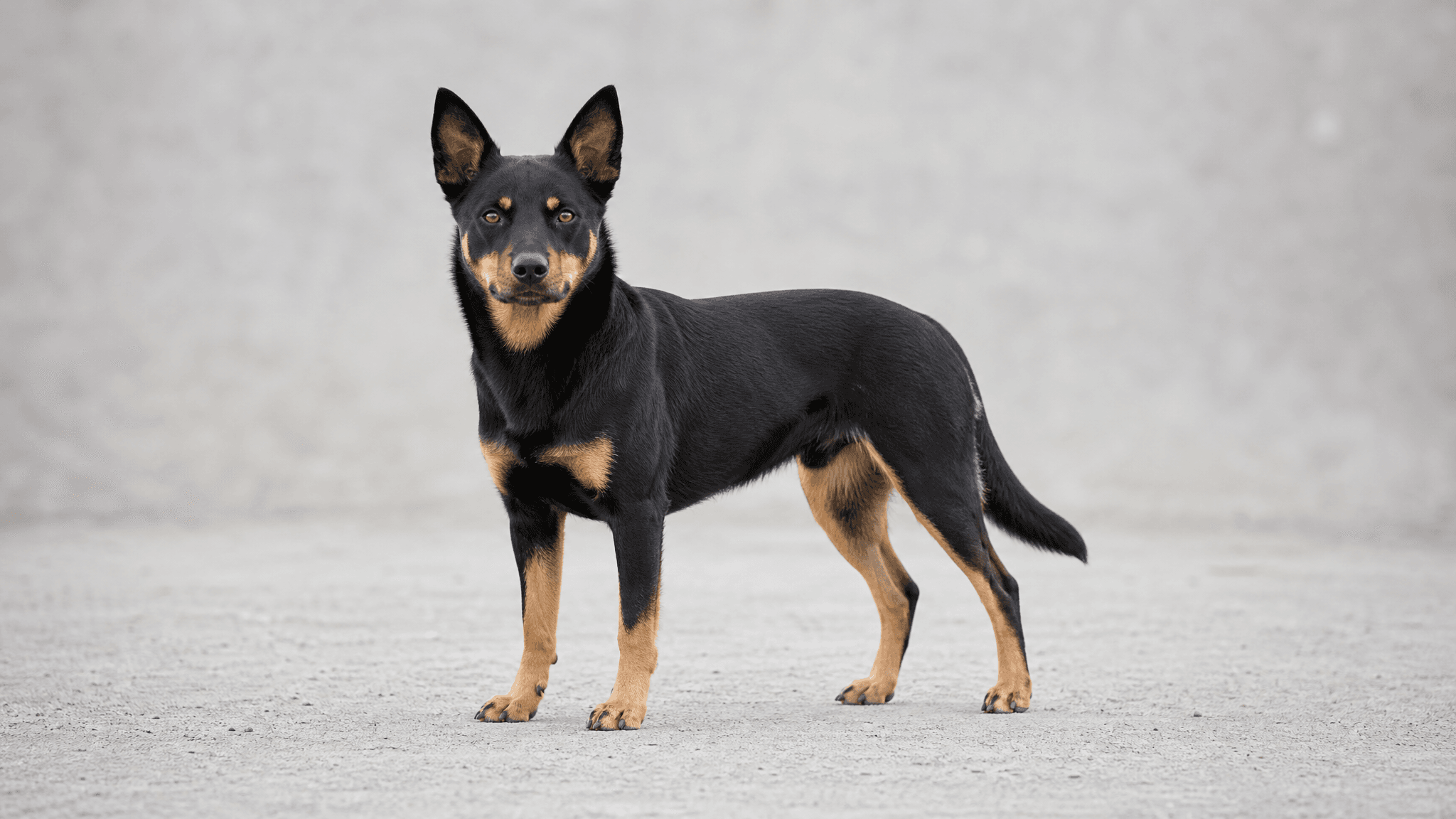
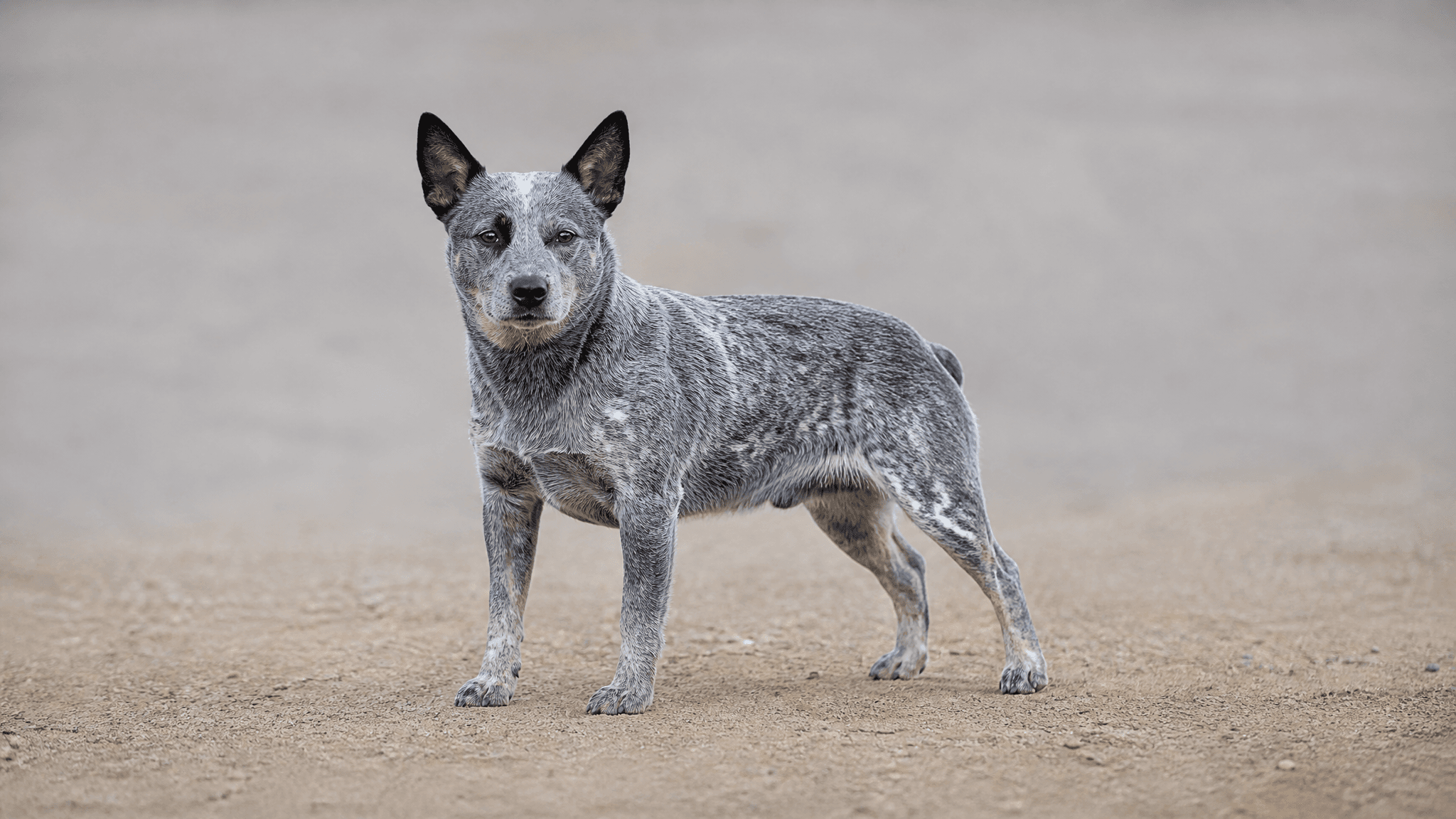
Australian Cattle Dog
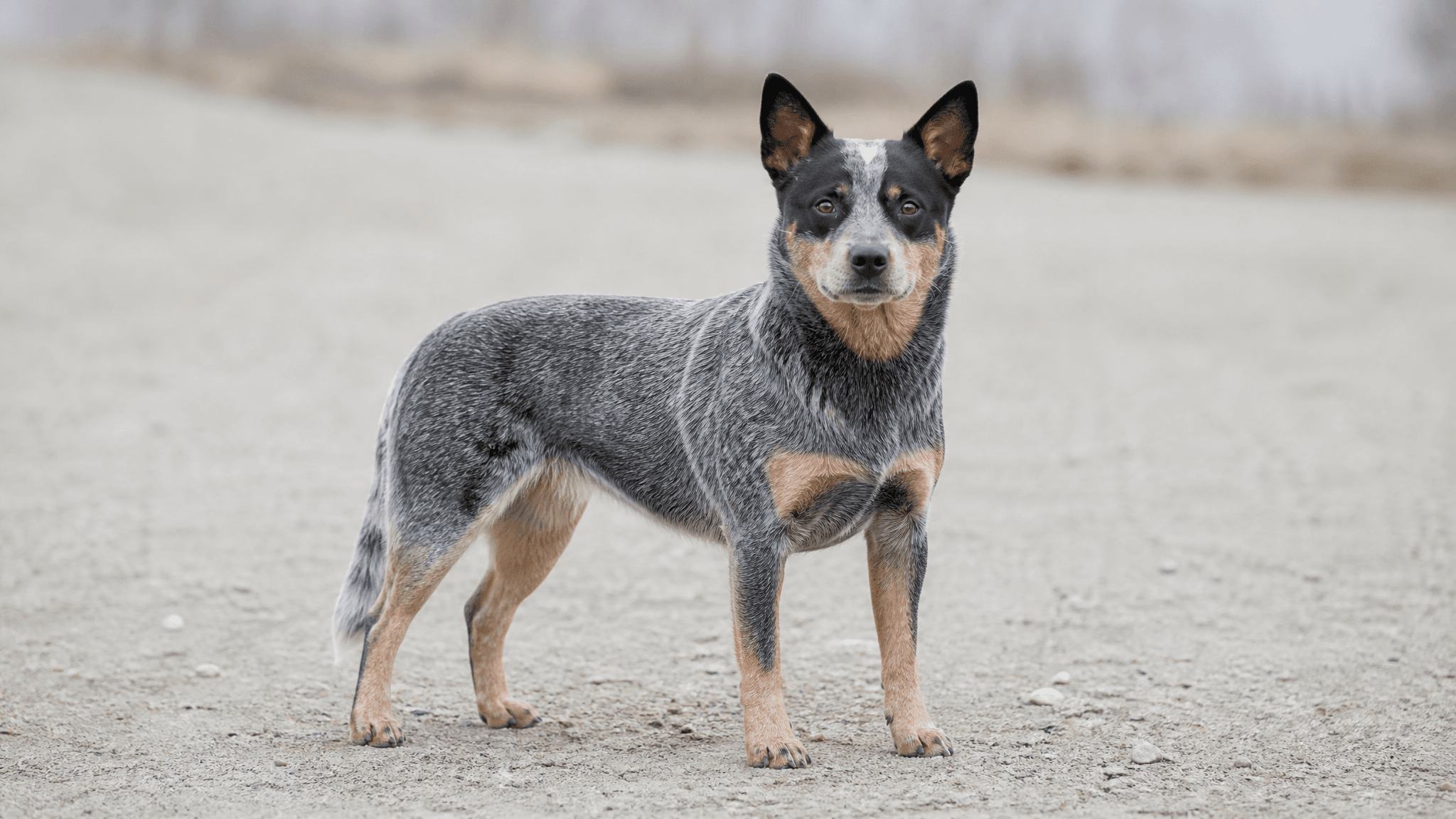
Summary
The Australian Cattle Dog, popularly known as "Blue Heeler" or "Queensland Heeler", is the result of meticulous breeding by Australian colonists in the 19th century to solve a specific problem: driving the wild cattle raised across the vast expanses of the Australian interior. Scottish Collies were crossed with Dingos, and later with Kelpies and Dalmatians, resulting in a dog of extraordinary endurance, keen intelligence and total commitment to work.
Physical Characteristics
- Size
- Medium
- Height (male)
- 46–51 cm
- Height (female)
- 43–48 cm
- Weight (male)
- 16–22 kg
- Weight (female)
- 14–18 kg
- Life Expectancy
- 12–16 years
- Coat
- Short, dense, weather-resistant; with undercoat
- Common Colors
- Blue (speckled or mottled, with or without black, blue or tan markings on the head); red (evenly speckled throughout the body, with or without darker markings)
Temperament & Personality
The Blue Heeler is a dog of extraordinary energy, remarkable intelligence and a dedication to work that few breeds can match. It is extremely loyal to its primary owner, sometimes exclusively so (it is nicknamed a "one-man dog"). It is courageous, determined and resilient. Without sufficient work or activity, it can become destructive and difficult to manage. It is a dog for truly active people.
Activity & Exercise
- Energy Level
- Very high
- Recommended Daily Exercise
- 120 minutes
- Suitable for Apartment
- Not recommended
Grooming & Care
- Grooming Needs
- Low
- Shedding
- Moderate
- Bathing Frequency
- Every 6–8 weeks
Health
- Common Health Issues
- Congenital deafness
- Hip dysplasia
- Progressive retinal atrophy (PRA)
- Recommended Health Tests
- BAER test (hearing)
- OFA orthopedic evaluation
- PRA and PRCD genetic test
Compatibility
- With Children
- Moderate
- With Other Dogs
- Moderate
- With Cats
- Can be difficult
- For First-Time Owners
- Not recommended
Is an Australian Cattle Dog right for you?
An Australian Cattle Dog may suit you if:
- You can commit to at least two hours of vigorous exercise and engaging mental challenges every single day.
- You enjoy an active, outdoor lifestyle and want a tireless companion for adventures like hiking, running, or dog sports.
- You appreciate a deeply loyal, courageous, and intelligent companion who will bond closely with you.
- You are prepared to invest consistently in positive reinforcement training and early socialization to channel their keen intelligence.
- You don't mind moderate shedding and only need to provide low-maintenance grooming for their weather-resistant coat.
- You are willing to manage their strong herding instincts and provide appropriate outlets for their natural drive.
Think twice if:
- You expect a dog that is inherently biddable and always eager to please without consistent guidance.
- Your household routine involves leaving a dog alone for long periods, as this breed thrives on companionship and activity.
- You have very young children or other small, vulnerable pets that might not appreciate a dog with strong herding instincts.
- You are unwilling to commit to at least two hours of daily exercise and rigorous mental engagement for a high-energy dog.
- Your living situation is an apartment or lacks a securely fenced yard where they can safely expend energy.
- You are not prepared for the determined nature and potential adolescent challenges of a highly intelligent working breed.
Living with an Australian Cattle Dog is a rewarding journey for the right person, offering unparalleled loyalty and an active partnership for 12 to 16 years. However, their extraordinary drive and intelligence demand a significant commitment of time and effort. They thrive when given a job to do and can become challenging without it, embodying a true working spirit that needs to be understood and respected.
Training an Australian Cattle Dog
Training an Australian Cattle Dog, or Blue Heeler, is a rewarding journey that taps into their extraordinary intelligence and deep-seated dedication to work. These clever canines thrive on engaging, positive reinforcement-based sessions that challenge their minds and bodies. Keep training sessions short, frequent, and varied to maintain their focus and enthusiasm. Because of their high energy and sharp intellect, inconsistent or insufficient training can quickly lead to frustration, boredom, and the development of destructive behaviours. A clear, confident handler who provides ample mental and physical stimulation will unlock their incredible potential.
Begin with:
- Attention and response to name around distractions
- Recall on a long line
- Loose-leash walking
- Leave it and drop it
- Calm greetings without jumping
- Settling on a mat or bed
- Cooperative handling for grooming, ears, feet and teeth
- Waiting at doors and gates
Herding instinct and focus
Australian Cattle Dogs possess an incredibly strong herding instinct, originally bred to drive cattle across vast distances. This drive means they are highly attentive to movement and can be easily distracted by anything that moves, from squirrels and bikes to children. This intense focus on perceived 'prey' or 'flock' can make recall challenging, especially in open spaces.
To manage this, channel their natural drive into appropriate activities like herding games, agility, or fetch. Practice recall in increasingly distracting environments, starting with a long line for safety. Consistent, positive reinforcement for returning to you is key. For more tips on building a reliable recall, check out our guide on teaching a dog to come when called.
Leash pulling and determination
With their very high energy level and determined nature, Australian Cattle Dogs can be strong pullers on the leash, especially if they aren't getting enough mental and physical exercise. Their medium size and sturdy build mean they can exert significant force, making walks less enjoyable for both of you. Early and consistent training is crucial to establish good leash manners.
Focus on teaching loose-leash walking from puppyhood, using positive reinforcement and rewarding your dog for walking calmly by your side. Consider using a front-clip harness for better control without causing discomfort. Remember that a tired ACD is a well-behaved ACD, so ensure they get their recommended 120 minutes of daily exercise. For detailed steps, see our article on how to stop a puppy pulling on the leash.
Boredom and destructive behaviour
An Australian Cattle Dog that is under-exercised, under-stimulated, or left alone for long periods can quickly become destructive and difficult to manage. Their extraordinary energy and intelligence mean they need a job to do, and if you don't provide one, they'll invent their own – often involving chewing, digging, or excessive barking. This breed requires at least 120 minutes of daily exercise to stay happy and healthy.
Beyond physical activity, provide plenty of mental enrichment through puzzle toys, training sessions, and interactive games. If you must leave your ACD alone, ensure they have had ample exercise beforehand and are left with safe, engaging chew toys. If you're concerned about separation stress, learn how to recognize the signs.
Australian Cattle Dog — Frequently Asked Questions
Are Australian Cattle Dogs good pets for first-time owners?
Australian Cattle Dogs are generally not recommended for first-time dog owners. They are extraordinarily intelligent, high-energy, and demanding dogs that were bred to work long days herding cattle across rough terrain. Without a job, structured exercise, and an experienced handler, they become bored, frustrated, and can develop destructive or controlling behaviours — including nipping at heels (which is instinctive herding behaviour). Experienced, active owners who can match their energy are the ideal fit.
How much exercise does an Australian Cattle Dog need?
Australian Cattle Dogs need at least 2 hours of vigorous exercise daily — and this means real physical and mental exertion, not just a leisurely stroll. They excel at herding, agility, flyball, frisbee, and distance running. Mental stimulation through puzzle feeders, scent work, and obedience training is equally important. An under-exercised Cattle Dog is one that will find its own entertainment — and it usually involves rearranging your furniture or herding your children.
Do Australian Cattle Dogs bite or nip?
Nipping is an instinctive herding behaviour in Australian Cattle Dogs and is one of the most commonly reported challenges with the breed. They were bred to control cattle by biting at their heels — and without proper training, they will apply this instinct to children, joggers, cyclists, and other animals. Early and consistent training to redirect this behaviour is essential. "Leave it" and impulse control exercises from puppyhood help significantly. Never reward or laugh at nipping, even in puppies.
Are Australian Cattle Dogs good with children?
Australian Cattle Dogs can be wonderful with children they're raised with, but they require careful management around young kids. Their herding instinct means they may try to "manage" children by nipping at their heels or circling them. They also have high energy and can accidentally knock over small children. Supervised, positive interactions from an early age work best. They are typically devoted and protective of family children, but strangers or visiting kids should be introduced carefully.
How intelligent are Australian Cattle Dogs?
Australian Cattle Dogs are consistently ranked among the most intelligent dog breeds in the world. They can learn commands quickly, solve problems independently, and adapt to complex tasks. This intelligence is a double-edged sword — they pick up both good and bad habits fast, and they will outsmart owners who aren't one step ahead. They need regular mental challenges as much as physical ones: trick training, advanced obedience, and dog sports all keep their minds sharp and their behaviour manageable.
What health issues affect Australian Cattle Dogs?
Australian Cattle Dogs are a hardy breed but have some hereditary concerns. Progressive Retinal Atrophy (PRA) and other eye conditions can cause vision loss — BAER testing and DNA screening of breeding stock are important. Hip dysplasia occurs in the breed. Deafness can affect Australian Cattle Dogs, particularly those with more white or merle colouring — BAER (hearing) testing is recommended for puppies. Elbow dysplasia is also documented. Overall, they are a healthy and long-lived breed when properly bred.
How long do Australian Cattle Dogs live?
Australian Cattle Dogs are one of the longest-lived breeds, with an average lifespan of 12–16 years. The oldest recorded dog ever — Bluey, an Australian Cattle Dog — lived to 29 years and 5 months. Their working dog constitution gives them robust health. Maintaining a lean body weight, regular exercise, good nutrition, and routine veterinary care all support longevity. Their active lifestyle naturally helps keep them in top condition well into their senior years.
Are Australian Cattle Dogs loyal to one person?
Australian Cattle Dogs are known for being strongly bonded to one primary person — often described as a "Velcro dog" for their preferred human. They are loyal and devoted to the whole family but typically show a clear preference for a single handler. This loyalty makes them exceptional working and sport dogs, but it also means they can be wary of strangers and protective of their person. Early socialisation helps them be polite and confident with new people.
Community
Talk to real Australian Cattle Dog owners
This guide covers the breed on paper. In the app, the Australian Cattle Dog community covers it in real life: photos from other owners, questions answered by people who live with the breed, and a directory of dogs you can browse.
- Photos & pollsSee what Australian Cattle Dog owners are sharing today.
- Questions & answersAsk anything and hear from people who own one.
- Dog directoryBrowse Australian Cattle Dogs from around the world.
You join automatically when you add a Australian Cattle Dog to your profile.