Appenzell Cattle Dog
Summary
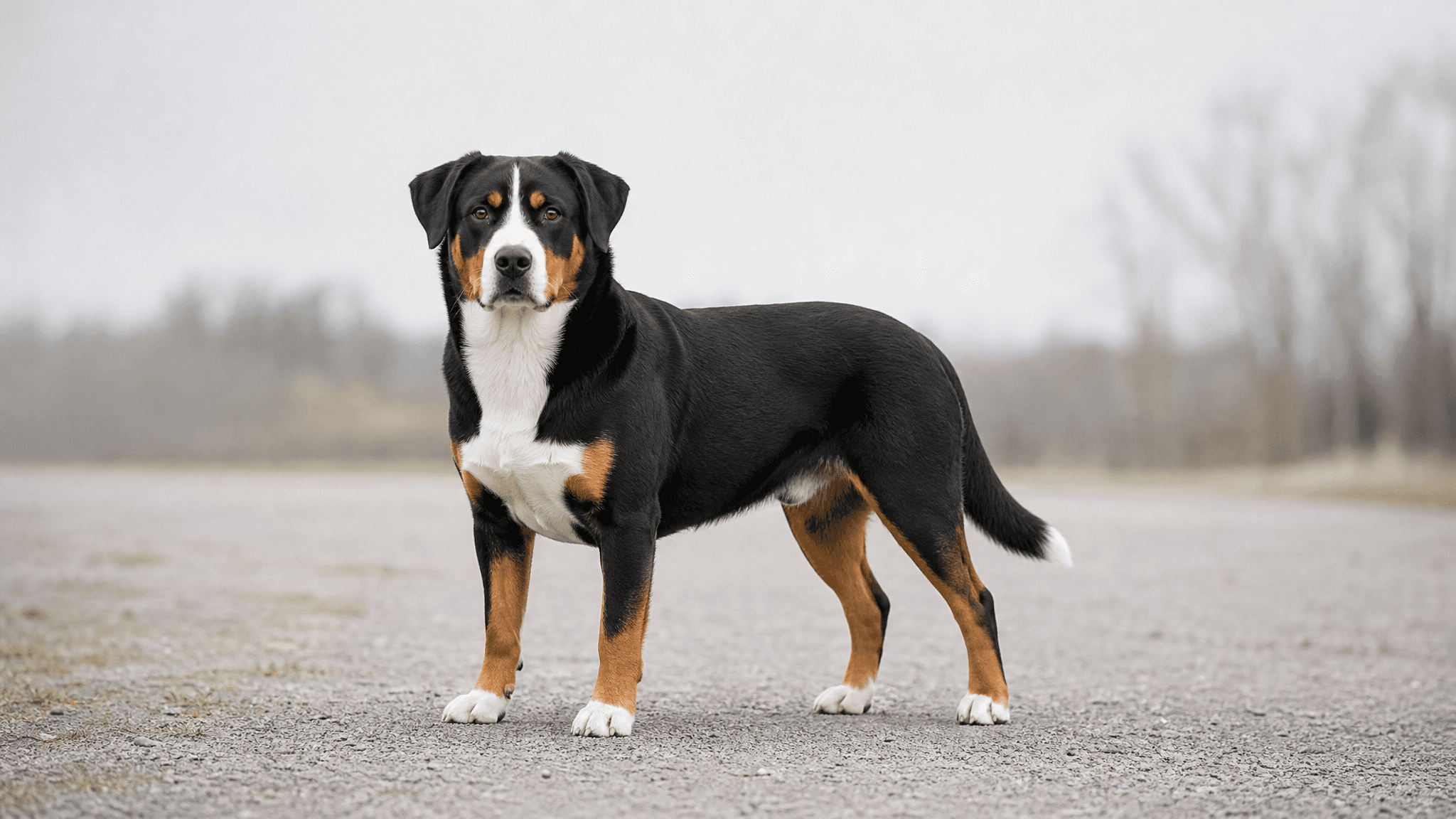
The Appenzeller Sennenhund is the most energetic and vocal of the four Swiss Sennenhunde. Originating from the Canton of Appenzell in the mountains of northeastern Switzerland, it was bred specifically to drive cattle with vigour, perseverance, and boldness. It is a medium-large dog, tricolour like its cousins, but with typically curled ears when active. Outside Switzerland, it remains relatively rare.
Physical Characteristics
- Size
- Medium to large
- Height (male)
- 52–56 cm
- Height (female)
- 50–54 cm
- Weight (male)
- 22–32 kg
- Weight (female)
- 22–30 kg
- Life Expectancy
- 12–14 years
- Coat
- Short to medium, dense and glossy; weather-resistant double coat
- Common Colors
- Tricolour: black or brown as base colour, with symmetrical rust and white markings
Temperament & Personality
The Appenzeller is a vibrant, confident dog with enormous liveliness. It is highly loyal to the family but can be suspicious of strangers — a characteristic that makes it an excellent guard dog. It is intelligent and learns quickly, but its independence can make training a challenge for less experienced owners. It loves to work, and without adequate stimulation, it can become noisy and destructive.
Activity & Exercise
- Energy Level
- High
- Suitable for Apartment
- Not recommended
Grooming & Care
- Grooming Needs
- Low to moderate
- Shedding
- Moderate
- Bathing Frequency
- Every 6–8 weeks
Health
- Common Health Issues
- Entropion
- Hereditary eye problems (cataracts)
- Hip dysplasia
- Recommended Health Tests
- Eye examination
- Hip radiography
Compatibility
- With Children
- Good
- With Other Dogs
- Good
- With Cats
- Moderate
- For First-Time Owners
- Not recommended
Is an Appenzell Cattle Dog right for you?
An Appenzell Cattle Dog may suit you if:
- You are prepared to provide vigorous daily exercise and engaging mental challenges for a highly energetic companion.
- You enjoy an active, outdoor lifestyle that includes hiking, dog sports, or other vigorous activities.
- You appreciate a loyal, confident, and alert companion who will be a dedicated guardian of your home.
- You are committed to consistent, positive reinforcement training from a young age to channel their intelligence effectively.
- You are willing to provide moderate grooming, including regular brushing to manage their seasonal shedding.
- You understand and are prepared to manage their natural herding instincts, including occasional vocalizations and a strong desire to work.
Think twice if:
- You expect a dog that is always eager to please and will unquestioningly follow every command.
- You have a busy schedule that requires leaving your dog alone for long periods each day.
- You are looking for a dog that will instantly and effortlessly integrate with your existing cats.
- You are unable or unwilling to commit to substantial daily exercise and consistent mental engagement.
- You live in an apartment or do not have a securely fenced yard for them to explore.
- You are a first-time dog owner seeking an easy-to-manage puppy without significant training experience.
The Appenzell Cattle Dog is a truly vibrant and loyal companion for the right family. While their intelligence and energy make them incredibly rewarding, their independent spirit and need for consistent engagement mean they thrive best with experienced owners committed to their unique demands. Embrace their zest for life, and you'll gain a devoted, protective friend for their 12 to 14 years.
Training an Appenzell Cattle Dog
Your Appenzell Cattle Dog is a bright, energetic companion eager to learn, but their independent spirit means training requires a consistent, engaging approach. They thrive on mental and physical challenges, so short, fun, and varied sessions with positive reinforcement will yield the best results. Because they are so intelligent and love to work, a handler who isn't consistent or doesn't provide enough stimulating activity might find their Appenzeller developing undesirable behaviors, becoming noisy or even destructive. Patience and understanding their strong will are key to unlocking their full potential.
Begin with:
- Attention and response to name
- Recall on a long line
- Loose-leash walking
- Leave it and drop it
- Calm greetings without jumping
- Settling on a mat or bed
- Cooperative handling for grooming
- Waiting at doors and gates
Herding Instincts
Your Appenzeller's heritage as a cattle dog means they possess a strong instinct to herd and chase moving objects. This can manifest as chasing bicycles, joggers, or even small animals, making a reliable recall absolutely crucial for their safety and your peace of mind. Start recall training in a secure, low-distraction environment, gradually increasing the challenge. Always make coming back to you the most rewarding option. For detailed guidance, check out our guide on teaching recall.
When out and about, especially in areas with potential triggers, keep your Appenzeller on a leash or a long line. Engage them in activities that satisfy their herding drive in a controlled way, like fetch or specific dog sports, to help manage this powerful instinct.
Leash Pulling
Appenzellers are powerful, energetic dogs, and their enthusiasm for exploring can quickly translate into significant leash pulling. Their medium to large size and strength mean that an untrained Appenzeller can easily pull an owner off balance. Start teaching loose-leash walking from puppyhood, using positive reinforcement to reward them for walking calmly by your side.
Consistency is vital. Avoid letting them pull even "just for a moment," as this reinforces the unwanted behavior. Consider using a front-clip harness for better control during training, and remember that short, frequent training sessions are more effective than long, frustrating ones. For more tips, read our force-free plan for stopping leash pulling.
Energy and Boredom
An Appenzeller Cattle Dog is a high-energy breed that thrives on activity and mental engagement. If under-exercised or left alone for extended periods without sufficient stimulation, they can quickly become bored, leading to undesirable behaviors such as excessive barking, chewing furniture, or digging. Remember, an Appenzeller without a "job" will often invent one, and it might not be one you appreciate!
Ensure your Appenzeller receives ample daily physical exercise, beyond just a quick walk – think vigorous play, hiking, or dog sports. Couple this with mental enrichment through puzzle toys, training sessions, and opportunities to explore new environments. Our training feature can help you build a consistent routine to keep their intelligent minds busy and happy.
Appenzell Cattle Dog — Frequently Asked Questions
What is the Appenzeller Sennenhund?
The Appenzeller Sennenhund (Appenzell Cattle Dog) is a medium-sized, tricolour Swiss mountain dog from the Appenzell region of Switzerland. It is one of four Swiss Sennenhund breeds (alongside the Greater Swiss Mountain Dog, Bernese Mountain Dog, and Entlebucher Mountain Dog). Historically, they served as versatile farm dogs — herding cattle, guarding the farm, pulling small carts, and general farm work in the Alpine regions. They have a distinctive black, white, and rust/tan tricolour coat with a characteristic tight curled tail carried over the back. In character they are energetic, loyal, intelligent, lively, alert, and somewhat reserved with strangers — true working farm dogs.
Are Appenzeller Sennenhunds good family dogs?
Appenzeller Sennenhunds can make excellent family companions in the right home. They are devoted, playful, and loving with their family — genuinely joyful dogs who love participating in family activities. They are generally good with children they are raised with. However, they are a high-energy working breed that needs significant daily exercise and mental stimulation; without it they become restless and destructive. They can be reserved or wary of strangers and have strong watchdog instincts — a trait that needs to be managed through good socialisation. They are not ideal for apartment life. For active, experienced families who enjoy outdoor pursuits and can commit to their exercise needs, they are extraordinary companions.
How much exercise does an Appenzeller Sennenhund need?
Appenzeller Sennenhunds need 1.5–2 hours of vigorous daily exercise. They are working farm dogs with tremendous stamina, bred to work the steep Alpine terrain all day. Long runs, hiking, agility, herding, tracking, carting, flyball, and any high-energy activity suit them well. They are exceptional athletes who thrive with a job or regular structured activity. They are not suited to casual, occasional exercise — they need sustained, vigorous daily activity. Mental stimulation through training, dog sports, and problem-solving activities is equally important. An under-exercised Appenzeller is a frustrated, destructive Appenzeller. Rural or suburban homes with a large securely fenced garden are strongly preferred.
Are Appenzeller Sennenhunds easy to train?
Appenzeller Sennenhunds are intelligent and capable but require an experienced, consistent handler. They learn quickly but can be wilful and independent — they were bred to make autonomous decisions while working cattle, and this assertiveness remains. They respond well to positive, motivational training with a firm, consistent approach. They do not respond well to harsh, forceful methods. Their high intelligence means they become bored with repetition — varied, challenging training keeps them engaged. They are capable of excellent results in obedience, herding, agility, and tracking. Early socialisation is crucial to manage their wariness of strangers and prevent defensive behaviour. They are not ideal for first-time dog owners due to their strength and assertiveness.
What health issues affect Appenzeller Sennenhunds?
Appenzeller Sennenhunds are generally a healthy, robust breed with good genetic diversity due to their working dog origins. Key health concerns include hip and elbow dysplasia — OFA screening of parents is recommended. Eye conditions including ectropion, entropion, and distichiasis have been documented. Epilepsy occurs in some lines. Ear infections can develop. As a medium-to-large active breed, joint health is important — avoid excessive high-impact exercise during puppyhood when growth plates are still developing. Annual vet check-ups, health-tested parents, and maintaining a lean, healthy weight throughout life are important for longevity.
How long do Appenzeller Sennenhunds live?
Appenzeller Sennenhunds have an average lifespan of 12–15 years — excellent for a medium working breed. Key longevity factors include health-tested parents (particularly hip/elbow screening and eye checks), daily vigorous exercise (active working dogs age well), maintaining a lean healthy weight throughout life (obesity dramatically shortens lifespan in active breeds), avoiding excessive high-impact exercise during puppyhood (to protect developing joints), annual vet check-ups, dental care, and mental engagement. Their strong working-dog constitution and active lifestyle generally supports excellent longevity. Appenzellers who remain active, engaged, and at a healthy weight commonly live into their early-to-mid teens.
What is the Appenzeller Sennenhund's coat like?
The Appenzeller Sennenhund has a distinctive tricolour double coat. The outer coat is short, dense, close-fitting, and slightly harsh to the touch. The undercoat is dense and can be black, brown, or grey. The classic colouration is jet black or havana brown with symmetrical rust/tan and white markings: rust/tan marks appear above the eyes (creating the 'eyebrow' effect), on the cheeks, throat, chest, legs, and under the tail; white appears on the muzzle, chest, and paws. The symmetric markings are an important part of the breed standard — well-defined, clear markings are highly valued. Their coat is relatively low-maintenance — weekly brushing is usually sufficient outside of shedding periods, when more frequent brushing is needed.
Do Appenzeller Sennenhunds get along with other dogs?
Appenzeller Sennenhunds can get along well with other dogs, particularly when properly socialised from puppyhood. They are not inherently dog-aggressive, but their confident, assertive nature means they do best with compatible, similarly energetic dogs. They may be dominant with dogs of the same sex in some cases. Their herding instinct can emerge around other dogs — they may attempt to herd or control other animals. Thorough early socialisation with a wide variety of dogs of different sizes and temperaments is important to ensure good adult social behaviour. Well-socialised Appenzellers commonly do well in multi-dog households. They typically get along with livestock and other farm animals they are raised with due to their working heritage.
Community
Talk to real Appenzell Cattle Dog owners
This guide covers the breed on paper. In the app, the Appenzell Cattle Dog community covers it in real life: photos from other owners, questions answered by people who live with the breed, and a directory of dogs you can browse.
- Photos & pollsSee what Appenzell Cattle Dog owners are sharing today.
- Questions & answersAsk anything and hear from people who own one.
- Dog directoryBrowse Appenzell Cattle Dogs from around the world.
You join automatically when you add a Appenzell Cattle Dog to your profile.