Welsh Corgi (Cardigan)
Summary
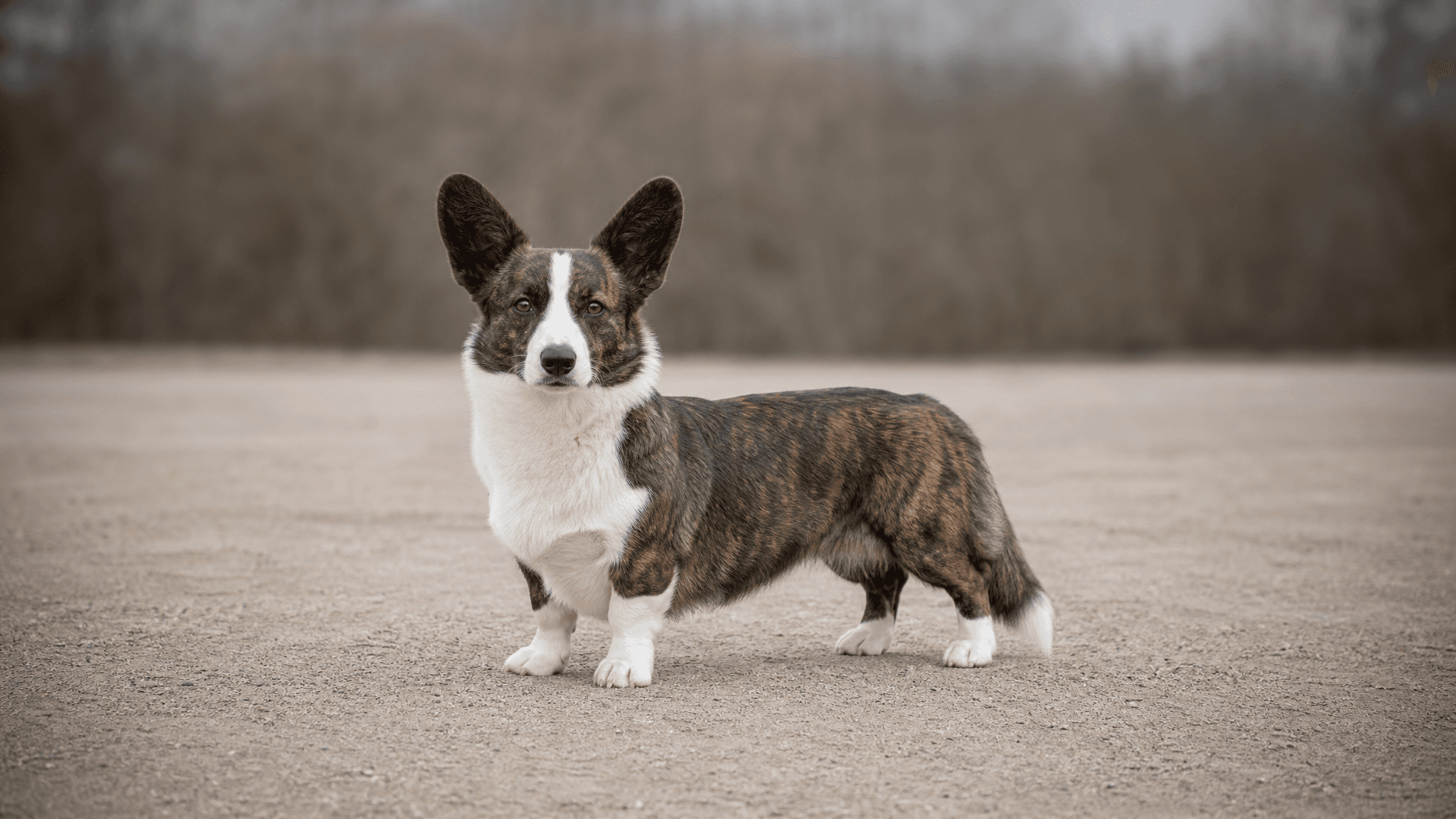
The Welsh Corgi Cardigan is one of the oldest breeds in the British Isles, with a history spanning over 3,000 years in Wales. It is the larger and older variety of the two Welsh Corgis, distinguishing itself from the Pembroke by its long, fox-like tail, rounded ears and slightly larger build. It was used for centuries to drive cattle, nipping at their heels and dodging kicks with agility.
Physical Characteristics
- Size
- Small to medium
- Height (male)
- 27–33 cm
- Height (female)
- 25–30 cm
- Weight (male)
- 14–17 kg
- Weight (female)
- 11–15 kg
- Life Expectancy
- 12–15 years
- Coat
- Medium, dense, straight and weather-resistant; dense, soft undercoat
- Common Colors
- Any color with or without white markings — sable, tricolor, brindle, blue merle, black, red; white should not predominate
Temperament & Personality
The Cardigan is an intelligent, adaptable and surprisingly versatile dog for its size. It is affectionate and loyal to the family, generally good with children and other animals. It retains a strong alert instinct and can be a good watchdog. Despite its small size, it is a sturdy dog with a mature and balanced personality. It can be somewhat reserved with strangers initially.
Activity & Exercise
- Energy Level
- Moderate to high
- Recommended Daily Exercise
- 45–60 minutes
- Suitable for Apartment
- Yes with exercise
Grooming & Care
- Grooming Needs
- Moderate
- Shedding
- Moderate to heavy
- Bathing Frequency
- Every 4–6 weeks
Health
- Common Health Issues
- Hip dysplasia
- Intervertebral disc disease (IVDD)
- Progressive retinal atrophy (PRA)
- Recommended Health Tests
- Eye examination
- OFA orthopedic evaluation
- PRA genetic test
Compatibility
- With Children
- Excellent
- With Other Dogs
- Excellent
- With Cats
- Good
- For First-Time Owners
- Recommended
Is a Welsh Corgi (Cardigan) right for you?
A Welsh Corgi (Cardigan) may suit you if:
- You can provide at least 45 to 60 minutes of engaging exercise daily to keep their clever minds and sturdy bodies happy.
- You enjoy activities like herding games, trick training, or even canine sports that challenge their intelligence and agility.
- You appreciate a loyal, affectionate companion with a mature and balanced personality that thrives on family connection.
- You are prepared to commit to consistent, positive training to harness their intelligence and adaptability.
- You are willing to provide moderate grooming, including regular brushing to manage their dense, shedding coat.
- You are ready to manage their natural alert barking and occasional herding instincts with patience and guidance.
Think twice if:
- You expect unwavering, immediate obedience, as their independent herding spirit means they think for themselves.
- You have a routine that requires leaving your dog alone for long stretches, as they thrive on companionship.
- You are unwilling to gently guide their natural herding instincts around small children or other pets.
- You are not prepared for consistent daily exercise or regular brushing to maintain their health and coat.
- You cannot provide a secure, contained space for a dog with a moderate to high energy level and a keen sense of adventure.
- You are not prepared to consistently manage a sturdy, intelligent dog who will test boundaries during adolescence.
Cardigan Welsh Corgis offer immense loyalty and a wonderfully balanced personality, making them delightful family members for 12 to 15 years. However, their intelligence and herding heritage mean they're more than just a cute face; they thrive with consistent engagement and an owner who appreciates their clever, sometimes independent, spirit. They offer deep companionship to those ready to meet their needs.
Training a Welsh Corgi (Cardigan)
Your Cardigan Welsh Corgi is a bright, intelligent dog, eager to learn and please when properly motivated. They thrive on positive reinforcement, responding wonderfully to tasty treats, enthusiastic praise, and engaging play. Keep training sessions short, fun, and varied to maintain their keen interest, as their clever minds can quickly get bored with repetition. Inconsistency or a lack of clear direction can lead to them making their own decisions, which might not always align with yours, so gentle, consistent guidance is key to unlocking their full potential.
Begin with:
- Attention and name response
- Recall on a long line
- Loose-leash walking
- Leave it and drop it
- Calm greetings without jumping
- Settling on a mat or bed
- Cooperative handling for grooming
- Waiting at doors and gates
Herding and nipping
Your Cardigan's heritage as a cattle driver means they possess a strong herding instinct, which can manifest as nipping at heels or trying to 'herd' family members, especially children. This isn't aggression, but an ingrained desire to control movement.
To manage this, teach your Corgi appropriate outlets for their energy and instincts. Redirect nipping towards toys, engage in herding-style games with a ball or flirt pole, and focus on impulse control exercises. Consistent training and mental stimulation are crucial to channel this drive positively.
Leash pulling
Despite their smaller stature, Cardigan Welsh Corgis are sturdy dogs with surprising strength, and they can become quite adept at pulling on the leash if not taught otherwise. Their moderate to high energy level means they are eager to explore, which can lead to a strong pull.
Start training loose-leash walking early and consistently. Use positive reinforcement to reward your Corgi for walking calmly by your side. Consider a front-clip harness for better control, and remember that patience and consistency are key to enjoyable walks. For more tips, check out this guide.
Boredom behaviours
Cardigans are intelligent dogs with moderate to high energy levels, requiring 45-60 minutes of daily exercise. If they don't receive enough physical activity or mental stimulation, they can quickly become bored, leading to undesirable behaviours.
This can manifest as excessive barking (due to their alert instinct), destructive chewing, digging, or general mischief around the house. Ensure your Corgi gets their recommended daily exercise and provide plenty of puzzle toys, training sessions, and interactive play to keep their clever minds engaged. Our training feature can help you build a consistent routine.
Welsh Corgi (Cardigan) — Frequently Asked Questions
What is the difference between a Cardigan and a Pembroke Welsh Corgi?
The Cardigan and Pembroke are two distinct breeds, not varieties of the same dog. The Cardigan is the older of the two (thought to be one of the oldest herding breeds in Britain) and is distinguished by its long, fox-like tail, rounded ears, and slightly larger, more robust body. Pembrokes are tailless (or naturally short-tailed), have pointed ears, and tend to be slightly lighter in build. Cardigans also come in a wider colour range including brindle and blue merle. Both are intelligent herders, but Cardigans tend to be slightly more reserved and independent.
Are Cardigan Welsh Corgis good family dogs?
Cardigan Welsh Corgis are loyal, affectionate, and adaptable family dogs. They bond closely with their family and are typically good with children. Their herding background means they may try to herd small children by nipping at heels, which requires consistent early training to redirect. They are generally good with other dogs and household pets when socialised early. Their medium energy level and adaptable size make them suitable for both houses and larger apartments when exercise needs are met. They are companionable without being needy.
How much exercise does a Cardigan Welsh Corgi need?
Cardigan Welsh Corgis need about 60–90 minutes of daily exercise. Despite their short legs, they are working herding dogs with real stamina and energy. They enjoy brisk walks, off-leash running in a secure area, hiking, agility, and herding activities. Mental stimulation through training, puzzle toys, and scent work is equally important. Their long body and short legs mean they are not well-suited to very high-impact activities (jumping, repetitive stair climbing) that can stress their back. A well-exercised Cardigan is calm and settled indoors.
Are Cardigan Welsh Corgis easy to train?
Cardigan Welsh Corgis are highly intelligent and generally very trainable. They were bred to make independent decisions while herding, which gives them a quick, problem-solving mind — but also a streak of independence that can surface during training. They respond very well to positive reinforcement, food rewards, and consistent guidance. Early puppy training and socialisation are important. They excel at obedience, agility, herding, and trick training. Their intelligence means they can learn bad habits as quickly as good ones, so consistency is essential from the start.
What health issues affect Cardigan Welsh Corgis?
Cardigan Welsh Corgis have several notable breed health concerns. Intervertebral Disc Disease (IVDD) — a spinal condition particularly common in long-backed, short-legged breeds — is a significant risk. Avoiding high-impact jumping and using ramps rather than stairs helps reduce risk. Hip dysplasia occurs — OFA screening recommended. Progressive Retinal Atrophy (PRA) can cause vision loss — DNA testing is available. Degenerative Myelopathy is documented in the breed. Obesity is a particular risk and significantly worsens IVDD and joint health.
Do Cardigan Welsh Corgis get along with other dogs?
Cardigan Welsh Corgis are generally sociable and good with other dogs when properly socialised from puppyhood. Their herding instinct means they may try to herd other dogs during play, which can occasionally cause friction with dogs that don't enjoy this. They can be assertive with unfamiliar dogs but are rarely outright aggressive. They tend to get on well with dogs of similar or compatible energy levels. Multi-dog households typically work well when the Cardigan has been raised alongside other dogs from an early age.
How long do Cardigan Welsh Corgis live?
Cardigan Welsh Corgis have an average lifespan of 12–15 years, which is excellent for a medium-sized dog. Maintaining a healthy weight is critically important — excess weight significantly increases spinal stress and worsens IVDD risk. Regular moderate exercise, careful management of jumping and stair use, annual vet check-ups including eye and hip assessments, DNA testing for PRA and Degenerative Myelopathy in breeding lines, and dental care all support longevity. Active, healthy Cardigans often remain bright and alert well into their senior years.
Are Cardigan Welsh Corgis good watchdogs?
Cardigan Welsh Corgis make excellent watchdogs. They are alert, observant, and will bark to signal anything unusual — a car in the driveway, a visitor at the door, a squirrel in the garden. Their sharp senses and attentiveness mean little passes their notice. They are not aggressive guard dogs, but their bark is surprisingly loud and can be a reliable alert system. Training a "enough" or "quiet" command is important to manage barking, as their watchdog nature can occasionally tip into excessive alerting. They are confident and not easily intimidated despite their small size.
Community
Talk to real Welsh Corgi (Cardigan) owners
This guide covers the breed on paper. In the app, the Welsh Corgi (Cardigan) community covers it in real life: photos from other owners, questions answered by people who live with the breed, and a directory of dogs you can browse.
- Photos & pollsSee what Welsh Corgi (Cardigan) owners are sharing today.
- Questions & answersAsk anything and hear from people who own one.
- Dog directoryBrowse Welsh Corgi (Cardigan)s from around the world.
You join automatically when you add a Welsh Corgi (Cardigan) to your profile.