Staffordshire Bull Terrier
Summary
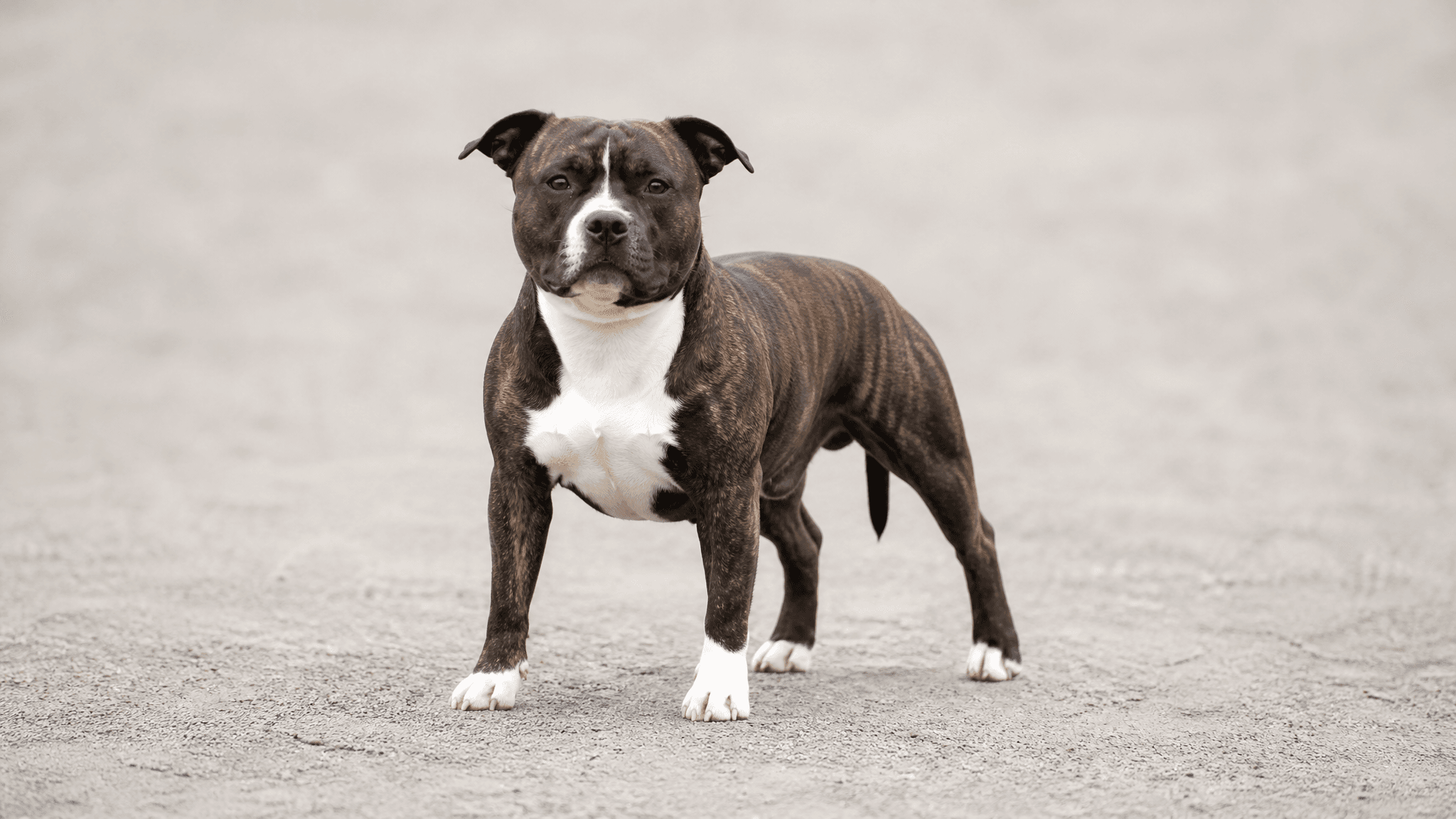
The Staffordshire Bull Terrier — affectionately called "Staffie" or "Stafford" — is one of the most beloved dogs in all of Great Britain. Developed in the 19th century in Staffordshire, from the crossing of bulldogs with local terriers for the old bull and dog fighting, it was gradually transformed (after the prohibition of such practices) into an excellent family dog, maintaining its imposing musculature but gaining a remarkably docile temperament. The FCI standard describes it as "courageous, fearless, and totally reliable."
Physical Characteristics
- Size
- Medium
- Height (male)
- 35.5–40.5 cm
- Height (female)
- 33–38 cm
- Weight (male)
- 12.7–17 kg
- Weight (female)
- 11–15 kg
- Life Expectancy
- 12–14 years
- Coat
- short, smooth, hard hair, lying very close to the body
- Common Colors
- red, fawn, white, black, blue; with or without white; brindle in any combination; black-and-tan or liver are undesirable
Temperament & Personality
The Staffie is a dog with a notoriously affectionate temperament — it was nicknamed "the nanny dog" in reference to its genuine tolerance and gentleness with children. It is exuberant, playful, very loyal, and needs a lot of human contact. It can be dominant with other dogs, especially of the same sex, and early socialization is essential. With the family, it is absolutely devoted.
Activity & Exercise
- Energy Level
- High
- Recommended Daily Exercise
- 60–90 minutes
- Suitable for Apartment
- Not recommended
Grooming & Care
- Grooming Needs
- Very low
- Shedding
- Moderate
- Bathing Frequency
- Every 4–6 weeks
Health
- Common Health Issues
- Chiari malformation
- Congenital myotonia
- Hereditary cataracts
- Hip dysplasia
- L-2-hydroxyglutaric aciduria (L2HGA)
- Recommended Health Tests
- Hereditary cataracts genetic test (mandatory)
- Hip evaluation
- L2HGA test
Compatibility
- With Children
- Excellent
- With Other Dogs
- Can be difficult
- With Cats
- Moderate
- For First-Time Owners
- Not recommended
Is a Staffordshire Bull Terrier right for you?
A Staffordshire Bull Terrier may suit you if:
- You can provide at least 60-90 minutes of vigorous exercise and engaging mental games daily.
- You enjoy an active lifestyle and want a loyal companion for adventures and family time.
- You appreciate a dog with an exceptionally affectionate, playful, and devoted temperament towards its family.
- You are prepared to commit to consistent, positive reinforcement training and early socialization.
- You prefer a low-maintenance grooming routine, as their short coat requires very little care.
- You are willing to manage and understand their strong prey drive and potential dominance with other dogs.
Think twice if:
- You expect a dog that is always immediately biddable or easily trained without consistent effort.
- You frequently leave your dog alone for long periods, as Staffies thrive on companionship and interaction.
- You are unwilling to manage potential difficulties with other dogs, especially of the same sex.
- You are unable to commit to providing their required 60-90 minutes of daily vigorous exercise.
- You live in an apartment and cannot provide ample outdoor space or daily adventurous outings.
- You are not prepared for the strength and exuberance of a medium-sized, powerful and playful dog.
A Staffordshire Bull Terrier offers unparalleled devotion and joy, truly earning its "nanny dog" nickname with children. However, their strong terrier spirit means they need consistent guidance and careful socialization, especially with other dogs. Living with a Staffie is a journey of managing their powerful exuberance with their profound desire for human connection, leading to a deeply rewarding bond for those prepared.
Training a Staffordshire Bull Terrier
Staffordshire Bull Terriers are incredibly intelligent and eager to please their beloved humans, making them highly trainable companions. They thrive on positive reinforcement, especially when it involves praise, engaging play, and tasty treats, which tap into their exuberant and loyal nature. Keep training sessions short, fun, and consistent to maintain their enthusiastic focus. If training becomes harsh, repetitive, or inconsistent, a Staffie can quickly become bored or resistant, potentially leading to stubbornness or a lack of engagement, as their strong will needs gentle, firm guidance.
Begin with:
- Attention and response to name around distractions
- Recall on a long line
- Loose-leash walking
- Leave it and drop it
- Calm greetings without jumping
- Settling on a mat or bed
- Cooperative handling for grooming, ears, feet and teeth
- Waiting at doors and gates
Managing dog-dog interactions
While Staffies are famously devoted to their human families, their history and temperament mean they can be dominant with other dogs, especially those of the same sex. Early, positive socialization is absolutely crucial, exposing your Staffie puppy to a variety of calm, vaccinated dogs in controlled environments. Continue this throughout their life.
On walks, always be aware of your surroundings. If you anticipate a challenging encounter, create distance or distract your Staffie with a favourite treat or toy. Focus on building a strong 'look at me' command and a reliable recall to help manage these situations. For more in-depth guidance on managing reactivity, consider exploring our guide on reactive dogs.
Enthusiastic leash pulling
Staffordshire Bull Terriers possess high energy and an imposing musculature for their medium size, meaning they can pull with surprising strength on the leash. This exuberance needs to be channelled into polite walking habits from day one. Start training loose-leash walking in a quiet area, rewarding every step your Staffie takes with a slack leash.
Consistency is key, and practice in various environments, gradually increasing distractions. Using a front-clip harness can help redirect their pulling energy without causing discomfort. For a comprehensive approach to tackling this common challenge, check out our plan to stop leash pulling.
Boredom and destruction
Staffies are highly intelligent, playful, and require a lot of human contact. With high energy levels, needing 60-90 minutes of exercise daily, they are not suited to apartment living and can become bored or destructive if under-exercised, under-stimulated, or left alone for too long. Ensure their physical and mental needs are met with daily walks, engaging playtime, and puzzle toys.
To prevent separation-related issues, gradually accustom your Staffie to short periods of alone time, always ensuring they have safe, appropriate chew toys. If you notice signs of stress when you leave, such as excessive barking or destructive chewing, it's important to address it proactively. Learn more about identifying these signs in our article, How to Tell If Your Dog Is Stressed When You Leave.
Staffordshire Bull Terrier — Frequently Asked Questions
Are Staffordshire Bull Terriers good family dogs?
Staffordshire Bull Terriers are one of the most loving and people-devoted breeds you can find. They are famously affectionate with their family and have historically been celebrated as one of the best breeds around children — earning the nickname 'nanny dog' in Britain. They are playful, gentle with family members, and bond with extraordinary depth to their people. Their medium size, moderate exercise needs, and loving nature make them genuinely wonderful family pets in the right hands. They require a confident, consistent owner — but the reward is a loyal, joyful companion who lives for human connection.
Are Staffordshire Bull Terriers good with other dogs?
Staffordshire Bull Terriers can be dog-selective or dog-aggressive, particularly with same-sex dogs. Their history as bull-baiting and pit-fighting dogs means not all Staffies naturally tolerate other dogs, especially in challenging situations. Well-socialised Staffies raised alongside other dogs from puppyhood often coexist peacefully in the same household. However, introductions to unfamiliar dogs should always be done carefully and on neutral ground. Same-sex pairings, in particular, require careful management. This is the most common challenge for Staffie owners and should be factored into the decision to get one.
How much exercise does a Staffordshire Bull Terrier need?
Staffordshire Bull Terriers need around 60–90 minutes of vigorous exercise daily. They are muscular, athletic dogs with good endurance who enjoy a wide range of activities — running, fetch, tug, agility, swimming, and hiking. Mental stimulation through training and puzzle activities is equally important. A well-exercised Staffie is wonderfully calm and manageable at home; an under-exercised one becomes frustrated, destructive, and mouthy. Their short coat and brachycephalic tendencies mean they can overheat — avoid exercise in the hottest parts of the day and always have water available.
Are Staffordshire Bull Terriers easy to train?
Staffordshire Bull Terriers are intelligent, responsive, and highly food-motivated, which makes them very trainable when approached correctly. They enjoy pleasing their owner and respond beautifully to positive reinforcement — praise, treats, and games. Their terrier stubbornness can surface occasionally, but consistency overcomes this. Early puppy training and socialisation are critically important given their strength and dog-selectivity. They excel at obedience, agility, treibball, and nose work. Some Staffies become so attached to their training sessions that they actively seek them out — they love the mental engagement and bond it creates with their person.
What health issues affect Staffordshire Bull Terriers?
Staffordshire Bull Terriers have several documented health concerns. L-2-Hydroxyglutaric Aciduria (L2HGA) — a progressive neurological condition — and Hereditary Cataracts (HC) are both DNA-testable conditions specific to the breed; responsible breeders test for both. Hip dysplasia occurs — OFA screening recommended. Skin allergies and atopic dermatitis are common. Their slightly brachycephalic face can cause breathing difficulties in heat — avoid intense exercise in hot weather. Mast cell tumours have a higher incidence in this breed. Regular vet check-ups from a trusted DNA-tested breeder reduce risk significantly.
How long do Staffordshire Bull Terriers live?
Staffordshire Bull Terriers have an average lifespan of 12–14 years — good for a medium-sized dog. Their robust, athletic constitution supports longevity when properly cared for. Key factors include regular exercise (keeping them lean and healthy), a carefully managed diet (they can be prone to weight gain), dental care, skin and allergy management, avoiding heat stress, sourcing from DNA-tested parents (reducing L2HGA and HC risk), and annual vet check-ups. A well-cared-for Staffie who comes from health-tested parents and receives regular vet attention can easily live a full, happy 14 years.
Is the Staffordshire Bull Terrier affected by breed-specific legislation?
In some countries and regions, Staffordshire Bull Terriers may be affected by Breed Specific Legislation (BSL). The UK, where the Staffie is one of the most popular breeds, does not ban them — they are a fully recognised breed with strong advocacy. However, they can sometimes be confused with Pit Bull Terriers or other banned breeds, which has occasionally led to wrongful seizures. In some countries (Germany, Australia, parts of the US), they may face restrictions. Always check the specific laws in your country, region, and housing situation before getting a Staffie, and ensure they can always be clearly identified as Staffordshire Bull Terriers.
What is the difference between a Staffordshire Bull Terrier and an American Staffordshire Terrier?
Both breeds share common ancestry but are now distinct. The Staffordshire Bull Terrier (Staffie) is smaller — weighing 11–17 kg and standing 36–41 cm. They originated in the Staffordshire region of England. The American Staffordshire Terrier (AmStaff) is larger — weighing 25–35 kg and standing 43–48 cm. The AmStaff was developed in the USA from dogs taken by immigrants. Both are recognised by the FCI and AKC as separate breeds. In temperament they are broadly similar — loyal, people-loving, and potentially dog-selective — but the Staffie is typically smaller, stockier, and has a somewhat softer personality than the more powerful AmStaff.
Community
Talk to real Staffordshire Bull Terrier owners
This guide covers the breed on paper. In the app, the Staffordshire Bull Terrier community covers it in real life: photos from other owners, questions answered by people who live with the breed, and a directory of dogs you can browse.
- Photos & pollsSee what Staffordshire Bull Terrier owners are sharing today.
- Questions & answersAsk anything and hear from people who own one.
- Dog directoryBrowse Staffordshire Bull Terriers from around the world.
You join automatically when you add a Staffordshire Bull Terrier to your profile.