Siberian Husky
Summary
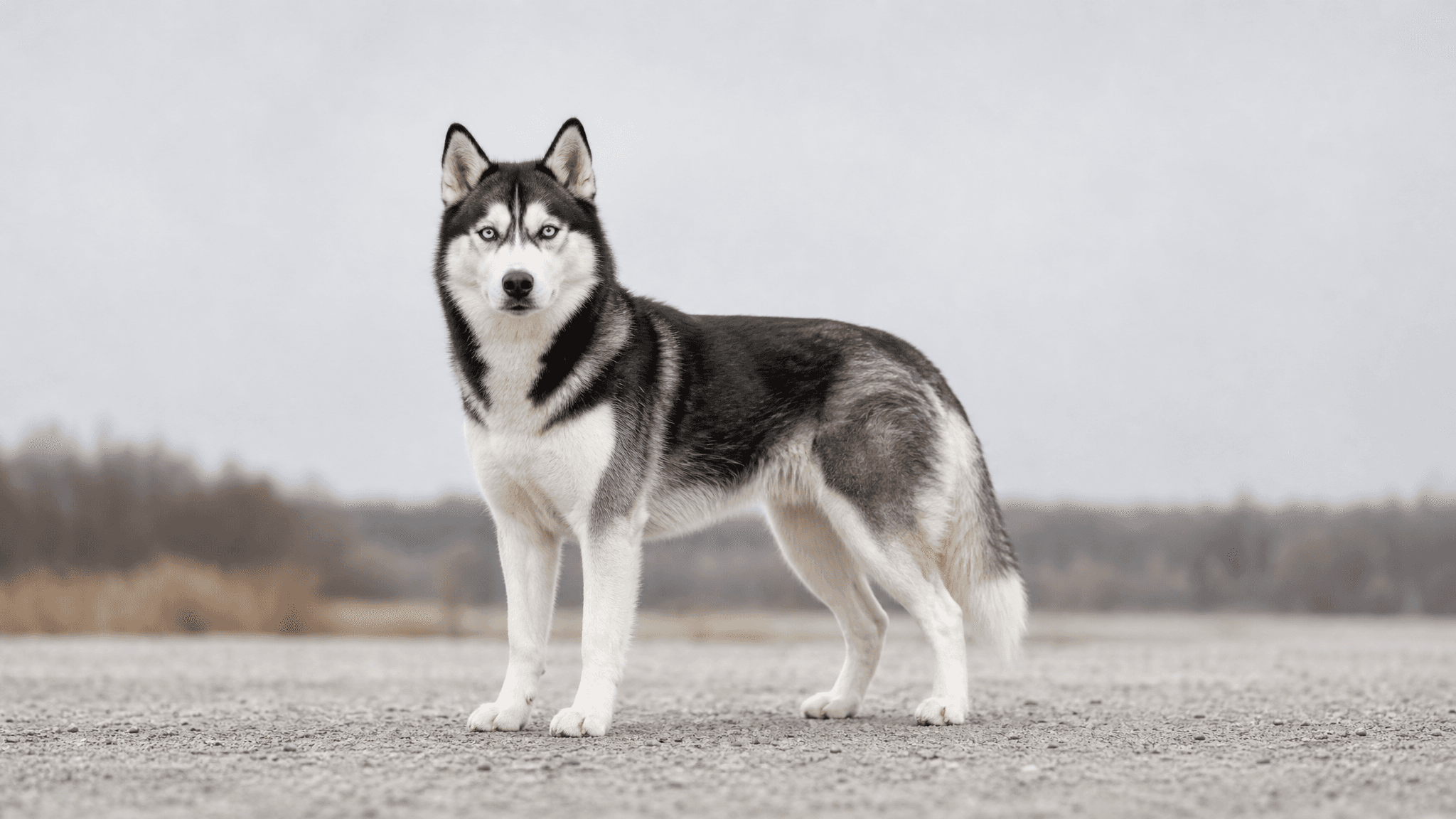
The Siberian Husky is a medium-sized sled dog, developed by the Chukchi people of northeastern Siberia to pull light loads at moderate speeds over long distances. Introduced to Alaska in the early 20th century, it gained worldwide fame after the 1925 sled run that delivered diphtheria antitoxin to Nome. It is distinguished by its extraordinary endurance, friendly temperament, and piercing gaze, often blue or heterochromatic.
Physical Characteristics
- Size
- Medium
- Height (male)
- 54–60 cm
- Height (female)
- 50–56 cm
- Weight (male)
- 20–27 kg
- Weight (female)
- 16–23 kg
- Life Expectancy
- 12–15 years
- Coat
- Double, dense; soft and dense undercoat, smooth outer coat of medium length
- Common Colors
- All colors, from black to pure white, including agouti; characteristic facial markings
Temperament & Personality
The Siberian Husky is a gregarious, friendly, and cheerful-tempered dog that rarely shows aggression or excessive distrust. Bred to work in packs, it enjoys the company of both other dogs and people. Although extremely affectionate with the family, it is not a good guard dog, as it tends to greet strangers with enthusiasm. It possesses a marked independence and a strong escape instinct, requiring secure fencing and a leash in open spaces.
Activity & Exercise
- Energy Level
- Very high
- Recommended Daily Exercise
- 120 minutes
- Suitable for Apartment
- Not recommended
Grooming & Care
- Grooming Needs
- Moderate
- Shedding
- Heavy
Health
- Common Health Issues
- Corneal ulcers
- Hereditary cataracts
- Hip dysplasia
- Hypothyroidism
- Progressive retinal atrophy (PRA)
- Recommended Health Tests
- Eye examination
- Hip evaluation
- Thyroid tests
Compatibility
- With Children
- Excellent
- With Other Dogs
- Excellent
- With Cats
- Can be difficult
- For First-Time Owners
- Not recommended
Is a Siberian Husky right for you?
A Siberian Husky may suit you if:
- You can commit to at least 120 minutes of vigorous daily exercise and engaging mental challenges.
- You enjoy an active, outdoor lifestyle, perhaps involving hiking, running, or dog sports with a canine companion.
- You appreciate a cheerful, friendly, and gregarious dog who loves company and shows affection readily.
- You are prepared to invest in consistent, positive training methods to manage an independent spirit.
- You don't mind regular grooming and are ready for heavy shedding, especially during seasonal coat blows.
- You are willing to manage a dog with a strong escape instinct and a tendency to greet everyone enthusiastically.
Think twice if:
- You expect a dog that is highly biddable and always eager to please, as Huskies are famously independent thinkers.
- You anticipate leaving your dog alone for long periods daily, as they thrive on companionship and can become destructive.
- You have cats and are unwilling to commit to careful, supervised introductions, as Huskies can find felines difficult.
- You are not prepared for a significant commitment to daily exercise or frequent, thorough coat maintenance.
- You live in an apartment or cannot provide a securely fenced yard to prevent escapes from a curious and athletic dog.
- You are a first-time dog owner seeking an easy-to-manage breed, as Huskies require experienced handling and patience.
Living with a Siberian Husky is a unique adventure, blending deep affection with a spirited independence. They offer boundless joy and companionship but demand significant commitment to their energy, grooming, and training needs throughout their 12 to 15-year lifespan. It's a rewarding journey for those prepared to embrace their distinctive character.
Training a Siberian Husky
Siberian Huskies are incredibly intelligent dogs with a strong independent streak, making training a rewarding challenge. They respond best to positive reinforcement and short, engaging sessions that feel like a game rather than a chore. Their pack-oriented nature means they thrive on connection, but their independence also means they'll quickly disengage if bored or if the handler becomes inconsistent or overly harsh. Patience, consistency, and making training fun are key to unlocking their potential and avoiding frustration for both of you.
Begin with:
- Responding to name around distractions
- Recall on a long line
- Loose-leash walking
- Leave it and drop it
- Calm greetings without jumping
- Settling on a mat or bed
- Cooperative handling for grooming, ears, feet and teeth
- Waiting at doors and gates
Recall and prey drive
Huskies have a strong prey drive, a remnant of their sled dog heritage, which can make off-leash recall incredibly difficult. Even the most well-trained Husky might ignore your calls if a squirrel or rabbit catches their eye. Always prioritize safety and keep them on a leash or in a secure, fenced area.
To build a reliable recall, start in a low-distraction environment and gradually increase the challenge. Use high-value treats and make coming back to you the most exciting thing ever. A long line is an invaluable tool for practicing recall safely in open spaces. For more in-depth guidance, check out our guide on teaching recall.
Leash pulling
These medium-sized dogs were bred to pull sleds over long distances, so pulling on the leash is often second nature to them. Their strength, even at 20-27 kg for males, can be surprising. It's crucial to teach loose-leash walking from an early age to prevent walks from becoming a struggle.
Use a front-clip harness or a head halter for better control, and practice frequently in short, positive sessions. Reward them generously when they walk nicely by your side. Consistency is vital, as any lapse can quickly reinforce the pulling behavior. Our guide on stopping leash pulling offers a great force-free plan.
Destructive tendencies
Siberian Huskies have very high energy levels and require a significant amount of exercise – at least 120 minutes per day. If they don't get enough physical and mental stimulation, or if they are left alone for long periods, they can become bored and destructive. This often manifests as chewing furniture, digging, or attempting to escape the yard.
Ensure your Husky receives ample exercise, including varied walks and playtime. Provide plenty of puzzle toys and chew items to keep their minds engaged when you can't actively supervise. Consider using our Training feature to build a consistent routine that incorporates both physical activity and mental enrichment. Remember, a tired Husky is a happy Husky!
Siberian Husky — Frequently Asked Questions
Why do Siberian Huskies try to escape so much?
Siberian Huskies were bred to run — they're built for covering huge distances across frozen tundra with minimal rest, and that drive doesn't switch off in a domestic setting. A bored or under-exercised Husky will look for ways to channel that energy, which often means finding escape routes from gardens. A 6-foot solid (not chain-link) fence is the minimum recommendation; some Huskies will climb, dig under, or find any gap in chain-link. Once out, they can cover miles before stopping, which is why never letting them off-leash in unfenced areas is critically important.
Do Siberian Huskies bark a lot?
Huskies are not typically heavy barkers — but they are extremely vocal in other ways. They're famous for their wolf-like howling, 'talking' (a distinctive vocalisation between a bark and a howl), and general chattiness when they want something. This vocalisation can carry a very long distance and is not particularly neighbour-friendly in a dense urban environment. They howl when lonely, when excited, or simply because something triggered them. Training 'quiet' cues early helps, but some Husky vocalisation is simply the breed communicating.
How much exercise does a Siberian Husky need?
Siberian Huskies need a minimum of 2 hours of vigorous exercise daily — and ideally more. They're endurance athletes who were bred to run 100+ miles a day, and that heritage is deeply ingrained. Running, hiking, cycling (bike-joring), canicross, skijoring, and sled-dog sports all tap into their natural abilities. Mental stimulation through training and enrichment activities supplements physical exercise. Without adequate outlets, Huskies become destructive, vocal, and deeply unhappy — this is not a couch-dog breed.
Can Siberian Huskies live in hot climates?
Huskies can adapt to warmer climates, but their double coat means heat management is essential. Contrary to popular belief, shaving a Husky's coat does NOT help — the double coat actually insulates them from heat as well as cold, and shaving damages the coat structure. In hot climates, air-conditioning, avoiding exercise during the hottest parts of the day, providing plenty of fresh water and shaded rest areas, and watching carefully for signs of overheating are all necessary precautions.
Are Siberian Huskies good family dogs?
Huskies are friendly, social, and gentle with family members including children — they have a pack mentality and genuinely enjoy being part of a family group. They're not guard dogs (they tend to be welcoming rather than suspicious of strangers), but their playfulness and affection make them wonderful family companions. Their high energy needs mean they're best suited to active families who enjoy outdoor activities rather than sedentary households.
Do Siberian Huskies get along with other dogs?
Huskies are pack animals that generally love the company of other dogs — most thrive in households with canine companions. However, their prey drive means they can be incompatible with small pets like cats, rabbits, and birds, particularly if not raised alongside them from puppyhood. Early, positive socialization with cats can work, but it's never guaranteed. Huskies raised from puppyhood with a family cat often coexist peacefully, while those introduced as adults may be unreliable around small animals.
How long do Siberian Huskies live?
Siberian Huskies are a relatively healthy, hardy breed and typically live 12–14 years. They're less prone to hereditary diseases than many other breeds, partly thanks to their working-dog gene pool. Eye conditions (juvenile cataracts, progressive retinal atrophy) are the most commonly inherited issue — reputable breeders screen breeding stock for these. Maintaining an active lifestyle, healthy weight, and staying on top of preventive vet care all contribute to Huskies reaching and staying healthy through their senior years.
Are Siberian Huskies good for first-time dog owners?
Huskies are generally not recommended for first-time owners because of their combination of high independence, intense exercise needs, escape artistry, and vocal nature. They need an owner who understands their working-dog psychology and won't be surprised or overwhelmed by these traits. That said, a first-timer who has thoroughly researched the breed, exercises daily, lives in a securely fenced property, and embraces the Husky's quirks rather than fighting them can absolutely make it work — just go in with eyes wide open.
Community
Talk to real Siberian Husky owners
This guide covers the breed on paper. In the app, the Siberian Husky community covers it in real life: photos from other owners, questions answered by people who live with the breed, and a directory of dogs you can browse.
- Photos & pollsSee what Siberian Husky owners are sharing today.
- Questions & answersAsk anything and hear from people who own one.
- Dog directoryBrowse Siberian Huskys from around the world.
You join automatically when you add a Siberian Husky to your profile.