Scottish Terrier
Summary
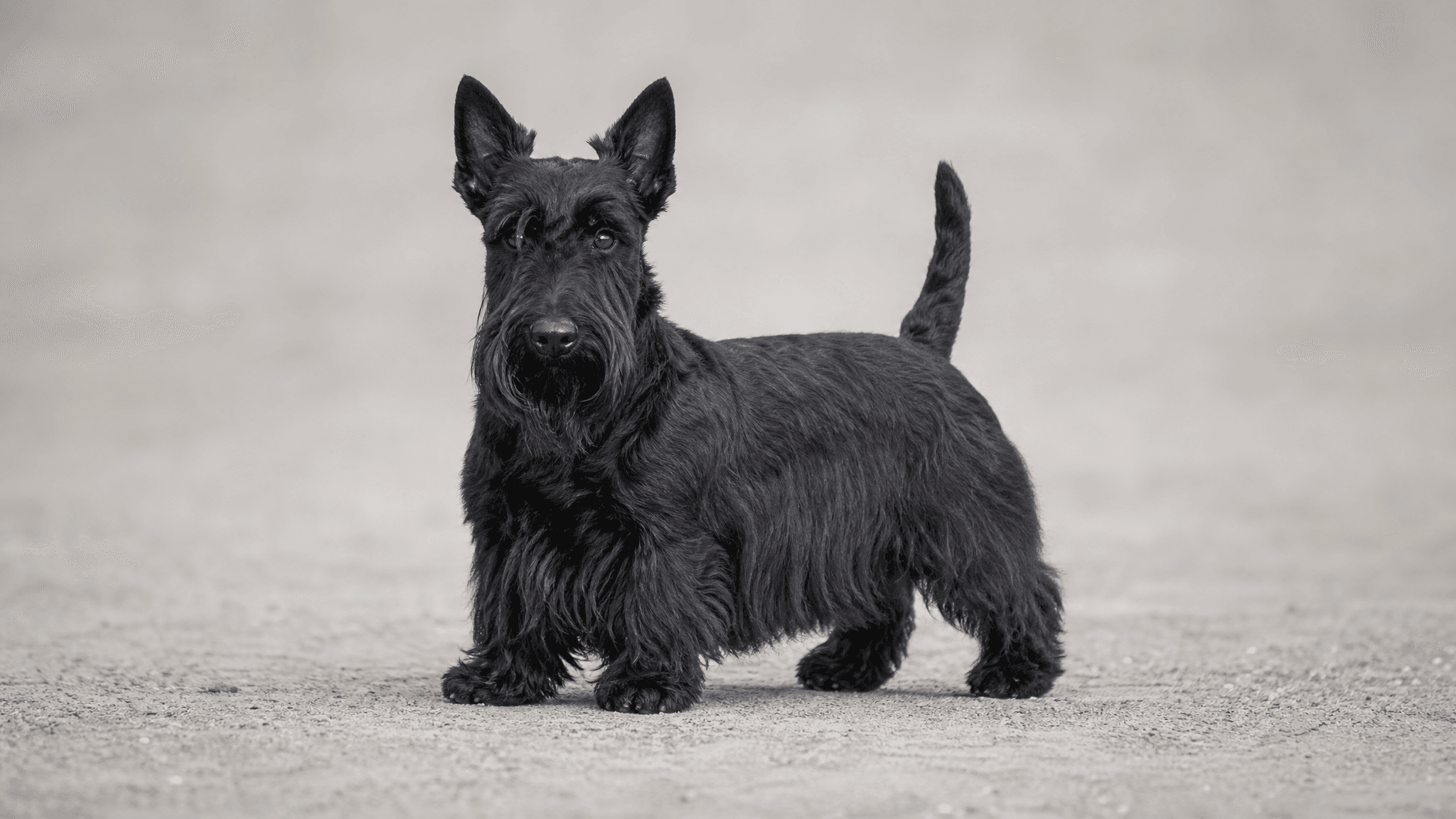
The Scottish Terrier — affectionately called "Scottie" — is one of the most recognizable canine silhouettes in the world: low, compact, with a long head and a characteristic beard. Developed in the Scottish Highlands to hunt badger, fox, and rodents in rocky terrain, the Scottie is today a prestigious companion breed, associated with American presidents, the Monopoly board game, and a haughty, unmistakable character.
Physical Characteristics
- Size
- Small
- Height (male)
- 24–26 cm
- Height (female)
- 24–26 cm
- Weight (male)
- 8.5–10 kg
- Weight (female)
- 8–9.5 kg
- Life Expectancy
- 11–13 years
- Coat
- hard, dense, and rough outer coat; soft and dense undercoat
- Common Colors
- black, wheaten, brindle
Temperament & Personality
The Scottie is often described as "proud, independent, and completely itself." It has a very distinct character: it is courageous, determined, very loyal to its owner (usually a "one-man dog"), but reserved and even suspicious with strangers. It is not an exuberant dog or one that seeks attention from everyone — it has an almost aristocratic dignity. It works well with older children; with younger ones it can be impatient.
Activity & Exercise
- Energy Level
- Moderate
- Recommended Daily Exercise
- 45 minutes
- Suitable for Apartment
- Yes
Grooming & Care
- Grooming Needs
- High
- Shedding
- Minimal
- Bathing Frequency
- Every 4–6 weeks
Health
- Common Health Issues
- Cancer (mast cell tumors, hemangiosarcoma, lymphoma)
- Cerebellar abiotrophy
- Craniomandibular osteopathy
- Hepatic shunt
- Hypothyroidism
- Scottie Cramp (hereditary muscular epilepsy)
- Von Willebrand's disease
- Recommended Health Tests
- Cancer screening in senior animals
- Liver evaluation
- Von Willebrand genetic test
Compatibility
- With Children
- Moderate
- With Other Dogs
- Moderate
- With Cats
- Moderate
- For First-Time Owners
- Not recommended
Is a Scottish Terrier right for you?
A Scottish Terrier may suit you if:
- You are prepared to provide at least 45 minutes of engaging daily exercise and mental challenges for a determined mind.
- You enjoy structured walks, interactive play, and appreciate a dog with a dignified presence in your home.
- You appreciate a dog with a strong, independent personality and are ready for unwavering loyalty to a chosen few.
- You are committed to consistent, patient training methods that respect an intelligent and sometimes stubborn nature.
- You are willing to commit to regular professional grooming or learn to maintain a high-maintenance, distinctive coat.
- You can manage a dog with a strong prey drive and a natural inclination to be watchful and reserved around new people.
Think twice if:
- You expect instant obedience from a dog, as Scotties are known for their independent and self-willed spirit.
- You have a routine that requires your dog to be left alone for long periods, which can be challenging for this devoted breed.
- You have very young children or other small, vulnerable pets that might not thrive with a terrier's strong personality.
- You are unwilling to dedicate consistent time to daily activity and the significant grooming needs of their unique coat.
- You lack a securely fenced outdoor space, as their strong prey drive means they will follow a scent without hesitation.
- You are unprepared for managing a dog that requires firm, consistent, and confident handling, especially during adolescence.
The Scottish Terrier offers profound loyalty and a distinct, dignified companionship to those who understand their independent spirit. While they are not a dog for everyone, the bond forged with a Scottie is incredibly rewarding for owners prepared to embrace their unique personality, consistent training, and dedicated grooming. They are truly "completely themselves," offering a rich and spirited presence in the right home.
Training a Scottish Terrier
Scottish Terriers are bright, independent thinkers, meaning training requires patience, consistency, and a good sense of humor. They respond best to positive reinforcement, especially when high-value treats or favorite toys are involved. Keep training sessions short, fun, and engaging to hold their attention, as their independent spirit can lead to disinterest if bored. If a handler is inconsistent or uses harsh methods, a Scottie will quickly become stubborn and resistant, making progress much harder. Building a strong, trusting bond is key to unlocking their potential and ensuring a happy partnership.
Begin with:
- Attention and response to name around distractions
- Recall on a long line
- Loose-leash walking
- Leave it and drop it
- Calm greetings without jumping
- Settling on a mat or bed
- Cooperative handling for grooming, ears, feet and teeth
- Waiting at doors and gates
Prey drive and recall
Scotties were bred to hunt small game, so their prey drive is strong. This means a squirrel or rabbit can quickly become more interesting than you! To manage this, start recall training in a quiet area and gradually introduce distractions. Always use a long line in unfenced areas until their recall is rock-solid. Make coming back to you the most rewarding thing ever with enthusiastic praise and fantastic treats. Consistency is vital, as is ensuring they get their recommended 45 minutes of daily exercise to help burn off some of that hunting energy. For more detailed steps, check out our guide on teaching recall.
Their determination means they will pursue what they want, so a strong recall is not just a convenience, but a safety measure. Always be vigilant in new environments and consider a secure harness for added safety during walks.
Leash pulling
Despite their small size, Scotties are determined, and if they want to go somewhere, they will pull! Early and consistent loose-leash training is crucial. Use positive reinforcement techniques, rewarding your Scottie for walking politely by your side. Avoid pulling back or yanking, as this can make them pull harder. Practice in low-distraction environments first, gradually increasing the challenge. Remember, patience is key with this tenacious breed.
Their low center of gravity and strong will can make them surprisingly effective at pulling. Consistency from day one is essential to teach them that walking nicely is far more rewarding. This guide can help you establish good leash manners.
Boredom and mischief
A Scottie's intelligent and independent nature means they need both physical and mental stimulation to thrive. While 45 minutes of daily exercise is recommended, simply letting them out in the yard isn't enough. Without engaging activities, a bored Scottie might invent their own fun, which often involves digging, chewing, or excessive barking. Provide puzzle toys, rotate their toys, and incorporate short, fun training sessions throughout the day. This helps keep their clever minds occupied and prevents unwanted behaviors.
Their loyalty to their owner means they thrive on interaction. Regular training sessions, even short ones, reinforce your bond and provide mental enrichment. Neglecting their need for engagement can lead to a 'proud, independent' Scottie finding less desirable ways to entertain themselves around the house.
Scottish Terrier — Frequently Asked Questions
What is the Scottish Terrier?
The Scottish Terrier, affectionately known as the "Scottie," is a small, compact dog with a distinctive silhouette: low to the ground, a long head, and a characteristic beard. Originating from the United Kingdom, specifically the Scottish Highlands, this breed belongs to FCI Group 3, which encompasses Small-Sized Terriers. Scotties are renowned for their unique character, often described as proud, independent, and utterly themselves. They carry an almost aristocratic dignity, making them one of the most recognizable and beloved canine companions worldwide.
What was the Scottish Terrier originally bred for?
The Scottish Terrier boasts a rich history rooted in the rugged terrains of the Scottish Highlands. These courageous little dogs were originally developed for a very specific and challenging purpose: to hunt badger, fox, and various rodents. Their compact size, sturdy build, and tenacious spirit made them perfectly suited for navigating rocky landscapes and going to ground after their quarry. While today they are cherished as prestigious companion breeds, their historical role as determined hunters speaks volumes about their inherent bravery and strong will.
How much exercise does a Scottish Terrier need?
Despite their small size, Scottish Terriers have a moderate energy level and do enjoy their daily outings! We recommend about 45 minutes of exercise each day to keep your Scottie happy and healthy. This could include a brisk walk around the neighborhood, some playful romps in a secure yard, or engaging in fun training sessions. Regular physical activity helps maintain their physical condition and provides mental stimulation, ensuring your proud companion remains well-adjusted and content in their home environment.
Is the Scottish Terrier a good family dog?
The Scottish Terrier can certainly be a wonderful family dog, especially with older children who understand how to interact respectfully with a dog. Scotties are known for being incredibly loyal to their owners, often forming a deep bond with one primary person, making them a true "one-man dog." They tend to be reserved and even a bit suspicious with strangers, preferring the company of their trusted family. While not an exuberant dog that constantly seeks attention, their dignified and courageous nature makes them a devoted and protective family member.
Is the Scottish Terrier easy to train?
Training a Scottish Terrier can be a rewarding experience, though their independent and determined nature means consistency is key! Scotties are intelligent dogs, but their temperament is often described as courageous and proud, meaning they aren't always eager to please. They have a very distinct character and an almost aristocratic dignity, which can translate into a strong will during training. Positive reinforcement, patience, and firm but gentle guidance will help you build a strong bond and teach your Scottie good manners.
What health issues are common in the Scottish Terrier?
Like all breeds, Scottish Terriers can be prone to certain health conditions, and being aware of them helps you provide the best care. Some documented health concerns in Scotties include various forms of cancer (such as mast cell tumors, hemangiosarcoma, and lymphoma), Cerebellar abiotrophy, Craniomandibular osteopathy, Hepatic shunt, Hypothyroidism, and Von Willebrand's disease. They can also experience a unique hereditary muscular epilepsy known as Scottie Cramp. Regular veterinary check-ups are essential for early detection and management of any potential health issues.
What is the Scottish Terrier's coat like and how much grooming does it need?
The Scottish Terrier's coat is a defining feature, contributing to its iconic silhouette! They possess a distinctive double coat: a hard, wiry outer coat that offers protection and a soft, dense undercoat. This unique texture requires regular grooming to keep it healthy and looking its best. Daily brushing helps prevent mats and removes loose hair, especially in their characteristic beard and furnishings. To maintain the coat's proper texture and shape, professional grooming, which often involves hand-stripping or clipping, is recommended every few months.
What is the typical lifespan of a Scottish Terrier?
It's wonderful to know how long you can expect to share your life with your beloved Scottie! The typical lifespan for a Scottish Terrier is generally between 11 and 13 years. Providing a balanced diet, regular exercise, consistent veterinary care, and plenty of love and attention can help ensure your Scottie lives a full, happy, and healthy life by your side. They truly become cherished members of the family for many years.
Community
Talk to real Scottish Terrier owners
This guide covers the breed on paper. In the app, the Scottish Terrier community covers it in real life: photos from other owners, questions answered by people who live with the breed, and a directory of dogs you can browse.
- Photos & pollsSee what Scottish Terrier owners are sharing today.
- Questions & answersAsk anything and hear from people who own one.
- Dog directoryBrowse Scottish Terriers from around the world.
You join automatically when you add a Scottish Terrier to your profile.