Schnauzer
Summary
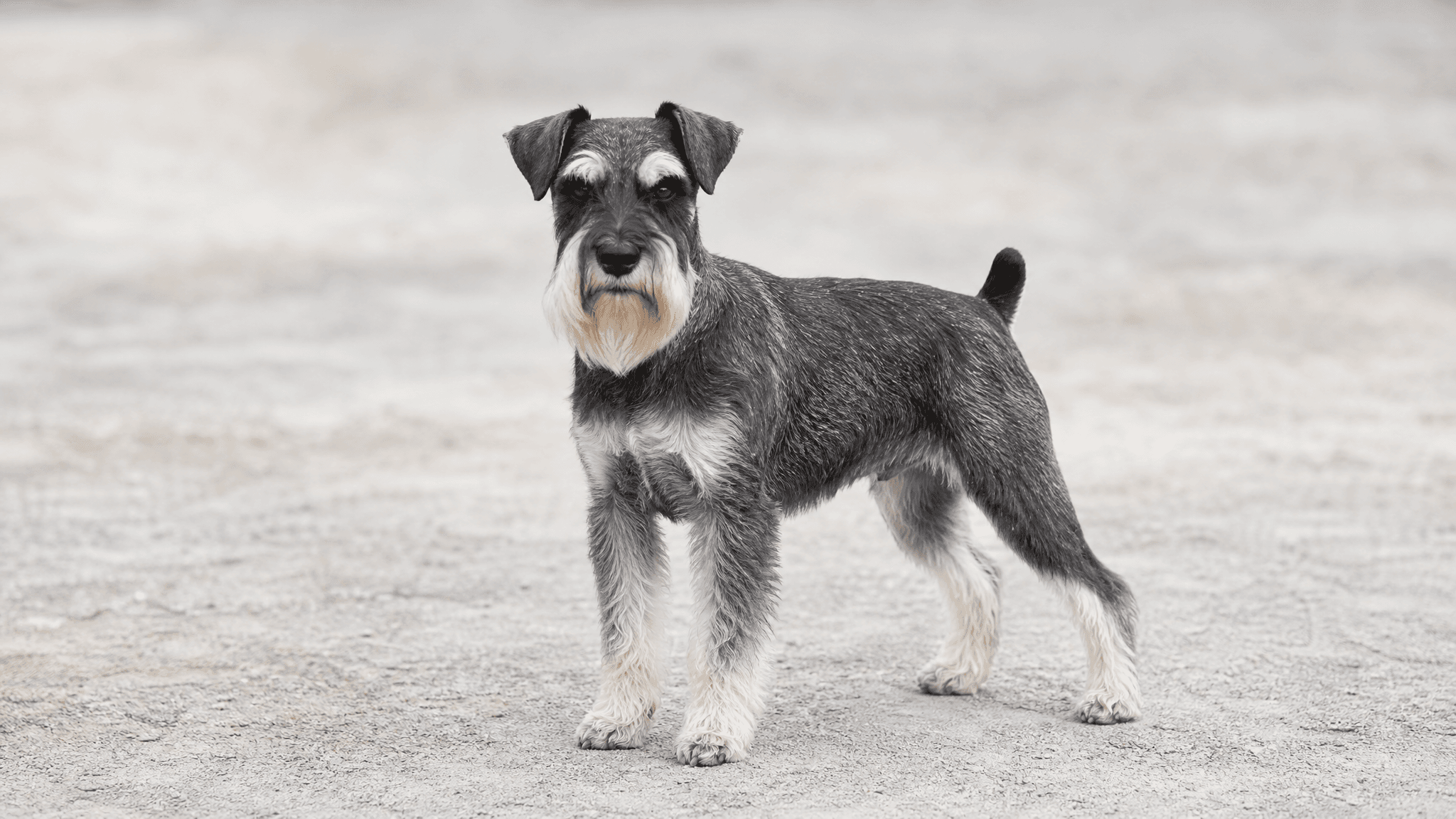
The Standard Schnauzer is the original representative of the Schnauzer family — it was from this breed that both the miniature and giant versions were developed. With roots in southern Germany, it was used to guard wagons and drive them, hunt rats, and protect farms. It is an extremely well-balanced dog, with a stable temperament that makes it equally suited to work and family life.
Physical Characteristics
- Size
- Medium
- Height (male)
- 45–50 cm
- Height (female)
- 45–50 cm
- Weight (male)
- 14–20 kg
- Weight (female)
- 14–20 kg
- Life Expectancy
- 13–16 years
- Coat
- Rough, hard, and dense, with characteristic whiskers and eyebrows
- Common Colors
- Pepper-and-salt (smoky grey with a mix of black and white hairs), solid black
Temperament & Personality
The Standard Schnauzer is intelligent, spirited, and versatile. It has the balance between the energy of a working dog and the serenity needed for family life. It is suspicious of strangers but never aggressive without reason, loves playing with children, and is sturdy enough to handle their antics. It responds very well to positive training and feels fulfilled when it has a task to perform.
Activity & Exercise
- Energy Level
- High
- Recommended Daily Exercise
- 60–90 minutes
- Suitable for Apartment
- Yes with exercise
Grooming & Care
- Grooming Needs
- High
- Shedding
- Minimal
- Bathing Frequency
- Every 4–6 weeks
Health
- Common Health Issues
- Eye problems
- Hip dysplasia
- Hyperlipidemia (elevated blood fat levels)
- Pancreatitis
- Recommended Health Tests
- Eye examination
- Hip radiography
- Metabolic profiles
Compatibility
- With Children
- Excellent
- With Other Dogs
- Good
- With Cats
- Moderate
- For First-Time Owners
- Recommended
Is a Schnauzer right for you?
A Schnauzer may suit you if:
- You are prepared to provide 60 to 90 minutes of engaging exercise daily to satisfy their high energy and sharp mind.
- You enjoy an active lifestyle that includes playful interactions and mental challenges for your intelligent companion.
- You appreciate a spirited, intelligent companion who is watchful of strangers yet deeply devoted and playful with family.
- You are committed to consistent, positive training methods that will channel their intelligence and desire to work.
- You are prepared for regular grooming, including brushing and professional trims, to maintain their distinctive rough coat.
- You are willing to manage their natural protective instincts and initial wariness towards unfamiliar people.
Think twice if:
- You expect a dog that will always unquestioningly obey without a clear purpose or engaging task.
- You have a very busy schedule that leaves a dog alone for long periods without companionship or activity.
- You have small, furry pets like hamsters or rabbits, as their strong prey drive might be a challenge.
- You are unwilling to commit to daily vigorous exercise or the regular, high-maintenance grooming their coat requires.
- You lack secure outdoor space or are unable to provide consistent, stimulating outings beyond apartment living.
- You are uncomfortable managing a robust, energetic dog during its boisterous adolescent phase.
A Schnauzer offers a wonderful blend of spirited intelligence and devoted companionship, thriving on purpose and family connection for 13 to 16 years. While their stable temperament makes them adaptable, they truly shine with consistent engagement and care. Be ready for their lively minds and distinctive grooming, and you'll discover a loyal, joyful partner.
Training a Schnauzer
Your spirited Schnauzer is a joy to train, thanks to their keen intelligence and desire for a task! They thrive on positive reinforcement, short, engaging sessions, and the satisfaction of a job well done. Think of training as a fun game where they earn rewards for smart choices. Consistency and patience are key; harsh corrections or boredom will quickly lead to disengagement, making them stubborn or less willing to participate. Keep sessions upbeat and varied to maintain their focus, and you'll build a strong, trusting bond.
Begin with:
- Attention and response to name around distractions
- Reliable recall on a long line
- Loose-leash walking
- Leave it and drop it
- Calm greetings without jumping
- Settling on a mat or bed
- Cooperative handling for grooming
- Waiting at doors and gates
Prey Drive and Recall
Schnauzers were originally bred to hunt rats and guard farms, so they possess a strong prey drive and a natural suspicion of new things. This can make recall challenging, especially when they spot a squirrel or another small critter. It's not that they don't love you, but instinct can be powerful! Start recall training in a quiet area and gradually introduce distractions, always making coming back to you the most rewarding choice. Using a long line in open spaces will give them freedom to explore safely while you build a rock-solid recall, ensuring their safety around tempting distractions. For a comprehensive guide, check out our tips on teaching a dog to come when called.
When out and about, always be mindful of their environment. If you know you're entering an area with lots of wildlife, keep your Schnauzer on a leash. Continue to practice 'leave it' with high-value treats to help them disengage from tempting sights and smells. Remember, a well-exercised and mentally stimulated Schnauzer is less likely to be solely driven by their instincts, so ensure they get their recommended 60-90 minutes of daily activity.
Leash Pulling
With their medium size and high energy, Schnauzers can be quite strong on the leash, especially when excited or encountering new smells. They are curious and love to explore, which can lead to a game of 'tug-of-war' if not addressed early. Teaching your Schnauzer to walk politely on a loose leash is crucial for enjoyable walks and to prevent strain on both of you. Start by rewarding them for walking by your side with a slack leash, using high-value treats and praise.
If your Schnauzer starts to pull, stop walking immediately. Only resume when the leash is slack again. This teaches them that pulling gets them nowhere. For persistent pullers, consider using a front-clip harness, which gently redirects their momentum back towards you without discomfort. Remember, consistency on every walk is vital to reinforce good habits. For more in-depth guidance, check out our guide on stopping leash pulling.
Boredom and Destructive Behavior
Standard Schnauzers are intelligent and high-energy dogs who thrive on mental and physical stimulation. If they don't receive their recommended 60-90 minutes of daily exercise and engaging activities, they can easily become bored. A bored Schnauzer might invent their own 'tasks,' which often manifest as excessive barking, chewing furniture, or digging in the yard. They need an outlet for their clever minds and energetic bodies to prevent these unwanted behaviors.
To keep your Schnauzer happy and well-behaved, incorporate puzzle toys, training sessions, and interactive games into their daily routine. Regular, varied walks are essential, but also consider activities like agility or scent work to challenge them mentally. If you need to leave them alone, ensure they have safe chew toys and a comfortable, secure space. Our training feature can help you build a consistent routine to keep their minds engaged and prevent boredom-related issues.
Schnauzer — Frequently Asked Questions
What is the Standard Schnauzer's history?
The Standard Schnauzer is the original Schnauzer — the founding breed from which both the Miniature and Giant Schnauzer were later developed. It originated in Germany, with records going back to at least the 15th century, and was developed as an all-purpose working dog — ratting, herding small livestock, pulling carts, and guarding farms and market stalls. The name 'Schnauzer' comes from the German word for 'snout', referring to their distinctive bearded muzzle. They served as dispatch carriers and guard dogs in both World Wars. They are classified by the FCI as a working dog rather than a terrier, despite their terrier-like tenacity.
What is the Standard Schnauzer's temperament like?
The Standard Schnauzer is bold, intelligent, lively, and deeply loyal — a proper working dog in a medium-sized body. They have a commanding, spirited personality that is equally at home in the field and in the family home. They are affectionate with their family while being naturally reserved and somewhat aloof with strangers. They have a strong protective instinct and make excellent watchdogs. Their terrier-like tenacity means they are confident, sometimes stubborn, and always alert. They have a great sense of humour and can be entertainingly mischievous — they are never boring to live with.
Are Standard Schnauzers good family dogs?
Standard Schnauzers make wonderful family dogs for experienced, active owners. They are devoted, playful, and excellent with children they've been raised with — their sturdy, medium size means they won't be knocked over by enthusiastic play. Their protective nature makes them natural family guardians. However, their independence and stubbornness require a firm, consistent owner who establishes clear boundaries from puppyhood. They are too much dog for passive owners who won't engage with training. For an active family who enjoys a dog with real personality and will commit to training and exercise, they are immensely rewarding companions.
How much exercise does a Standard Schnauzer need?
Standard Schnauzers need about 60–90 minutes of vigorous daily exercise, plus mental stimulation. They are an energetic, athletic working breed — brisk walks alone are not enough. They enjoy running, hiking, agility, obedience, fetch, and playing with their family. Mental challenges through training, puzzle games, and nose work are equally important — their sharp mind needs as much engagement as their body. They make excellent jogging or cycling companions. A Standard Schnauzer that is adequately exercised and mentally stimulated is a calm, manageable companion at home; one that is under-stimulated will find inventive ways to entertain themselves.
Are Standard Schnauzers easy to train?
Standard Schnauzers are highly intelligent but independently minded. They learn commands quickly but frequently evaluate whether complying is in their interest — a distinctly non-retriever trait. They respond to confident, consistent, positive training from a handler who earns their respect. Harsh or repetitive training causes them to disengage or become stubborn. They enjoy challenges and excel at obedience, agility, Schutzhund, and working dog activities. Early socialisation and puppy classes are essential. A trained Standard Schnauzer is a genuinely impressive, reliable companion; an untrained one is a handful.
What health issues affect Standard Schnauzers?
Standard Schnauzers are generally a robust, healthy breed with fewer hereditary issues than many breeds, partly thanks to their broader working dog gene pool. Some documented concerns include hip dysplasia — OFA/BVA screening recommended. Eye conditions including hereditary cataracts and progressive retinal atrophy (PRA) have been found — DNA testing available for some types. Follicular dermatitis and skin conditions are seen occasionally. Bladder stones occur in some individuals. Their general robustness makes them a relatively low-maintenance breed health-wise, but regular vet check-ups and sourcing from health-screened parents remain important.
How long do Standard Schnauzers live?
Standard Schnauzers have an average lifespan of 13–16 years — excellent for their size. Their robust working dog constitution and generally good health support impressive longevity. Key factors include regular vigorous exercise (keeping them lean and engaged), dental care, maintaining a healthy weight, annual vet check-ups including hip and eye monitoring, sourcing from health-screened lines, and managing their characteristic stubbornness through good training (reducing stress-related health impacts). A well-cared-for Standard Schnauzer can be an active, bright, and devoted companion well into their mid-teens.
How do you groom a Standard Schnauzer?
The Standard Schnauzer's wiry, dense double coat requires hand-stripping twice a year (for show dogs) or regular clipping (for companion dogs) to maintain. Hand-stripping preserves the coat's natural texture and colour; clipping eventually softens the coat. Between grooming sessions, the coat needs brushing 2–3 times per week to prevent matting — especially in the leg furnishings and beard. The distinctive beard and eyebrows require regular cleaning (they can trap food and moisture). Professional grooming every 8–10 weeks is recommended. Standard Schnauzers are low-shedding, which is a genuine advantage for many owners.
Community
Talk to real Schnauzer owners
This guide covers the breed on paper. In the app, the Schnauzer community covers it in real life: photos from other owners, questions answered by people who live with the breed, and a directory of dogs you can browse.
- Photos & pollsSee what Schnauzer owners are sharing today.
- Questions & answersAsk anything and hear from people who own one.
- Dog directoryBrowse Schnauzers from around the world.
You join automatically when you add a Schnauzer to your profile.