Rottweiler
Summary
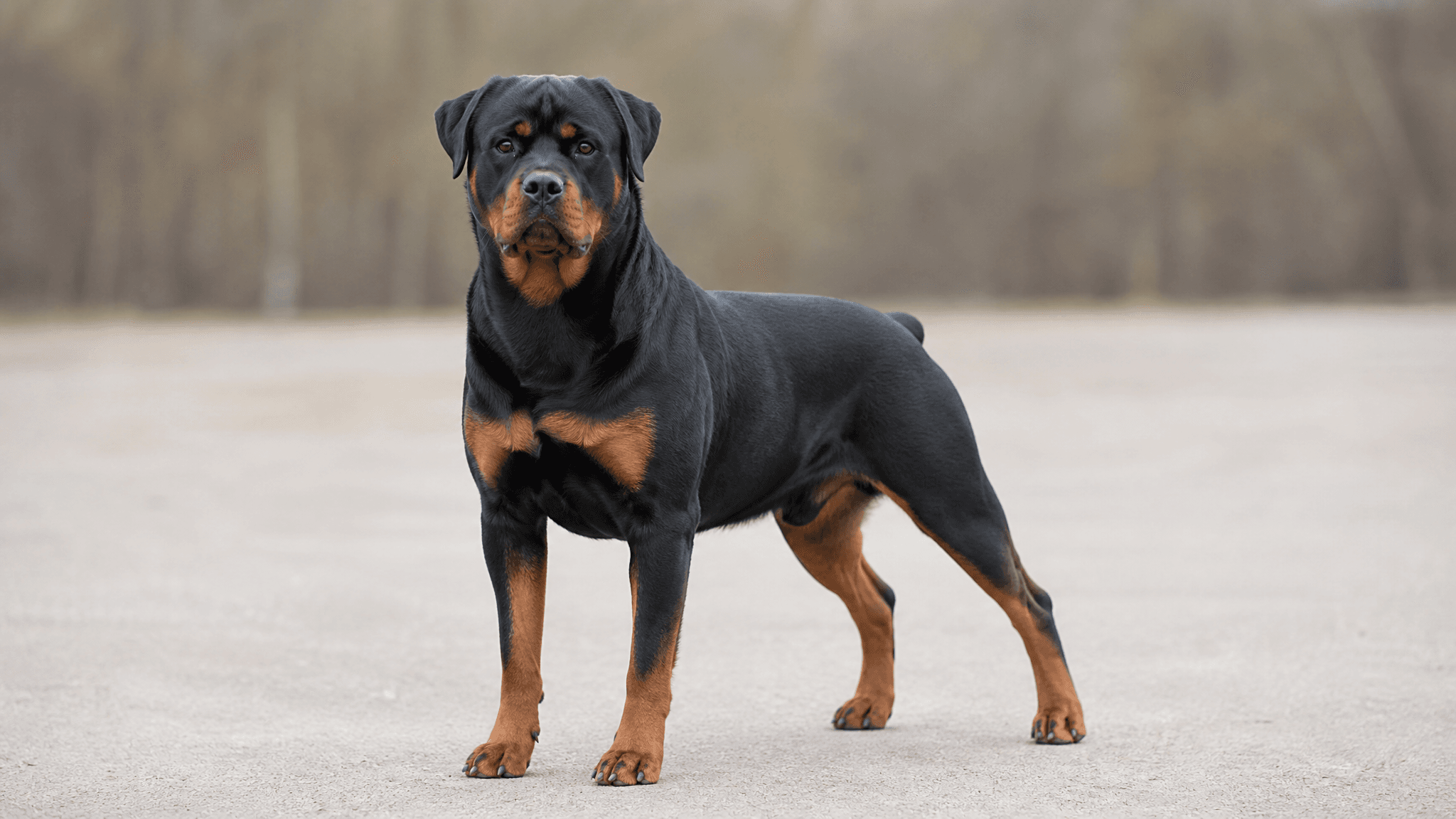
The Rottweiler is one of the most versatile and recognised working dogs in the world, descended from the cattle dogs of the Roman legionaries who accompanied the legions in their expansion across Europe. Over the centuries, it developed in the German town of Rottweil, where it was used to drive cattle to market and pull butchers' carts — hence its old name "Metzgerhund" (butcher's dog). Today it is widely used as a police dog, protection dog, and family companion.
Physical Characteristics
- Size
- Large
- Height (male)
- 61–69 cm
- Height (female)
- 56–63 cm
- Weight (male)
- 50–60 kg
- Weight (female)
- 35–48 kg
- Life Expectancy
- 9–10 years
- Coat
- Short, dense, smooth, and hard; with undercoat
- Common Colors
- Black with well-defined rust markings on the muzzle, cheeks, chest, legs, and above the eyes
Temperament & Personality
A well-socialised Rottweiler is a calm, confident, and devoted dog. It is very attached to its family, tolerant of children, and capable of surprising tenderness with its loved ones. With strangers, it is naturally reserved but should never be aggressive without cause. It needs consistent training and an owner who establishes clear rules from the start — its muscular mass and determination can make it difficult to control if not properly educated.
Activity & Exercise
- Energy Level
- High
- Recommended Daily Exercise
- 90–120 minutes
- Suitable for Apartment
- Not recommended
Grooming & Care
- Grooming Needs
- Low
- Shedding
- Moderate to heavy
- Bathing Frequency
- Every 6–8 weeks
Health
- Common Health Issues
- Certain types of cancer (osteosarcoma, lymphoma)
- Gastric dilatation/torsion
- Heart disease
- Hip and elbow dysplasia
- Osteochondrosis
- Recommended Health Tests
- Cardiac examination
- Eye examination
- Hip and elbow X-rays
Compatibility
- With Children
- Good
- With Other Dogs
- Moderate
- With Cats
- Moderate
- For First-Time Owners
- Not recommended
Is a Rottweiler right for you?
A Rottweiler may suit you if:
- You are prepared to provide 90 to 120 minutes of vigorous exercise and engaging mental challenges daily.
- You enjoy an active lifestyle that includes training for dog sports or structured outdoor adventures.
- You appreciate a confident, devoted companion who forms a deep, tender bond with their family.
- You are committed to consistent, firm, and positive training to establish clear rules from puppyhood.
- You are comfortable with moderate to heavy shedding and regular brushing to maintain their short, dense coat.
- You are ready to manage their natural protectiveness and powerful presence with calm, confident leadership.
Think twice if:
- You expect a dog that is always instinctively biddable without consistent, firm guidance.
- You have a routine that requires your dog to be left alone for long periods each day.
- You are unwilling to provide careful, ongoing supervision and training for interactions with other pets.
- You are unable or unwilling to commit to at least 90 minutes of daily vigorous exercise.
- You live in an apartment or do not have a securely fenced yard for a large, active dog.
- You are not prepared to handle a powerful, determined adolescent dog who needs clear boundaries.
The Rottweiler is a magnificent breed, offering unparalleled devotion and a strong protective instinct. While they can be incredibly gentle and loving family members, their strength, intelligence, and protective nature demand a committed owner who understands their needs for consistent training and ample activity. Living with a Rottweiler is a rewarding journey, but it requires dedication to truly unlock their potential as a balanced and cherished companion.
Training a Rottweiler
Rottweilers are highly intelligent and deeply devoted to their families, making them eager learners when approached with consistency and positive reinforcement. They thrive on having a purpose, so engaging them with food, praise, and interactive play during training sessions is incredibly motivating. Keep sessions short, frequent, and fun to maintain their focus and enthusiasm. When training lacks clarity or consistency, or if the handler fails to establish clear leadership, a Rottweiler's inherent determination and considerable strength can lead them to make their own choices, which can be challenging to manage given their large size and powerful presence.
Begin with:
- Attention and response to name around distractions
- Recall on a long line
- Loose-leash walking
- Leave it and drop it
- Calm greetings without jumping
- Settling on a mat or bed
- Cooperative handling for grooming, ears, feet and teeth
- Waiting at doors and gates
Herding Instinct and Focus
Rottweilers were originally bred to drive cattle, which means they possess a strong natural instinct to move things and can become intensely focused on a task. This can manifest as a powerful prey drive or a tendency to 'herd' people or other animals, making off-leash reliability a significant challenge without proper training.
To manage this, teach a rock-solid 'leave it' and a reliable 'come' command from a very young age, especially in environments with distractions. Use high-value rewards and strive to be the most exciting thing in your dog's world. Practice your recall in various locations, gradually increasing the level of distraction to build their focus on you. You can find more tips on how to teach a reliable recall.
Leash Pulling and Strength
Given a Rottweiler's substantial size and muscular strength – males typically weigh 50-60 kg and females 35-48 kg – leash pulling is not just an inconvenience; it can be genuinely dangerous. Early and consistent loose-leash training is crucial, starting when they are puppies, using positive reinforcement methods.
If your adult Rottweiler pulls, consider using a front-clip harness or a head halter, as these can provide better control without causing discomfort. However, never rely solely on equipment; it's vital to pair these tools with consistent training that teaches your Rottweiler that walking politely by your side is the most rewarding choice. For practical steps, check out our guide on how to stop puppy pulling.
Boredom and Destructive Behavior
Rottweilers are high-energy dogs that require a significant amount of activity, typically 90-120 minutes of exercise daily. When they are under-exercised or lack sufficient mental stimulation, they can quickly become bored, anxious, and resort to destructive behaviors. This might include chewing furniture, excessive barking, or digging up your garden.
Ensure your Rottweiler receives adequate physical activity and mental enrichment through regular training sessions, puzzle toys, and interactive play. A Rottweiler left alone for extended periods without proper stimulation may also develop separation anxiety. Provide a safe, comfortable space for them and gradually increase their alone time. Monitoring their comfort when you're away can be aided by a behaviour AI feature.
Rottweiler — Frequently Asked Questions
What is the Rottweiler?
The Rottweiler is a truly remarkable and versatile working dog, descended from the robust cattle dogs that accompanied Roman legionaries across Europe. This large, powerful breed was further developed in the German town of Rottweil, where it earned its old name "Metzgerhund" (butcher's dog) for its role in driving cattle and pulling carts. Today, the Rottweiler is classified in FCI Group 2 (Mastiff type) and is celebrated for its confident, calm, and devoted nature when well-socialised, making it a highly recognised and respected companion worldwide.
What was the Rottweiler originally bred for?
The Rottweiler's origins are deeply rooted in its working heritage, tracing back to the Roman Empire where its ancestors served as cattle dogs, herding and guarding livestock for the legions. As the Roman legions expanded, these dogs settled in the German town of Rottweil. There, they became indispensable to butchers, driving cattle to market and pulling heavy carts laden with meat. This historical role as a drover and cart dog shaped their strength, intelligence, and protective instincts, qualities that are still evident in their modern roles as police dogs, protection dogs, and cherished family companions.
How much exercise does a Rottweiler need?
Rottweilers are dogs with a high energy level and thrive on regular, engaging activity! To keep your Rottie happy, healthy, and well-behaved, they need a significant amount of exercise daily. We recommend providing them with 90 to 120 minutes of physical activity each day. This isn't just about physical exertion; it's also crucial for their mental stimulation. Long walks, vigorous play sessions, training exercises, or even dog sports are excellent ways to meet their exercise needs and ensure they remain a balanced and joyful part of your family.
Is the Rottweiler a good family dog?
Absolutely! A well-socialised Rottweiler can be an incredibly devoted and loving family dog. They are known for being very attached to their human family members and are often surprisingly tender with their loved ones. With children, they can be quite tolerant, making them wonderful companions when raised properly alongside them. While they are naturally reserved with strangers, they should never be aggressive without cause. Early socialisation and consistent training are key to nurturing their calm and confident temperament, ensuring they integrate beautifully into your home and become a cherished member of the family.
Is the Rottweiler easy to train?
Rottweilers are highly intelligent and capable dogs, which makes them very trainable, but they do require a committed and consistent approach from their owner. Their muscular build and strong determination mean that establishing clear rules and boundaries from the very beginning is essential. They thrive on structure and respond best to positive reinforcement and firm, fair leadership. With consistent training and an owner who understands their needs, a Rottweiler can excel in obedience, various dog sports, and become an incredibly well-mannered and responsive companion. Their eagerness to please, once properly guided, is truly rewarding!
What health issues are common in the Rottweiler?
While specific health concerns are not detailed in our curated information, like all large and active breeds, Rottweilers can be predisposed to certain genetic conditions. A responsible breeder will always screen their breeding stock for common health issues to ensure the healthiest possible puppies. Maintaining a healthy weight through proper diet and providing the recommended daily exercise are crucial steps in preventing many potential health problems. Regular veterinary check-ups are also vital for early detection and management of any health concerns, helping your Rottweiler live a long, happy, and robust life.
What is the Rottweiler's coat like and how much grooming does it need?
While specific details about the Rottweiler's coat type are not provided, most active dogs benefit from a consistent grooming routine to keep their skin and coat in top condition. Generally, regular brushing helps to manage shedding and keeps their coat healthy and shiny. Occasional baths are also beneficial, especially for an active dog. Beyond coat care, routine nail trims are essential to prevent discomfort, and ear cleaning helps maintain ear health. Establishing these grooming habits early will ensure your Rottweiler is comfortable with the process and always looks and feels their best.
What is the typical lifespan of a Rottweiler?
It's wonderful to consider the long-term companionship a Rottweiler offers! Typically, a healthy Rottweiler can be expected to live for about 9 to 10 years. Providing them with excellent nutrition, consistent veterinary care, plenty of exercise within their recommended 90-120 minutes daily, and a loving home environment are all key factors in helping your Rottie achieve their full lifespan. Cherish every moment with these devoted companions, as they bring so much joy and loyalty to their families throughout their lives.
Community
Talk to real Rottweiler owners
This guide covers the breed on paper. In the app, the Rottweiler community covers it in real life: photos from other owners, questions answered by people who live with the breed, and a directory of dogs you can browse.
- Photos & pollsSee what Rottweiler owners are sharing today.
- Questions & answersAsk anything and hear from people who own one.
- Dog directoryBrowse Rottweilers from around the world.
You join automatically when you add a Rottweiler to your profile.