Rhodesian Ridgeback
Summary
The Rhodesian Ridgeback is the only African hunting dog recognized by the FCI, developed in the 19th century by Boer and Voortrekker settlers of South Africa, crossing their European dogs (including Great Dane, Mastiff, and Bloodhound) with the native Khoikhoi dogs of South Africa — which possessed the characteristic ridge of reversed hair on the back. It was originally bred to hunt lions and guard the farms of the African interior, being today both a hunting dog and an excellent companion and guard dog.
Physical Characteristics
- Size
- Large
- Height (male)
- 63–69 cm
- Height (female)
- 61–66 cm
- Weight (male)
- 36–41 kg
- Weight (female)
- 29–34 kg
- Life Expectancy
- 10–12 years
- Coat
- Short, dense, and glossy
- Common Colors
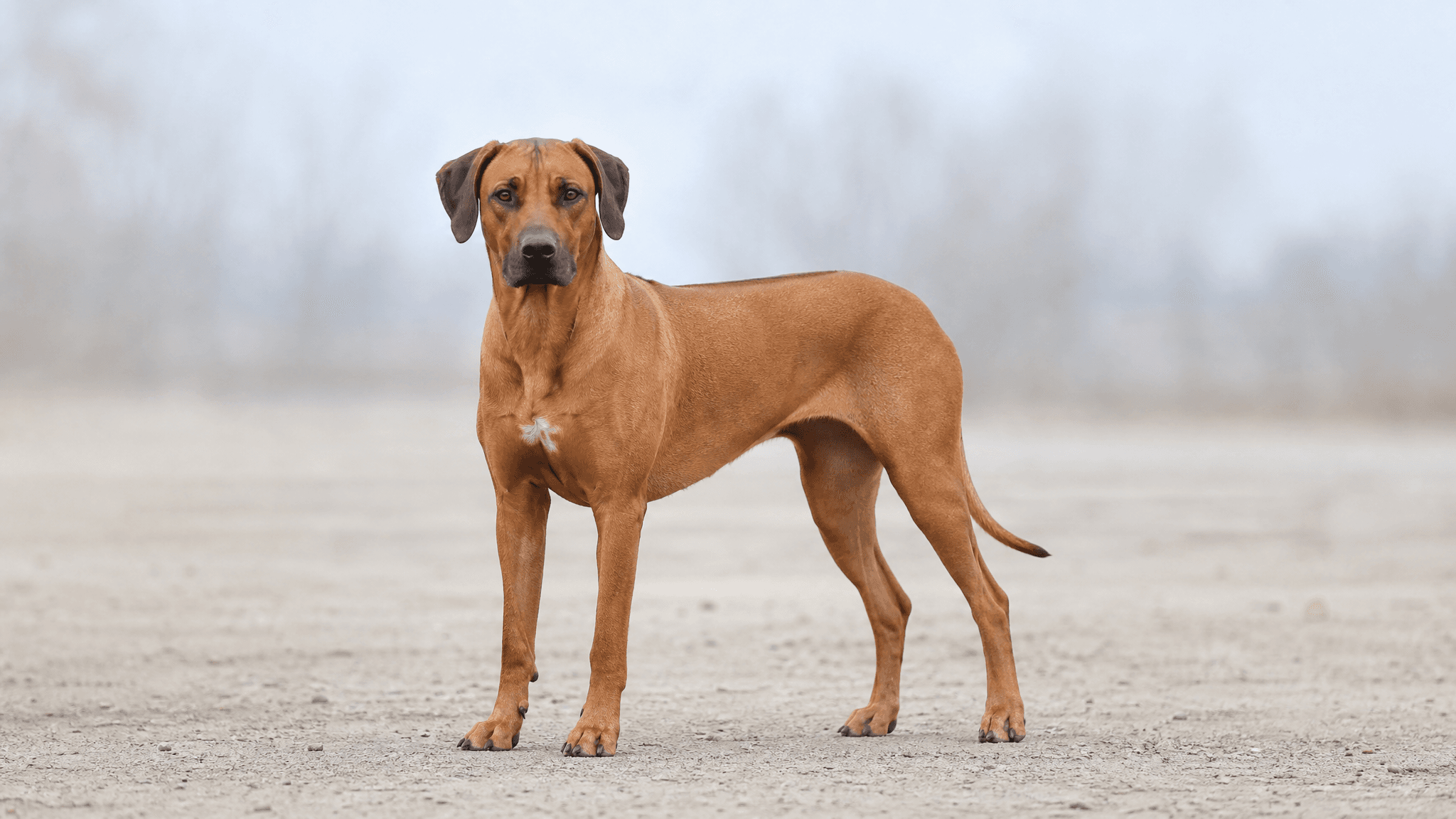
- Wheaten from pale gold to reddish fawn; a small white patch on the chest and toes is permissible; the ridgeback (dorsal ridge) is mandatory
Temperament & Personality
The Rhodesian Ridgeback is a majestic, intelligent dog of great dignity. It is extremely loyal to its family — especially to children — but can be reserved, even indifferent, with strangers. It is a dog of enormous courage and determination, with strong guarding instincts. It needs early and consistent socialization and training to channel its energy and self-confidence positively.
Activity & Exercise
- Energy Level
- High
- Recommended Daily Exercise
- 90–120 minutes
- Suitable for Apartment
- Not recommended
Grooming & Care
- Grooming Needs
- Low
- Shedding
- Moderate
- Bathing Frequency
- Every 4 weeks
Health
- Common Health Issues
- Cancer (mast cell tumors, hemangiosarcoma, lymphoma)
- Degenerative myelopathy
- Dermoid sinus (dermal cyst — a breed-specific genetic condition associated with the ridge)
- Hip and elbow dysplasia
- Hypothyroidism
- Recommended Health Tests
- Dermoid sinus examination (in puppies)
- OFA test
- Orthopedic evaluation
- Thyroid examination
Compatibility
- With Children
- Good
- With Other Dogs
- Moderate
- With Cats
- Can be difficult
- For First-Time Owners
- Not recommended
Is a Rhodesian Ridgeback right for you?
A Rhodesian Ridgeback may suit you if:
- You are eager to provide 90 to 120 minutes of vigorous daily exercise and engaging mental challenges.
- You enjoy an active lifestyle that includes outdoor adventures and purposeful activities with your dog.
- You appreciate a dog with a dignified, intelligent, and loyal temperament that is watchful of its family.
- You are prepared for consistent, patient training and early socialization to guide a confident, independent spirit.
- You are comfortable with minimal grooming, requiring only regular brushing of their short, dense coat.
- You understand and are willing to manage strong guarding instincts and a tendency to be reserved with new people.
Think twice if:
- You expect instant obedience and a highly biddable nature from your canine companion.
- You often leave your dog alone for long periods, as they thrive on companionship and activity.
- You have cats or small, fragile pets, as their strong prey drive can make cohabitation challenging.
- You are unable to commit to at least 90 minutes of dedicated, vigorous exercise every single day.
- You live in an apartment or do not have a securely fenced outdoor space for a large, active dog.
- You are not prepared to manage a physically strong and often headstrong dog through its boisterous adolescent phase.
Living with a Rhodesian Ridgeback is a journey filled with loyalty and adventure, but it's not without its demands. These magnificent dogs offer deep companionship to those who understand their independent spirit and are ready to channel their energy and intelligence. They thrive when given a purpose and a confident leader, rewarding their dedicated families with unwavering devotion for their 10 to 12 years.
Training a Rhodesian Ridgeback
Training a Rhodesian Ridgeback is a rewarding journey that requires consistency, patience, and a deep understanding of this majestic breed. Ridgebacks are intelligent and eager to please their beloved family, responding best to positive reinforcement methods like praise, treats, and engaging play. Keep training sessions short, fun, and frequent to maintain their focus and enthusiasm. Inconsistent boundaries or harsh corrections can quickly lead to a standoff, as their strong-willed nature means they will often shut down or become resistant. Early, positive experiences are key to channeling their natural courage and determination into desirable behaviours.
Begin with:
- Attention and response to name around distractions
- Recall on a long line
- Loose-leash walking
- Leave it and drop it
- Calm greetings without jumping
- Settling on a mat or bed
- Cooperative handling for grooming, ears, feet and teeth
- Waiting at doors and gates
Prey Drive and Recall
The Rhodesian Ridgeback's heritage as a lion hunter means they possess a powerful prey drive, which can make recall training particularly challenging, especially when a tempting scent or movement catches their attention. It's crucial to start recall training in a secure, distraction-free area, building a rock-solid foundation before gradually introducing more stimulating environments. Always use a long line in open spaces until their recall is absolutely reliable, as their instinct to chase can override even the best training.
Consistency and high-value rewards are your best tools. Make coming back to you the most rewarding thing in their world, using their favourite treats or toys. Practice regularly and consider enrolling in advanced obedience classes to reinforce this vital command. For more detailed steps, check out our guide on recall.
Leash Pulling Power
Given their large size and significant strength – males can weigh up to 41 kg – a Rhodesian Ridgeback that pulls on the leash can quickly become unmanageable. It's essential to establish loose-leash walking from the very beginning, using positive reinforcement to reward walking calmly by your side. Invest in a comfortable, well-fitting front-clip harness to help manage their strength and redirect their focus back to you without causing discomfort or pain.
Consistency is key; every walk is a training opportunity. If they pull, stop walking until the leash slackens, then continue. Avoid yanking or harsh corrections, as Ridgebacks are sensitive and can become resistant. For a structured approach, you might find this force-free plan helpful in teaching polite leash manners.
Boredom Behaviours
Rhodesian Ridgebacks have a high energy level and require substantial physical and mental stimulation. If under-exercised or left alone for extended periods, they can become bored, leading to destructive behaviours like chewing furniture, excessive barking, or digging. Ensure your Ridgeback receives their recommended 90-120 minutes of daily exercise, split into varied activities like brisk walks, runs, or engaging play sessions.
Beyond physical activity, these intelligent dogs thrive on mental challenges. Incorporate puzzle toys, scent games, and regular training sessions into their routine to keep their minds engaged. If your Ridgeback struggles with being left alone, look for signs of stress and consider working on separation anxiety protocols to help them feel more comfortable and secure when you're away.
Rhodesian Ridgeback — Frequently Asked Questions
What is the ridge on a Rhodesian Ridgeback?
The distinctive ridge running along the Rhodesian Ridgeback's back is a line of hair that grows in the opposite direction to the rest of the coat — forming a symmetrical, sword-shaped pattern along the spine. It's a defining breed characteristic, present from birth, and varies slightly between individuals in width and clarity. The ridge is caused by a genetic mutation and is the breed's most recognisable feature. A small number of Ridgebacks are born without a ridge (called 'ridgeless') but are otherwise genetically identical to ridged dogs.
Are Rhodesian Ridgebacks good family dogs?
Rhodesian Ridgebacks are devoted, affectionate, and wonderfully loyal family dogs — when raised with the family from puppyhood, they form deep, protective bonds. They're generally patient with children they know, though their large size and exuberance can unintentionally knock over small children. Their independent, athletic nature requires experienced ownership and a genuinely active lifestyle. For active families with older children who can meet their exercise needs and provide consistent training, a Ridgeback is a magnificent, devoted companion.
How much exercise does a Rhodesian Ridgeback need?
Rhodesian Ridgebacks need substantial daily exercise — at least 1.5–2 hours, ideally including off-leash running in a secure area. Bred to hunt lions across the African veldt, they have extraordinary endurance and stamina. Running, hiking, cycling, and swimming are ideal outlets. Without sufficient exercise they become restless, destructive, and difficult. Mental stimulation through training, scent work, and problem-solving is equally important. Like all large breeds, puppies should not be over-exercised until skeletal maturity at around 18 months to protect developing joints.
Are Rhodesian Ridgebacks easy to train?
Rhodesian Ridgebacks are intelligent but strongly independent — bred to think for themselves when tracking and confronting game without constant direction. They respond well to positive reinforcement training but have little patience for repetitive drills. They need to understand the purpose of what they're being asked to do. Consistent early training and socialisation are crucial; a badly managed Ridgeback is a very difficult dog to live with given their size and strength. Experienced owners who respect their intelligence and match it with clear, consistent leadership get excellent results.
What health problems do Rhodesian Ridgebacks have?
Rhodesian Ridgebacks have several breed-specific health concerns. Dermoid sinus — a congenital skin condition closely linked to the ridge gene — can occur and requires surgical removal; responsible breeders screen for it in newborn puppies. Hip and elbow dysplasia occur. Hypothyroidism affects some lines. Bloat (GDV) is a risk given their deep chest — prophylactic gastropexy is often discussed. Eye conditions including entropion occur. Degenerative Myelopathy (progressive spinal condition) has been documented. Choosing from health-tested breeding lines and reputable breeders reduces these risks significantly.
How long do Rhodesian Ridgebacks live?
Rhodesian Ridgebacks typically live 10–12 years. Supporting their longevity involves prophylactic gastropexy to prevent GDV, hip and elbow screening, dermoid sinus checking in puppies, maintaining a healthy weight, keeping them appropriately active throughout their lives, and annual veterinary check-ups. Their athletic working-dog constitution means they tend to age gracefully when well cared for. Many Ridgebacks remain remarkably fit and active into their senior years, though they appreciate gentler exercise as they age.
Do Rhodesian Ridgebacks shed?
Rhodesian Ridgebacks shed moderately year-round. Their short, dense, sleek coat is relatively low maintenance — a weekly brush with a rubber grooming mitt or bristle brush removes loose hair effectively. They don't have dramatic seasonal coat blows, but short, copper-coloured hairs will appear on furniture and clothing. Their minimal grooming requirements are a practical advantage of the breed — time you'd spend on coat care is better spent meeting their exercise needs. Despite their short coat, they're not hypoallergenic.
Are Rhodesian Ridgebacks good with other dogs?
Well-socialised Rhodesian Ridgebacks can get along well with other dogs, though their dominant nature and confidence means they won't back down from a challenge. They were bred to work alongside other dogs, giving them a cooperative foundation. Same-sex aggression can occur, particularly between intact males. Early and broad socialisation is important to shape positive responses to unfamiliar dogs. In multi-dog households they tend to establish a clear hierarchy — which works well as long as introductions are carefully managed and there's no resource competition.
Community
Talk to real Rhodesian Ridgeback owners
This guide covers the breed on paper. In the app, the Rhodesian Ridgeback community covers it in real life: photos from other owners, questions answered by people who live with the breed, and a directory of dogs you can browse.
- Photos & pollsSee what Rhodesian Ridgeback owners are sharing today.
- Questions & answersAsk anything and hear from people who own one.
- Dog directoryBrowse Rhodesian Ridgebacks from around the world.
You join automatically when you add a Rhodesian Ridgeback to your profile.