Rat Terrier
Summary
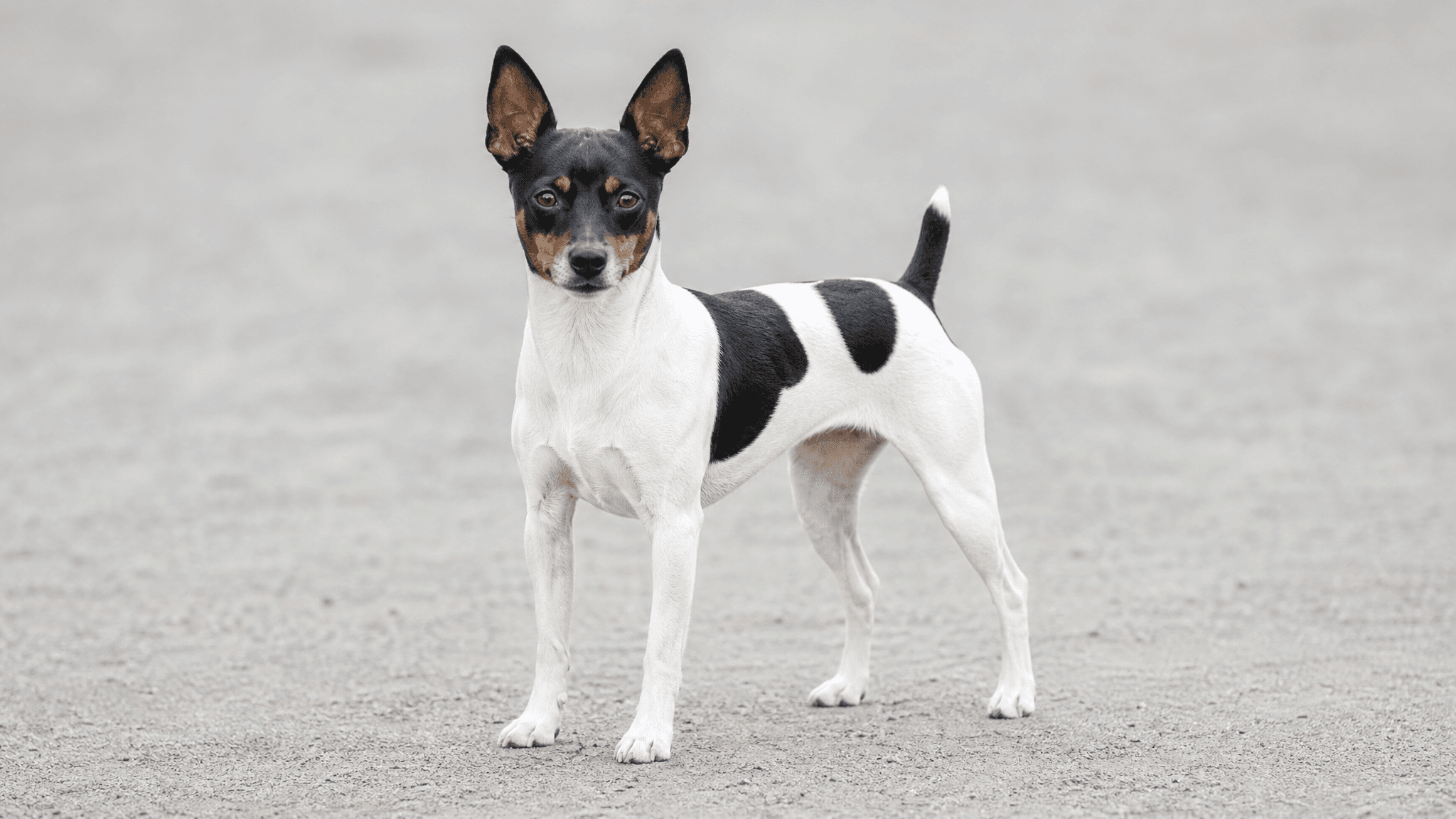
The Rat Terrier is an American farm terrier developed as a quick, tough vermin hunter and all-purpose companion. The breed exists in miniature and standard size varieties.
Physical Characteristics
- Size
- Small to medium
- Height (male)
- 25.5–45.5 cm
- Height (female)
- 25.5–45.5 cm
- Weight (male)
- 4.5–11.5 kg
- Weight (female)
- 4.5–11.5 kg
- Life Expectancy
- 12–18 years
- Coat
- Short, smooth, close, and glossy
- Common Colors
- Pied patterns with white and black, tan, chocolate, blue, apricot, lemon, or red
Temperament & Personality
The Rat Terrier is lively, alert, intelligent, affectionate, and determined. It usually learns quickly but has a strong prey drive and needs daily activity and clear boundaries.
Activity & Exercise
- Energy Level
- Moderate to high
- Recommended Daily Exercise
- 45–75 minutes
- Suitable for Apartment
- Yes with exercise
Grooming & Care
- Grooming Needs
- Low
- Shedding
- Moderate
- Bathing Frequency
- Every 6–8 weeks
Health
- Common Health Issues
- Cardiac disease
- Eye disorders
- Hip dysplasia
- Legg-Calve-Perthes disease
- Patellar luxation
- Recommended Health Tests
- Cardiac examination
- Eye examination
- Hip evaluation
- Patella evaluation
Compatibility
- With Children
- Good
- With Other Dogs
- Good
- With Cats
- Moderate
- For First-Time Owners
- Acceptable
Is a Rat Terrier right for you?
A Rat Terrier may suit you if:
- You can provide 45 to 75 minutes of engaging activity daily to satisfy their moderate to high energy.
- You enjoy an active lifestyle that includes exploring, playing games, or participating in dog sports.
- You appreciate a clever, affectionate, and determined companion with a lively spirit.
- You are prepared to commit to consistent, positive training to channel their intelligence and determination.
- You are comfortable with moderate shedding and minimal grooming, including bathing every 6 to 8 weeks.
- You are willing to manage a strong natural prey drive, which is a hallmark of this keen vermin hunter.
Think twice if:
- You expect unwavering obedience without understanding their terrier determination and independent spirit.
- You frequently leave your dog alone for long periods, as they thrive on companionship and activity.
- You have small, non-canine pets that might trigger their strong natural prey drive.
- You are unwilling to provide at least 45 minutes of daily exercise or manage their moderate shedding.
- You do not have a securely fenced yard or reliable containment for a dog with a determined spirit.
- You are unprepared for the consistent guidance and firm, gentle handling a spirited terrier puppy or adolescent requires.
Rat Terriers are truly wonderful companions, brimming with intelligence and affection, ready to share 12 to 18 years of lively adventures. Their spirited nature and keen prey drive, however, mean they thrive with owners who appreciate their determination and are committed to consistent training and ample activity. Embrace their terrier heart, and you'll find an incredibly loyal and engaging friend.
Training a Rat Terrier
Rat Terriers are incredibly intelligent, lively, and alert dogs who thrive on positive reinforcement and engaging training. Their quick minds mean they learn rapidly, especially when sessions are kept short, fun, and rewarding with high-value treats or favorite toys. Consistency is key; these determined dogs need clear boundaries and a confident, patient handler. Without proper guidance or if training becomes repetitive and boring, a Rat Terrier can quickly become frustrated or find their own (often mischievous) ways to entertain themselves, making training much harder to redirect.
Begin with:
- Attention and response to name around distractions
- Recall on a long line
- Loose-leash walking
- Leave it and drop it
- Calm greetings without jumping
- Settling on a mat or bed
- Cooperative handling for grooming, ears, feet and teeth
- Waiting at doors and gates
Prey drive and recall
Your Rat Terrier's strong prey drive is a defining characteristic, making recall a significant training focus. These quick, determined hunters can be easily distracted by small, fast-moving objects. Start recall training in a secure, distraction-free environment, gradually introducing more challenging settings. Always use a long line initially to keep them safe while practicing, and make coming back to you the most rewarding thing ever. Consistent, positive reinforcement is essential to build a reliable recall, even when squirrels are tempting them away. Mastering recall is vital for their safety.
Leash pulling
Despite their small to medium size, Rat Terriers have moderate to high energy and a determined nature that can lead to significant leash pulling. They love to explore and can be quite strong for their size, making walks less enjoyable if not addressed. Focus on teaching them that a loose leash means forward movement and a tight leash means stopping. Use positive reinforcement, rewarding them frequently for walking politely by your side. Short, frequent training sessions on walks can make a big difference, helping them learn to walk calmly alongside you. Consistent loose-leash training is a game-changer.
Boredom behaviors
Rat Terriers are intelligent and need daily activity to keep their minds and bodies engaged. With 45-75 minutes of recommended daily exercise, plus mental stimulation, they thrive. If under-exercised, under-stimulated, or left alone for too long, they can develop undesirable behaviors like excessive barking, digging, or destructive chewing. Ensure they have plenty of opportunities for physical activity, puzzle toys, and interactive play. Establishing a consistent routine and providing enrichment helps prevent these issues. Consider using our training feature to build a consistent routine that keeps your Rat Terrier happy and well-behaved.
Rat Terrier — Frequently Asked Questions
What is a Rat Terrier's personality like?
The Rat Terrier is a lively, affectionate, and surprisingly adaptable American breed. They are loyal and deeply bonded to their family — more demonstrably affectionate than many terrier breeds — while retaining the quick-witted, alert, curious nature of their terrier heritage. They are playful, funny, and enjoy being involved in everything their family does. Despite their small size, they are tough, confident working dogs who are neither delicate nor nervous. They tend to be a bit more biddable than other terrier breeds, making them somewhat easier to train.
Are Rat Terriers good family dogs?
Rat Terriers are excellent family dogs in active, engaged households. They are playful and gentle with children who treat them respectfully, and they tend to be more patient with kids than many terrier breeds. They form very strong bonds with their whole family rather than just one person. Their alert, protective nature means they make good watchdogs without being excessive barkers. Their adaptability — equally happy in a farmhouse or an apartment — combined with their moderate exercise needs and generally good health make them a genuinely versatile family companion.
How much exercise does a Rat Terrier need?
Rat Terriers need around 60 minutes of daily exercise. They are energetic, quick, and agile dogs that enjoy running, fetch, agility, and active games — but they are not as relentlessly driven as some other terrier breeds. They enjoy both vigorous outdoor activity and active indoor play. Mental stimulation through training, puzzle toys, and scent games is equally important. They were bred as versatile farm dogs — good ratters, hunters, and companions — so they appreciate variety in their exercise routine rather than simple repetitive walks.
Are Rat Terriers easy to train?
Rat Terriers are one of the more trainable terrier breeds. They are intelligent, willing to please, and respond very well to positive, reward-based training. They enjoy learning new things and can excel at obedience, agility, trick training, and nose work. They retain terrier independence, so patience, consistency, and high-value rewards are important — but they are generally easier to motivate than many other terrier breeds. Early socialisation and puppy training are still recommended. Their recall can be unreliable near small animals or exciting scents, so management in open areas is advised.
What health issues affect Rat Terriers?
Rat Terriers are generally a healthy breed with good longevity, benefiting from their diverse genetic background. Some documented concerns include patellar luxation (slipping kneecap) — common in small breeds. Hip dysplasia occurs in some individuals. Allergies and skin sensitivities are seen. Cardiac issues, including mitral valve disease (more common in older dogs), have been documented. Eye conditions (including lens luxation in some lines) are worth monitoring. The breed's varied heritage contributes to generally strong hybrid vigour, but sourcing from health-tested parents remains advisable.
How long do Rat Terriers live?
Rat Terriers have an impressive average lifespan of 15–18 years — among the longest of any dog breed. Their diverse genetic heritage and generally robust constitution contribute to this exceptional longevity. Key factors include daily exercise (keeping them lean and active), regular dental care (critical for small breeds), maintaining a healthy weight, annual vet check-ups, and protection from injury. Many Rat Terriers remain remarkably active and alert well into their mid-teens, making them one of the most long-lived companions available.
Do Rat Terriers bark a lot?
Rat Terriers can be moderately vocal. They are alert dogs with a strong watchdog instinct — they will reliably alert to visitors, unfamiliar sounds, and activity near the home. However, they are not considered obsessive or excessive barkers like some small breeds. With training and clear boundaries from puppyhood, their alert barking can be well-managed. The key is teaching a 'quiet' command and reinforcing calm behaviour rather than letting barking become habitual. They are usually fine in apartment settings with consistent training.
Are Rat Terriers good for apartment living?
Rat Terriers can adapt well to apartment living when their exercise and mental stimulation needs are consistently met. Their smaller size and moderate exercise requirements make them manageable in apartments. Their alert watchdog nature means they will bark at sounds in the corridor — training a solid 'quiet' command from puppyhood is important. They need daily walks and active indoor play. Their social, people-oriented nature means they dislike being left alone for long periods. With consistent exercise and training, they are among the more apartment-friendly small terrier breeds.
Community
Talk to real Rat Terrier owners
This guide covers the breed on paper. In the app, the Rat Terrier community covers it in real life: photos from other owners, questions answered by people who live with the breed, and a directory of dogs you can browse.
- Photos & pollsSee what Rat Terrier owners are sharing today.
- Questions & answersAsk anything and hear from people who own one.
- Dog directoryBrowse Rat Terriers from around the world.
You join automatically when you add a Rat Terrier to your profile.