Pumi
Summary
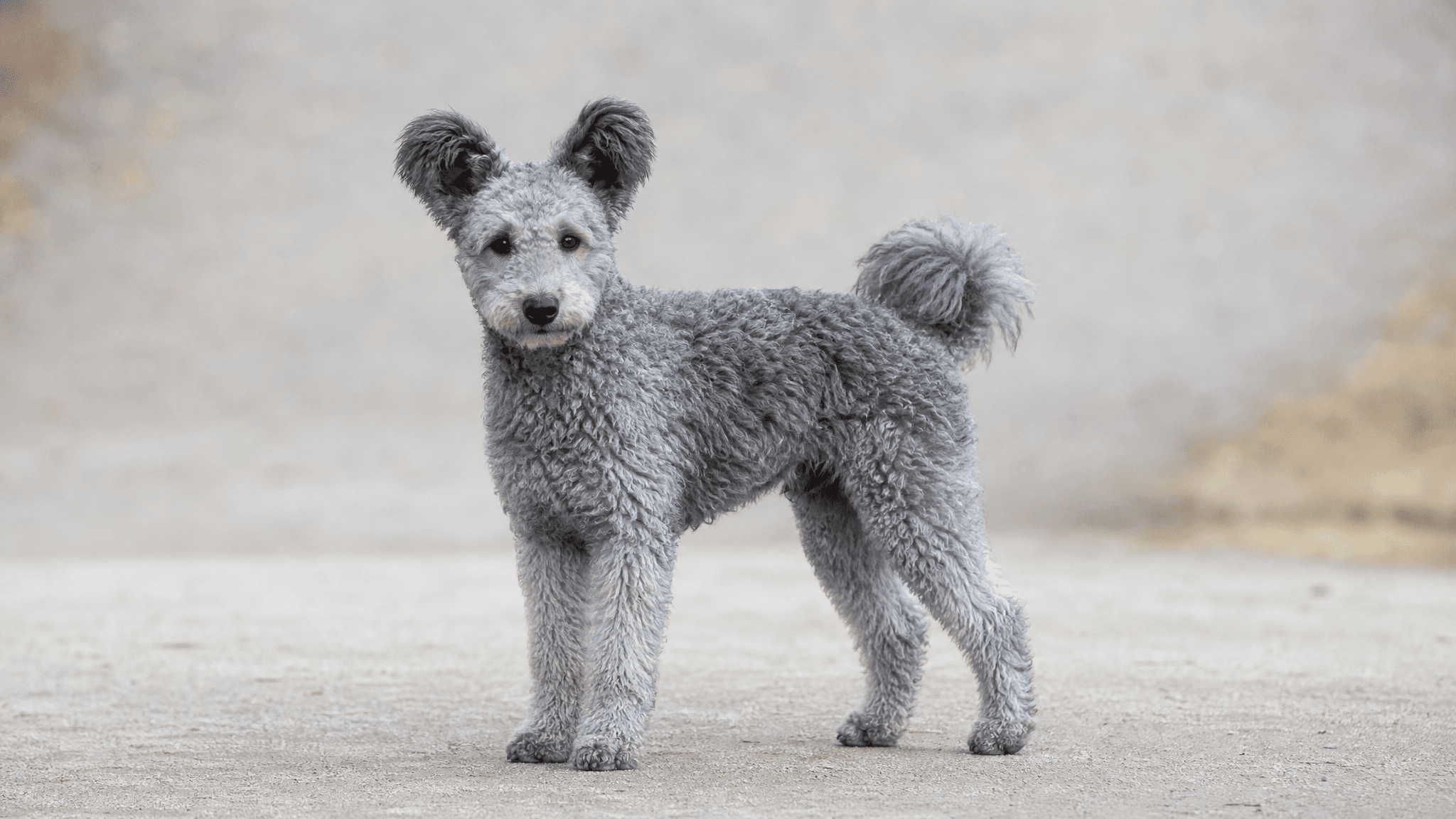
The Pumi is a medium-sized Hungarian sheepdog, recognizable by its characteristic ears — semi-erect, folding forward at the tip — and its curly, vibrant coat. Developed in the 17th and 18th centuries probably through crossing the Puli with German and French sheepdogs, the Pumi became a versatile flock driver, particularly skilled with sheep and pigs. It is a relatively rare breed outside Hungary, but has been gaining popularity in Nordic countries and the USA.
Physical Characteristics
- Size
- Medium
- Height (male)
- 41–47 cm
- Height (female)
- 38–44 cm
- Weight (male)
- 10–15 kg
- Weight (female)
- 8–13 kg
- Life Expectancy
- 12–14 years
- Coat
- Medium, curly or wavy, dense; soft undercoat
- Common Colors
- Grey (various shades), black, masquerade, cream, white
Temperament & Personality
The Pumi is a lively, energetic, courageous and somewhat irreverent dog. It is extremely active, always on the move, and has an insatiable curiosity. Despite its characteristic independence, it forms very strong bonds with the family and is affectionate with its owners. It can be somewhat vocal, which reflects its alert character and its historical function as a herding dog that used its voice to move livestock.
Activity & Exercise
- Energy Level
- High
- Recommended Daily Exercise
- 60–90 minutes
- Suitable for Apartment
- Yes with exercise
Grooming & Care
- Grooming Needs
- Moderate
- Shedding
- Low to moderate
- Bathing Frequency
- Every 6 weeks
Health
- Common Health Issues
- Degenerative myelopathy
- Hip dysplasia
- Patellar luxation
- Primary lens luxation
- Recommended Health Tests
- Genetic test for PLL and DM
- OFA orthopedic evaluation
Compatibility
- With Children
- Good
- With Other Dogs
- Good
- With Cats
- Moderate
- For First-Time Owners
- Acceptable
Is a Pumi right for you?
A Pumi may suit you if:
- You are eager to provide at least 60 to 90 minutes of daily vigorous exercise and engaging mental challenges.
- You enjoy an active lifestyle that includes dog sports like agility, herding, or long, exploratory hikes.
- You appreciate a lively, courageous, and somewhat independent companion who forms deep bonds with their family.
- You are prepared to invest consistently in positive reinforcement training to channel their intelligence and independence.
- You are willing to commit to regular grooming, including brushing and bathing every six weeks, to maintain their unique curly coat.
- You can comfortably manage a dog that is naturally vocal and uses their voice as part of their alert and herding instincts.
Think twice if:
- You expect unwavering obedience and a constantly compliant temperament from your canine companion.
- Your daily routine involves leaving a dog alone for long periods, which can lead to boredom and destructive behaviors.
- You are unwilling to carefully introduce and supervise interactions with resident cats or smaller, prey-like pets.
- You are not prepared for a daily commitment to vigorous exercise or regular grooming for their distinct coat.
- Your living situation lacks secure containment or adequate space for a highly energetic dog to safely explore and play.
- You are uncomfortable guiding a boisterous, independent adolescent dog through their energetic and curious phases.
The Pumi is a delightful, spirited companion, full of life and loyalty. While their intelligence and boundless energy are truly engaging, they thrive best with owners who appreciate their independent streak and vocal nature. Be prepared for an active partner who will challenge and charm you daily, making every moment an adventure.
Training a Pumi
Pumis are bright, energetic learners who thrive on positive reinforcement and engaging, short training sessions. Their insatiable curiosity means they pick up new commands quickly when motivated by treats, praise, and play. However, their independent spirit and high energy mean that long, repetitive, or harsh training methods will quickly lead to boredom, frustration, and a Pumi who might decide to do things their own way. Keep it fun, varied, and rewarding to tap into their eagerness to please their beloved family.
Begin with:
- Attention around distractions
- Recall on a long line
- Loose-leash walking
- Leave it and drop it
- Calm greetings without jumping
- Settling on a mat or bed
- Cooperative handling for grooming, ears, feet and teeth
- Waiting at doors and gates
Herding instincts and voice
Pumis are vocal herding dogs with an insatiable curiosity, often using their voice to alert or "manage" their environment. To prevent excessive barking, start early with teaching a "quiet" cue and consistently reward calm behavior. Provide plenty of appropriate outlets for their herding drive, like herding balls or structured play, rather than letting them herd children or other pets.
Channeling their natural instincts into positive activities is key. Engaging in dog sports like agility or herding trials can provide an excellent outlet for their energy and intelligence, satisfying their desire to work and use their voice appropriately.
Leash manners and focus
A Pumi's high energy and "always on the move" nature can make loose-leash walking a challenge. Start training in a low-distraction environment, gradually increasing the complexity. Use a front-clip harness for better control and reward frequently for walking nicely by your side.
Consistency is key, and remember that a well-exercised Pumi is more likely to walk calmly. For detailed guidance, check out this guide on stopping leash pulling. Maintaining their focus on you amidst distractions is crucial for enjoyable walks.
Managing Pumi energy
Pumis require 60-90 minutes of daily exercise and significant mental stimulation. Without enough physical activity and engaging tasks, their high energy and curiosity can lead to destructive chewing, excessive barking, or digging. Incorporate puzzle toys, scent work, and regular training sessions to keep their intelligent minds busy.
Consider dog sports like agility or obedience to channel their drive positively. If left alone, ensure they have had ample exercise and mental engagement to prevent separation-related stress. Recognizing signs of stress is important for their well-being.
Pumi — Frequently Asked Questions
What is the Pumi?
The Pumi is a captivating, medium-sized Hungarian sheepdog, instantly recognizable by their charming semi-erect ears that fold forward at the tip and their unique curly, vibrant coat. Originating in Hungary during the 17th and 18th centuries, they are believed to have developed from crosses between the Puli and various German and French sheepdogs. As part of FCI Group 1 (Sheepdogs), they embody the classic herding spirit. This delightful breed, though relatively rare outside its homeland, is known for its lively and energetic presence, making them truly special companions for those who appreciate their distinctive look and spirited personality.
What was the Pumi originally bred for?
Originally, the Pumi was bred for a very important job: a versatile flock driver in Hungary, particularly adept at managing sheep and pigs. Emerging in the 17th and 18th centuries, these clever dogs were essential partners to shepherds, using their agility, intelligence, and characteristic vocalizations to control livestock. Their historical function as a herding dog that used its voice to guide and gather is still evident in their alert and sometimes vocal nature today. This rich history as a working dog has shaped their energetic temperament and insatiable curiosity, making them truly engaging companions.
How much exercise does a Pumi need?
Pumis are absolutely bursting with energy, so they definitely need a good amount of exercise to stay happy and healthy! We recommend providing them with 60 to 90 minutes of activity every single day. This isn't just a casual stroll; they thrive on vigorous play, long walks, jogging, or even dog sports like agility. Their high energy level means they love to be on the move and explore, so regular physical and mental stimulation is crucial to prevent boredom and ensure they channel their lively spirit positively. Keeping your Pumi active will truly make them a joyful and well-behaved member of your family.
Is the Pumi a good family dog?
Yes, the Pumi can make a wonderful family dog, especially for active households! They form very strong bonds with their family and are incredibly affectionate with their owners, bringing a lively and energetic spirit into the home. Their courageous and somewhat irreverent nature means they're always up for an adventure. While they can be somewhat vocal, reflecting their alert character, early socialization and consistent training are key to helping them integrate smoothly with children and other pets. With proper introductions and guidance, their loyal and playful disposition shines, making them a cherished and engaging family member.
Is the Pumi easy to train?
Pumis are highly intelligent and eager to please, which generally makes them quite trainable, though their independent streak means consistency is key! Their lively, energetic, and curious temperament means they love to learn and thrive on mental stimulation. They are extremely active and always on the move, so training sessions should be engaging and fun to hold their attention. While they possess a characteristic independence, they form very strong bonds with their family, which motivates them to work with you. Positive reinforcement methods work best to channel their spirited nature and develop them into well-behaved companions.
What health issues are common in the Pumi?
Like all breeds, Pumis can be prone to certain health conditions, and being aware of them helps ensure they live their best lives. Some documented health concerns for the Pumi include Degenerative Myelopathy, a progressive disease affecting the spinal cord, and Hip Dysplasia, which affects the hip joints. They can also be susceptible to Patellar Luxation, where the kneecap slips out of place, and Primary Lens Luxation, an eye condition. Responsible breeders screen for these issues, and regular veterinary check-ups are vital to monitor your Pumi's health and catch any potential problems early, keeping your energetic companion thriving.
What is the Pumi's coat like and how much grooming does it need?
The Pumi's coat is truly one of its defining features – it's a vibrant, curly coat that gives them their distinctive, charming appearance! This unique coat is a mix of soft and harsh hair, forming delightful curls and waves. While it doesn't shed excessively, it does require regular attention to prevent matting and keep it looking its best. Brushing a few times a week helps to remove loose hair and tangles, and periodic trimming is also beneficial to maintain its characteristic texture and shape. With consistent grooming, your Pumi's coat will remain healthy and beautiful, reflecting their lively personality.
What is the typical lifespan of a Pumi?
Pumis are wonderful companions who typically enjoy a good, long life, bringing joy and energy to their families for many years. You can generally expect a Pumi to live for about 12 to 14 years. Of course, individual lifespans can vary depending on factors like genetics, diet, exercise, and overall healthcare. Providing your Pumi with a high-quality diet, plenty of regular exercise, routine veterinary check-ups, and a loving environment are all key ingredients to helping them live a full, healthy, and happy life right by your side.
Community
Talk to real Pumi owners
This guide covers the breed on paper. In the app, the Pumi community covers it in real life: photos from other owners, questions answered by people who live with the breed, and a directory of dogs you can browse.
- Photos & pollsSee what Pumi owners are sharing today.
- Questions & answersAsk anything and hear from people who own one.
- Dog directoryBrowse Pumis from around the world.
You join automatically when you add a Pumi to your profile.