Mudi
Summary
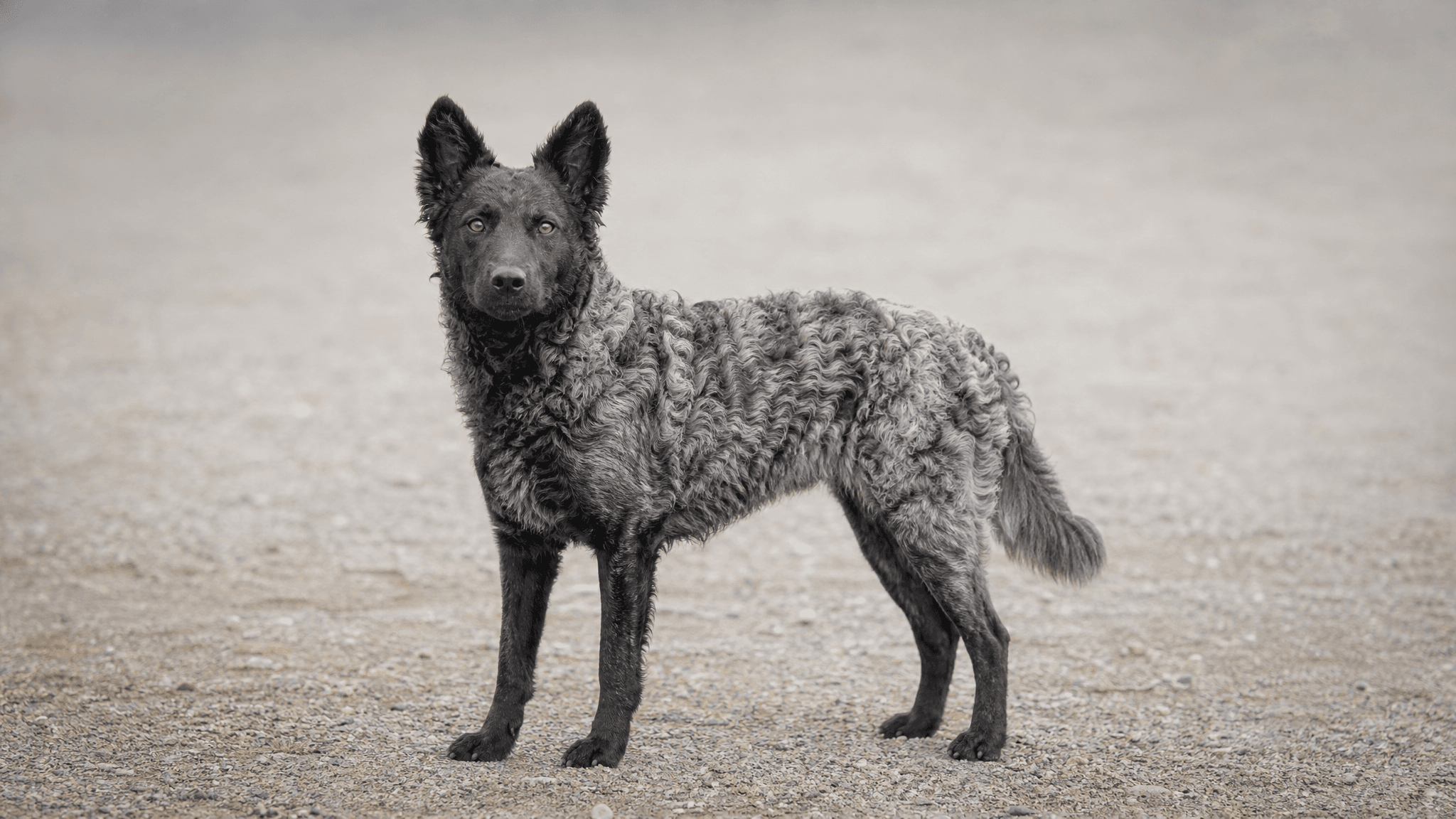
The Mudi (plural: Mudik) is the least internationally known Hungarian sheepdog, but no less capable. Discovered as a distinct breed only in 1936 by Dr. Dezső Fényesi, it is considered a breed that developed naturally from crosses between the Puli, the Pumi and German sheepdogs. The Mudi nearly disappeared during World War II and continues to be one of the rarest breeds in Group 1 — it is estimated that only a few thousand exist worldwide, mainly in Hungary and Finland.
Physical Characteristics
- Size
- Medium
- Height (male)
- 43–45 cm
- Height (female)
- 40–42 cm
- Weight (male)
- 8–13 kg
- Weight (female)
- 8–11 kg
- Life Expectancy
- 12–14 years
- Coat
- Medium to long on the body, very wavy to slightly curly; short and smooth on the head and front of the legs
- Common Colors
- Black, white, yellow, brown, grey, beige, merle (blue or marbled); can be solid or merle
Temperament & Personality
The Mudi is an extraordinarily versatile and multi-purpose dog — it herds sheep, hunts wild boar, alerts to dangers and protects the flock, all with the same determination. It is very intelligent, active and courageous for its size. With the family it is loyal and affectionate, but can be reserved with strangers. Its genuine courage — not aggressiveness — is one of the most admired characteristics of the breed.
Activity & Exercise
- Energy Level
- High
- Recommended Daily Exercise
- 60–90 minutes
- Suitable for Apartment
- Yes with exercise
Grooming & Care
- Grooming Needs
- Moderate
- Shedding
- Moderate
- Bathing Frequency
- Every 4–6 weeks
Health
- Common Health Issues
- Congenital cataracts
- Degenerative myelopathy
- Epilepsy
- Hip dysplasia
- Recommended Health Tests
- Eye examination
- Genetic test for DM
- OFA orthopedic evaluation
Compatibility
- With Children
- Good
- With Other Dogs
- Good
- With Cats
- Moderate
- For First-Time Owners
- Acceptable
Is a Mudi right for you?
A Mudi may suit you if:
- You can provide at least 60 to 90 minutes of vigorous daily exercise and engaging mental challenges.
- You enjoy an active lifestyle that includes dog sports like agility, herding, or flyball.
- You appreciate a loyal and affectionate companion who is genuinely courageous and protective of their family.
- You are prepared to commit to consistent, positive training to channel their keen intelligence.
- You are willing to provide moderate grooming for their unique wavy to curly coat, including baths every 4-6 weeks.
- You are prepared to manage their natural herding instincts and their tendency to be alert to their surroundings.
Think twice if:
- You expect unwavering obedience from a dog that is courageous and can be quite determined.
- You have a routine that often leaves a high-energy, intelligent dog alone for long stretches of time.
- You are unwilling to supervise interactions with cats or other small household pets due to their herding drive.
- You are not prepared to meet their daily need for significant exercise and mental engagement.
- You live in a small space without easy access to safe, secure areas for vigorous outdoor activity.
- You are not prepared for the consistent guidance and firm, fair handling a determined adolescent Mudi requires.
Living with a Mudi is a unique adventure, offering immense loyalty and affection to those who embrace their spirited nature. While incredibly versatile and intelligent, their courage and determination mean they thrive with consistent guidance and an active partnership. They are a rewarding companion for the right committed owner, but not a dog for the faint of heart.
Training a Mudi
Mudi dogs are incredibly bright and eager learners, thriving on positive reinforcement and engaging, varied training sessions. Their intelligent and active nature means they excel when challenged with new skills and tasks, especially those that tap into their natural working instincts as herders and protectors. Keep sessions short, fun, and consistent to maintain their focus and enthusiasm. If training becomes repetitive, harsh, or lacks sufficient mental stimulation, a Mudi can quickly become bored or frustrated, potentially leading to unwanted behaviours as they seek their own entertainment.
Begin with:
- Attention and response to name around distractions
- Recall on a long line
- Loose-leash walking
- Leave it and drop it
- Calm greetings without jumping
- Settling on a mat or bed
- Cooperative handling for grooming, ears, feet and teeth
- Waiting at doors and gates
Prey Drive and Recall
Mudi dogs possess strong herding and hunting instincts, making them highly susceptible to distractions from moving objects or small animals. This natural drive means a reliable recall is absolutely critical for their safety and your peace of mind, especially given their high energy levels.
Start recall training in a quiet, enclosed area with high-value treats, gradually introducing distractions as your Mudi's reliability grows. Always use a long line in unfenced areas until their recall is rock-solid, as their drive to chase can be incredibly powerful. For more detailed guidance, check out our recall training guide.
Leash Pulling
A medium-sized, energetic Mudi can exert considerable strength on the leash, particularly if they haven't had enough mental and physical exercise. Their intelligence means they quickly learn that pulling often gets them where they want to go, which can make walks challenging.
Focus on consistent loose-leash training from an early age, using positive reinforcement for walking nicely by your side. Ensure your Mudi receives their recommended 60-90 minutes of daily exercise, including engaging mental games, before walks to help them be calmer and more focused. Our guide on stopping leash pulling offers a great force-free plan.
Boredom Behaviors
Mudis are highly intelligent and active working dogs that thrive on having a purpose. If they're not adequately exercised or mentally stimulated, they will often find their own 'jobs' around the house, which can manifest as destructive chewing, excessive barking, or digging.
To prevent these issues, provide a variety of enrichment activities daily, including puzzle toys, scent work, and short, engaging training sessions. Consistent daily exercise is paramount for this high-energy breed. If you suspect your Mudi is showing signs of stress or boredom when left alone, our article on how to tell if your dog is stressed can offer helpful insights.
Mudi — Frequently Asked Questions
What is the Mudi?
The Mudi is a truly special and unique medium-sized dog breed hailing from Hungary, where it was first recognized as a distinct breed in 1936. Part of the FCI Group 1 (Sheepdogs), this agile and intelligent canine is believed to have developed naturally from crosses between the Puli, Pumi, and German sheepdogs. Mudik are known for their high energy, courage, and incredible versatility, making them capable of handling various tasks with determination. They are quite rare, with only a few thousand estimated to exist worldwide, primarily in their home country and Finland, making them a fascinating discovery for any dog enthusiast!
What was the Mudi originally bred for?
The Mudi is an extraordinary multi-purpose dog with a rich history rooted in Hungarian farm life. Originally, these clever canines were bred to be incredibly versatile working partners. They excel at herding sheep with remarkable skill and determination, but their talents don't stop there! Mudik were also historically used for hunting wild boar, alerting their owners to dangers, and protecting the flock. Their genuine courage and unwavering loyalty made them indispensable companions for farmers, showcasing an impressive range of abilities that truly set them apart as capable and dedicated working dogs.
How much exercise does a Mudi need?
As a breed with a high energy level and a working background, the Mudi thrives on plenty of activity! To keep your Mudi happy, healthy, and well-behaved, they typically need a good 60 to 90 minutes of vigorous exercise every single day. This isn't just about physical exertion; it's also crucial for their mental stimulation. Think beyond just a leash walk – activities like agility, flyball, herding trials, or even long, engaging hikes are perfect for these intelligent and active dogs. Providing them with consistent outlets for their energy will ensure they are calm and content companions at home.
Is the Mudi a good family dog?
Yes, the Mudi can be a wonderful family dog, especially for active households! With their family, Mudik are known to be incredibly loyal and affectionate companions, forming strong bonds with their human pack. However, they can be a bit reserved with strangers, which is a natural part of their protective herding instincts. When it comes to children and other pets, early socialization is key. Their inherent courage means they are not aggressive, but their herding drive might lead them to 'herd' small children or other animals, so gentle guidance and supervision are important to ensure harmonious living for everyone.
Is the Mudi easy to train?
Absolutely! The Mudi is renowned for its exceptional intelligence and eagerness to please, making them a joy to train for experienced owners. Their active and courageous temperament means they thrive on having a job to do and love learning new things. They respond best to consistent, positive reinforcement methods and enjoy engaging in activities that challenge their minds, such as obedience, agility, or even advanced trick training. Their versatility and determination mean they pick up commands quickly, but their cleverness also means they need engaging training sessions to prevent boredom and keep them focused.
What health issues are common in the Mudi?
Like all breeds, Mudik can be prone to certain health conditions, and being aware of them helps you provide the best care. Some documented health concerns in the Mudi include Congenital Cataracts, which can affect vision, and Degenerative Myelopathy, a progressive neurological condition. They can also be susceptible to Epilepsy and Hip Dysplasia, a common orthopedic issue in many active breeds. Responsible breeders will screen their dogs for these conditions to help minimize their occurrence. Regular veterinary check-ups and a healthy lifestyle are crucial for keeping your Mudi in tip-top shape and catching any potential issues early.
What is the Mudi's coat like and how much grooming does it need?
The Mudi's coat is generally quite practical and relatively easy to maintain, which is a big plus for such an active working breed! While the curated database doesn't provide specific details on its texture, you can expect a coat that offers protection from the elements. Regular brushing, perhaps a couple of times a week, is usually sufficient to keep it free of tangles and reduce shedding, especially during seasonal changes. This routine grooming also helps distribute natural oils, keeping their coat healthy and shiny. Overall, their grooming needs are manageable, allowing more time for adventures!
What is the typical lifespan of a Mudi?
Mudik are generally robust and healthy dogs, and with proper care, they typically enjoy a good, long life! You can expect your Mudi companion to be with you for approximately 12 to 14 years. Providing them with a high-quality diet, consistent exercise, regular veterinary check-ups, and plenty of love and mental stimulation will contribute significantly to their longevity and overall well-being. These wonderful dogs truly become cherished family members, and their impressive lifespan means many years of joyful companionship and adventure together.
Community
Talk to real Mudi owners
This guide covers the breed on paper. In the app, the Mudi community covers it in real life: photos from other owners, questions answered by people who live with the breed, and a directory of dogs you can browse.
- Photos & pollsSee what Mudi owners are sharing today.
- Questions & answersAsk anything and hear from people who own one.
- Dog directoryBrowse Mudis from around the world.
You join automatically when you add a Mudi to your profile.