Pug
Summary
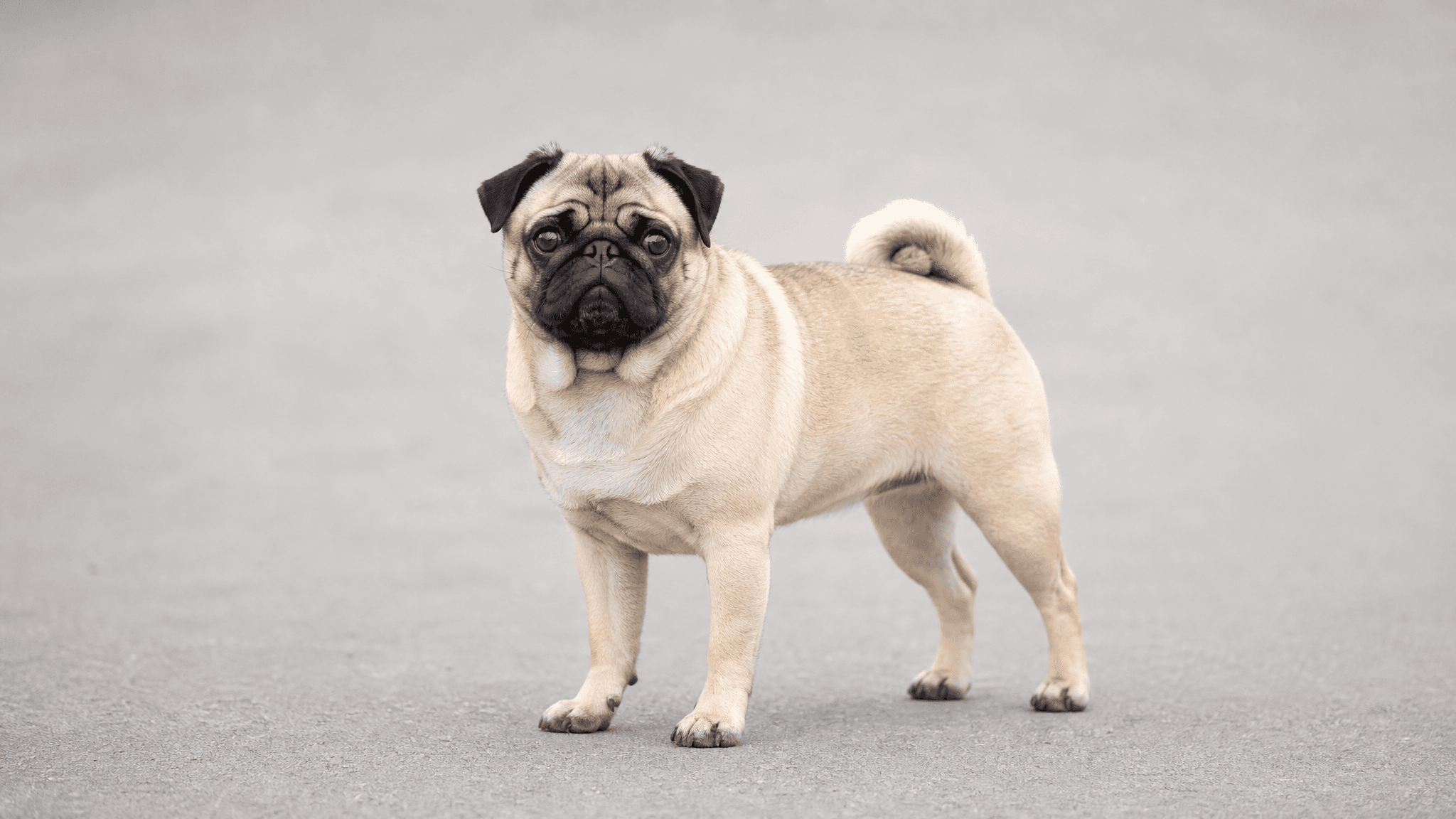
The Pug is one of the oldest breeds in the world, with records dating back to 400 BC in imperial China. It arrived in Europe in the 16th century brought by Dutch traders from the East India Company and quickly became the favorite of European royal houses. It is a dog with an unmistakable expression — very flat face, large prominent eyes, tail curled over the back — and a placidly good-natured temperament.
Physical Characteristics
- Size
- Small
- Height (male)
- 30–36 cm
- Height (female)
- 25–30 cm
- Weight (male)
- 6–8 kg
- Weight (female)
- 6–8 kg
- Life Expectancy
- 12–15 years
- Coat
- Short, fine, soft, and shiny; double coat (which increases shedding)
- Common Colors
- Fawn with black mask, and black; the FCI standard accepts only these two colors
Temperament & Personality
The Pug is a dog with an equable temperament, affectionate and very entertaining — it is frequently described as a "clown" for its hilarious expression and comical behavior. It is sociable with everyone, including children, strangers, other dogs, and cats. It has no marked hunting instincts and prefers human company to physical exercise. It is sensitive to its owners' emotions and can be an excellent emotional support dog.
Activity & Exercise
- Energy Level
- Low to moderate
- Recommended Daily Exercise
- 20–30 minutes
- Suitable for Apartment
- Yes
Grooming & Care
- Grooming Needs
- Low to moderate
- Shedding
- Heavy
- Bathing Frequency
- Every 3–4 weeks
Health
- Common Health Issues
- Brachycephalic obstructive airway syndrome (mild)
- Ear infections
- Eye problems
- Obesity (pronounced tendency)
- Orthopedic problems (hip dysplasia, patellar luxation)
- Pug Dog Encephalitis (PDE — a fatal neurological condition specific to the breed)
- Skin allergies
- Recommended Health Tests
- Airway evaluation
- Cardiac examination
- Eye examination
- Orthopedic evaluation
Compatibility
- With Children
- Excellent
- With Other Dogs
- Excellent
- With Cats
- Excellent
- For First-Time Owners
- Recommended
Is a Pug right for you?
A Pug may suit you if:
- You are happy with short, gentle daily walks and prefer cozy indoor playtime over strenuous outdoor adventures.
- You enjoy a relaxed home life and appreciate a loyal companion who thrives on human company and affection.
- You are drawn to a dog with a comical, affectionate, and entertaining personality that will make you laugh daily.
- You are prepared to use positive reinforcement for a smart but sometimes stubborn companion, making training a fun bonding experience.
- You are willing to commit to regular brushing to manage heavy shedding and keep their short, fine coat healthy.
- You appreciate a dog that is generally placid and sociable with everyone, including children and other pets.
Think twice if:
- You expect a dog that is always eager to please and performs complex commands flawlessly.
- You frequently leave your dog alone for extended periods, as Pugs deeply crave constant human companionship.
- You are uncomfortable with a dog that seeks to be the center of attention and interact with all household members and guests.
- You are unwilling to commit to daily brushing to manage their heavy shedding or provide consistent, short daily walks.
- You prefer a dog that is independent and does not require much supervision around the home.
- You are unprepared for the specific care required for their prominent eyes and characteristic facial folds.
Pugs are truly unique companions, offering boundless affection and endless entertainment. While their charming personalities and relatively low exercise needs make them appealing, prospective owners must be prepared for their significant grooming requirements due to heavy shedding and their deep need for human connection. Embracing both their delightful quirks and specific care needs ensures a happy, healthy life together.
Training a Pug
Training a Pug is a delightful journey, as these affectionate companions thrive on positive reinforcement and your loving attention. Their sensitive nature means they respond best to gentle, consistent methods, motivated by praise, treats, and quality time with you. Keep training sessions short, fun, and engaging, perhaps 5-10 minutes at a time, to match their low to moderate energy level and keep their "clown" personality shining. If training becomes too strict or repetitive, your Pug might become bored, withdrawn, or even a little stubborn, so always aim for a lighthearted and rewarding experience.
Begin with:
- Attention and name response
- Recall on a long line
- Loose-leash walking
- Leave it and drop it
- Calm greetings without jumping
- Settling on a mat or bed
- Cooperative handling for grooming
- Waiting at doors and gates
Separation sensitivity
Pugs adore their human companions and can become very attached, sometimes leading to distress when left alone. This sensitivity means they might develop separation anxiety if not taught to be comfortable by themselves from a young age.
To prevent this, start with short periods of separation and gradually increase the time. Make sure their "alone time" is positive, perhaps with a puzzle toy. A cozy crate can become their safe den. Our guide on stress signs can help you observe their comfort levels.
Leash manners and breathing
While Pugs are small and not typically strong pullers, their unique brachycephalic (flat-faced) structure makes loose-leash walking incredibly important for their respiratory health. Any pulling on a collar can restrict their breathing, so a well-fitting harness is highly recommended to protect their delicate airways.
Teach loose-leash walking from day one using positive reinforcement, rewarding them for walking calmly by your side. Keep their daily exercise to the recommended 20-30 minutes, especially in moderate temperatures, and always be aware of signs of overheating.
Boredom and mischief
Despite their low to moderate energy, Pugs are intelligent and thrive on mental engagement and human interaction. If they become bored or feel neglected, their "clown" personality might manifest as unwanted mischief, such as excessive barking, chewing on inappropriate items, or even staging elaborate "accidents" indoors to get your attention.
Ensure your Pug receives not just physical exercise (20-30 minutes daily is usually enough) but also plenty of mental stimulation through puzzle toys, short training games, and interactive play. Consistent daily routines and quality time together will keep your Pug happy and well-behaved, preventing these attention-seeking antics.
Pug — Frequently Asked Questions
Are Pugs good dogs for first-time owners?
Pugs are one of the most beginner-friendly breeds around. They're adaptable, love people, and don't demand intense exercise — short daily walks keep them happy. Their main learning curve is health management: keeping face folds clean, monitoring weight, and watching for breathing difficulties.
What are the main health concerns for Pugs?
Pugs are brachycephalic, meaning their short muzzle can cause breathing difficulties — especially in heat or after vigorous play. They're also prone to eye ulcers (their eyes protrude), skin fold infections, and obesity. Regular vet visits and keeping their face folds clean and dry makes a real difference to their comfort and longevity.
How much exercise does a Pug need?
Pugs need moderate exercise — two short walks of 15–20 minutes a day is ideal. They love playing indoors and are not built for running or hiking due to their breathing limitations. Always walk them in the cooler parts of the day and watch for heavy panting, which is a signal to stop and rest.
Do Pugs get along well with children and other pets?
Pugs are famously sociable and generally adore children — they're playful, gentle, and love being part of the action. They also tend to get along well with other dogs and cats, particularly when socialized early. Their small size means very young toddlers should be supervised, but Pugs rarely show aggression.
How do I care for a Pug's skin folds?
Pug skin folds trap moisture and debris, which can lead to painful infections if neglected. Gently clean between the folds with a soft damp cloth or pet-safe wipes every few days, then thoroughly dry them — moisture left behind is the enemy. Check for redness, odour, or discharge, which are signs that a vet visit is needed.
Are Pugs easy to train?
Pugs are clever and respond well to positive reinforcement, but they have a streak of stubbornness that can test your patience. Short, fun training sessions with high-value treats work best — they're motivated by food and praise. They're not the fastest learners but they're willing once you make training feel like a game.
What is the typical lifespan of a Pug?
Pugs typically live between 12 and 15 years, which is a respectable lifespan for a small breed. Their longevity depends heavily on keeping them at a healthy weight, managing their breathing condition, and staying on top of regular veterinary care. Pugs who are well looked after and not allowed to become obese tend to live closer to the top of that range.
Can Pugs live comfortably in hot climates?
Pugs struggle significantly with heat — their flat faces mean they can't cool themselves efficiently through panting. In hot climates, air-conditioning is not a luxury but a necessity for a Pug. Keep outdoor time short during summer, avoid midday walks, always have fresh water available, and never leave a Pug in a car even for a few minutes.
Community
Talk to real Pug owners
This guide covers the breed on paper. In the app, the Pug community covers it in real life: photos from other owners, questions answered by people who live with the breed, and a directory of dogs you can browse.
- Photos & pollsSee what Pug owners are sharing today.
- Questions & answersAsk anything and hear from people who own one.
- Dog directoryBrowse Pugs from around the world.
You join automatically when you add a Pug to your profile.