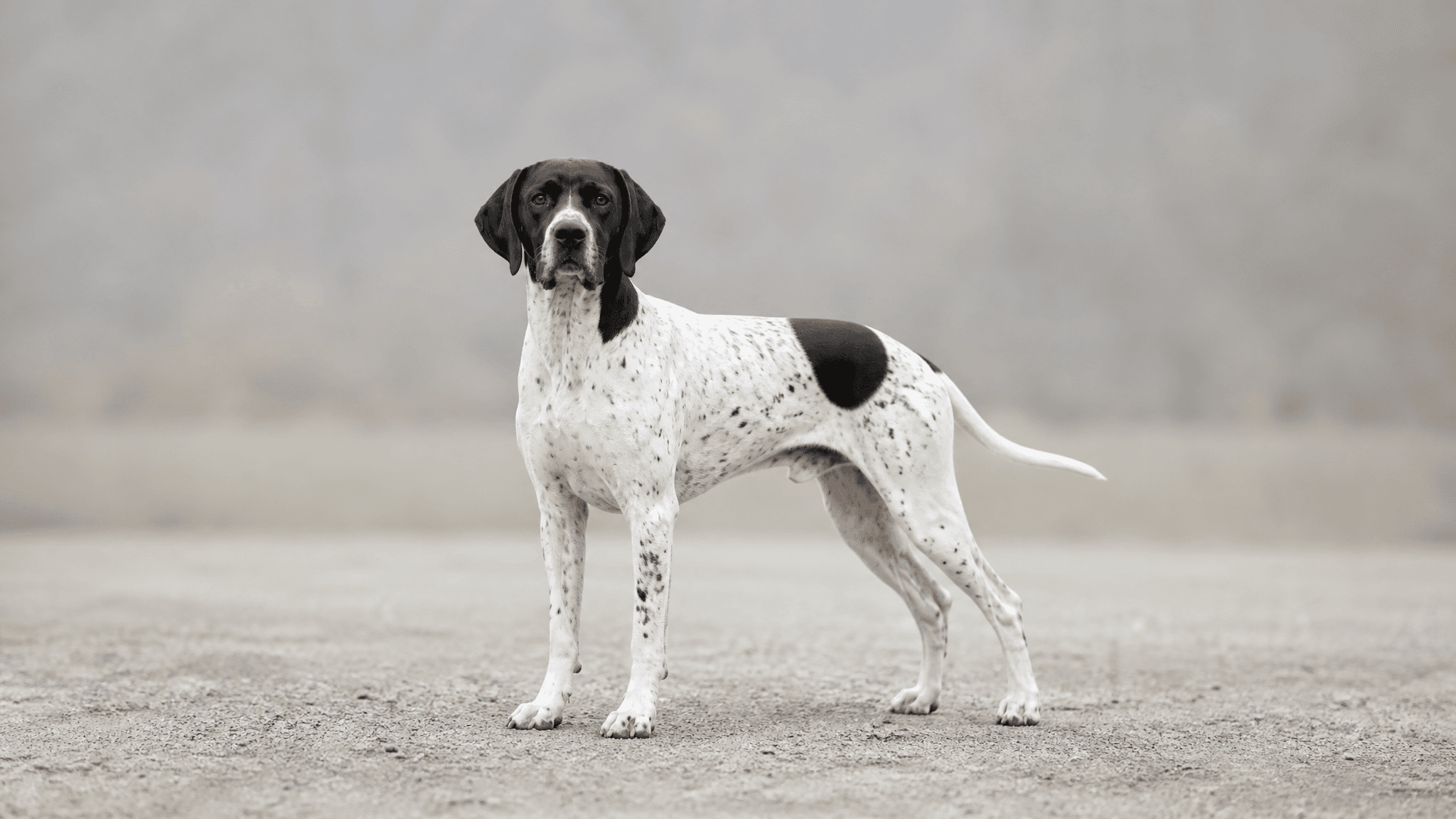
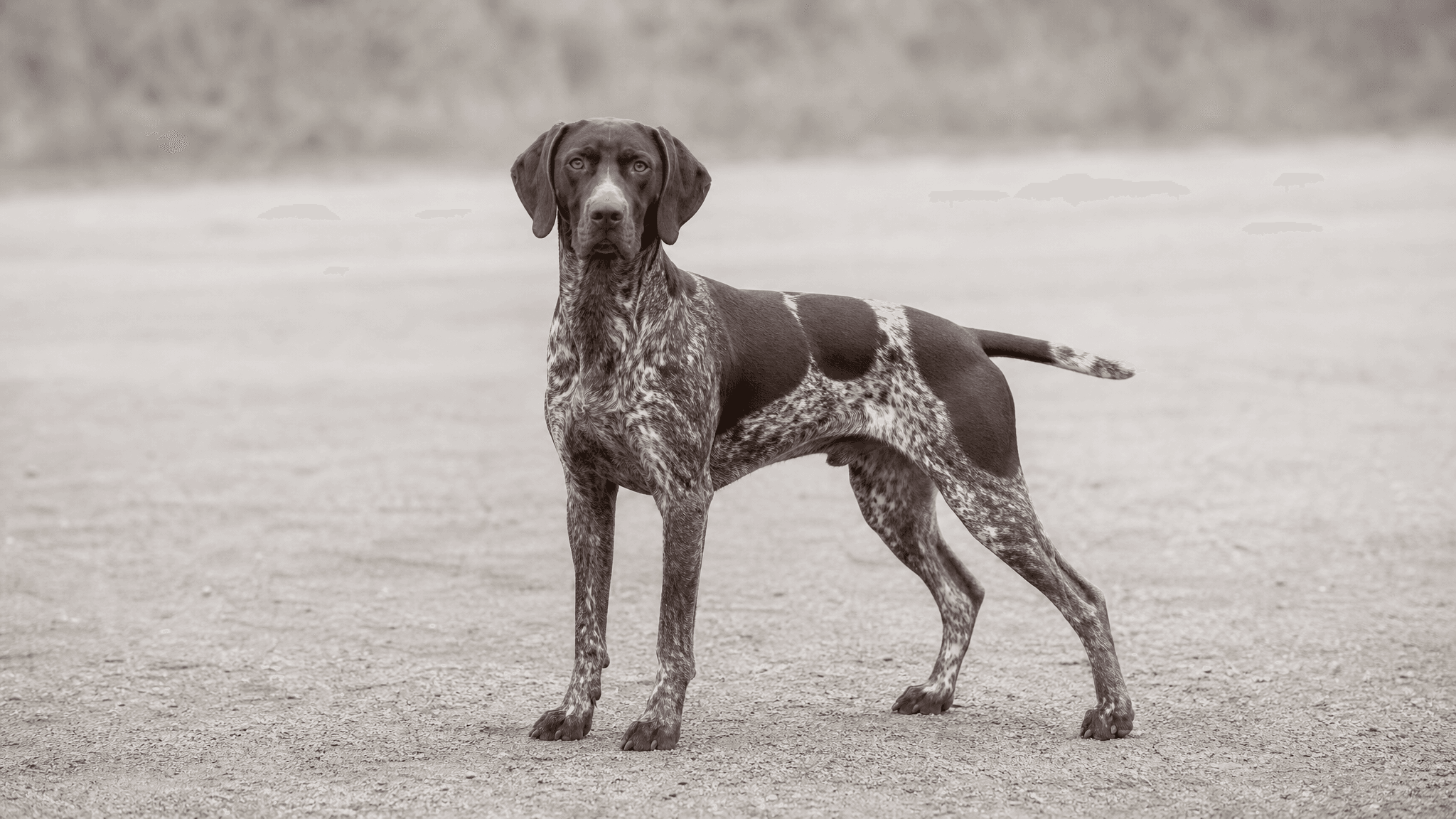
Pudelpointer
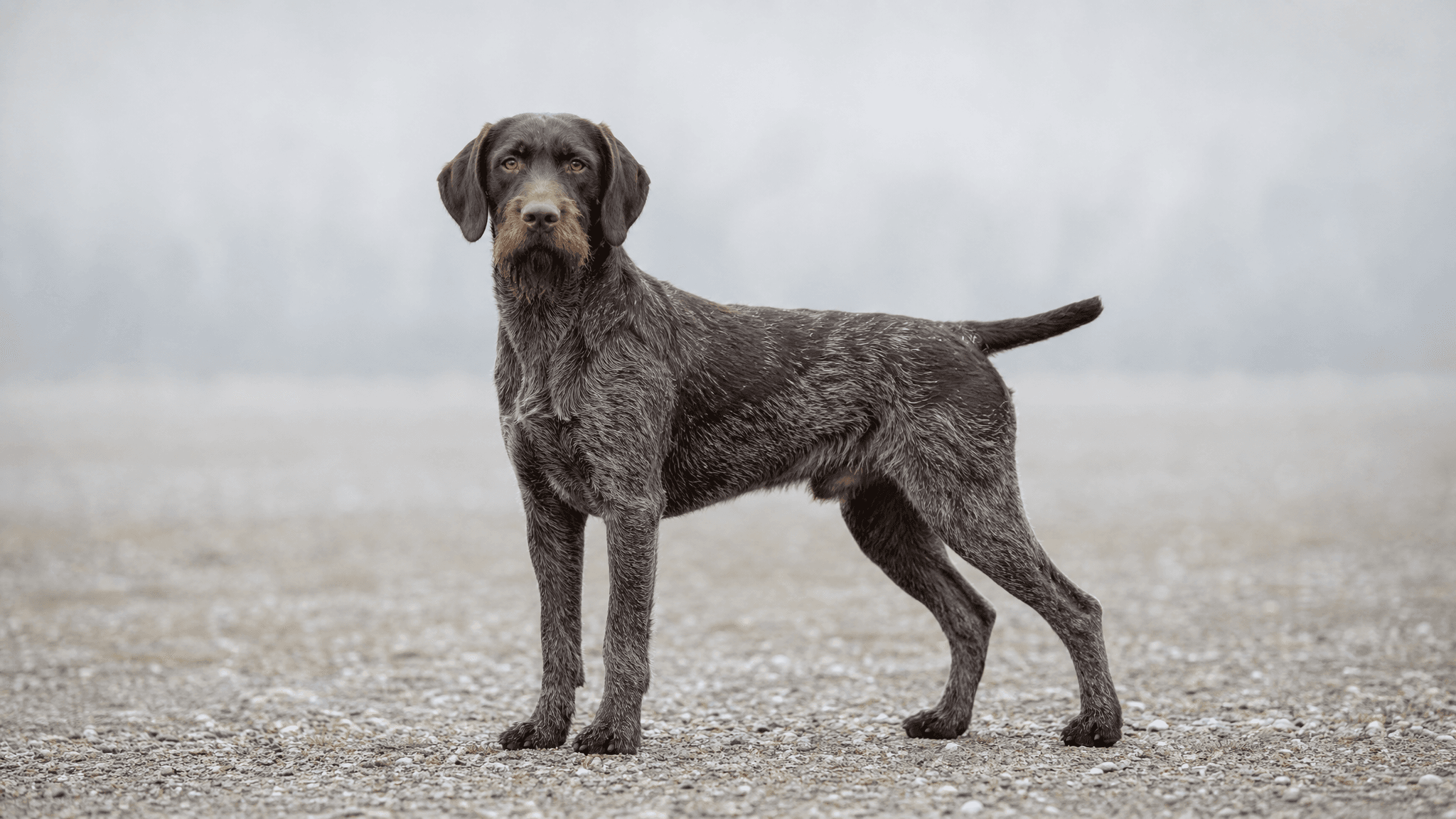
Summary
The Pudelpointer was created from 1881 by Baron Sigismund von Zedlitz und Neukirch through the crossing of a German working Pudel (Poodle) with an English Pointer, with the aim of combining the intelligence and water resistance of the Poodle with the hunting instinct of the Pointer. The current composition is approximately 85% Pointer and 15% Poodle. The result is a versatile hunting dog with a hard, weather-resistant coat, excellent for both field work and water retrieval.
Physical Characteristics
- Size
- Medium to large
- Height (male)
- 60–68 cm
- Height (female)
- 55–63 cm
- Weight (male)
- 25–30 kg
- Weight (female)
- 20–26 kg
- Life Expectancy
- 13–14 years
- Coat
- Thick, hard, and flat ("wire"); dense undercoat; with eyebrows and beard; coat types vary from "woolly" to "perfect"
- Common Colors
- Liver, "dead leaf," black; occasional small white markings
Temperament & Personality
The Pudelpointer is described as a dog with a "fun, almost clownish" personality at home, but serious and dedicated in the field. It is very cooperative and forms close bonds with the owner. It has a high energy level but is relatively calm and balanced compared to other German pointing dogs. It responds well to positive training and has a strong retrieving instinct from an early age.
Activity & Exercise
- Energy Level
- High
- Recommended Daily Exercise
- 90 minutes
- Suitable for Apartment
- Not recommended
Grooming & Care
- Grooming Needs
- Moderate
- Shedding
- Minimal
Health
- Common Health Issues
- Epilepsy
- Hip dysplasia
- Rigorous German selection has minimized hereditary problems
- Recommended Health Tests
- Mandatory orthopedic evaluation for breeding stock
- Temperament assessment
Compatibility
- With Children
- Excellent
- With Other Dogs
- Good
- With Cats
- Moderate
- For First-Time Owners
- Acceptable
Is a Pudelpointer right for you?
A Pudelpointer may suit you if:
- You can provide at least 90 minutes of vigorous daily exercise and engaging mental challenges.
- You enjoy outdoor adventures like hunting, hiking, or water sports, where your dog can be your active companion.
- You appreciate a loyal, cooperative companion with a fun-loving, clownish personality at home.
- You are prepared to commit to consistent, positive reinforcement training to harness their intelligence and retrieving drive.
- You are willing to provide moderate grooming for their distinctive wire coat, including regular brushing and occasional stripping.
- You can manage a strong prey drive and a natural inclination to retrieve, even from an early age.
Think twice if:
- You are not prepared for the dedication required to channel their intelligent, independent hunting drive into cooperative behavior.
- You frequently leave your dog alone for long periods, as these social, energetic dogs thrive on companionship and activity.
- You have small, vulnerable pets like cats without the time to carefully manage introductions and supervision.
- You are unwilling to consistently provide the significant daily exercise and moderate grooming a Pudelpointer needs to thrive.
- You live in an apartment or lack a securely fenced outdoor space for their substantial energy and size.
- You are not prepared to handle a strong, energetic medium-to-large dog through its boisterous adolescent phase.
Living with a Pudelpointer is a rewarding journey for those who embrace their unique blend of playful charm and serious working drive. While they bring immense joy and loyalty, their high energy and intelligent nature demand consistent engagement and activity. They are not merely pets, but dedicated partners who thrive when their minds and bodies are purposefully challenged, offering a deep bond in return for your commitment.
Training a Pudelpointer
Your Pudelpointer is a joy to train, thanks to their cooperative nature and keen intelligence. These clever dogs thrive on positive reinforcement, eager to please their beloved owners and engage in activities that tap into their natural retrieving instincts. Short, fun, and consistent training sessions, filled with praise and high-value rewards, will keep them engaged and eager to learn. If training becomes inconsistent or overly harsh, a Pudelpointer can become confused, lose motivation, or even shut down, potentially damaging that wonderful bond you share. Always remember, a happy Pudelpointer is a learning Pudelpointer!
Begin with:
- Attention to name with distractions
- Recall on a long line
- Loose-leash walking basics
- Leave it and drop it cues
- Calm greetings without jumping
- Settling on a mat or bed
- Cooperative handling for grooming
- Waiting at doors and gates
Prey drive and recall
Pudelpointers are pointing dogs with a strong hunting and retrieving instinct, meaning their prey drive is powerful. A squirrel, bird, or even a blowing leaf can be an irresistible temptation, making recall a significant challenge in distracting environments. Start recall training in a quiet area, using high-value treats and enthusiastic praise to make coming back to you the most rewarding thing ever.
Gradually introduce distractions while always setting your dog up for success. Practice regularly on a long line in varied environments to ensure their safety and solidify their response. Make sure you are more exciting than any potential chase! For more in-depth guidance, check out our guide on how to teach a dog to come when called.
Leash manners and strength
As a medium to large breed with high energy, a Pudelpointer can become quite a strong puller on the leash if not taught proper manners from an early age. Their enthusiasm for exploring and scent tracking can quickly turn a pleasant walk into a tug-of-war. Focus on positive reinforcement techniques, rewarding every moment of slack in the leash and making yourself the most interesting thing on the walk.
Consider using a front-clip harness, which can help redirect their pulling without causing discomfort. Consistency is key, and every family member should use the same methods. For practical steps to achieve a relaxed stroll, read our guide on stopping leash pulling.
Boredom and destructive behaviour
Pudelpointers have a high energy level and require approximately 90 minutes of exercise daily. They are not recommended for apartment living because they need space and activity. If under-exercised, under-stimulated, or left alone for too long, a Pudelpointer will find their own ways to entertain themselves, which often involves destructive chewing, excessive barking, or digging.
Ensure your Pudelpointer receives plenty of physical activity, including walks, runs, and retrieving games. Mental stimulation is just as important; incorporate puzzle toys, scent work, and regular training sessions to keep their intelligent minds engaged. A consistent training routine, like those you can build with our training feature, can help manage their energy and prevent unwanted behaviours.
Pudelpointer — Frequently Asked Questions
What is the Pudelpointer?
The Pudelpointer is a truly remarkable medium to large-sized dog, originating from Germany. This versatile breed belongs to the FCI Group 7, known as Braque type dogs, which highlights their pointing abilities. Developed from 1881 by Baron Sigismund von Zedlitz und Neukirch, it's a unique blend of a German working Pudel (Poodle) and an English Pointer. They are distinguished by their hard, weather-resistant coat and their exceptional abilities as both field and water retrievers, embodying the best traits of both parent breeds to create a dedicated and intelligent companion.
What was the Pudelpointer originally bred for?
The Pudelpointer was meticulously created with a very specific purpose in mind: to be the ultimate versatile hunting dog! Beginning in 1881, Baron Sigismund von Zedlitz und Neukirch set out to combine the intelligence and water resistance of the German working Pudel with the keen hunting instinct of the English Pointer. The goal was to produce a dog equally adept at field work and water retrieval, capable of handling diverse hunting conditions. This thoughtful breeding resulted in a highly capable companion, dedicated to its work and forming close bonds with its owner.
How much exercise does a Pudelpointer need?
Pudelpointers are dogs with a high energy level, so they definitely need plenty of activity to stay happy and healthy! To keep your companion in peak condition, we recommend at least 90 minutes of vigorous exercise every single day. This isn't just a suggestion; it's crucial for their well-being. Think long walks, energetic runs, challenging hikes, or engaging in dog sports like agility or field trials. Providing ample opportunities to burn off that energy will ensure your Pudelpointer remains a calm, balanced, and joyful member of your family.
Is the Pudelpointer a good family dog?
Absolutely! The Pudelpointer can make a wonderful addition to an active family. While they are serious and dedicated in the field, at home they are described as having a fun, almost clownish personality, which is endearing. They form close bonds with their owners and are very cooperative. Their high energy means they thrive in homes where they can be included in family activities and receive plenty of exercise. With proper socialization from a young age, they generally get along well with children and can coexist peacefully with other pets, thanks to their relatively calm and balanced nature.
Is the Pudelpointer easy to train?
Yes, the Pudelpointer is generally considered quite easy to train, which is fantastic news for new owners! They are highly intelligent and possess a very cooperative temperament, always eager to please their human companions. They respond exceptionally well to positive training methods, thriving on encouragement and rewards. Their strong retrieving instinct is often evident from an early age, making them quick learners for tasks involving fetching and carrying. This combination of intelligence, willingness, and natural drive makes training a rewarding experience for both you and your Pudelpointer.
What health issues are common in the Pudelpointer?
Pudelpointers are generally a robust and healthy breed, thanks in part to rigorous German selection processes that have worked to minimize hereditary problems. However, like all breeds, they can be predisposed to certain health conditions. The primary health concerns documented in the Pudelpointer include Epilepsy and Hip Dysplasia. Responsible breeders screen their dogs to help reduce the incidence of these issues. Regular veterinary check-ups and a healthy lifestyle are key to ensuring your beloved Pudelpointer lives a long, happy, and active life by your side.
What is the Pudelpointer's coat like and how much grooming does it need?
The Pudelpointer is known for its distinctive hard, wiry, and weather-resistant coat, which is truly one of its defining features! This robust coat is perfectly designed to protect them from harsh elements and rough terrain, whether they're working diligently in the field or bravely retrieving from chilly waters. While it's not overly demanding, a good brushing a few times a week will help keep it clean, free of debris, and in top condition. This simple routine ensures their protective qualities remain intact, keeping your adventurous companion comfortable.
What is the typical lifespan of a Pudelpointer?
Pudelpointers are known for their robust health and can be wonderful companions for many years! You can generally expect your beloved Pudelpointer to live a happy and active life for approximately 13 to 14 years. Of course, providing them with excellent nutrition, plenty of exercise, regular veterinary care, and a loving home environment will contribute significantly to them reaching the upper end of this lifespan and enjoying every moment by your side. They truly are a joy to have around!
Community
Talk to real Pudelpointer owners
This guide covers the breed on paper. In the app, the Pudelpointer community covers it in real life: photos from other owners, questions answered by people who live with the breed, and a directory of dogs you can browse.
- Photos & pollsSee what Pudelpointer owners are sharing today.
- Questions & answersAsk anything and hear from people who own one.
- Dog directoryBrowse Pudelpointers from around the world.
You join automatically when you add a Pudelpointer to your profile.