Polish Greyhound
Summary
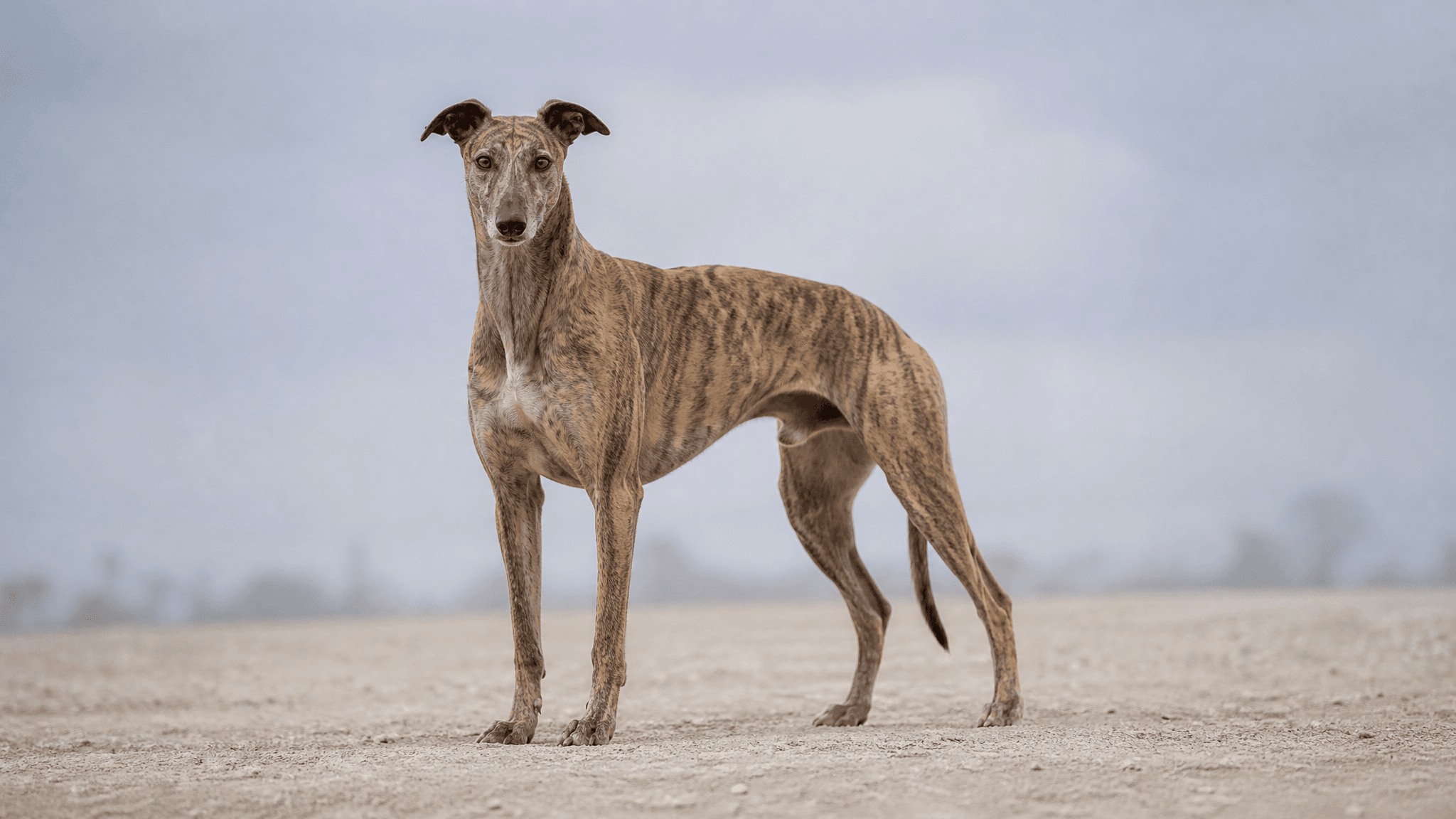
The Polish Greyhound — _Chart Polski_ — is the most robust and muscular short-haired sighthound in the group, probably descended from Asian Saluki-type sighthounds that arrived in Central Europe during medieval migrations. Used by Polish nobility to hunt hares, foxes, deer, bustards, and wolves on the Polish plains, it was selectively bred for greater strength and resistance to the harsh climatic conditions of Eastern Europe. It is a rare breed outside Poland, of noble, courageous, and very loyal character.
Physical Characteristics
- Size
- Large
- Height (male)
- 70–80 cm
- Height (female)
- 68–75 cm
- Weight (male)
- 27–40 kg
- Weight (female)
- 25–35 kg
- Life Expectancy
- 10–14 years
- Coat
- Relatively rough to the touch, firm, and elastic; shorter on the belly and limbs; longer and slightly fringed on the buttocks and tail (forming a "pennant" or "flag"); undercoat develops in winter
- Common Colors
- All colors accepted — black, fawn, brindle, blue, sand, white; with or without markings
Temperament & Personality
The Chart Polski is described as "self-confident, courageous, reserved, and brave." It is not a submissive dog — it has a strong personality and leadership character that requires an experienced and consistent owner. With the family it is deeply loyal and protective; with strangers it is naturally distrustful but rarely aggressive without reason. Unlike other sighthounds, it has a developed guarding instinct. It is generally careful with children, but its size and energy require supervision. It requires solid socialization and training from puppyhood.
Activity & Exercise
- Energy Level
- High
- Recommended Daily Exercise
- 60–90 minutes
- Suitable for Apartment
- Not recommended
Grooming & Care
- Grooming Needs
- Low to moderate
- Shedding
- Moderate
- Bathing Frequency
- Every 6–8 weeks
Health
- Common Health Issues
- Anesthesia sensitivity
- Generally healthy and robust
- Hip dysplasia
- Skin conditions
- Susceptibility to gastric dilatation-volvulus (GDV) due to the deep chest
- Recommended Health Tests
- Always inform the veterinarian of anesthesia sensitivity
- Cardiac examination
- Hip evaluation
Compatibility
- With Children
- Good
- With Other Dogs
- Good
- With Cats
- Can be difficult
- For First-Time Owners
- Not recommended
Is a Polish Greyhound right for you?
A Polish Greyhound may suit you if:
- You are prepared to provide 60 to 90 minutes of vigorous daily exercise and engaging mental challenges.
- You enjoy an active outdoor lifestyle that includes long runs or lure coursing with your canine companion.
- You appreciate a self-confident and courageous companion who forms deep, loyal bonds with their family.
- You are an experienced owner ready for consistent, firm, and positive training with a strong-willed sighthound.
- You are comfortable with moderate shedding and providing routine grooming for a relatively rough, yet distinctive, coat.
- You understand and are willing to manage a strong prey drive and a natural, protective instinct towards your home.
Think twice if:
- You expect immediate, unquestioning obedience from your dog, as this breed has a very independent spirit.
- You have a routine that requires your dog to be left alone for long periods, as they thrive on companionship.
- You have cats or small pocket pets, as their strong sighthound prey drive can make cohabitation challenging.
- You are unable to commit to at least 60 to 90 minutes of vigorous exercise every single day.
- You live in an apartment or do not have a securely fenced yard for a large, athletic sighthound to stretch their legs.
- You are a first-time dog owner, as their strong personality requires confident and experienced guidance.
The Polish Greyhound offers unparalleled loyalty and a noble presence to the right home. While their independent spirit and high energy demand an experienced owner committed to consistent training and ample exercise, their deep affection and protective nature create an incredibly rewarding bond. Living with a Chart Polski is a journey of mutual respect and understanding, perfect for those who cherish a strong-willed yet devoted companion.
Training a Polish Greyhound
Polish Greyhounds, or Chart Polski, are intelligent and independent sighthounds with a strong, self-confident personality. They respond best to positive reinforcement and clear, consistent guidance from an experienced owner. Training sessions should be short, engaging, and fun, focusing on building a strong bond rather than repetitive drills. Their keen intelligence means they can quickly become bored or resistant if training is inconsistent, harsh, or lacks motivation. If a handler is not firm, fair, and patient, this breed's independent nature and strong will can lead to them making their own decisions, which may not always align with your expectations.
Begin with:
- Attention and response to name around distractions
- Reliable recall, on a long line at first
- Loose-leash walking without pulling
- Leave it and drop it commands
- Calm greetings without jumping
- Settling on a mat or bed
- Cooperative handling for grooming and vet checks
- Waiting patiently at doors and gates
Prey Drive and Recall
Polish Greyhounds were bred to hunt fast-moving prey like hares and deer, giving them an incredibly strong prey drive. This means that even the most well-trained Chart Polski can be instantly distracted by a squirrel or a blowing leaf. Off-leash freedom in unfenced areas is a huge risk. Always prioritize recall training, starting in a secure, distraction-free environment and gradually introducing more stimuli. Using a long line is crucial for safety and practice, especially while your dog is learning to reliably return to you even when tempted. Remember, their high energy level means they need their 60-90 minutes of daily exercise, but this should often be done on a leash or in a secure, enclosed space. Our guide to recall training can help you build this essential skill.
Leash Manners and Strength
Given their large size and significant strength – males can weigh up to 40 kg and stand 80 cm tall – a Polish Greyhound who pulls on the leash can be a real handful. Their independent nature means they won't naturally defer to your lead if they're not properly motivated. Start loose-leash training early and consistently, using positive reinforcement to reward walking calmly by your side. Avoid harsh corrections, as their sensitive nature combined with their bravery can lead to resistance rather than compliance. A well-fitted front-clip harness can be a valuable tool to manage pulling while you work on training. For more help, check out our tips on stopping leash pulling.
Boredom and Destructive Behavior
A Chart Polski with its high energy level and keen intelligence needs consistent physical and mental stimulation. If under-exercised, under-stimulated, or left alone for extended periods, this breed can become bored and channel its energy into destructive behaviors like chewing or excessive barking. They are not recommended for apartment living precisely because of these needs. Ensure they receive their recommended 60-90 minutes of daily exercise, which should include opportunities for running in a secure area, alongside mental enrichment like puzzle toys and training games. Establishing a consistent routine and providing plenty of appropriate outlets for their energy will help keep your Polish Greyhound happy and well-behaved.
Polish Greyhound — Frequently Asked Questions
What is the Chart Polski?
The Chart Polski, or Polish Greyhound, is one of the oldest sighthound breeds in existence, with records of greyhound-type dogs in Poland dating back to the 13th century. It is a large, powerful sighthound developed on the open plains of Poland and the steppes of Central Europe for coursing hare, fox, and deer. More robust and heavily boned than most Mediterranean sighthound breeds, it was designed to handle the harsh winters and demanding terrain of Eastern Europe. It is the national sighthound of Poland and is recognised by the FCI, though it remains rare outside its homeland.
How does the Chart Polski compare to other sighthounds?
The Chart Polski is noticeably more powerful and heavily built than most sighthound breeds such as the Greyhound, Saluki, or Whippet. While those breeds prioritise extreme speed and elegant build, the Chart Polski was developed for versatility in harsh conditions — it needed to be fast enough to catch prey on open plains but also strong enough to pull it down and withstand freezing Eastern European winters. It is also notably more protective and territorial than many sighthounds, making it a more alert watchdog. Its coat is slightly longer and denser for weather protection, further distinguishing it from its Mediterranean relatives.
How much exercise does a Chart Polski need?
The Chart Polski is an athletic, energetic sighthound that needs substantial daily exercise — at least 1.5–2 hours, including opportunities for high-speed running. Like all sighthounds, it requires a securely fenced area to run freely, as its prey drive is strong and its speed is exceptional — once it spots something moving, recall becomes very difficult. Long walks, free running in enclosed spaces, and lure coursing are ideal activities. Despite its energy when exercised, the Chart Polski is typically calm and dignified indoors, making it a surprisingly manageable house dog when its exercise needs are met.
Is the Chart Polski a good family dog?
The Chart Polski can be an excellent companion for the right family — one that is experienced with sighthounds, active, and has space. It is loyal and deeply bonded to its people, though it tends to be reserved and selective in affection rather than demonstratively affectionate with everyone. It is typically gentle with children it knows and lives with, though its large size warrants supervision around very young children. It can be aloof with strangers and has a territorial instinct stronger than most sighthounds. Early socialisation is very important. It is generally not suited to first-time dog owners due to its independent nature and exercise requirements.
Is the Chart Polski easy to train?
The Chart Polski is an intelligent breed but has an independent nature typical of sighthounds — it thinks for itself and does not blindly follow commands the way a herding or retriever breed might. It responds well to positive reinforcement with patience, but poorly to repetitive or forceful training. Its recall is one of the most important behaviours to establish early, as prey drive can completely override trained commands in the open. Training should be consistent, clear, and reward-based. The Chart Polski particularly respects boundaries and responds to calm, authoritative leadership rather than emotional or harsh approaches.
What health issues are common in the Chart Polski?
The Chart Polski is generally a robust and healthy breed, partly because its gene pool has been maintained with working selection. As a large, deep-chested dog, bloat (gastric dilatation-volvulus) is the most serious health risk — feeding two smaller meals per day and avoiding vigorous exercise around mealtimes are important preventive measures. Hip dysplasia can occur at low to moderate rates. Sighthounds are sensitive to anaesthesia, which is important for vets to know before any surgical procedure. They have low body fat and are sensitive to cold — appropriate shelter and protection in winter is important. Regular vet check-ups monitor overall health effectively.
What is the Chart Polski's coat like?
The Chart Polski has a short to medium-length, dense coat that is slightly harder in texture than many sighthound breeds — an adaptation to the harsher climate of Central and Eastern Europe. It comes in a wide range of colours including fawn, brindle, black, blue, and various combinations with or without white markings. Grooming is minimal — a weekly brush with a soft bristle brush or rubber grooming mitt removes loose hair and maintains the coat's natural sheen. Seasonal shedding occurs twice a year. Despite their short coat, Chart Polski are sensitive to cold and may need a coat in winter, particularly in wet or freezing conditions.
What is the typical lifespan of a Chart Polski?
The Chart Polski typically lives between 10 and 12 years, which is a standard range for a large sighthound breed. Their active lifestyle and working heritage contribute to a generally robust constitution. The main longevity factors are maintaining a lean weight (large breeds are significantly impacted by obesity), providing daily vigorous exercise to keep the musculoskeletal system strong, monitoring for bloat as they age, and ensuring appropriate warmth in cold climates. Anaesthesia sensitivity means surgical procedures require special protocols — always inform your vet that your dog is a sighthound before any procedure requiring general anaesthesia.
Community
Talk to real Polish Greyhound owners
This guide covers the breed on paper. In the app, the Polish Greyhound community covers it in real life: photos from other owners, questions answered by people who live with the breed, and a directory of dogs you can browse.
- Photos & pollsSee what Polish Greyhound owners are sharing today.
- Questions & answersAsk anything and hear from people who own one.
- Dog directoryBrowse Polish Greyhounds from around the world.
You join automatically when you add a Polish Greyhound to your profile.