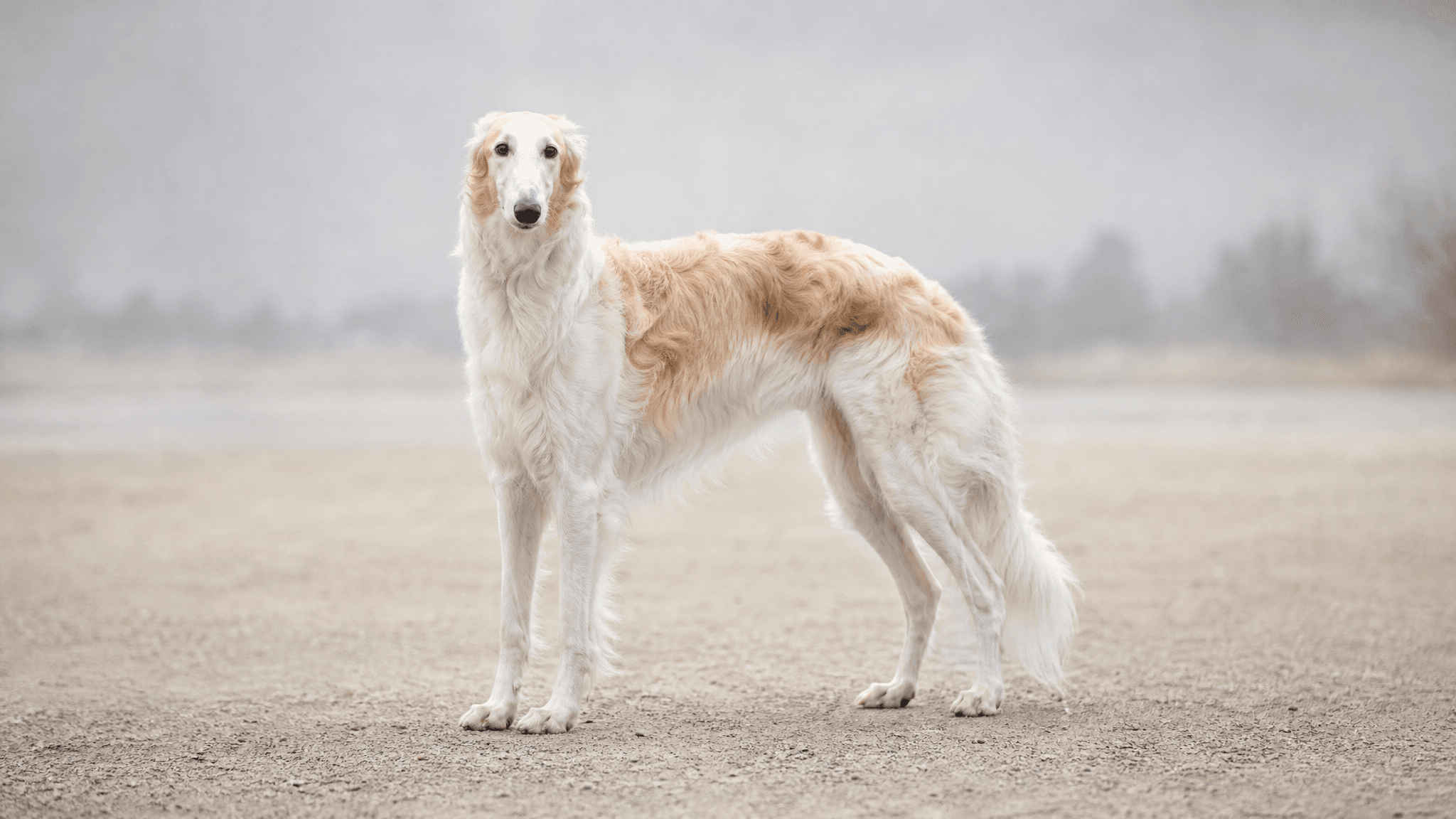
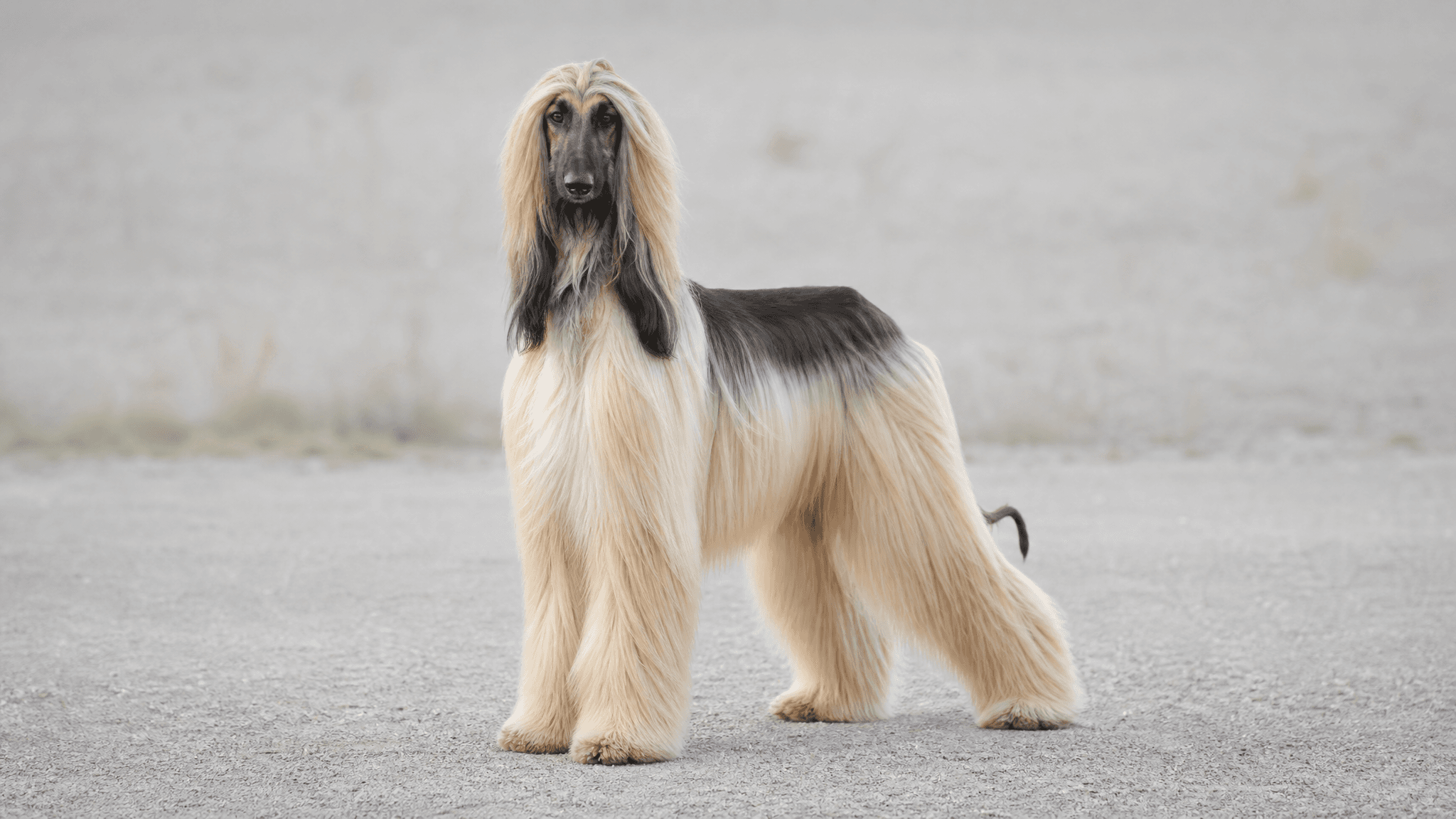
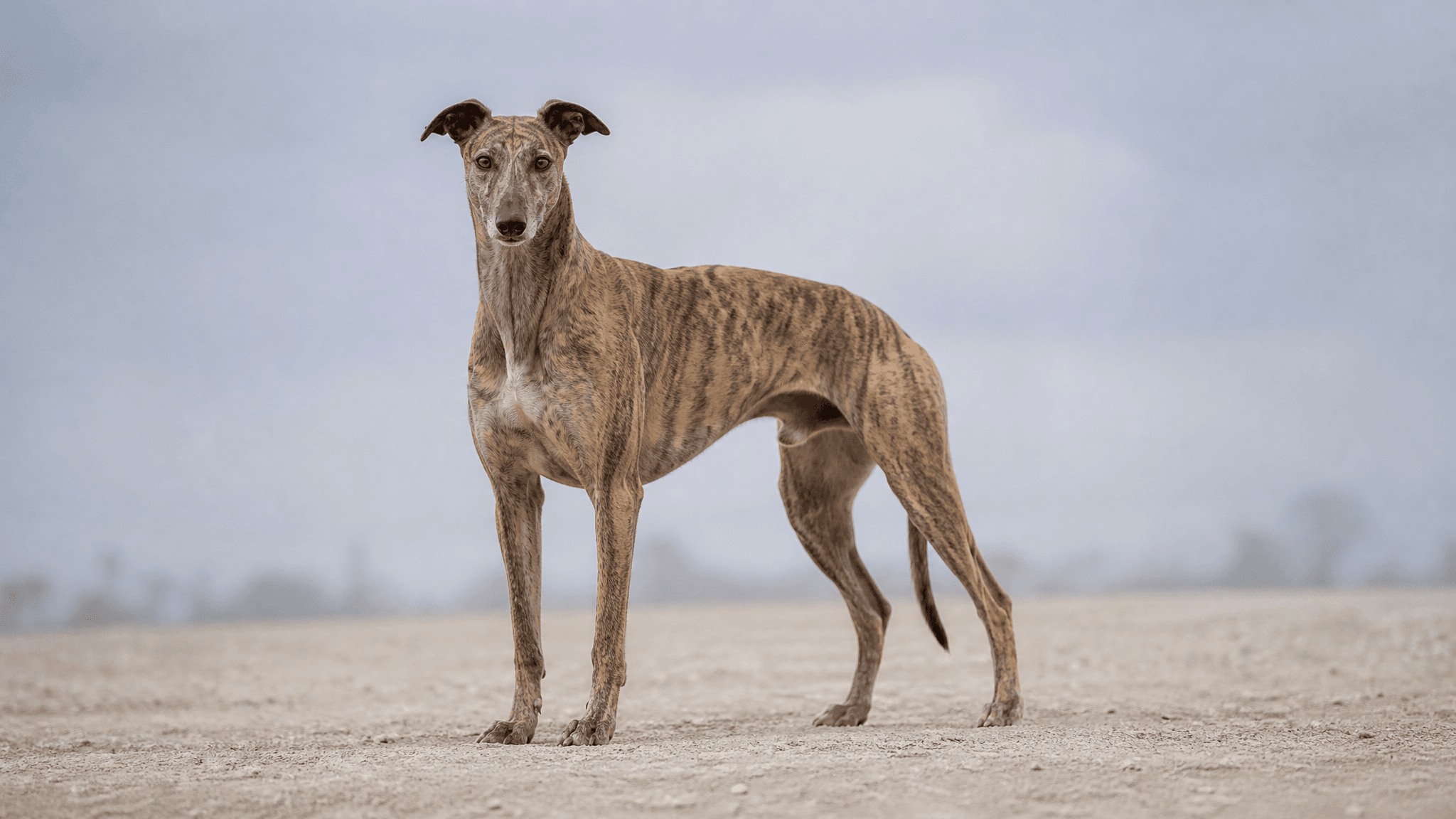
Greyhound
Summary
The Greyhound is the fastest dog in the world, capable of reaching 69–72 km/h at top speed, and the archetype of the modern sighthound. With a history spanning thousands of years — representations of this silhouette appear in engravings from Ancient Egypt and classical Greece — it is a breed refined over centuries for speed competitions and hunting. Today it is also known as "the racing greyhound" and is widely adopted as a companion animal after the end of its sporting career, proving to be an exemplarily calm and affectionate companion.
Physical Characteristics
- Size
- Large
- Height (male)
- 71–76 cm
- Height (female)
- 68–71 cm
- Weight (male)
- 27–40 kg
- Weight (female)
- 25–34 kg
- Life Expectancy
- 10–14 years
- Coat
- Very short, smooth, dense, and slightly rougher to the touch; practically no undercoat
- Common Colors
- Virtually all colors — black, white, red, blue, fawn, brindle, dun, and their respective combinations
Temperament & Personality
The Greyhound is frequently described as "the cat of the dog world" for its independence and love of comfort. At home it is surprisingly calm, non-destructive, and rarely barks. With the family it is affectionate, gentle, and discreet; with strangers it is reserved but rarely aggressive. Despite being the fastest dog in the world, it is not a high-energy dog — it prefers rest interspersed with brief, intense bursts of speed. The chase instinct is very strong and it should never be let loose in open space without a fence.
Activity & Exercise
- Energy Level
- Moderate
- Recommended Daily Exercise
- 40–60 minutes
- Suitable for Apartment
- Yes with exercise
Grooming & Care
- Grooming Needs
- Very low
- Shedding
- Moderate
- Bathing Frequency
- Every 6–8 weeks
Health
- Common Health Issues
- Anesthesia sensitivity
- Gastric dilatation-volvulus (GDV — less frequent than in larger breeds)
- Hereditary polyneuropathy (linked to the NDRG1 gene — DNA test available)
- Osteosarcoma
- Physiologically atypical blood values (elevated red blood cells, low platelets, low T4)
- Post-surgical fibrinolysis syndrome (delayed hemorrhage)
- Recommended Health Tests
- Always inform the veterinarian that the Greyhound's normal values differ from standard references
- Genetic test for polyneuropathy
- Hip evaluation
Compatibility
- With Children
- Good
- With Other Dogs
- Excellent
- With Cats
- Can be difficult
- For First-Time Owners
- Recommended
Is a Greyhound right for you?
A Greyhound may suit you if:
- You are prepared to provide 40-60 minutes of daily exercise, often in short, energetic bursts.
- You enjoy a calm home life balanced with brisk walks and opportunities for a good sprint.
- You appreciate an independent yet affectionate companion who enjoys quiet comfort indoors.
- You are ready to engage in positive, consistent training, understanding their independent sighthound nature.
- You appreciate a low-maintenance coat that requires very little grooming effort.
- You are willing to manage their strong sighthound instinct, which means they love to chase moving objects.
Think twice if:
- You expect unwavering obedience and instant recall, especially off-leash in open areas.
- Your household routine involves leaving a dog alone for long stretches every day.
- You currently share your home with cats or other small, fast-moving pets.
- You are unwilling to commit to daily walks or provide opportunities for them to stretch their legs.
- Your yard is not securely fenced, or you live in an area without safe, contained spaces for off-leash running.
- You are not prepared for a large, powerful dog that needs careful handling, especially during excited moments.
Greyhounds offer a unique blend of athletic grace and couch-potato charm. While they crave exhilarating sprints, they are equally content lounging beside you, often earning them the nickname "45-mph couch potatoes." Embracing their independent spirit and sighthound instincts means welcoming a gentle, quiet companion who truly thrives on both adventure and affection.
Training a Greyhound
Greyhounds, often called the "cat of the dog world," thrive on positive reinforcement and gentle guidance. Their independent yet affectionate nature means training sessions should be short, fun, and reward-based, focusing on praise and tasty treats. Avoid harsh corrections or long, repetitive drills, as these sensitive sighthounds can become withdrawn or shut down. Understanding their desire for comfort and their history as swift hunters will help you build a strong, trusting bond and make learning a joyous experience for your elegant companion.
Begin with:
- Attention and response to name around distractions
- Recall on a long line
- Loose-leash walking
- Leave it and drop it
- Calm greetings without jumping
- Settling on a mat or bed
- Cooperative handling for grooming
- Waiting at doors and gates
Prey Drive Management
Greyhounds are sighthounds, capable of incredible speed (up to 72 km/h), and possess a strong instinct to chase anything that moves. This powerful prey drive means off-leash freedom in unsecured areas is risky, as they can be out of sight in seconds.
To manage this, always use a secure leash or long line in open spaces. Focus heavily on teaching a rock-solid recall, starting in low-distraction environments and gradually increasing challenges. Practice "leave it" to help them disengage from potential triggers. A strong recall is your best safety tool.
Leash Manners
Despite their calm indoor demeanor, Greyhounds are large dogs, with males weighing up to 40 kg. Their strength, combined with their sensitive nature, means that pulling on the leash can be both uncomfortable for them and challenging for you. Harsh jerks can damage their delicate necks and erode trust.
Start loose-leash training early with positive reinforcement, rewarding calm walking beside you. Use a well-fitting harness that discourages pulling without causing discomfort. Consistent, patient practice will help your Greyhound learn to walk politely. For tips, see this guide on stopping leash pulling.
Preventing Boredom
While Greyhounds are known for their love of comfort and can be "couch potatoes," they still require a moderate 40–60 minutes of daily exercise to stay happy and healthy. An under-exercised or under-stimulated Greyhound, though typically non-destructive, might become restless or seek out their own entertainment, which could lead to unwanted behaviors.
Ensure they get their daily walks and provide mental enrichment through puzzle toys or short training sessions. Despite their independence, they thrive on companionship. If left alone for extended periods, they might show signs of stress. Learn to recognize these in this article.
Greyhound — Frequently Asked Questions
Are Greyhounds good family dogs?
Greyhounds — especially retired racing Greyhounds — make surprisingly wonderful family dogs. Calm, gentle, affectionate, and low-maintenance indoors, they often confound expectations. They're sensitive, quiet dogs who love comfort and warmth and bond deeply with their family. They're generally good with older children and can live peacefully with cats they've been properly introduced to. Their need for exercise is moderate rather than extreme, and their independent, gentle nature makes them wonderfully easy companions for many household types.
How much exercise does a Greyhound need?
Despite being the fastest dog breed (reaching 70 km/h), Greyhounds are sprinters, not endurance athletes — they don't need as much daily exercise as you'd expect. Two 30–45 minute walks per day, plus at least a few opportunities each week to run freely at full speed in a securely enclosed area, is typically sufficient. After a good sprint they're happy to sleep for hours. They should never be let off-lead in open, unsecured areas — their prey drive and speed mean they can be gone before you react.
Are Greyhounds good apartment dogs?
Greyhounds are one of the best large breeds for apartment living, which surprises many people. Indoors they're calm, clean, quiet, and content to sleep for up to 18 hours a day — more like a large, affectionate cat than the energetic dog you might expect from the world's fastest breed. The key requirement is access to regular outdoor exercise and a safe enclosed space for occasional full-speed runs. For people in cities with access to parks or enclosed exercise fields, an apartment Greyhound is entirely workable.
Are Greyhounds good with cats?
Greyhounds have a strong sight-hound prey drive and many have been trained to chase small animals on the race track. Whether a Greyhound is safe with cats depends entirely on the individual dog — it needs careful assessment (usually called a 'cat test' by Greyhound rescue organisations). Some Greyhounds live happily with cats; others have too strong a chase instinct. Never assume they're safe until properly tested. Even a cat-safe Greyhound should always have an indoor escape route for the cat and should not be trusted off-lead near unknown cats outdoors.
Are Greyhounds easy to train?
Greyhounds are gentle, sensitive, and willing to cooperate, but their sight-hound independence means they can choose to disengage when something more interesting appears. They respond well to positive, reward-based training. Basic obedience, leash manners, and recall (in secure areas) are the most important skills. They're not typically interested in advanced tricks or competitive obedience, but house manners and basic commands come reasonably easily with patient, kind training. Harsh methods cause them to shut down and lose confidence.
What health problems do Greyhounds have?
Greyhounds are generally a healthy breed, but have specific considerations. Their thin skin and low body fat make wounds slower to heal and make them sensitive to anaesthesia — always inform your vet this is a sight-hound before any procedure. Osteosarcoma (bone cancer) is unfortunately elevated in the breed. Bloat (GDV) risk exists given their deep chest. Dental disease is common. They're also susceptible to cold and need appropriate bedding and coats in winter. Retired racing Greyhounds sometimes carry injuries from their racing careers that need ongoing management.
Do Greyhounds need to wear coats?
Yes — Greyhounds genuinely need coats in cold weather. Their single, very thin coat and almost complete lack of subcutaneous fat means they lose body heat rapidly and feel the cold acutely. In temperatures below 10°C, a well-fitting dog coat is a welfare necessity rather than a fashion statement. Many Greyhound owners have several coats of different thicknesses for different weather conditions. At night, they need warm, padded bedding. Their love of burrowing under blankets and sleeping near heat sources is entirely instinctive and sensible for their physiology.
How long do Greyhounds live?
Greyhounds typically live 10–14 years — a good lifespan that reflects their generally sound genetic health. Retired racing Greyhounds often make their adoption home their first real domestic environment, and many thrive wonderfully in home life after their racing career ends. Key health priorities are dental care (often neglected in racing), monitoring for osteosarcoma, keeping them warm, and weight management. Their calm, undemanding nature combined with their relatively good health makes them a genuinely rewarding long-term companion.
Community
Talk to real Greyhound owners
This guide covers the breed on paper. In the app, the Greyhound community covers it in real life: photos from other owners, questions answered by people who live with the breed, and a directory of dogs you can browse.
- Photos & pollsSee what Greyhound owners are sharing today.
- Questions & answersAsk anything and hear from people who own one.
- Dog directoryBrowse Greyhounds from around the world.
You join automatically when you add a Greyhound to your profile.