Norwich Terrier
Summary
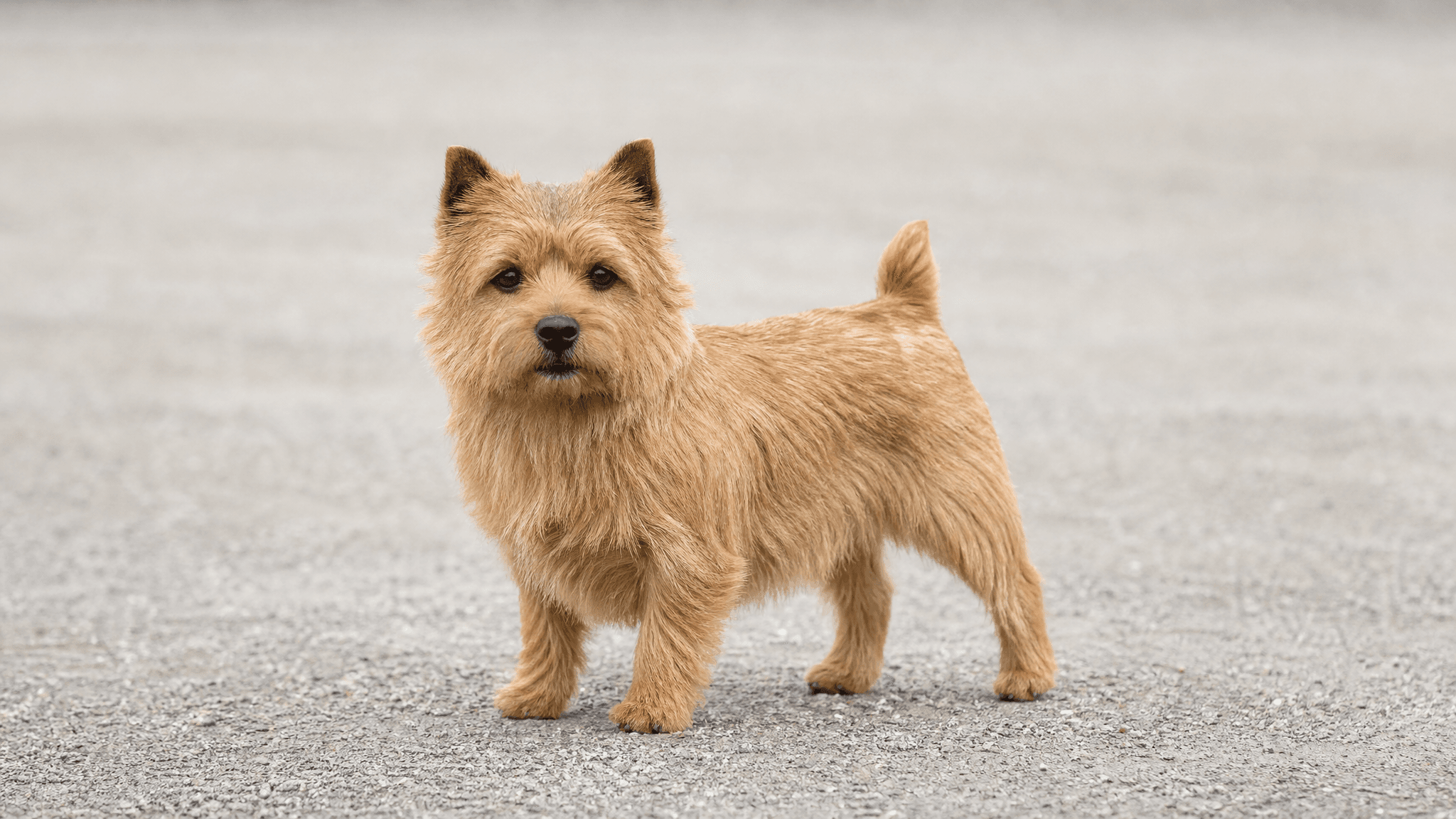
The Norwich Terrier is one of the smallest working terriers in the world, at only 25 cm ideal height, but with the spirit of a much larger dog. Originating from Norwich, in East Anglia, where it hunted fox and rat, it is distinguished from its near-twin the Norfolk Terrier by its erect ears (while the Norfolk has drop ears). The two were the same breed until 1964, when they were formally separated based solely on ear shape.
Physical Characteristics
- Size
- Small
- Height (male)
- 24–26 cm
- Height (female)
- 24–26 cm
- Weight (male)
- 5–6 kg
- Weight (female)
- 5–6 kg
- Life Expectancy
- 12–15 years
- Coat
- hard, rough, and straight hair, lying close to the body; longer ruff on the neck
- Common Colors
- all shades of red, wheaten, black-and-tan, or grizzle; no white markings
Temperament & Personality
The Norwich is described as "a demon for its size" — a statement that perfectly captures its character. Affectionate, very active, courageous, and rarely confrontational with other dogs (for a terrier). It is a cheerful and loyal companion, easily adapted to apartment life as long as it is well exercised. Excellent with children.
Activity & Exercise
- Energy Level
- High
- Recommended Daily Exercise
- 30–45 minutes
- Suitable for Apartment
- Yes
Grooming & Care
- Grooming Needs
- Moderate
- Shedding
- Minimal
- Bathing Frequency
- Every 4–6 weeks
Health
- Common Health Issues
- Epilepsy
- Hip dysplasia
- Upper respiratory problems (especially in show lines)
- Recommended Health Tests
- Joint evaluation
- Respiratory evaluation
Compatibility
- With Children
- Excellent
- With Other Dogs
- Good
- With Cats
- Moderate
- For First-Time Owners
- Recommended
Is a Norwich Terrier right for you?
A Norwich Terrier may suit you if:
- You can commit to providing 30-45 minutes of daily exercise and engaging mental games for your spirited companion.
- You enjoy an active lifestyle that includes walks, playtime, and adventures with a cheerful and loyal friend.
- You are drawn to a courageous, affectionate, and very active personality in a small dog with a big heart.
- You are prepared to invest in consistent, positive training to guide a smart, spirited terrier.
- You can manage moderate grooming needs, including regular brushing and occasional bathing every 4-6 weeks.
- You are willing to embrace the lively spirit and natural curiosity of a small terrier bred for hunting.
Think twice if:
- You expect unwavering obedience from a dog, as Norwich Terriers possess an independent, spirited nature.
- You have a household routine that requires your dog to be left alone for long stretches each day.
- You are unwilling to carefully introduce and supervise interactions with resident cats due to their moderate compatibility.
- You are not prepared for the consistent daily exercise or the moderate grooming a Norwich Terrier truly needs.
- You are unable to provide a securely fenced area or vigilant supervision to prevent their adventurous spirit from roaming.
- You prefer a dog that is always calm and gentle, rather than one with a bold, energetic, and sometimes boisterous personality.
The Norwich Terrier is a wonderful, spirited companion, bringing joy and lively energy into many homes. While their small size makes them adaptable to apartment living, their big personality and historical drive mean they thrive with active engagement and consistent guidance. Be ready for a loyal friend who will keep you on your toes in the most delightful way for 12-15 years.
Training a Norwich Terrier
Norwich Terriers are intelligent, spirited little dogs with a "demon for its size" character, making training a joyful adventure when approached correctly. They thrive on positive reinforcement, short, engaging sessions, and a handler who understands their innate drive and courage. Consistency is key; these clever pups learn best when training feels like a fun game, not a chore. If sessions are too long, repetitive, or inconsistent, a Norwich may quickly lose interest or become stubborn, channeling their energy into less desirable behaviors. Keep it upbeat, reward generously, and you'll build a strong, loyal bond with your cheerful companion.
Begin with:
- Attention and name response around distractions
- Recall on a long line
- Loose-leash walking
- Leave it and drop it
- Calm greetings without jumping
- Settling on a mat or bed
- Cooperative handling for grooming, ears, feet and teeth
- Waiting at doors and gates
Recall and prey drive
Norwich Terriers were originally bred to hunt fox and rat, and this strong prey drive is still very much alive in them today. While this makes them courageous and active, it also means a squirrel or a rustle in the bushes can easily become far more interesting than you are. To build a reliable recall, start in a quiet environment and gradually introduce distractions. Always make coming back to you the most rewarding thing ever, with high-value treats and enthusiastic praise. Practice regularly on a long line in varied locations to give them freedom while ensuring their safety, especially during their recommended 30-45 minutes of daily exercise. Our guide on recall offers more tips.
Leash pulling
Despite their small size of 5-6 kg, Norwich Terriers possess a surprising strength and a determined spirit, which can lead to significant pulling on the leash. Their high energy level means they are eager to explore and can be quite strong-willed when they want to get somewhere. Start teaching loose-leash walking early with positive reinforcement, rewarding every step taken without tension on the leash. Avoid letting them practice pulling, as this only reinforces the behavior. Consider using a front-clip harness for better control without discomfort, and remember that consistent, patient training is far more effective than force. This plan can help.
Boredom and destruction
A Norwich Terrier is an active, intelligent dog that needs mental and physical stimulation to thrive. While they adapt well to apartment life, this is only true if their high energy needs are met with adequate exercise and engagement. If under-exercised, under-stimulated, or left alone for long periods without enrichment, they can become bored and channel their "demon for its size" energy into destructive chewing, excessive barking, or digging. Provide plenty of interactive toys, puzzle feeders, and regular training sessions to keep their minds busy. Daily walks and playtime are essential, and consider dog sports like agility to truly engage their clever minds and active bodies.
Norwich Terrier — Frequently Asked Questions
What is the Norwich Terrier?
The Norwich Terrier is a small, sturdy, fearless terrier from Norfolk, England, developed in the late 19th century. They are one of the smallest working terriers, originally used to hunt rats and other vermin and to bolt foxes from their dens when working with hounds. They are closely related to the Norfolk Terrier — the key distinguishing feature is that the Norwich Terrier has prick (upright) ears while the Norfolk Terrier has drop ears. They have a hard, wiry, straight coat that lies close to the body in various shades of red, wheaten, black and tan, or grizzle. In character they are lively, affectionate, curious, alert, and somewhat independent — a big personality in a small body.
Are Norwich Terriers good family dogs?
Norwich Terriers make charming family companions. They are affectionate, playful, and devoted — they love being part of family life and thrive on interaction. They are generally good with children who treat them with respect. Their small size makes them practical. However, their terrier nature means they have a strong prey drive and will chase small animals — they should not be trusted with pet rabbits, guinea pigs, or similar small animals. They can be stubborn and independent. They can be quite vocal — typical terrier alertness leads to barking at new sights and sounds. Their fun, robust personality — 'big dog in a small body' — makes them entertaining and engaging companions for active families.
How much exercise does a Norwich Terrier need?
Norwich Terriers need 45–60 minutes of daily exercise. Despite their small size, they are energetic, athletic dogs with real stamina — they were bred to work all day hunting in demanding terrain. Daily walks, play sessions, off-leash time in a secure garden, and nose work keep them fit and mentally satisfied. Their terrier instinct means they may dig and explore — a supervised garden is ideal. They enjoy agility, earthdog trials, and obedience activities. Off-leash exercise in unsecured areas is not safe — their prey drive is strong and they will chase without regard for traffic. They are robust enough for active families but manageable enough for older owners who take regular daily walks.
How do you groom a Norwich Terrier?
The Norwich Terrier's hard, wiry, straight double coat requires regular hand-stripping to maintain its correct texture and appearance. The outer coat should be hand-stripped 2–3 times per year — this involves pulling out dead outer coat by the roots rather than clipping, which preserves the coat's hard texture and natural dirt-resistance. Clipping softens and changes the coat's texture permanently. Between strips, weekly brushing with a pin brush or slicker keeps the coat neat. Their compact beard and eyebrows need occasional tidying. Ears need monthly cleaning. Nails need monthly trimming. Most Norwich Terrier owners either learn to hand-strip themselves or use a professional groomer familiar with terrier coats.
What health issues affect Norwich Terriers?
Norwich Terriers are generally a healthy, robust breed. Key health concerns include: Upper Airway Syndrome (UAS) — a respiratory condition (not to be confused with brachycephalic syndrome) related to abnormal soft palate anatomy has been documented in the breed and can be serious; breathing assessment of parents is recommended. Hip dysplasia occurs. Epilepsy has been noted. Mitral valve disease (heart) occurs. Degenerative myelopathy (DM) has been documented. Cataracts and other eye conditions have been noted. Dental disease is common given their small mouth. Health-tested parents and annual vet check-ups are important.
How long do Norwich Terriers live?
Norwich Terriers have an average lifespan of 12–15 years — good to excellent for a small breed. Key longevity factors include breathing assessment of parents (UAS screening — the upper airway condition can be life-limiting if severe), annual cardiac monitoring (mitral valve disease management), regular dental care (small-mouthed dogs with neglected teeth develop significant health complications), daily exercise, healthy weight management (obesity worsens breathing and joint problems), annual vet check-ups, and mental stimulation (engaged terriers age well). Their sturdy constitution and working-terrier origins generally support good longevity. Many Norwich Terriers remain remarkably active, energetic, and bright well into their early teens.
What is the difference between a Norwich and a Norfolk Terrier?
The Norwich Terrier and Norfolk Terrier are closely related breeds that were only officially separated into two distinct breeds in 1964. Before that, both ear types existed within the same breed. The key differences are: Ears — the Norwich Terrier has prick (upright, pointed) ears; the Norfolk Terrier has drop (folded, V-shaped) ears. This is the primary and definitive distinguishing feature. Head shape — the Norwich tends to have a slightly more rounded skull; the Norfolk a slightly more wedge-shaped head. Character — both are very similar in temperament: lively, affectionate, bold terriers. Size and coat — both are virtually identical. The ear position is the reliable way to tell them apart.
Are Norwich Terriers easy to train?
Norwich Terriers are intelligent and willing but have a typical terrier independent streak. They were bred to work independently — making their own decisions while hunting — and this self-determination carries into their training. They respond very well to positive, reward-based training with high-value treats and enthusiastic praise. Short, varied, fun sessions work best — they lose interest in repetitive drills quickly. They respond poorly to harsh corrections, which can make them shut down or become stubborn. Their food motivation makes them very trainable for basic obedience and beyond. They can excel at agility, rally obedience, nose work, and earthdog trials. Consistent training from early puppyhood establishes the patterns that make them pleasantly well-mannered adults.
Community
Talk to real Norwich Terrier owners
This guide covers the breed on paper. In the app, the Norwich Terrier community covers it in real life: photos from other owners, questions answered by people who live with the breed, and a directory of dogs you can browse.
- Photos & pollsSee what Norwich Terrier owners are sharing today.
- Questions & answersAsk anything and hear from people who own one.
- Dog directoryBrowse Norwich Terriers from around the world.
You join automatically when you add a Norwich Terrier to your profile.