Newfoundland
Summary
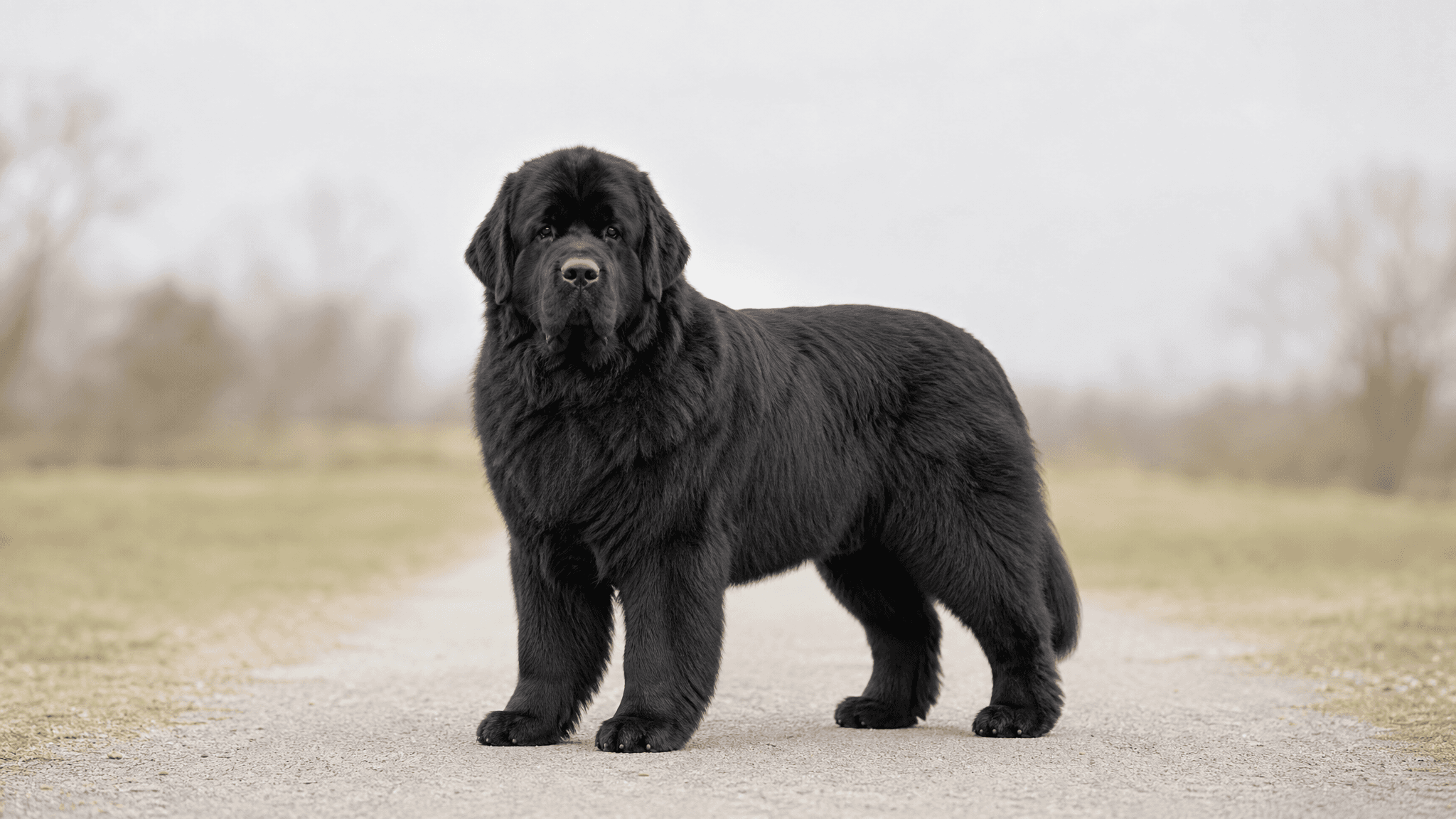
The Newfoundland is one of the largest and gentlest dogs in the world, originating from the Canadian island of the same name. Bred by fishermen to help with nets, pull carts, and rescue shipwreck survivors, it develops a natural affinity with water that is almost unique among breeds. Its webbed feet, waterproof coat, and enormous muscular strength make it one of the best water rescue dogs in existence.
Physical Characteristics
- Size
- Giant
- Height (male)
- 71 cm
- Height (female)
- 66 cm
- Weight (male)
- 60–70 kg
- Weight (female)
- 45–55 kg
- Life Expectancy
- 9–10 years
- Coat
- Double, dense, waterproof; outer coat coarse and straight; undercoat dense and soft
- Common Colors
- Black, brown, grey; the black-and-white pattern is called Landseer (European continental type — see separate breed)
Temperament & Personality
The Newfoundland is often described as the "perfect nanny", a reference to the book Peter Pan, where J.M. Barrie portrayed a Newfoundland (Nana) as the guardian dog of the Darling children. Indeed, the breed has almost unlimited patience with children, an innate protective instinct, and a sweetness of temperament that is hard to find in any other large breed. It loves cold weather and water.
Activity & Exercise
- Energy Level
- Moderate
- Recommended Daily Exercise
- 60–90 minutes
- Suitable for Apartment
- Not recommended
Grooming & Care
- Grooming Needs
- High
- Shedding
- Heavy
- Bathing Frequency
- Every 6–8 weeks
Health
- Common Health Issues
- Dilated cardiomyopathy (DCM)
- Gastric dilatation/torsion
- Hip and elbow dysplasia
- Hypothyroidism problems
- Osteosarcoma
- Recommended Health Tests
- Cardiac examination
- Hip and elbow X-rays
- Thyroid evaluation
Compatibility
- With Children
- Excellent
- With Other Dogs
- Excellent
- With Cats
- Good
- For First-Time Owners
- Acceptable
Is a Newfoundland right for you?
A Newfoundland may suit you if:
- You are prepared to provide 60 to 90 minutes of daily exercise, including opportunities for swimming or water play.
- You enjoy an active, outdoor lifestyle, especially in cooler climates or near water where your dog can truly shine.
- You are seeking a gentle, patient, and sweet-tempered companion with a natural protective instinct for your family.
- You are committed to consistent, positive reinforcement training to manage a giant-sized dog with a gentle spirit.
- You are prepared for a high grooming commitment, including regular brushing of their dense, waterproof double coat.
- You understand and appreciate a breed with a strong natural affinity for water and a tendency to drool.
Think twice if:
- You expect instant obedience or a highly biddable dog, as Newfoundlands are intelligent but can have their own gentle will.
- You frequently leave dogs alone for long periods, as this breed thrives on companionship and can develop separation anxiety.
- You are not prepared to supervise interactions between a giant, powerful dog and very young children or fragile pets.
- You are unwilling to commit to the significant daily exercise requirements of 60 to 90 minutes, especially if it involves water activities.
- You dislike regular, thorough grooming sessions and are unprepared for heavy shedding from a dense double coat.
- You are unable to physically manage a powerful dog that can weigh up to 70 kg, especially during clumsy adolescent phases.
Newfoundlands are truly magnificent, gentle giants, offering unparalleled companionship and patience. However, their immense size and specific needs demand a significant commitment from their owners. While they are incredibly loving and devoted, prospective owners must be prepared for the substantial investment in time, space, and care required to ensure these wonderful dogs live a happy, healthy life for their 9-10 year lifespan.
Training a Newfoundland
Newfoundland dogs are truly gentle giants, eager to please and highly intelligent companions. They thrive on positive reinforcement and respond best to short, fun, and consistent training sessions that always end on a high note. Their sensitive nature means harsh corrections or impatience will quickly shut them down, making them resistant and potentially undermining the deep bond you share. Keep training engaging and reward-based, leveraging their natural desire to work alongside you. This approach builds confidence and ensures a happy, well-behaved companion for their 9-10 year lifespan.
Begin with:
- Attention and response to name around distractions
- Recall on a long line
- Loose-leash walking
- Leave it and drop it
- Calm greetings without jumping
- Settling on a mat or bed
- Cooperative handling for grooming, ears, feet and teeth
- Waiting at doors and gates
Water Drive Distraction
Newfoundlands possess an almost unique affinity for water, a trait bred into them for rescue work. While wonderful, this can become a significant distraction during training, especially if a body of water is nearby. They will often make a beeline for any puddle, pond, or stream, ignoring your commands in their eagerness to swim or splash.
To manage this, practice commands like "leave it" and "stay" far from water initially, gradually introducing water as a distraction. Use high-value rewards to maintain their focus on you, even when the call of the water is strong. Consider using a long line for safety near water until their recall is absolutely solid, ensuring you can prevent them from self-rewarding by bolting into the water.
Leash Pulling Power
Given their giant size and enormous muscular strength, a Newfoundland pulling on the leash can be a serious challenge, making walks difficult and even dangerous for both of you. A dog weighing up to 70 kg can easily pull an adult off their feet if not properly trained. This isn't about malice; it's simply their natural strength combined with excitement.
Start loose-leash training early and consistently. Use a front-clip harness or a head halter for better control, as these tools can help redirect their momentum without causing discomfort. Reward heavily for any slack in the leash and practice in low-distraction environments before gradually increasing complexity. Consistency is key to teaching them that polite walking gets them to their destination. For more help, check out this guide.
Boredom and Loneliness
Despite their moderate energy level, Newfoundlands require 60-90 minutes of daily exercise and mental stimulation to stay happy and well-adjusted. If under-exercised or left alone for extended periods without engagement, these intelligent dogs can become bored, leading to undesirable behaviors like excessive barking, chewing, or even a quiet withdrawal. They are companion animals and thrive on interaction.
Ensure they receive their recommended daily activity, which can include swimming, walks, or engaging playtime. Provide puzzle toys and enrichment activities when you can't actively supervise them. If you must leave them alone, ensure they have had sufficient exercise and mental stimulation beforehand. Consider using our Behaviour AI feature to understand and work on any signs of stress or boredom.
Newfoundland — Frequently Asked Questions
Are Newfoundlands good swimmers?
Newfoundlands are exceptional swimmers — arguably one of the best in the dog world. They were bred by fishermen in Newfoundland, Canada, to haul nets and rescue drowning sailors. Their webbed feet, water-resistant double coat, and powerful build make them natural water dogs. They have an instinctive lifesaving ability and are still used in water rescue operations today. Most Newfoundlands absolutely love the water and will seek it out whenever they can.
How much does a Newfoundland dog weigh?
Newfoundlands are giant dogs. Adult males typically weigh between 65–80 kg (143–176 lbs), while females range from 55–65 kg (121–143 lbs). They stand around 66–71 cm (26–28 in) at the shoulder. Their large, muscular build and thick double coat make them look even more imposing. Full size is generally reached around 2 years, though they may continue to fill out until age 3.
Are Newfoundlands good with children?
Newfoundlands are famously gentle and patient with children — they have earned the nickname "Nanny Dog" for their natural affinity with youngsters. They are calm, tolerant, and deeply protective of those they love. Their massive size means that interactions with very small children should be supervised (a friendly wagging tail alone can knock a toddler over!), but their gentle temperament makes them wonderful family dogs in homes with enough space.
Do Newfoundlands drool?
Yes — drooling is very much part of the Newfoundland experience. Their large jowls and loose lips are designed for swimming, but they also mean significant drooling at mealtimes, after drinking, or during excitement. Keeping a dedicated drool towel nearby is almost a requirement in Newfoundland households. It's one of those quirks that devoted owners quickly learn to embrace as part of the breed's lovable, larger-than-life personality.
How much exercise does a Newfoundland need?
Despite their size, Newfoundlands are moderate in their exercise needs. Around 30 to 60 minutes of daily activity is sufficient — swimming is ideal as it is gentle on their joints and they love it. Long, strenuous hikes are not appropriate, especially in warm weather, as they are prone to overheating. Puppies should have limited, controlled exercise to protect their developing joints and bones.
Do Newfoundlands shed a lot?
Yes — Newfoundlands are heavy shedders. Their thick, water-resistant double coat sheds heavily twice a year (spring and autumn) and moderately throughout the rest of the year. Regular brushing several times a week — and daily during shedding seasons — is essential to manage loose hair and prevent matting. Professional grooming every few months is also recommended. If dog hair on your furniture is a concern, the Newfoundland may be a challenging choice.
Are Newfoundlands easy to train?
Newfoundlands are intelligent, calm, and eager to please, which makes them very trainable. They respond well to positive reinforcement and gentle, patient guidance. They are not known for stubbornness and genuinely want to cooperate with their owners. Early socialization and basic obedience training are still important given their enormous size — a well-trained Newfoundland is a joy, but an untrained one is very difficult to manage. Their calm temperament makes them ideal therapy and service dogs.
How long do Newfoundlands live?
Newfoundlands have a typical lifespan of 8 to 10 years, which is common for giant breeds. They are prone to certain health issues including hip and elbow dysplasia, heart conditions (especially subvalvular aortic stenosis), bloat, and cystinuria. Working with a responsible breeder who conducts health testing and maintaining regular vet visits, appropriate exercise, and a carefully managed diet all contribute to a longer, healthier life.
Community
Talk to real Newfoundland owners
This guide covers the breed on paper. In the app, the Newfoundland community covers it in real life: photos from other owners, questions answered by people who live with the breed, and a directory of dogs you can browse.
- Photos & pollsSee what Newfoundland owners are sharing today.
- Questions & answersAsk anything and hear from people who own one.
- Dog directoryBrowse Newfoundlands from around the world.
You join automatically when you add a Newfoundland to your profile.