Kerry Blue Terrier
Summary
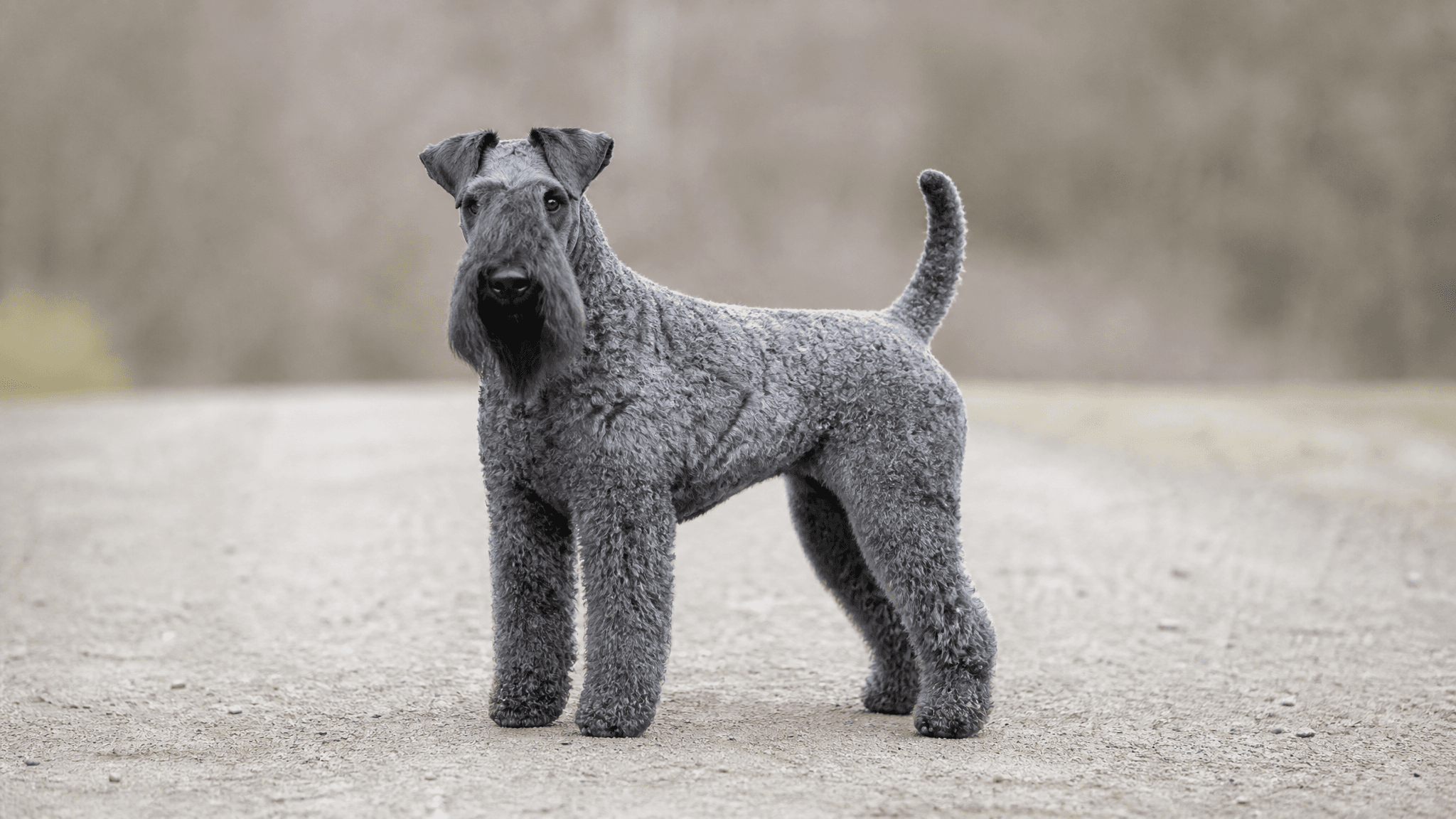
The Kerry Blue Terrier is the national canine symbol of Ireland, originating from County Kerry, in the southwest of the island. Its characteristic blue-grey coat (which develops gradually over the first 18 months of life, starting from black) is unique among terriers. It was bred as a versatile dog for hunting fox, hare, and otter, for herding cattle, and as a guard dog.
Physical Characteristics
- Size
- Medium
- Height (male)
- 45.5–49.5 cm
- Height (female)
- 44.5–48 cm
- Weight (male)
- 15–18 kg
- Weight (female)
- 12–16 kg
- Life Expectancy
- 12–15 years
- Coat
- dense, wavy, soft to silky texture; single coat (no undercoat)
- Common Colors
- any shade of blue to blue-grey; tan markings on the head and limbs in puppies (disappear with age)
Temperament & Personality
The Kerry Blue has a typically Irish character: full of life, cheerful, and absolutely courageous. It is very affectionate with its family and surprisingly good with children, but retains the terrier instinct — it is determined, stubborn, and can be confrontational with other dogs (especially males). Early socialization is essential. Its intelligence and willingness to please make it trainable, as long as the owner is patient and consistent.
Activity & Exercise
- Energy Level
- High
- Recommended Daily Exercise
- 60–90 minutes
- Suitable for Apartment
- Not recommended
Grooming & Care
- Grooming Needs
- High
- Shedding
- Minimal
- Bathing Frequency
- Every 4 weeks
Health
- Common Health Issues
- Cataracts
- Dermatological problems
- Hip dysplasia
- Hypothyroidism
- Pituitary dwarfism (rare)
- Recommended Health Tests
- Eye tests
- Hip evaluation
- Pituitary dwarfism genetic test (PNED)
Compatibility
- With Children
- Good
- With Other Dogs
- Can be difficult
- With Cats
- Moderate
- For First-Time Owners
- Not recommended
Is a Kerry Blue Terrier right for you?
A Kerry Blue Terrier may suit you if:
- You are prepared to provide 60 to 90 minutes of vigorous daily exercise and engaging mental challenges.
- You enjoy an active lifestyle that includes outdoor adventures and purposeful activities with your dog.
- You appreciate a spirited, intelligent companion who is affectionate and full of Irish charm.
- You are committed to consistent, positive training and early socialization to shape a well-mannered friend.
- You are ready for regular grooming, including brushing and professional clipping, to maintain their unique blue-grey coat.
- You are willing to manage a determined terrier's instincts, including potential prey drive and independent thinking.
Think twice if:
- You expect instant, unquestioning obedience from your dog, as Kerry Blues retain a strong independent streak.
- You have a busy schedule that leaves a dog alone for long hours, as they thrive on companionship and activity.
- You already have other dogs, especially males, or cats, and are not prepared for careful introductions and management.
- You are unwilling to commit to daily vigorous exercise or the significant grooming required to keep their coat healthy.
- You live in an apartment or lack a securely fenced yard, which is not ideal for this energetic, medium-sized terrier.
- You are a first-time dog owner who prefers a very easy-to-manage puppy without a strong-willed adolescent phase.
The Kerry Blue Terrier is a truly special companion, offering boundless affection and a lively spirit to the right family. While their intelligence makes them trainable, their inherent terrier determination means they thrive with consistent guidance and an owner who appreciates their spirited independence. Be prepared for an active, engaging, and wonderfully unique friend who will fill your life with joy for 12 to 15 years.
Training a Kerry Blue Terrier
Training a Kerry Blue Terrier is a rewarding experience, as these intelligent and spirited dogs are eager to please their beloved family. They thrive on positive reinforcement, especially when it involves tasty treats or engaging play, making short, fun-filled sessions highly effective. Keep training upbeat and varied to hold their attention, as their terrier determination can quickly turn to stubbornness if they become bored or feel unfairly treated. Inconsistent or harsh methods will only lead to disengagement and a less cooperative companion, so patience and a cheerful approach are your best tools.
Begin with:
- Attention and response to name around distractions
- Reliable recall on a long line
- Loose-leash walking
- Leave it and drop it
- Calm greetings without jumping
- Settle on a mat or bed
- Cooperative handling for grooming, ears, feet and teeth
- Waiting at doors and gates
Prey Drive and Recall
The Kerry Blue Terrier was historically bred for hunting fox, hare, and otter, giving them a strong prey drive. This instinct means that even the most well-trained Kerry Blue might struggle with recall when a squirrel or rabbit crosses their path. It's crucial to practice recall in varied environments, starting with low distractions and gradually increasing the challenge. Always use a long line in unfenced areas until their recall is rock-solid, even around tempting wildlife. For more guidance, check out our guide on teaching recall.
Additionally, their confrontational nature with other dogs, especially males, requires careful management. Early and ongoing socialization is paramount, but always be prepared to redirect their attention if another dog approaches, ensuring positive interactions.
Leash Manners
With their high energy level and medium size (males weighing 15–18 kg), a Kerry Blue Terrier can be a powerful puller on the leash if not taught proper manners from a young age. Their determined nature means they won't give up easily if they're trying to get somewhere. Start loose-leash training in a quiet area with minimal distractions, rewarding every step they take without tension on the leash. Consistency is key, and using a front-clip harness can provide better control without causing discomfort.
Remember, your Kerry Blue needs 60–90 minutes of exercise daily, so make sure walks are enjoyable for both of you. For practical tips, take a look at our plan to stop leash pulling.
Preventing Boredom
A Kerry Blue Terrier is full of life and possesses high energy, requiring significant physical and mental stimulation. If under-exercised, under-stimulated, or left alone for extended periods, they can become bored and resort to destructive behaviors, excessive barking, or other expressions of frustration. They are not recommended for apartment living precisely because of these needs.
Ensure your Kerry Blue receives their recommended daily exercise and incorporate puzzle toys, training sessions, and interactive play into their routine. Providing ample mental enrichment can help prevent anxiety and keep your cheerful companion happy and well-behaved. If you notice signs of stress when you leave, our article can help you identify them.
Kerry Blue Terrier — Frequently Asked Questions
What makes the Kerry Blue Terrier distinctive?
The Kerry Blue Terrier is Ireland's national dog — a versatile, people-oriented terrier instantly recognisable by its distinctive blue-grey wavy coat that is unique among dog breeds. Puppies are born black and develop their blue coat gradually, typically fully transitioning between 18 months and 2 years. Unlike most terrier breeds, Kerries were developed as true all-purpose farm dogs — herding sheep and cattle, hunting game (including badger, otter, and small game), retrieving, and guarding — giving them a broader skillset and somewhat more versatile, adaptable temperament than many single-purpose terrier breeds. They are loyal, courageous, and spirited with a characteristic Irish terrier fire.
Are Kerry Blue Terriers good family dogs?
Kerry Blue Terriers can be excellent family companions in active, experienced households. They are playful, affectionate, and energetic — genuinely enjoying family life and activity. They tend to be good with children they are raised with. However, they can be dog-aggressive (a trait shared with most Irish terrier breeds) — same-sex dog aggression particularly requires management, and early, extensive socialisation is critical. Their terrier spirit means they need experienced owners who provide clear structure and consistent training. For the right family willing to commit to their needs, they are lively, loving, and characterful companions.
How much exercise does a Kerry Blue Terrier need?
Kerry Blue Terriers need 60–90 minutes of vigorous daily exercise. They are energetic, athletic, and tireless — one of the more physically capable terrier breeds given their multi-purpose working background. They enjoy long walks, running, fetch, agility, water activities (they are strong swimmers), and active exploration. Their prey drive is strong — they should be exercised in securely fenced areas or on a leash in open spaces where wildlife or cats may be present. Without adequate exercise, Kerry Blues become restless, vocal, and inventively destructive. Their energy and enthusiasm make them wonderful companions for truly active owners.
What health issues affect Kerry Blue Terriers?
Kerry Blue Terriers have several documented health concerns. Cerebellar Abiotrophy (CA) — a progressive neurological condition causing loss of coordination — is a serious hereditary condition in the breed; DNA testing is available and all responsible breeders should screen for it. Hypothyroidism is common. Hip dysplasia occurs. Entropion (inward rolling eyelid) and cataracts have been documented. Spiculosis (abnormal hair follicle growth causing irritation) occurs in some lines. Progressive Retinal Atrophy has been reported. Sourcing from DNA-tested parents, particularly for CA, is critically important.
How do you groom a Kerry Blue Terrier?
The Kerry Blue Terrier's soft, wavy, non-shedding coat requires regular professional grooming. Their coat grows continuously and needs trimming every 6–8 weeks to maintain the breed's characteristic silhouette — a longer body coat with a shorter, neat head, neck, and leg profile. Between grooming appointments, the coat should be brushed 2–3 times per week to prevent tangles, particularly in the beard and leg furnishings. The beard requires daily cleaning as it traps food and moisture. Kerry Blues are considered low-shedding — their dead coat stays in the coat rather than falling on furniture, which is great for those sensitive to dog hair (though professional grooming is still essential to remove it).
Are Kerry Blue Terriers easy to train?
Kerry Blue Terriers are intelligent and more versatile than many terrier breeds — their multi-purpose working background gives them a broader range of instincts and willingness to engage with training. They respond well to positive, consistent, food-motivated training. They are somewhat more biddable than some of their Irish terrier cousins, but they retain terrier independence and selective hearing. Their recall near wildlife or other animals is unreliable. Early socialisation is critical — particularly to manage their dog-aggression tendency. They can achieve excellent obedience levels and excel at agility, tracking, nose work, and water retrieving activities.
How long do Kerry Blue Terriers live?
Kerry Blue Terriers have an average lifespan of 13–15 years. Key longevity factors include sourcing from parents DNA-tested for Cerebellar Abiotrophy (the breed's most serious hereditary concern), regular eye and joint monitoring, annual vet check-ups including thyroid testing, regular professional grooming (keeping the coat clean and tangle-free protects skin health), dental care, maintaining a healthy weight, daily vigorous exercise, and proper management of their dog-aggression tendency (preventing injuries from confrontations). Kerry Blues from health-tested lines with consistent, active care commonly remain energetic and healthy into their early to mid-teens.
Are Kerry Blue Terriers good with other dogs?
Kerry Blue Terriers have a well-documented tendency toward dog aggression, particularly with dogs of the same sex — a characteristic shared with most Irish terrier breeds. They were developed partly to hunt other animals, and this instinct can translate into conflict with unfamiliar dogs. This does not mean they cannot live with other dogs: many Kerry Blues coexist happily with household dogs, especially when introduced young and socialised extensively. However, meeting unfamiliar dogs — particularly males meeting males — requires careful management. Dog parks and off-leash areas with unknown dogs are generally not recommended. Early, thorough socialisation and reward-based training help significantly.
Community
Talk to real Kerry Blue Terrier owners
This guide covers the breed on paper. In the app, the Kerry Blue Terrier community covers it in real life: photos from other owners, questions answered by people who live with the breed, and a directory of dogs you can browse.
- Photos & pollsSee what Kerry Blue Terrier owners are sharing today.
- Questions & answersAsk anything and hear from people who own one.
- Dog directoryBrowse Kerry Blue Terriers from around the world.
You join automatically when you add a Kerry Blue Terrier to your profile.