Italian Cane Corso
Summary
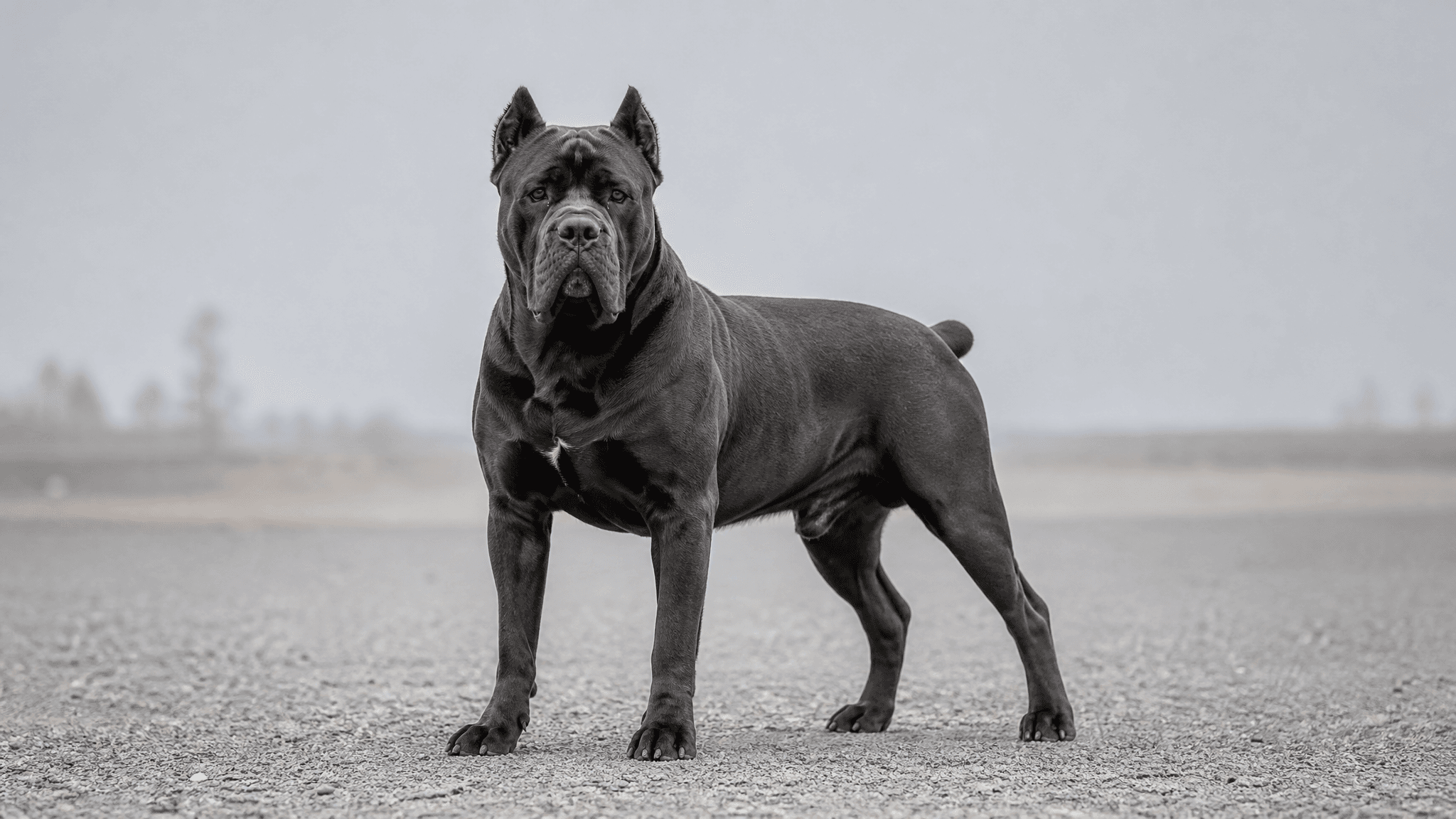
The Cane Corso is an ancient Italian guard and hunting breed, descended from the Roman canes pugnaces that were used in war and in amphitheatres. Nearly extinct in the 20th century, it was recovered by dedicated Italian breeders and recognised by the FCI in 2007. Its name derives from the Latin "cohors" (guard) or the Greek "kortos" (courtyard), reflecting its primary function as a guardian.
Physical Characteristics
- Size
- Large
- Height (male)
- 64–68 cm
- Height (female)
- 60–64 cm
- Weight (male)
- 45–50 kg
- Weight (female)
- 40–45 kg
- Life Expectancy
- 9–12 years
- Coat
- Short, dense, glossy; with fine undercoat
- Common Colors
- Black, lead, grey, slate, light to dark fawn, red, brindle
Temperament & Personality
The Cane Corso combines superior intelligence with very pronounced guarding instincts. It is extremely loyal to its family, with whom it can be very affectionate, but is naturally reserved and suspicious of strangers. It needs intensive socialisation from puppyhood to develop a balanced temperament. It is a breed that requires an experienced owner capable of establishing clear leadership through consistent positive training.
Activity & Exercise
- Energy Level
- High
- Recommended Daily Exercise
- 90–120 minutes
- Suitable for Apartment
- Not recommended
Grooming & Care
- Grooming Needs
- Low
- Shedding
- Moderate
- Bathing Frequency
- Every 6–8 weeks
Health
- Common Health Issues
- Cardiomyopathy
- Ectropion/entropion (eyelid anomalies)
- Gastric dilatation/torsion
- Hip and elbow dysplasia
- Idiopathic epilepsy
- Recommended Health Tests
- Cardiac examination
- Epilepsy screening
- Eye examination
- Hip and elbow X-rays
Compatibility
- With Children
- Moderate
- With Other Dogs
- Can be difficult
- With Cats
- Can be difficult
- For First-Time Owners
- Not recommended
Is an Italian Cane Corso right for you?
An Italian Cane Corso may suit you if:
- You are prepared to provide 90-120 minutes of vigorous daily exercise and engaging mental challenges for your intelligent companion.
- You enjoy a lifestyle that integrates a loyal guardian who thrives on having a purposeful role within your family.
- You appreciate a dog with superior intelligence, deep family affection, and a naturally reserved demeanor towards strangers.
- You are an experienced owner capable of establishing clear leadership through consistent training and intensive socialization from puppyhood.
- You are comfortable with a low grooming commitment, involving moderate shedding from a short, dense coat and bathing every 6-8 weeks.
- You are willing to manage and embrace a breed with very pronounced guarding instincts and natural suspicion of unfamiliar people.
Think twice if:
- You expect a dog that is inherently biddable or an easy first-time companion without consistent, firm leadership.
- You have a routine that requires your dog to spend long hours alone, especially if living in an apartment.
- You have very young children or other pets, particularly cats or other dogs, without being prepared for intensive management and socialization.
- You are unwilling or unable to provide 90-120 minutes of daily exercise for a large, high-energy dog.
- You live in an apartment or lack the secure, spacious environment a large breed like the Cane Corso requires.
- You are not prepared for the physical strength and assertive handling required for a powerful dog during its adolescent phase.
Living with an Italian Cane Corso is a journey of deep loyalty and immense responsibility. While they offer unwavering affection to their family, their powerful guarding instincts and high energy demand a committed, experienced owner. For the right person, this ancient breed is a truly rewarding and protective companion, offering a bond unlike any other.
Training an Italian Cane Corso
Cane Corsos are highly intelligent and deeply motivated by the strong bond they share with their family. They thrive on positive reinforcement, responding best to clear, consistent leadership that builds trust rather than fear. Training sessions should be kept short, engaging, and fun, leveraging their natural desire to please their trusted handler. Inconsistency, harsh corrections, or a lack of clear guidance will quickly lead to frustration and a breakdown of trust with this sensitive yet powerful breed, making future training much more challenging. Intensive socialization from puppyhood is also absolutely vital for them to develop a balanced temperament.
Begin with:
- Attention and response to name around distractions
- Recall on a long line
- Loose-leash walking
- Leave it and drop it
- Calm greetings without jumping
- Settling on a mat or bed
- Cooperative handling for grooming, ears, feet and teeth
- Waiting at doors and gates
Guarding and distractions
Cane Corsos have very pronounced guarding instincts and are naturally suspicious of strangers. This can make training around new people or dogs challenging, as their focus shifts to their protective role. Start training in quiet environments, gradually introducing distractions. Reward calm observation and redirection of attention to you.
Intensive socialization from puppyhood is crucial to help them develop a balanced temperament and understand appropriate responses to new situations. Our Behaviour AI feature can help you understand and work on specific behaviours.
Leash pulling
Given their large size and strength (up to 50 kg), a Cane Corso pulling on the leash can be a significant problem, especially as they mature. Early and consistent training in loose-leash walking is essential. Use a front-clip harness or head halter for better control, and practice frequently in low-distraction areas before moving to busier environments.
Reward every step taken with a loose leash, making walks a pleasant experience for both of you. For more detailed guidance, check out our guide on stopping leash pulling.
Destructive behaviour
Cane Corsos have high energy and require 90-120 minutes of daily exercise, along with mental stimulation. If under-exercised, under-stimulated, or left alone for too long, they can become bored and resort to destructive chewing, excessive barking, or other undesirable behaviours.
Ensure they receive adequate physical activity and engaging mental challenges, like puzzle toys or training games, to keep their intelligent minds occupied. A consistent routine and plenty of positive interaction will help prevent these issues. Our Training feature can help you build a consistent routine.
Italian Cane Corso — Frequently Asked Questions
Is the Cane Corso a good family dog?
The Cane Corso can be a deeply loyal and affectionate family companion in the hands of an experienced, responsible owner. They are devoted to their family and naturally protective of children they're raised with. However, they are large, powerful, and dominant — they require an owner who can provide confident leadership, consistent training, and early socialisation. A Cane Corso is not suitable for passive owners or those who cannot commit to ongoing training. In the right family, they are gentle giants.
Are Cane Corsos aggressive?
A well-bred, properly socialised Cane Corso is not human-aggressive — they are confident, composed, and reserved with strangers rather than agitated. However, they have a very strong protective instinct and will act decisively if they perceive a genuine threat. They can be dog-aggressive, particularly with dogs of the same sex, and their size and power make any aggression serious. Socialisation from puppyhood, consistent obedience training, and responsible ownership are non-negotiable for this breed.
How much exercise does a Cane Corso need?
Cane Corsos need 60–90 minutes of moderate to vigorous exercise daily. They are athletic, working dogs with substantial stamina — not couch dogs. They enjoy long walks, jogging, and structured activities. However, during puppyhood (up to 18–24 months), avoid high-impact activities on hard surfaces, as their joints are still developing and overexertion can cause lasting damage. As adults, they thrive with regular exercise and enjoy having a job or activity to focus on. Mental stimulation is equally important.
Are Cane Corsos easy to train?
Cane Corsos are highly intelligent and capable of excellent obedience, but they are also confident and dominant dogs that do not respond well to passive or inconsistent leadership. They need an owner who is calm, authoritative, and consistent. Positive reinforcement works well — harsh corrections often produce resentment rather than compliance. Early obedience training and socialisation are critical. A Cane Corso that has not been properly trained is a serious safety risk due to its size and strength.
What are the health concerns for Cane Corsos?
Cane Corsos have several breed-specific health concerns. Hip and elbow dysplasia are common given their size — OFA certification of parents is important. Bloat (GDV) is a serious risk in all deep-chested breeds; feeding smaller meals and avoiding exercise around mealtimes helps prevent it. Entropion and ectropion (eyelid abnormalities) are documented. Cardiac conditions, including dilated cardiomyopathy, can occur. Idiopathic epilepsy affects some lines. Annual vet check-ups and choosing from health-tested breeders are essential.
How big do Cane Corsos get?
Cane Corsos are large to giant dogs. Males typically weigh 45–68 kg (100–150 lbs) and stand 64–70 cm at the shoulder. Females are slightly smaller, typically 40–56 kg (88–123 lbs). Their size means they require space — a small flat is not ideal. They need room to move, a sturdy fence, and owners who are physically able to handle a dog of this stature. Their muscular, imposing build contributes to their effectiveness as guard dogs and their need for responsible ownership.
Do Cane Corsos drool a lot?
Cane Corsos are moderate to heavy droolers. Their loose jowls and powerful jaw structure mean saliva collects and drips, particularly after drinking, eating, or during exercise. Some individuals drool more than others. Keeping a "drool cloth" accessible is a practical necessity for Cane Corso owners. If you are bothered by drool, this may not be the right breed for you. Excessive, sudden drooling outside these contexts can indicate nausea, dental problems, or heat stress and should be checked by a vet.
How long do Cane Corsos live?
Cane Corsos have an average lifespan of 9–12 years, which is typical for a large to giant breed — larger dogs tend to have shorter lifespans than smaller breeds. Proper nutrition (especially avoiding overfeeding in puppyhood, which can damage developing joints), regular exercise, and proactive management of health conditions like bloat and dysplasia are the most impactful factors. Choosing from a breeder who health-tests for hip, elbow, cardiac, and eye conditions significantly improves the odds of a long, healthy life.
Community
Talk to real Italian Cane Corso owners
This guide covers the breed on paper. In the app, the Italian Cane Corso community covers it in real life: photos from other owners, questions answered by people who live with the breed, and a directory of dogs you can browse.
- Photos & pollsSee what Italian Cane Corso owners are sharing today.
- Questions & answersAsk anything and hear from people who own one.
- Dog directoryBrowse Italian Cane Corsos from around the world.
You join automatically when you add a Italian Cane Corso to your profile.