Irish Water Spaniel
Summary
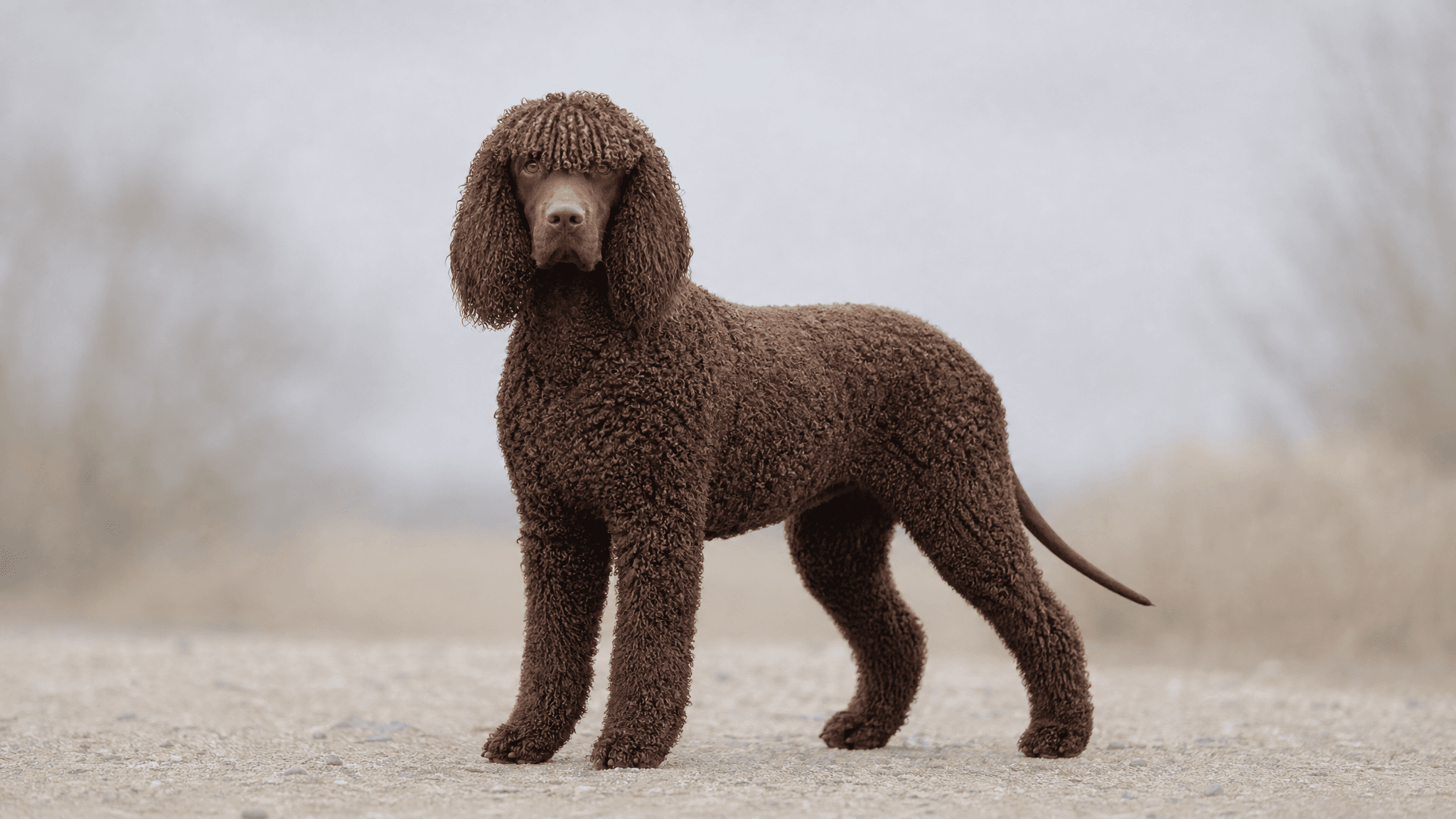
The Irish Water Spaniel is the largest of all spaniels and one of the oldest Irish breeds. Developed in Dublin in the 19th century by Justin McCarthy, it is an exceptional water dog, combining the elegance of a spaniel with the aquatic ability of a retriever. Its "rat tail" — thin, smooth, and covered only with fine curls at the base — is its most distinctive feature. It is a powerful and resilient swimmer, especially adapted to the cold and rough waters of the Irish coast.
Physical Characteristics
- Size
- Large
- Height (male)
- 56–61 cm
- Height (female)
- 53–58 cm
- Weight (male)
- 25–30 kg
- Weight (female)
- 20–26 kg
- Life Expectancy
- 12–13 years
- Coat
- Completely covered with tight, dense curls, with a characteristic topknot of loose curls falling over the eyes; smooth tail at the tip (rat tail)
- Common Colors
- Solid liver (reddish-brown) — the only accepted color
Temperament & Personality
The Irish Water Spaniel is an intelligent, curious, playful, and affectionate dog — a true family "clown" that loves to make people laugh. It is courageous and determined at work and energetic and entertaining at home. It can be cautious or reserved with strangers but is extremely loyal and affectionate with its family. It has considerable energy and is better suited for active families that can take it swimming and do outdoor activities.
Activity & Exercise
- Energy Level
- High
- Recommended Daily Exercise
- 60–90 minutes
- Suitable for Apartment
- Not recommended
Grooming & Care
- Grooming Needs
- High
- Shedding
- Low to moderate
- Bathing Frequency
- Every 4–6 weeks
Health
- Common Health Issues
- Alopecia (non-seasonal hair loss)
- Distichiasis (extra eyelashes that irritate the eye)
- Hip dysplasia
- Hypothyroidism
- Otitis
- Recommended Health Tests
- Eye examination
- Hip radiography
- Thyroid function test
Compatibility
- With Children
- Good
- With Other Dogs
- Good
- With Cats
- Moderate
- For First-Time Owners
- Not recommended
Is an Irish Water Spaniel right for you?
An Irish Water Spaniel may suit you if:
- You are prepared to provide 60 to 90 minutes of vigorous daily exercise, including plenty of swimming and engaging mental games.
- You enjoy an active, outdoor lifestyle that includes water sports, long hikes, and adventures with a canine companion.
- You appreciate a clever, playful, and affectionate family 'clown' who thrives on making you laugh and being part of family activities.
- You are committed to consistent, positive reinforcement training from a young age to channel their intelligence and independent spirit.
- You are ready for regular grooming, including brushing their distinctive curly coat and bathing every 4 to 6 weeks.
- You understand and embrace their natural retrieving instincts and boundless energy, providing outlets for their working drive.
Think twice if:
- You expect instant obedience or a highly biddable nature, as their intelligence often comes with an independent, mischievous streak.
- You frequently leave your dog alone for long periods, as these social, high-energy dogs thrive on companionship.
- You have cats and are unwilling to commit to careful, supervised introductions and ongoing management to ensure harmony.
- You are unable or unwilling to dedicate 60 to 90 minutes daily to vigorous exercise or their high grooming needs.
- You live in an apartment or do not have a securely fenced outdoor space for a large, energetic dog who loves to explore.
- You are unprepared for managing a large, strong, and boisterous adolescent dog who requires patient guidance and consistent boundaries.
The Irish Water Spaniel is truly a unique and charming companion, brimming with intelligence and a joyful, clownish spirit. While their boundless energy and distinctive grooming require significant commitment, the bond you forge with this loyal, affectionate water dog is incredibly deep. For the active, dedicated family, living with an Irish Water Spaniel is a wonderfully enriching adventure.
Training an Irish Water Spaniel
Training an Irish Water Spaniel is a joyful journey with a truly intelligent and curious companion! These "clowns" thrive on positive reinforcement, playful interactions, and a handler who makes learning fun. Their affectionate nature means they truly want to please you, but their determination also means they need clear, consistent guidance. Keep training sessions short, engaging, and varied to hold their attention. If training becomes repetitive or harsh, your clever IWS might become bored, reserved, or decide to use their considerable energy and intelligence to train you instead, leading to unwanted behaviors. Patience and a good sense of humor are your best tools!
Begin with:
- Attention to name with distractions
- Reliable recall on a long line
- Loose-leash walking manners
- Leave it and drop it cues
- Calm greetings without jumping
- Settling on a mat or bed
- Cooperative grooming and handling
- Waiting patiently at doors and gates
Prey Drive and Recall
Your Irish Water Spaniel's heritage as an exceptional water dog and retriever means they possess a strong prey drive and an instinct to explore. This can make recall a significant challenge, particularly when they spot something interesting or catch a scent. It's vital to start recall training early and consistently, beginning in a secure, low-distraction environment. Always use high-value rewards and make coming back to you the most exciting option available.
Gradually introduce distractions and practice recall on a long line to ensure safety while building reliability. Remember, their courage and determination at work can translate into single-minded focus on a 'target,' so consistent, positive reinforcement for returning to you is key to overcoming this natural inclination. For more tips, check out our guide on teaching recall.
Leash Pulling Power
With their large size and high energy, an Irish Water Spaniel can become a powerful puller on the leash if not taught proper manners early on. Their enthusiasm for exploring the world can quickly turn a pleasant walk into a tug-of-war. Start loose-leash training from puppyhood, using positive reinforcement to reward walking calmly by your side.
Invest in a comfortable, well-fitting front-clip harness, which can help redirect their pulling power without causing discomfort. Consistency is crucial; every time they pull and get to move forward, the behavior is reinforced. Practice in quiet areas first, gradually introducing more distractions. For detailed guidance, see our article on stopping leash pulling.
Boredom Behaviors
An Irish Water Spaniel is an intelligent, energetic, and curious dog that requires a significant outlet for both physical and mental energy. With a recommended 60-90 minutes of daily exercise, and their unsuitability for apartment living, insufficient activity can quickly lead to boredom and frustration. When under-exercised or left alone for too long without stimulation, these clever dogs can resort to unwanted behaviors such as excessive barking, destructive chewing, or digging.
To prevent these issues, ensure your IWS receives plenty of varied exercise, including walks, play, and opportunities to swim if safe. Incorporate puzzle toys, scent work, and regular training sessions to engage their sharp minds. Our training feature can help you build a consistent routine to keep your companion happy and well-behaved.
Irish Water Spaniel — Frequently Asked Questions
What is the Irish Water Spaniel?
The Irish Water Spaniel is the tallest and one of the oldest of all spaniel breeds, with documented origins in Ireland dating back to at least the early 1800s. They are a versatile hunting dog primarily bred for waterfowl retrieving — swimming through cold Irish rivers, lakes, and marshes to retrieve ducks and geese. They are instantly recognisable by their distinctive liver-coloured, densely curled coat, their characteristic smooth 'rat tail' (without the typical spaniel feathering), and their topknot of loose curls. In character they are bold, playful, inquisitive, and sometimes clownish — with a mischievous sense of humour unique among sporting dogs.
Are Irish Water Spaniels good family dogs?
Irish Water Spaniels can be wonderful family dogs for active, experienced households. They are loving, playful, and devoted to their family — particularly good with children they are raised with. Their mischievous, comedic personality makes them highly entertaining companions. They are active dogs that need significant daily exercise; without it, their energy turns to mischief. They can be reserved or wary with strangers — Irish Water Spaniels are notably less outgoing than most other retrievers and need thorough early socialisation. They are generally good with other dogs. Their independent thinking and occasional stubbornness means they need experienced owners who enjoy the challenge of the breed's unique character.
How much exercise does an Irish Water Spaniel need?
Irish Water Spaniels need 1–2 hours of vigorous daily exercise. They are energetic, athletic sporting dogs bred to work all day retrieving waterfowl in challenging conditions. They love swimming — water is their element — and swimming is excellent exercise for them. Long walks, running, fetch, agility, field trials, and dock diving are all wonderful outlets. Off-leash exercise in secure areas is important. Without adequate daily exercise, Irish Water Spaniels become restless, inventively mischievous, and may develop destructive habits. Their combination of physical energy and quick intelligence means both body and mind need daily engagement.
Are Irish Water Spaniels easy to train?
Irish Water Spaniels are intelligent and capable, but entertainingly independent. They respond well to positive, reward-based training — they are highly food-motivated and enjoy training when it is engaging and varied. They are quicker to comply when they can see the point of a command. They have a characteristically independent, sometimes stubborn streak — they may comply on their terms or test limits to see what they can get away with. Their recall can be unreliable when something interesting catches their attention. They can achieve excellent results in field work, obedience, agility, and nose work — but they need patient, creative trainers who make training genuinely enjoyable.
How do you groom an Irish Water Spaniel?
The Irish Water Spaniel's dense, tightly curled, liver-coloured double coat requires regular, committed grooming. Their coat does not shed in the traditional sense — dead hair stays within the curls rather than falling — which makes them a good choice for those sensitive to dog hair. However, the curls mat easily if not regularly maintained. The coat should be thoroughly brushed or combed at least twice a week, and professional trimming every 6–8 weeks maintains the breed's characteristic shape and prevents the coat becoming an unmanageable mass of matted curls. Their ears require weekly inspection and cleaning. Their smooth 'rat tail' needs only occasional grooming.
What health issues affect Irish Water Spaniels?
Irish Water Spaniels have several documented health concerns. Hip dysplasia — OFA/BVA screening is recommended. Hypothyroidism is relatively common in the breed — annual thyroid panel testing is advisable from middle age. Drug sensitivity has been reported in some Irish Water Spaniels — a reaction to sulfa antibiotics and some other drugs has been noted; a vet should be made aware. Epilepsy occurs in some lines. Ear infections are common due to their heavy, folded ears and their love of water — weekly ear cleaning and drying after swimming is important. Eye conditions including cataracts and entropion have been documented. Health-tested parents and regular vet check-ups are important.
How long do Irish Water Spaniels live?
Irish Water Spaniels have an average lifespan of 10–12 years. Key longevity factors include annual thyroid testing from middle age (hypothyroidism is manageable when caught early), informing your vet of potential drug sensitivities (particularly sulfa antibiotics), weekly ear cleaning and drying after water activities (preventing the chronic ear infections that the breed is prone to), regular hip monitoring, daily vigorous exercise, healthy weight maintenance, dental care, and regular vet check-ups. Their love of swimming is excellent low-impact exercise that helps maintain fitness well into their later years. Responsible breeding from health-tested parents is the best foundation for longevity.
Are Irish Water Spaniels hypoallergenic?
Irish Water Spaniels are often listed as a low-allergy or hypoallergenic breed. Their curly coat retains dead hair and dander rather than dispersing it into the environment — meaning they shed far less loose hair than most breeds. For people with mild dog allergies, this can make a meaningful difference. However, it is important to understand that no dog is truly hypoallergenic: the primary allergens are proteins found in dog saliva, urine, and skin (dander) — not the hair itself. People with severe dog allergies may still react to Irish Water Spaniels. Spending time with the breed before committing to owning one is strongly recommended for anyone with known dog sensitivities. Their low-shedding coat is a genuine practical advantage, but is not a guarantee of allergy safety.
Community
Talk to real Irish Water Spaniel owners
This guide covers the breed on paper. In the app, the Irish Water Spaniel community covers it in real life: photos from other owners, questions answered by people who live with the breed, and a directory of dogs you can browse.
- Photos & pollsSee what Irish Water Spaniel owners are sharing today.
- Questions & answersAsk anything and hear from people who own one.
- Dog directoryBrowse Irish Water Spaniels from around the world.
You join automatically when you add a Irish Water Spaniel to your profile.