Irish Terrier
Summary
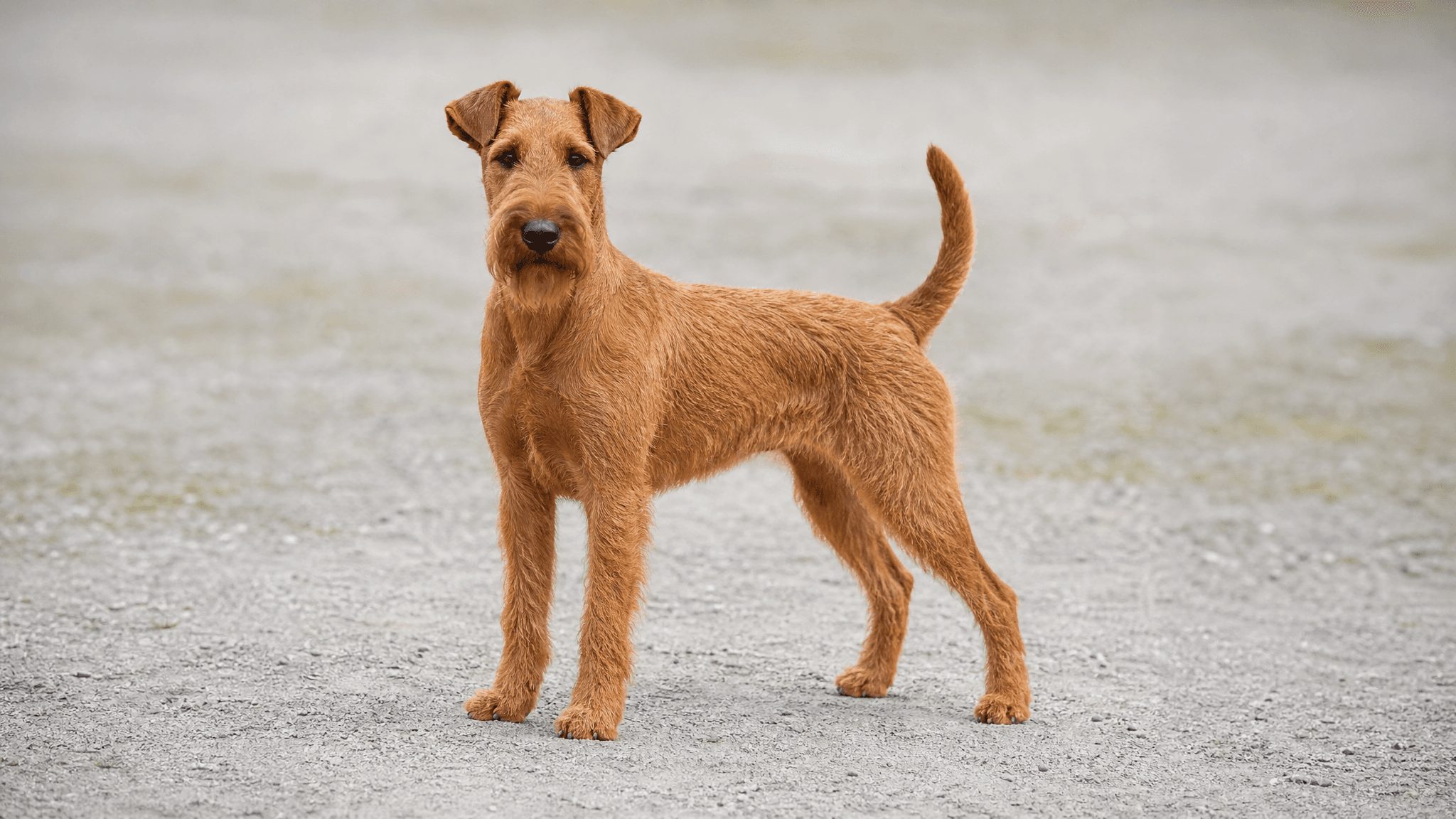
The Irish Terrier is one of the oldest Irish terriers and, during the 19th century, was the most popular breed in Ireland. Developed in the south of the island as a hunting and versatile guard dog, it is recognizable by its elegant rectangular body, red coat, and the bold character that earned it the nickname "the Daredevil." It served as a messenger and liaison dog during World War I with enormous bravery.
Physical Characteristics
- Size
- Medium
- Height (male)
- 46–48 cm
- Height (female)
- 43–46 cm
- Weight (male)
- 11–12 kg
- Weight (female)
- 10–11 kg
- Life Expectancy
- 13–15 years
- Coat
- hard, dense, and rough outer coat; soft undercoat; characteristic beard
- Common Colors
- bright red, golden red, red-wheaten, wheaten
Temperament & Personality
The Irish Terrier is described as "straight and firm in the field, tender at home." It is an exceptionally loyal and devoted dog to the family, courageous to the extreme, but also very affectionate. It tends to be aggressive with other dogs (especially males with males) and has a strong prey drive. With children it is very good as long as socialization is done early. It is intelligent but uses that intelligence to test its limits.
Activity & Exercise
- Energy Level
- High
- Recommended Daily Exercise
- 60–90 minutes
- Suitable for Apartment
- Not recommended
Grooming & Care
- Grooming Needs
- Moderate to high
- Shedding
- Minimal
- Bathing Frequency
- Every 4–6 weeks
Health
- Common Health Issues
- Cystinuria
- Hereditary footpad hyperkeratosis (HFH — a breed-specific condition causing hardening and cracking of the paw pads)
- Hip dysplasia
- Skin allergies
- Recommended Health Tests
- Hyperkeratosis genetic test
- Joint evaluation
- Kidney evaluation
Compatibility
- With Children
- Good
- With Other Dogs
- Can be difficult
- With Cats
- Can be difficult
- For First-Time Owners
- Not recommended
Is an Irish Terrier right for you?
An Irish Terrier may suit you if:
- You can commit to providing 60 to 90 minutes of vigorous exercise and engaging mental challenges every single day.
- You enjoy an active, adventurous lifestyle that includes plenty of outdoor exploration and fun.
- You appreciate a loyal, courageous, and affectionate companion who will be devoted to your family.
- You are prepared to invest in consistent, positive, and firm training to guide an intelligent, independent spirit.
- You are willing to commit to regular grooming to maintain their distinctive hard, wiry coat and characteristic beard.
- You are ready to manage a strong prey drive and ensure proper socialization to mitigate dog-on-dog aggression.
Think twice if:
- You expect a dog that is always eager to please and highly biddable, as they possess an independent, terrier spirit.
- You have a busy schedule that requires leaving your dog alone for long stretches, as they thrive on companionship.
- You have other small pets like cats or small dogs, or you are unwilling to manage potential dog-on-dog issues.
- You are not prepared for the significant daily exercise and consistent grooming required to keep them happy and healthy.
- You live in a small apartment or lack a securely fenced yard, as they need space to run and explore safely.
- You are a first-time dog owner seeking an easy-to-manage puppy, as their spirited adolescence requires experienced guidance.
The Irish Terrier is truly a 'Daredevil' with a heart of gold, offering immense loyalty and affection to their family. While their spirited nature and intelligence make them engaging companions, they are not for the faint of heart. Living with an Irish Terrier means embracing their independence and committing to consistent training and activity, rewarding you with an unforgettable, devoted friend for their 13-15 year lifespan.
Training an Irish Terrier
Training an Irish Terrier is a rewarding experience, as these intelligent and devoted dogs thrive on working alongside their beloved family. They respond best to positive reinforcement, fun, and engaging sessions that keep their sharp minds stimulated. Short, frequent training bursts, ending on a high note, will keep your "Daredevil" eager for more. If training becomes repetitive, harsh, or inconsistent, their independent spirit and intelligence can lead to stubbornness or them finding their own (often mischievous!) ways to entertain themselves, making progress much harder.
Begin with:
- Attention and response to name around distractions
- Reliable recall, initially on a long line
- Loose-leash walking
- Leave it and drop it cues
- Calm greetings without jumping
- Settling quietly on a mat or bed
- Cooperative handling for grooming, ears, feet and teeth
- Waiting at doors and gates
Prey drive and recall
Irish Terriers possess a strong prey drive, a natural instinct from their hunting heritage. This means a scurrying squirrel or a darting rabbit can instantly become the most captivating thing in their world, often overriding any training you've done. To build a reliable recall, start in a quiet, enclosed area with minimal distractions, making coming back to you the most rewarding thing ever with high-value treats and enthusiastic praise. Always use a long line in unfenced spaces until their recall is absolutely solid, ensuring their safety.
Remember, their "Daredevil" nature means they'll often chase first and think later. Consistency and making yourself more exciting than the distraction are key. Our guide on recall training offers excellent strategies to help you master this vital skill.
Leash manners
These medium-sized, high-energy dogs need their recommended 60-90 minutes of vigorous daily exercise. Without proper leash training, walks can quickly devolve into a frustrating tug-of-war. Their tendency to be difficult with other dogs, especially males with males, also means you need to maintain control at all times for everyone's safety and comfort. Start practicing loose-leash walking in low-distraction environments, rewarding every step they take without pulling.
If your Irish Terrier starts to pull, simply stop walking until the leash loosens, then continue. Consistency is paramount, and patience will pay off. For more in-depth advice on preventing pulling, you might find this article on stopping leash pulling helpful.
Boredom and mischief
An Irish Terrier who isn't receiving enough physical exercise or mental stimulation will quickly become a bored, mischievous, and potentially destructive dog. They are not recommended for apartment living precisely because they need space and activity! Ensure they get their full 60-90 minutes of vigorous activity each day, combined with puzzle toys, engaging training sessions, and interactive play to keep their intelligent minds occupied.
If left alone for long periods without appropriate outlets, they may resort to undesirable behaviors like excessive barking, chewing furniture, or digging up your garden. Provide a variety of appropriate chew toys and rotate them regularly to keep things interesting and prevent boredom-induced mischief.
Irish Terrier — Frequently Asked Questions
What is the Irish Terrier's character like?
The Irish Terrier has been nicknamed the 'Daredevil' of the terrier world — bold, reckless in courage, fiercely loyal, and full of fire. They are one of the oldest terrier breeds, bred in Ireland as all-purpose farm dogs and vermin hunters. In character they are intensely loyal, brave, and spirited — described by enthusiasts as 'the little red fellow who is always ready for a row or a romp'. They form exceptionally deep bonds with their family and are devoted, even tender, with the people they love. Their courage means they have no concept of relative size when defending their family — and no concept of backing down from a challenge.
Are Irish Terriers good family dogs?
Irish Terriers can be excellent family dogs in the right household. They are devoted and gentle with their own family — particularly known for their deep affection for children in the household. However, they need experienced owners who understand terrier nature: they require firm, consistent training from puppyhood, are dog-aggressive (particularly with same-sex dogs), and need clear boundaries. Their courage and tenacity mean they will not back down from a confrontation. For an active, experienced family who wants a loyal, lively, characterful dog and is prepared for the terrier challenge, they are wonderfully rewarding companions.
How much exercise does an Irish Terrier need?
Irish Terriers need 60–90 minutes of vigorous daily exercise. They are energetic, tireless, and athletic — bred to work all day in tough Irish countryside. They enjoy long walks, running, fetch, agility, and active exploration. They should be exercised on a leash or in a securely fenced area — their strong prey drive and fearlessness mean they will pursue cats, wildlife, or other dogs without hesitation and without considering traffic or other hazards. A bored, under-exercised Irish Terrier becomes vocal, destructive, and difficult. Their boundless energy and courage make them wonderful companions for genuinely active owners and families.
Are Irish Terriers easy to train?
Irish Terriers are intelligent but strongly independent — classic terrier. They learn quickly but decide independently whether a given command is worth complying with. They respond best to confident, consistent, positive training with a handler who combines firmness with respect. They absolutely do not respond to harsh methods — they simply dig in harder. Early puppy classes and socialisation are important. Recall in open spaces near animals is essentially unreliable — management and secure environments are the safe approach. They can achieve a good level of obedience with persistent, patient training but will always retain their independent terrier spirit.
What health issues affect Irish Terriers?
Irish Terriers are generally a robust, healthy breed — one of the hardier terrier breeds. Key concerns include hyperkeratosis (a hereditary foot pad condition causing excessive cornification of the paw pads and nose, leading to painful cracking) — this is DNA-testable and responsible breeders screen for it. Hypothyroidism has been noted. Urological issues and bladder stones occur in some individuals. Cataracts and other eye conditions are documented. Their generally vigorous constitution makes them relatively low-maintenance from a health perspective, but sourcing from health-tested parents and annual vet check-ups remain important.
How long do Irish Terriers live?
Irish Terriers have an average lifespan of 13–15 years. Their robust, vigorous constitution supports excellent longevity. Key factors include sourcing from hyperkeratosis DNA-tested parents (the breed's most significant hereditary concern), annual vet check-ups, dental care (important for all terrier breeds), maintaining a healthy weight, daily vigorous exercise, regular ear checks, and managing their well-known fearlessness to prevent injury from confrontations with other dogs or traffic. Irish Terriers who are well cared for and managed safely can be remarkable, lively, and healthy companions well into their teens.
What does an Irish Terrier look like?
The Irish Terrier is a medium-sized, elegant, and well-proportioned dog with a striking, uniform red to wheaten coat — the only solid-red terrier breed. Their coat is dense, wiry, and weather-resistant. They have a long, flat skull, a strong jaw, small V-shaped ears that fold forward close to the head, and a bright, alert eye full of expression. Their body is long relative to their height, with a strong back, well-muscled hindquarters, and a customarily docked tail (where legal) or a full natural tail. They stand 45–48 cm at the shoulder and weigh 11–12 kg. Their overall impression is of a dog full of energy, life, and character.
How do you groom an Irish Terrier?
The Irish Terrier's dense, wiry double coat requires relatively modest maintenance compared to many other terrier breeds. Hand-stripping — pulling out the dead outer coat by hand — is the traditional method that preserves the coat's hard texture and rich colour; it is done every 4–6 months for show or working dogs. Many pet owners choose clipping instead, which is more convenient but gradually softens the coat's texture and can fade the colour. Between grooming sessions, the coat should be brushed once or twice a week to remove dead hair and debris. The beard and leg furnishings need more frequent attention. Irish Terriers are moderate shedders.
Community
Talk to real Irish Terrier owners
This guide covers the breed on paper. In the app, the Irish Terrier community covers it in real life: photos from other owners, questions answered by people who live with the breed, and a directory of dogs you can browse.
- Photos & pollsSee what Irish Terrier owners are sharing today.
- Questions & answersAsk anything and hear from people who own one.
- Dog directoryBrowse Irish Terriers from around the world.
You join automatically when you add a Irish Terrier to your profile.