Irish Soft Coated Wheaten Terrier
Summary
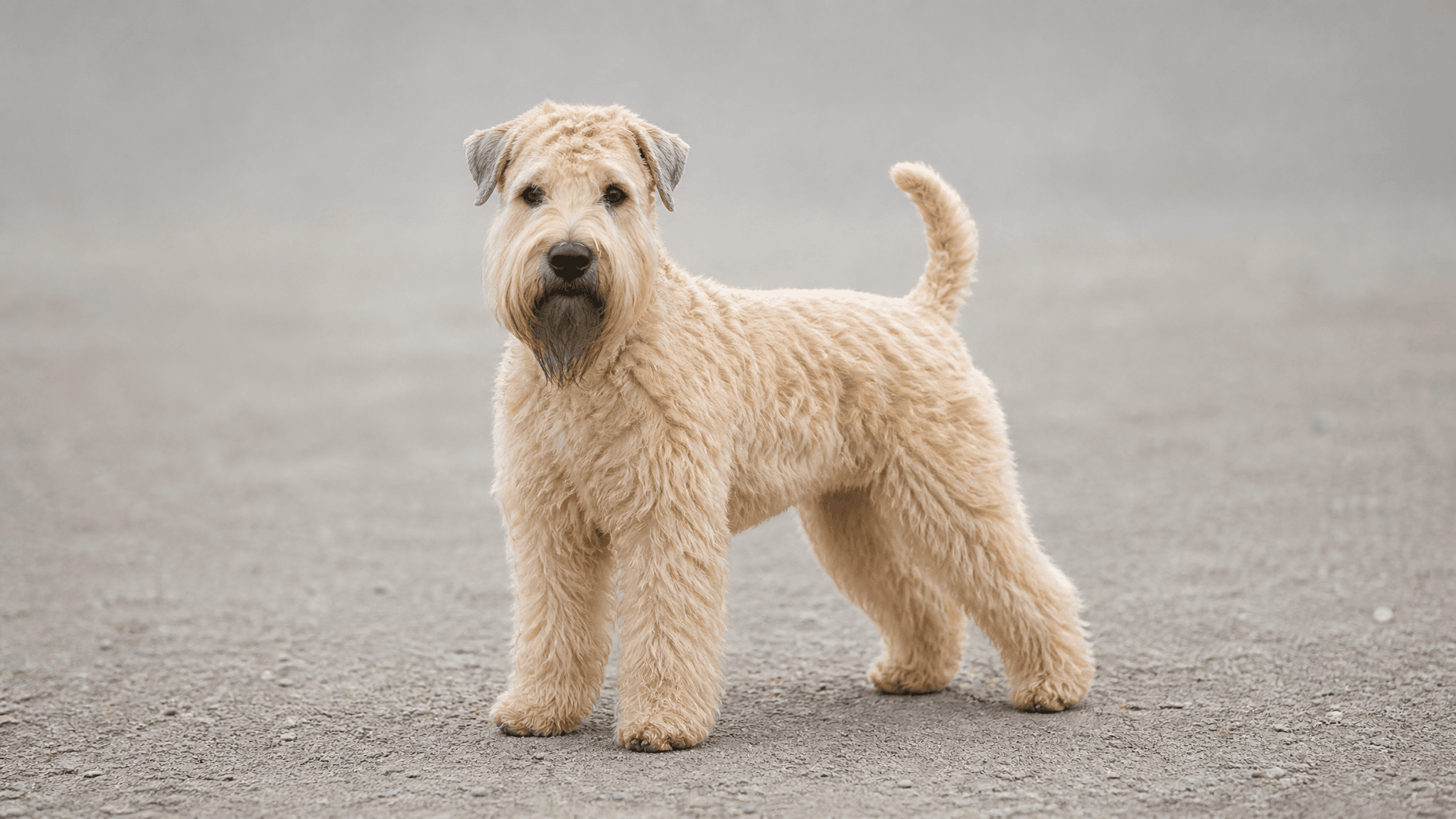
The Wheaten is probably the oldest of the four Irish terriers, with records of "soft-coated" dogs in Ireland dating back at least two centuries. It was developed as a versatile farm dog: it caught rodents, hunted rabbit and fox, herded cattle, and stood guard. Its name reflects the wheat color that characterizes its silky and flowing coat — the softest among all terriers.
Physical Characteristics
- Size
- Medium
- Height (male)
- 46–48 cm
- Height (female)
- 43–46 cm
- Weight (male)
- 18–20.5 kg
- Weight (female)
- 13–16 kg
- Life Expectancy
- 12–14 years
- Coat
- single coat (no undercoat), soft, wavy or loosely curled, with silky sheen; not harsh
- Common Colors
- any shade from light wheat to golden-reddish
Temperament & Personality
The Wheaten is often described as a terrier with a golden retriever's heart — it is exuberant, cheerful, extremely affectionate, and devoted to the family. Unlike many terriers, it is not prone to aggression toward other dogs. However, it retains the terrier independence and stubbornness, as well as an active prey drive. The "greeting explosion" — the enthusiastic jumping welcome for anyone arriving home — is one of its trademarks that requires early training.
Activity & Exercise
- Energy Level
- High
- Recommended Daily Exercise
- 60 minutes
- Suitable for Apartment
- Not recommended
Grooming & Care
- Grooming Needs
- High
- Shedding
- Minimal
- Bathing Frequency
- Every 4–6 weeks
Health
- Common Health Issues
- Atopic dermatitis (very common; \"Westie Armpit Disease\" or White Shaker Dog Syndrome)
- Food allergies
- Hip dysplasia
- Protein-losing enteropathy (PLE)
- Protein-losing nephropathy (PLN)
- Recommended Health Tests
- Food trials
- Hip evaluation
- Kidney evaluation
Compatibility
- With Children
- Excellent
- With Other Dogs
- Good
- With Cats
- Moderate
- For First-Time Owners
- Acceptable
Is an Irish Soft Coated Wheaten Terrier right for you?
An Irish Soft Coated Wheaten Terrier may suit you if:
- You are prepared to provide daily engaging activities and at least 60 minutes of vigorous exercise.
- You enjoy an active lifestyle and want a cheerful companion for adventures.
- You appreciate an extremely affectionate and devoted companion with an exuberant personality.
- You are prepared to commit to consistent and positive training to manage their independent terrier spirit.
- You are willing to dedicate time to regular grooming, brushing their soft, wavy coat, and bathing every 4-6 weeks.
- You can lovingly manage their enthusiastic 'greeting explosion' when new people arrive.
Think twice if:
- You expect instant obedience and a highly biddable companion.
- You have a demanding schedule that requires leaving your dog alone for long periods each day.
- You are unwilling to carefully introduce and supervise them with small, existing household pets due to their active prey drive.
- You are unable to commit to daily vigorous exercise and consistent, high-level grooming.
- You live in an apartment or do not have a securely fenced outdoor space for them to play.
- You are not prepared to guide an exuberant, medium-sized dog through their energetic adolescent phase.
Living with a Wheaten Terrier is a unique blend of joy and commitment. You'll gain an incredibly affectionate, cheerful companion with a 'golden retriever's heart' that thrives on family connection. However, be prepared for their inherent terrier independence and spirited energy. This breed requires consistent guidance and dedicated care, but the reward is an unwavering, loving bond that truly enriches your life.
Training an Irish Soft Coated Wheaten Terrier
Training your Irish Soft Coated Wheaten Terrier is a joyful journey, as these intelligent and affectionate dogs thrive on positive reinforcement and engaging interactions. They are highly motivated by praise, delicious treats, and playful rewards from their beloved family. Keep training sessions short, fun, and varied to capture their attention and prevent boredom, which can quickly lead to their independent terrier spirit taking over. Inconsistent commands or a handler who becomes frustrated will quickly see a Wheaten disengage, making progress much harder. Patience, consistency, and a cheerful attitude are your best tools for success with this wonderful breed.
Begin with:
- Attention and response to name around distractions
- Recall on a long line
- Loose-leash walking
- Leave it and drop it
- Calm greetings without jumping
- Settling on a mat or bed
- Cooperative handling for grooming, ears, feet and teeth
- Waiting at doors and gates
Prey drive and recall
The Wheaten's historical role as a versatile farm dog included hunting rodents, rabbits, and foxes, meaning they possess a strong, active prey drive. This instinct can make recall a significant challenge, especially in environments with tempting distractions like squirrels or birds. Always prioritize safety by practicing recall in a securely fenced area or using a long line during walks until their response is rock-solid. Make yourself the most exciting thing in their world, using high-value treats and enthusiastic praise when they return. For more detailed guidance, check out how to teach a dog to come when called.
Start training recall in a low-distraction environment, gradually increasing the difficulty. When you call your Wheaten, make it a positive experience every single time, even if they take a moment to respond. Never punish them for coming to you, no matter how long it took. Consistency and making recall incredibly rewarding are key to overcoming this natural instinct.
Leash pulling
Despite their medium size, an exuberant Wheaten can be quite strong on the leash, especially given their high energy level and cheerful enthusiasm for exploring the world. Their desire to greet everyone and everything can lead to significant pulling, making walks less enjoyable for both of you. Start loose-leash training early and consistently, rewarding every step taken without tension on the leash. If they pull, stop walking immediately and only resume when the leash is slack. Changing direction frequently can also help teach them to pay attention to you.
Consider using a front-clip harness, which can help redirect their forward momentum without causing discomfort. Avoid retractable leashes, as these teach dogs that pulling is acceptable. Remember that consistent daily exercise, at least 60 minutes, will help burn off some of their energy, making them more receptive to training during walks. For more tips, refer to how to stop a puppy pulling on the leash.
Greeting explosion and boredom
The Wheaten's famous 'greeting explosion' — their enthusiastic jumping welcome for anyone arriving — is a hallmark of their affectionate nature but can be overwhelming. This behavior is often exacerbated when they are under-exercised or under-stimulated, as their high energy level and intelligence need appropriate outlets. Teach an alternative, calm greeting behavior, such as sitting or keeping four paws on the floor, and reward it generously. Practice with visitors, having them only acknowledge your Wheaten when they are calm.
To prevent boredom-related issues or excessive exuberance, ensure your Wheaten receives their recommended daily 60 minutes of exercise, ideally split into multiple sessions. Beyond physical activity, provide plenty of mental stimulation through puzzle toys, training games, and scent work. A bored or lonely Wheaten, especially one with their inherent terrier independence, can become quite creative in finding their own entertainment, which might not align with your household rules.
Irish Soft Coated Wheaten Terrier — Frequently Asked Questions
What makes the Wheaten Terrier unique?
The Irish Soft Coated Wheaten Terrier is instantly recognisable by its silky, wavy, wheaten-coloured coat and exuberant personality. Unlike the rough, wiry coats of most terriers, the Wheaten's coat is soft and flowing — developing its characteristic adult texture from the original puppy coat over the first two years. They are also notable for what is known as the 'Wheaten greeting' — an enthusiastic leap into the arms of anyone they like. Originally Irish farm dogs used for ratting, herding, and general farm work, they are one of Ireland's oldest terrier breeds, known for balancing terrier spirit with greater warmth and sociability than many related breeds.
Are Wheaten Terriers good family dogs?
Wheaten Terriers are wonderful family dogs for active households. They are affectionate, playful, and energetic — they genuinely love children and tend to match the energy and enthusiasm of family life well. They are more sociable and less dog-aggressive than many terrier breeds, making them easier to integrate into multi-pet households. Their typical exuberance (including their famous jumping greeting) should be managed through training, particularly around young children. Their moderate exercise needs, people-oriented nature, and adaptable size make them excellent companions for families who want a dog with real personality and warmth.
How much exercise does a Wheaten Terrier need?
Wheaten Terriers need 45–60 minutes of active daily exercise. They are energetic and playful but not extreme in their exercise demands — a good daily walk plus active play sessions will keep most Wheatens happy and well-exercised. They enjoy running, fetch, agility, and exploring, but they are adaptable enough to manage in smaller homes or apartments when their exercise needs are consistently met. Their recall outdoors can be unreliable — terrier instinct may override commands if a cat or squirrel appears — so exercise in a securely fenced area or on a leash is advisable in open spaces.
What are the health concerns for Wheaten Terriers?
Wheaten Terriers have two significant breed-specific health concerns that all owners should be aware of. Protein-Losing Nephropathy (PLN) — a kidney disease where protein leaks into the urine — and Protein-Losing Enteropathy (PLE) — a digestive condition causing protein loss through the gut — both occur at higher rates in Wheatens and can be serious. Annual urinalysis is recommended from an early age to monitor kidney function. Renal Dysplasia has also been documented. Food allergies and sensitivities are common. Hip dysplasia and Progressive Retinal Atrophy also occur. Sourcing from health-tested parents is very important.
How much grooming does a Wheaten Terrier need?
The Wheaten Terrier's distinctive silky, wavy coat requires significant grooming. It should be brushed 3–4 times per week — daily is ideal — to prevent the coat from matting, which it is prone to particularly behind the ears, in the beard, and under the legs. Their coat grows continuously and requires trimming or professional grooming every 6–8 weeks. There are two coat styles: the traditional Irish trim (longer, flowing) and the American trim (shorter, neater). The good news is that Wheatens are considered low-shedding, making them a better choice for those sensitive to dog hair — though no dog is truly hypoallergenic.
Are Wheaten Terriers easy to train?
Wheaten Terriers are intelligent and more trainable than many terrier breeds, but they retain characteristic terrier independence and can be selectively deaf when something more interesting is afoot. They respond best to positive, reward-based training — they are food-motivated and enjoy training when it feels like a game. Consistency and patience are essential. Their recall in open spaces around wildlife or small animals is unreliable. Early puppy classes and ongoing training from puppyhood help establish good habits. They can achieve solid obedience and excel at agility, nose work, and fun dog sports. Training is also a wonderful way to channel their energy productively.
How long do Wheaten Terriers live?
Wheaten Terriers have an average lifespan of 12–15 years. Key longevity factors include annual urinalysis from 3 years of age (to monitor for PLN and PLE — catching protein loss early allows for dietary management that can significantly extend a dog's quality of life), feeding a high-quality, appropriate diet (many Wheatens benefit from grain-free or limited-ingredient diets due to sensitivity), regular dental care, maintaining a healthy weight, daily exercise, and sourcing from breeders who screen for PLN/PLE. Many Wheatens remain active and lively well into their early teens with appropriate health management.
Are Wheaten Terriers considered hypoallergenic?
Wheaten Terriers are often listed as low-shedding and potentially suitable for allergy sufferers, but it is important to understand what this means. They shed very little — their dead coat stays within the coat rather than falling on furniture and floors — which reduces the amount of airborne dander. However, no dog is truly hypoallergenic: allergies are typically triggered by a protein in dog saliva and dander (Canis familiaris allergen 1), not by the hair itself. Many people with mild dog allergies find they tolerate Wheatens better than heavy-shedding breeds. Spending time with the breed before committing is always recommended for allergy sufferers.
Community
Talk to real Irish Soft Coated Wheaten Terrier owners
This guide covers the breed on paper. In the app, the Irish Soft Coated Wheaten Terrier community covers it in real life: photos from other owners, questions answered by people who live with the breed, and a directory of dogs you can browse.
- Photos & pollsSee what Irish Soft Coated Wheaten Terrier owners are sharing today.
- Questions & answersAsk anything and hear from people who own one.
- Dog directoryBrowse Irish Soft Coated Wheaten Terriers from around the world.
You join automatically when you add a Irish Soft Coated Wheaten Terrier to your profile.