Ibizan Podenco
Summary
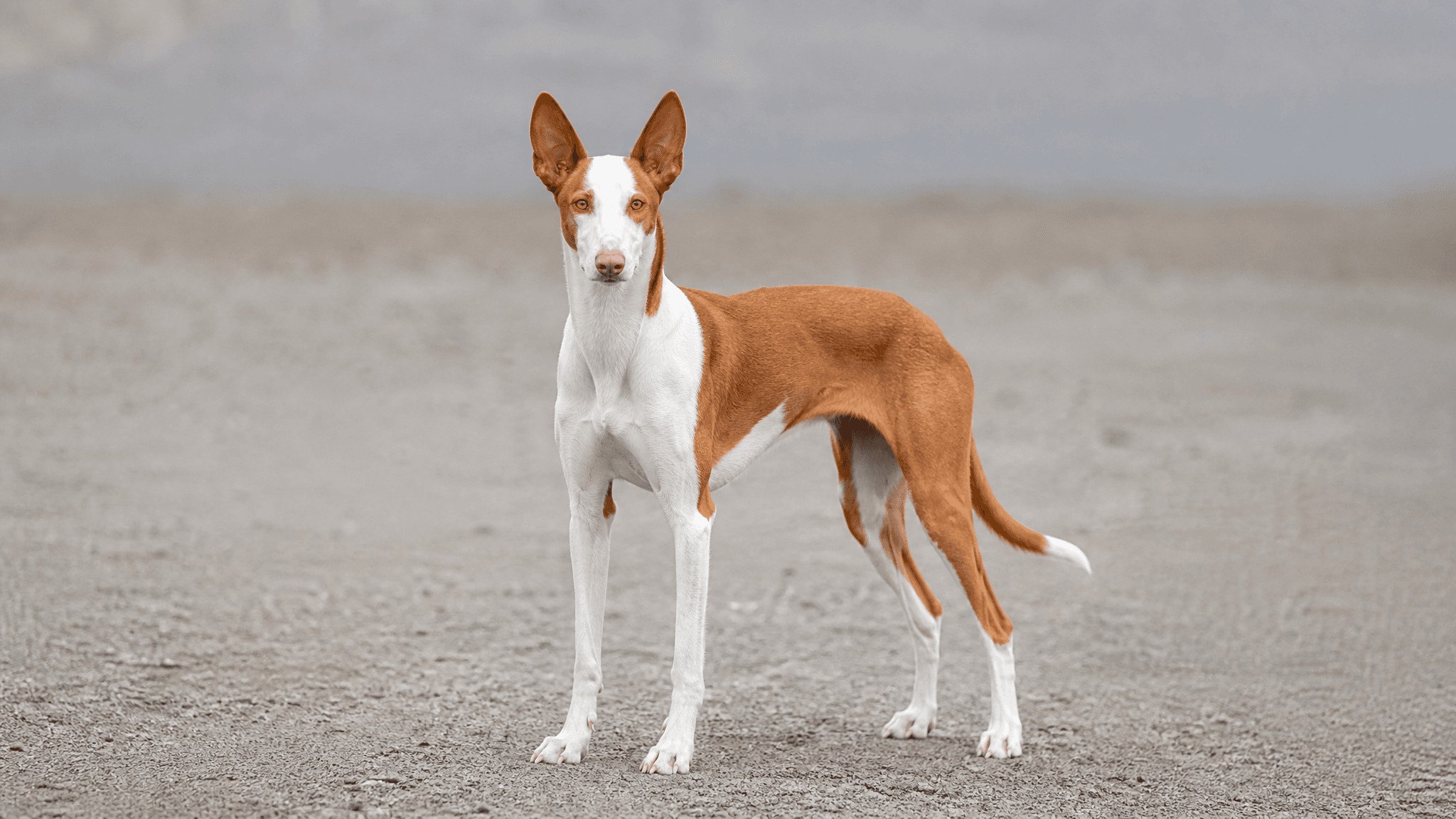
The Ibizan Podenco (Ca Eivissenc in Catalan) is a hunting breed originating from the Balearic Islands — mainly Ibiza, Majorca, Menorca, and Formentera — where it is used primarily to hunt rabbits without firearms, both by day and by night. It hunts using all three senses — sight, smell, and hearing — with extraordinary efficiency. It exists in two coat varieties: smooth coat and wire coat.
Physical Characteristics
- Size
- Large
- Height (male)
- 66–72 cm
- Height (female)
- 60–67 cm
- Weight (male)
- 20–29 kg
- Weight (female)
- 19–25 kg
- Life Expectancy
- 12–14 years
- Coat
- Smooth coat: smooth, hard, and glossy; Wire coat: hard and dense, minimum 5 cm on thighs and tail; long coat (rare) also exists
- Common Colors
- White and red (preferred), completely white, completely red; fawn tolerated only in excellent wire coat specimens
Temperament & Personality
The Ibizan Podenco is an intelligent, active, and agile dog, with a very keen hunting instinct. In its natural environment, it is a dedicated worker; as a companion animal, it can be somewhat reserved with strangers. It is affectionate with the family but maintains an independence typical of primitive dogs. Its agility is remarkable — it can jump considerable barriers.
Activity & Exercise
- Energy Level
- High
- Recommended Daily Exercise
- 90–120 minutes
- Suitable for Apartment
- Not recommended
Grooming & Care
- Grooming Needs
- Low
- Shedding
- Moderate
- Bathing Frequency
- Every 6–8 weeks
Health
- Common Health Issues
- Generally very healthy and resistant breed
- Hip dysplasia
- Recommended Health Tests
- Hip evaluation
Compatibility
- With Children
- Good
- With Other Dogs
- Good
- With Cats
- Can be difficult
- For First-Time Owners
- Acceptable
Is an Ibizan Podenco right for you?
An Ibizan Podenco may suit you if:
- You can provide at least 90 to 120 minutes of vigorous daily exercise and engaging mental challenges.
- You enjoy active outdoor pursuits like lure coursing, agility, or long hikes in secure areas.
- You appreciate an intelligent, independent companion who is deeply affectionate with their family.
- You are prepared for consistent, positive reinforcement training that respects their independent nature.
- You are happy with a low-maintenance grooming routine, requiring only occasional brushing and bathing.
- You are willing to manage a strong prey drive and ensure secure containment to prevent escapes.
Think twice if:
- You expect unwavering obedience and a dog that always puts your commands above their instincts.
- You have a busy schedule that leaves a dog alone for long periods in a small living space.
- You have cats or other small pets that could be seen as prey by a keen hunter.
- You are unable to commit to providing extensive daily exercise and mental stimulation.
- You live in an apartment or have a yard with easily scalable fences.
- You are not prepared for a large, energetic dog that requires consistent guidance through adolescence.
Living with an Ibizan Podenco is a unique blend of joy and challenge. Their independent spirit and powerful hunting drive require understanding and commitment, yet they are deeply affectionate family members. For those prepared to meet their significant exercise and mental needs, the reward is an intelligent, agile, and loyal companion who brings a special energy to the home. They thrive when their primitive instincts are respected and channeled.
Training an Ibizan Podenco
Ibizan Podencos are intelligent and independent thinkers, learning best through positive reinforcement that taps into their natural drives. Keep training sessions short, fun, and engaging, using high-value rewards like treats or a favorite toy to capture their attention. Their keen hunting instinct means they are easily distracted by movement or scents, so consistency and patience are key. If training becomes repetitive or handler expectations are unclear, their independent nature can lead to disengagement, making them seem stubborn or simply wandering off to find more interesting things to do.
Begin with:
- Attention and response to name around distractions
- Recall on a long line
- Loose-leash walking
- Leave it and drop it
- Calm greetings without jumping
- Settling on a mat or bed
- Cooperative handling for grooming, ears, feet and teeth
- Waiting at doors and gates
Prey Drive and Recall
The Ibizan Podenco's extraordinary hunting instinct, using sight, smell, and hearing, is perhaps their most defining trait. This strong prey drive means that a squirrel or distant movement can instantly override any training, making off-leash recall particularly challenging. Start recall training early and consistently in a secure, distraction-free area, gradually introducing more stimulating environments. Always use a long line in unfenced areas until their recall is rock-solid, as their agility allows them to clear considerable barriers and disappear quickly. For more detailed guidance, check out our guide on teaching recall.
Leash Manners
Given their large size, high energy, and need for 90–120 minutes of exercise daily, Ibizan Podencos can be powerful pullers on the leash if not taught proper manners. Their sensitivity means harsh corrections are counterproductive; instead, focus on positive reinforcement for walking politely. Practice loose-leash walking in quiet areas first, rewarding them frequently for staying by your side. If they pull, stop walking until the leash slackens, then continue. This teaches them that pulling gets them nowhere. For more tips on enjoyable walks, see our top dog walking advice.
Boredom and Destructive Behavior
An under-exercised or under-stimulated Ibizan Podenco can quickly become bored, leading to undesirable behaviors like excessive barking, chewing, or even attempting to escape. Their high energy and intelligence mean they thrive on both physical exertion and mental challenges. Ensure they receive their recommended 90–120 minutes of daily exercise, split into varied activities like brisk walks, secure off-leash play, or scent work. Provide puzzle toys and training games to keep their minds engaged, especially if they must be left alone for short periods. Remember, they are not recommended for apartment living due to their activity needs.
Ibizan Podenco — Frequently Asked Questions
What is the Ibizan Podenco?
The Ibizan Podenco (Podenco Ibicenco) is a primitive sighthound/scenthound type from the Balearic Islands of Spain — primarily Ibiza and Formentera — with a history stretching back at least 5,000 years and probable ancient Egyptian origins. They are a tall, elegant, lean, deer-like dog with large, erect, bat-like ears, a long fine muzzle, and amber/caramel eyes. They come in smooth-haired and wire-haired varieties, and colours range from white and red to white and lion. They are a multi-sense hunter — unusual among sighthounds — using sight, scent, AND hearing to locate prey, making them extraordinarily versatile. In character they are sensitive, affectionate, playful, and athletic.
Are Ibizan Podencos good family dogs?
Ibizan Podencos can make wonderful family dogs for the right household. They are affectionate, playful, and devoted to their family — they love human company and can be very clownish and entertaining. They are generally gentle with children. However, they have a very strong prey drive — they will chase small animals (including cats and small dogs) and must always be in a securely fenced area or on lead outdoors. They can be somewhat reserved with strangers initially. Their sensitivity means they are easily stressed by harsh handling or chaotic environments. For active, patient families who can meet their exercise needs and provide a securely enclosed space, they make delightful, graceful companions.
How much exercise does an Ibizan Podenco need?
Ibizan Podencos need 1–1.5 hours of vigorous daily exercise. They are athletically built coursing dogs with real speed and stamina. Off-leash running is essential — but only in a completely and securely fenced area: their prey drive is intense, their speed extraordinary (they can reach 60+ km/h), and they will bolt after quarry without recall. Long walks, running, lure coursing, agility, and dock diving are all excellent activities. They are surprisingly athletic in unusual ways — Ibizan Podencos can jump remarkable heights from a standing start (up to 2 metres) and climb fencing, so fencing must be high and secure. Adequate exercise keeps them calm and content indoors.
Can Ibizan Podencos live with cats?
Living with cats is challenging for Ibizan Podencos and requires careful assessment of the individual dog. Their strong multi-sense prey drive — sight, scent, and hearing — means they are naturally inclined to chase small, fast-moving animals, including cats. Some Podencos can learn to coexist with a cat they are raised with from puppyhood, particularly when the cat is confident and can escape to safe spaces. However, many will always see cats as prey, regardless of early exposure. Never assume a Podenco is cat-safe without careful, supervised introduction and ongoing management. Adoption organisations typically test for cat-suitability. Other small pets (rabbits, guinea pigs, birds) are generally not safe with a Podenco.
What health issues affect Ibizan Podencos?
Ibizan Podencos are generally a healthy, robust primitive breed with good genetic diversity. Key health concerns include: Anesthesia sensitivity — like all sighthounds, they metabolise drugs differently due to very low body fat; specialist veterinary knowledge is required for any procedure. Allergic skin reactions — sensitivity to some chemicals and medications has been reported. Hereditary axonopathy — a neurological condition — has been documented in the breed. Hip dysplasia occurs. Eye conditions have been noted. Their thin skin makes them sensitive to cold — a coat is needed in winter. Regular annual vet check-ups and a vet experienced with sighthounds are recommended.
How long do Ibizan Podencos live?
Ibizan Podencos have an average lifespan of 12–14 years. Their primitive constitution and relatively clean health profile supports good longevity. Key longevity factors include ensuring your vet is familiar with sighthound anesthesia protocols (critical for any medical procedure — standard anesthetic doses can be fatal), protecting them from cold weather (coats in winter, warm sleeping areas), maintaining a lean, healthy weight, daily vigorous exercise, annual vet check-ups, fencing that prevents their extraordinary jumping ability from causing escape-related accidents, and dental care. Their low body fat means they are particularly sensitive to cold illnesses. Rescued Podencos, even those with difficult backgrounds, commonly thrive and live long lives in caring homes.
Are Ibizan Podencos related to Ancient Egyptian dogs?
Ibizan Podencos bear a striking resemblance to the dogs depicted in ancient Egyptian art — particularly the jackal-headed god Anubis and hunting scenes in pharaonic tomb paintings. The upright ears, long muzzle, and lean, elegant build of the Podenco match these ancient depictions remarkably closely. The traditional theory is that Phoenician traders brought Egyptian hunting dogs to the Balearic Islands thousands of years ago, where they evolved in relative isolation into the modern Podenco Ibicenco. DNA studies have complicated this story — modern genetic analysis suggests they may have been reconstructed in more recent centuries rather than being a continuous ancient breed. Regardless of their origins, they are a remarkable, ancient-looking primitive breed with extraordinary hunting abilities.
How do you groom an Ibizan Podenco?
Ibizan Podenco grooming needs vary by coat type. The smooth-haired variety is one of the easiest coats to maintain — a weekly wipe-down with a damp cloth or rubber curry brush removes loose hair and keeps the coat gleaming. Bathing every 4–6 weeks is sufficient. The wire-haired variety has a rough, bristly coat that needs brushing 1–2 times per week and occasional hand-stripping or light trimming to maintain its shape. Both coat types benefit from monthly ear cleaning (checking for moisture or debris — their large ears can trap dirt), monthly nail trimming, and dental care. Their very low body fat means they are sensitive to cold — a thin-coated Podenco will benefit from a dog coat in winter. They are naturally clean and odour-light dogs.
Community
Talk to real Ibizan Podenco owners
This guide covers the breed on paper. In the app, the Ibizan Podenco community covers it in real life: photos from other owners, questions answered by people who live with the breed, and a directory of dogs you can browse.
- Photos & pollsSee what Ibizan Podenco owners are sharing today.
- Questions & answersAsk anything and hear from people who own one.
- Dog directoryBrowse Ibizan Podencos from around the world.
You join automatically when you add a Ibizan Podenco to your profile.