Hamiltonstövare
Summary
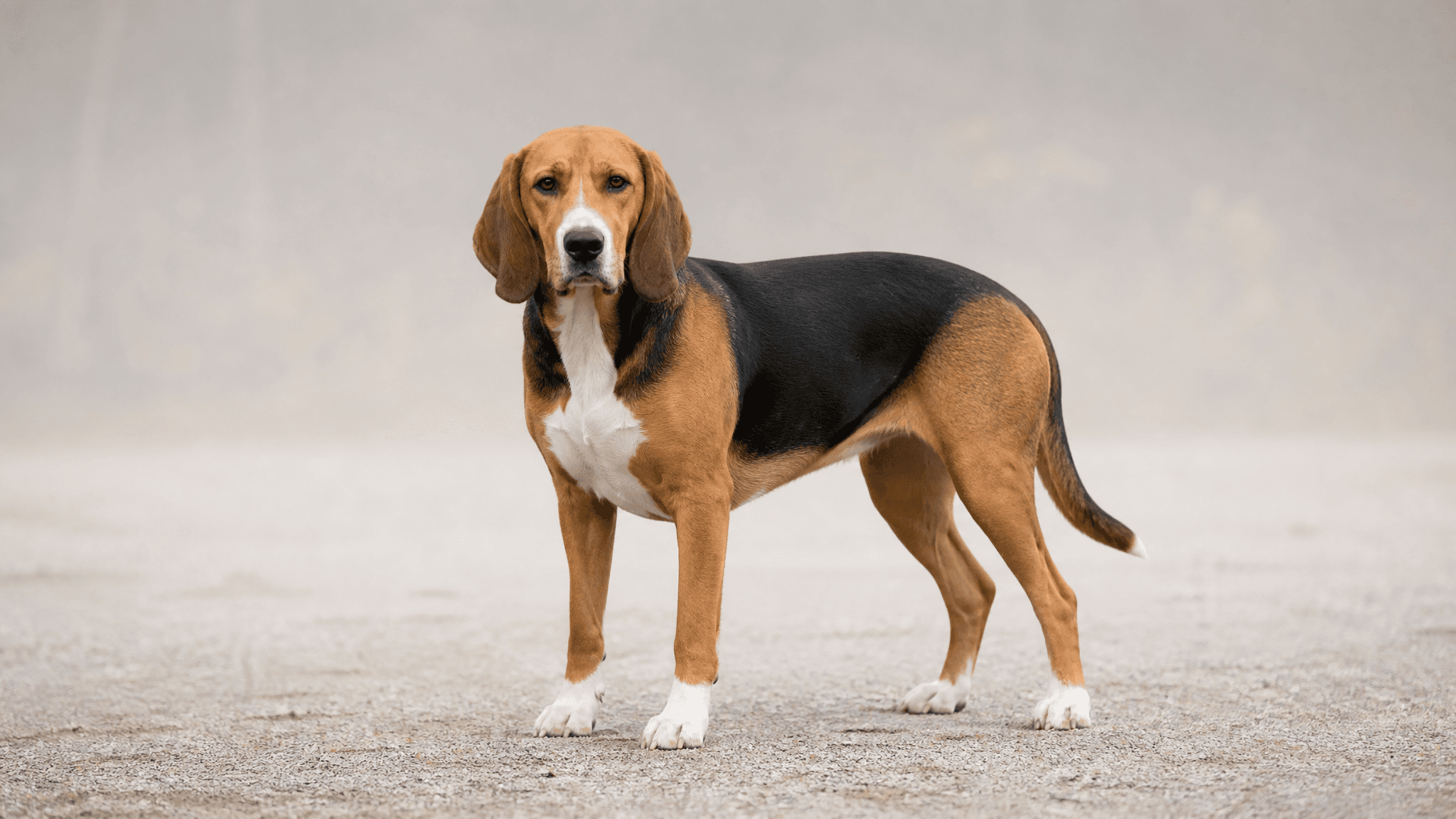
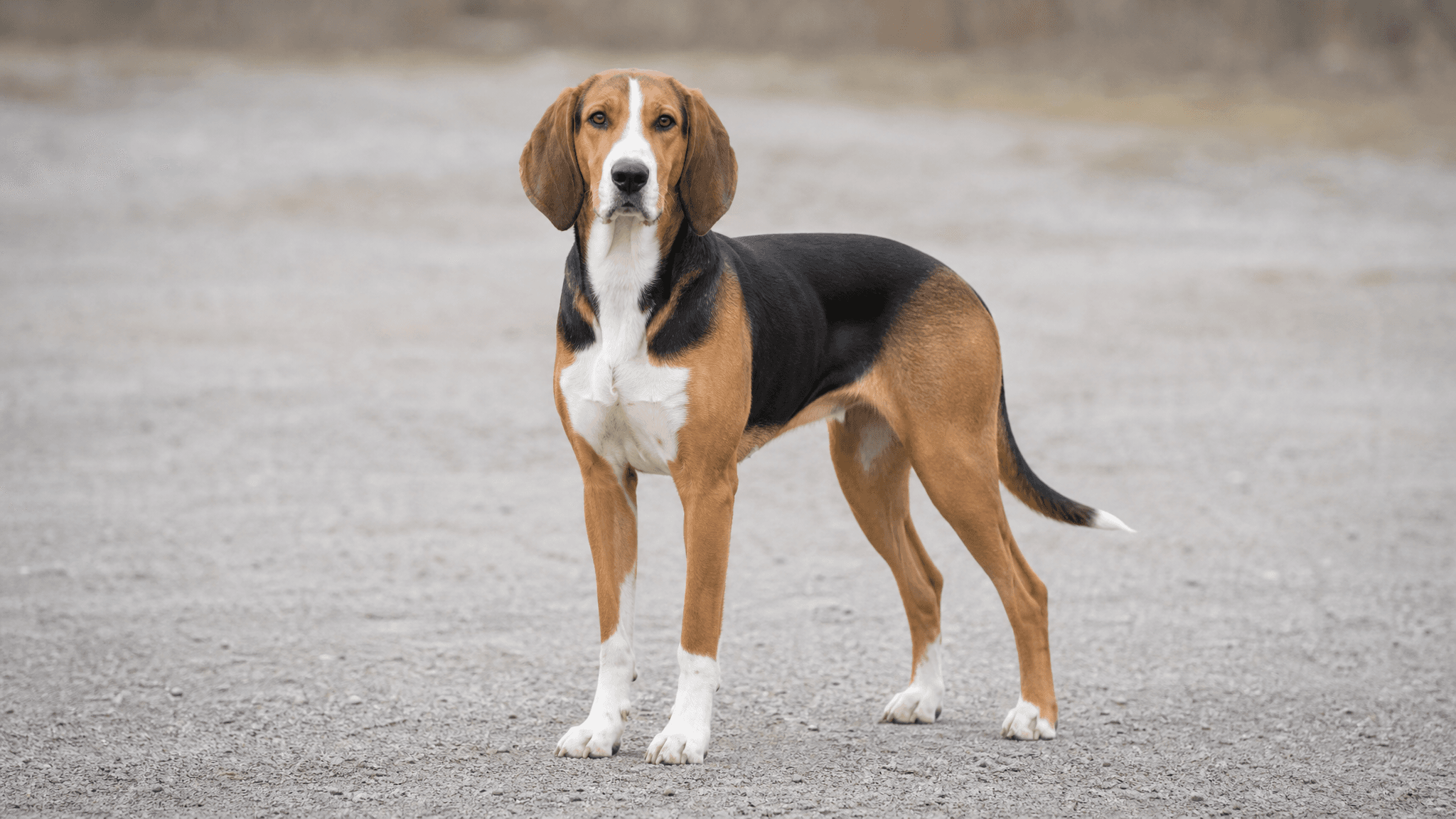
The Hamiltonstövare is the quintessential Swedish scent hound, bred in the late 19th century by Count Adolf Patrick Hamilton — founder of the Swedish Kennel Club — from crosses between German scent hounds (Holsteiner Hound, Heiderbracke) and the English Foxhound. It is recognized for its striking tricolor coat and athletic elegance, being used to hunt hare and fox individually (not in packs). It is also a highly prized show dog.
Physical Characteristics
- Size
- Large
- Height (male)
- 53–61 cm
- Height (female)
- 49–57 cm
- Weight (male)
- 23–27 kg
- Weight (female)
- 20–25 kg
- Life Expectancy
- 14–17 years
- Coat
- Double — short and soft undercoat; harsh and weather-resistant outer coat
- Common Colors
- Tricolor — black, tan, and white in well-defined areas
Temperament & Personality
The Hamiltonstövare is a relaxed, friendly dog devoted to its family. Unlike many scent hounds, it is trained to hunt individually, which gives it a stronger bond with its owner. It is, however, a dog that vocalizes frequently and has an irresistible attraction to trails, which requires a fenced yard. Outside the home, it is cheerful and good-natured with children.
Activity & Exercise
- Energy Level
- High
- Recommended Daily Exercise
- 60–90 minutes
- Suitable for Apartment
- Not recommended
Grooming & Care
- Grooming Needs
- Low
- Shedding
- Moderate
- Bathing Frequency
- Every 4 weeks
Health
- Common Health Issues
- Epilepsy
- Gastric torsion
- Hip and elbow dysplasia
- Otitis
- Recommended Health Tests
- Neurological examination
- Orthopedic evaluation
Compatibility
- With Children
- Excellent
- With Other Dogs
- Excellent
- With Cats
- Moderate
- For First-Time Owners
- Acceptable
Is a Hamiltonstövare right for you?
A Hamiltonstövare may suit you if:
- You enjoy long, active walks or runs for 60 to 90 minutes daily, providing both physical and mental stimulation.
- You thrive on building a strong, individual bond with a devoted companion through consistent engagement.
- You appreciate a friendly, relaxed, and cheerful dog that is deeply devoted to its human family.
- You are prepared to invest in consistent, positive reinforcement training to nurture its bond and focus.
- You are comfortable with moderate shedding and minimal grooming, requiring only occasional bathing every four weeks.
- You are willing to manage a dog that vocalizes frequently and has a strong instinct for following scents.
Think twice if:
- You expect unwavering obedience from a dog with a powerful, independent scent-driven focus.
- You have a routine that leaves a high-energy dog alone for long periods, leading to potential boredom.
- You are unwilling to manage a dog with a moderate prey drive around smaller household pets, especially cats.
- You are unable to commit to daily vigorous exercise or tolerate moderate shedding from a double coat.
- You do not have a securely fenced yard or sufficient space for a large, active scent hound.
- You are not prepared for the strength and exuberance of a large, energetic dog, particularly during adolescence.
The Hamiltonstövare is a truly devoted and friendly companion, bringing warmth and cheer to its family for 14 to 17 years. However, their deep-seated scent hound instincts mean they require consistent exercise and mental engagement to thrive. Embracing their vocal nature and strong desire to follow a trail is key to a harmonious life with this charming, athletic breed.
Training a Hamiltonstövare
Hamiltonstövare are devoted and intelligent companions who thrive on positive reinforcement and the strong bond they form with their owners. Short, engaging training sessions, perhaps 5-10 minutes long, are most effective, especially when incorporating their natural scent-hound instincts. They learn best when training is consistent and fun, but can become frustrated or disengaged if sessions are too long, repetitive, or if the handler is inconsistent. Their high energy and keen nose mean a distracted or bored Hamiltonstövare will easily find its own entertainment, often by following an enticing trail.
Begin with:
- Attention and response to name around distractions
- Recall on a long line
- Loose-leash walking
- Leave it and drop it
- Calm greetings without jumping
- Settling on a mat or bed
- Cooperative handling for grooming, ears, feet and teeth
- Waiting at doors and gates
Prey Drive and Scent Trails
As a true scent hound, your Hamiltonstövare has an irresistible attraction to trails and a strong prey drive, having been bred to hunt individually. This means that once a captivating scent is picked up, their focus can shift entirely. Start recall training in low-distraction environments, gradually increasing the challenge. Always use a long line in unfenced areas until their recall is rock-solid. Practicing 'leave it' with high-value treats is also crucial for managing their urge to follow a scent.
Ensure your yard is securely fenced to prevent them from following a tempting trail. For walks, consider using a harness that gives you better control without causing discomfort. Consistent practice and patience will help your Hamiltonstövare learn to disengage from scents when you ask. For more in-depth guidance, check out our article on how to teach a dog to come when called.
Leash Pulling
Given their large size and high energy level, a Hamiltonstövare can be quite strong on the leash, especially when their keen nose catches an interesting scent. Starting loose-leash walking training early is vital. Use positive reinforcement, rewarding your dog with treats and praise every time the leash is slack. Avoid pulling back on the leash, as this often teaches them to pull harder.
Practice short bursts of loose-leash walking, changing directions frequently to keep their attention on you. A well-fitted front-clip harness can also provide better control and discourage pulling without causing discomfort. For a comprehensive approach, our guide on stopping leash pulling offers a force-free plan.
Boredom and Vocalization
Hamiltonstövare are high-energy dogs that require 60-90 minutes of daily exercise. If under-exercised, under-stimulated, or left alone for too long, they can become bored and vocalize frequently, as is typical for the breed. They are not recommended for apartment living due to their need for space and activity. Ensure they receive ample physical activity, including walks, runs, and playtime, along with mental stimulation through puzzle toys and training games.
A consistent routine, plenty of enrichment, and structured playtime can help prevent boredom-related behaviors. If your Hamiltonstövare is vocalizing, first ensure all their needs are met before addressing the behavior. Our Training feature can help you build a consistent routine to keep your Hamiltonstövare happy and engaged.
Hamiltonstövare — Frequently Asked Questions
What is the Hamiltonstövare?
The Hamiltonstövare is a Swedish scenthound developed in the late 19th century by Count Adolf Patrick Hamilton, who gave the breed its name. Bred specifically for solo hare and fox hunting in the deep Swedish winters, it is athletic, determined on the trail, and distinguished by its striking tricolour coat — black, brown, and white. It is the most popular hunting dog in Sweden and is now recognised internationally as both a working hound and a handsome, companionable family dog.
How much exercise does a Hamiltonstövare need?
The Hamiltonstövare is a high-energy working hound that needs at least 1.5–2 hours of vigorous exercise per day. Simply walking on a lead is not enough — they need opportunities to run freely in safe, enclosed spaces and to engage their nose through scent work or tracking. They are built for endurance in cold conditions and don't tire easily. Insufficient exercise leads to boredom, destructiveness, and excessive howling. They are best suited to active families with access to countryside or large open spaces.
Is the Hamiltonstövare a good family dog?
Yes, the Hamiltonstövare has a gentle, even temperament that makes it a reliable and affectionate family dog — provided its exercise needs are met. It is good with children and tends to be sociable with other dogs. It can be somewhat reserved with strangers at first but is not aggressive. Like many hounds, it has strong pack instincts and does not like being left alone for extended periods. Given an active family and the space to run, it is a devoted and joyful companion.
Are Hamiltonstövares easy to train?
Hamiltonstövares are moderately trainable. They are intelligent and willing, but their hunting instincts mean that an interesting scent can override even the best-trained recall. Positive reinforcement works well; they respond to praise and food rewards. Basic obedience from puppyhood is important to establish a foundation of communication. Their independence on the trail means they should never be trusted off-lead in unsecured areas. Scent-based activities — tracking, mantrailing, or hunt-style nosework — are highly motivating and ideal for mental engagement.
What health issues are common in Hamiltonstövares?
The Hamiltonstövare is generally considered a healthy breed with a relatively good constitution, partly because Swedish breeders have maintained careful selection for working ability. Hip dysplasia can occur and is worth screening for in breeding pairs. Epilepsy has been reported at higher rates than average in some bloodlines and is something breeders are working to reduce. As a larger breed, joint care and weight management become important in older dogs. Regular annual veterinary check-ups and hip scoring for breeding animals are recommended.
What is the Hamiltonstövare's coat like?
The Hamiltonstövare has a medium-length, dense, weather-resistant double coat in a classic tricolour pattern — black on the upper body, tan on the legs and head, and white on the chest, muzzle, feet, and tail tip. This coloration is reminiscent of the classic English Foxhound and is one of the breed's most distinctive features. The coat is relatively easy to maintain — a thorough brush once or twice a week keeps it in good condition. Seasonal shedding occurs and daily brushing during those periods helps manage loose hair. They need bathing only occasionally.
What is the typical lifespan of a Hamiltonstövare?
The Hamiltonstövare typically lives between 12 and 14 years, which is good for a medium-to-large breed. Their working-dog constitution and the careful selection for health in Swedish breeding programmes contribute to this healthy outlook. Regular exercise, maintaining a lean weight, and annual veterinary check-ups are the key pillars for maximising longevity. Dogs who remain active and mentally engaged throughout their life tend to age more gracefully, and the Hamiltonstövare's love of activity makes this natural to achieve.
Is the Hamiltonstövare rare outside Sweden?
Yes — outside of Scandinavia, the Hamiltonstövare remains quite rare. It is the most common hunting dog in Sweden, where it is bred in significant numbers and actively worked, but internationally it has a very small following. Numbers outside Sweden and the Nordic countries are modest, though breed clubs and enthusiasts exist in several European countries, the UK, and North America. Those who do discover the breed often become dedicated advocates, attracted by its striking looks, affectionate temperament, and versatility as both a working and companion dog.
Community
Talk to real Hamiltonstövare owners
This guide covers the breed on paper. In the app, the Hamiltonstövare community covers it in real life: photos from other owners, questions answered by people who live with the breed, and a directory of dogs you can browse.
- Photos & pollsSee what Hamiltonstövare owners are sharing today.
- Questions & answersAsk anything and hear from people who own one.
- Dog directoryBrowse Hamiltonstövares from around the world.
You join automatically when you add a Hamiltonstövare to your profile.