Gordon Setter
Summary
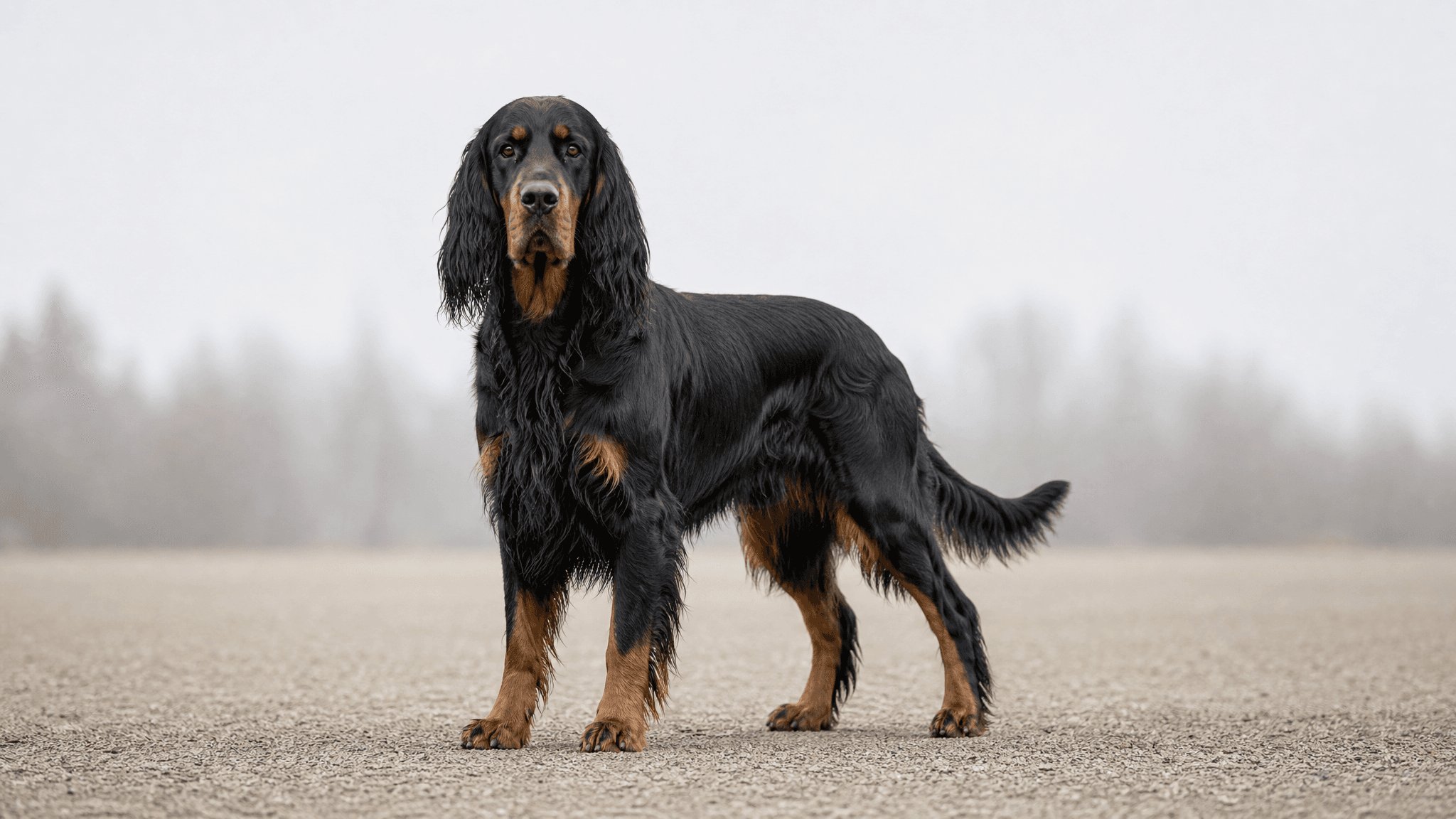
The Gordon Setter is the largest and heaviest of the three British setters, bred in Scotland by the 4th Duke of Gordon in the 18th century. Its black and tan coat makes it unmistakable. It was developed to work in the Scottish Highland terrain, being slower than its Irish and English counterparts but extraordinarily resilient and with an exceptional sense of smell. It is a dog of endurance for hunting and, at the same time, an extremely loyal family companion.
Physical Characteristics
- Size
- Large
- Height (male)
- 61–69 cm
- Height (female)
- 58–66 cm
- Weight (male)
- 25–36 kg
- Weight (female)
- 20–32 kg
- Life Expectancy
- 12–14 years
- Coat
- Long, silky, slightly wavy; with characteristic feathering on the legs, chest, and tail
- Common Colors
- Black with well-defined tan markings on the eyebrows, muzzle, chest, legs, and anal area
Temperament & Personality
The Gordon Setter is a loyal, affectionate, and confident dog, often described as "the faithful guardian of the Highlands." It tends to form very strong bonds with its family, being sometimes reserved with strangers. It has a lot of energy and may take up to four years to reach emotional maturity — which means a very prolonged puppy phase. It is intelligent but can be stubborn, requiring a consistent and patient owner.
Activity & Exercise
- Energy Level
- Very high
- Recommended Daily Exercise
- 60–90 minutes
- Suitable for Apartment
- Not recommended
Grooming & Care
- Grooming Needs
- High
- Shedding
- Heavy
- Bathing Frequency
- Every 3–4 weeks
Health
- Common Health Issues
- Cerebellar degeneration
- Gastric dilatation-volvulus (GDV — less frequent than in larger breeds)
- Hip dysplasia
- Hypothyroidism
- Progressive retinal atrophy (PRA)
- Recommended Health Tests
- Annual ophthalmologic examination (glaucoma)
- Genetic test for PRA (_rod-cone dysplasia 1a_)
- OFA hip evaluation
- Thyroid evaluation
Compatibility
- With Children
- Good
- With Other Dogs
- Good
- With Cats
- Moderate
- For First-Time Owners
- Not recommended
Is a Gordon Setter right for you?
A Gordon Setter may suit you if:
- You are prepared to provide 60-90 minutes of vigorous daily exercise and engaging mental challenges.
- You enjoy long hikes, scent work, or other outdoor adventures that tap into their endurance and exceptional sense of smell.
- You appreciate a loyal, affectionate, and confident companion who forms strong bonds with their family.
- You are ready for consistent, patient training, understanding that their intelligence comes with a stubborn streak.
- You are prepared for high grooming needs, including regular brushing and bathing every 3-4 weeks.
- You are willing to embrace a prolonged puppy phase, as emotional maturity can take up to four years.
Think twice if:
- You expect instant obedience from a dog, as their intelligence is often paired with an independent, stubborn nature.
- You have a busy schedule that would leave your dog alone for long periods, which this bond-forming breed dislikes.
- You are unwilling to manage their moderate suitability with cats, requiring careful introductions and supervision.
- You are not prepared for heavy shedding or the significant commitment of their high grooming and exercise needs.
- You live in a small apartment or cannot provide a securely fenced outdoor space for a large, energetic dog.
- You are a first-time dog owner seeking an easy-to-manage puppy, given their prolonged adolescence and large size.
The Gordon Setter is a magnificent companion, offering deep loyalty and a zest for life. However, their high energy, significant grooming demands, and prolonged adolescence mean they thrive best with dedicated owners who understand their unique needs. If you're ready for an active, intelligent, and sometimes stubborn friend, you'll find an incredibly rewarding bond that lasts 12-14 years.
Training a Gordon Setter
Gordon Setters are intelligent and eager to please their beloved family, but their strong will and prolonged puppy phase (up to four years!) mean consistency is key. They respond best to positive reinforcement, like high-value treats and enthusiastic praise, making short, fun training sessions highly effective. Keep it engaging and avoid repetition to prevent boredom. Inconsistent cues or harsh methods will quickly lead to a stubborn, disengaged dog, making progress difficult. Remember, patience and a good sense of humor are your best tools with this loyal companion.
Begin with:
- Attention and response to name around distractions
- Recall on a long line
- Loose-leash walking
- Leave it and drop it
- Calm greetings without jumping
- Settling on a mat or bed
- Cooperative handling for grooming, ears, feet and teeth
- Waiting at doors and gates
Prey Drive and Recall
Gordon Setters were bred for hunting in the Scottish Highlands and possess an extraordinary sense of smell and a very strong prey drive. This means a scurrying squirrel or a distant scent can easily override their recall, even if they know the command perfectly. Begin recall training in a low-distraction environment and gradually increase the difficulty, always making coming back to you the most rewarding thing ever.
Until their recall is absolutely rock-solid, especially around tempting distractions, always use a long line in unfenced areas. Consistent practice and high-value rewards will help your Gordon understand that returning to you is always more exciting than chasing a scent. For more guidance, check out our guide on teaching recall.
Leash Pulling
As large, strong dogs (males can weigh up to 36 kg) with very high energy and a breed history of endurance, a Gordon Setter pulling on the leash can be a significant challenge. They can keep pulling for a long time without tiring! Start loose-leash training early and be incredibly consistent. Reward frequently when they walk nicely beside you, and consider using a front-clip harness or head halter for better control.
If your Gordon starts to pull, stop walking immediately. Only resume when the leash slackens. This teaches them that pulling gets them nowhere, while a loose leash means forward movement. Patience is key, but with consistency, you can enjoy pleasant walks together. You might find this force-free plan for stopping leash pulling helpful.
Destructive Boredom
Gordon Setters have very high energy and require a minimum of 60-90 minutes of exercise daily. If they are under-exercised, under-stimulated, or left alone for extended periods without engagement, they can quickly become bored and resort to destructive behaviors. This might manifest as excessive barking, chewing furniture, or digging in the garden.
Ensure your Gordon gets their full daily physical and mental outlet, combining brisk walks with off-leash play in secure areas. Provide plenty of puzzle toys, durable chew toys, and engage them in regular training games to keep their intelligent minds busy. A tired Gordon is a well-behaved Gordon, less likely to create their own (often destructive) fun.
Gordon Setter — Frequently Asked Questions
What kind of dog is the Gordon Setter?
The Gordon Setter is a large, handsome, and distinctive gundog from Scotland — the only setter breed native to Britain (developed by the 4th Duke of Gordon in the early 1800s). They are the heaviest and most substantial of the three setter breeds, with a striking black and tan coat. In temperament they are known for being deeply loyal, affectionate, and steady — somewhat more serious and less exuberant than Irish Setters, and more reserved with strangers. They are confident, bold hunting dogs who are also devoted, calm home companions with their family.
Are Gordon Setters good family dogs?
Gordon Setters are excellent family dogs for active households. They are affectionate, gentle, and playful with children — their calm, steady nature makes them more patient with kids than some other setter breeds. They form very deep bonds with their family and are known for their devotion. They are reserved with strangers but not shy or aggressive — just naturally cautious and discriminating. Their large size and exercise needs mean they need space and an active family. They are not suited to small apartments or sedentary lifestyles, but in the right active home they are outstanding companions.
How much exercise does a Gordon Setter need?
Gordon Setters need at least 1.5–2 hours of vigorous exercise daily. They are powerful, endurance-built hunting dogs bred for a day's hunting over rough Scottish countryside — a short walk around the block is nowhere near enough. They thrive with off-leash running in safe open spaces, swimming (they love water), hiking, and if possible field work or nose work. Mental stimulation through training and scent activities is equally important. Without adequate exercise, Gordon Setters become restless, anxious, and may develop destructive behaviours. A large, securely fenced garden is a significant advantage for this breed.
Are Gordon Setters easy to train?
Gordon Setters are intelligent and willing to learn, but they think independently — a trait bred into all hunting dogs who must work at a distance from their handler. They respond well to patient, positive, consistent training with high-value rewards. Their sensitivity means they respond very poorly to harsh corrections — this can cause anxiety and undermine confidence. They are not the fastest responders compared to herding or gun dogs bred for tight teamwork. Early socialisation and puppy classes help build a confident, manageable dog. They can achieve solid obedience and excel at tracking, nose work, and hunting activities.
What health issues affect Gordon Setters?
Gordon Setters have several documented health concerns. Hip dysplasia is significant given their size — OFA/BVA screening of parents is important. Progressive Retinal Atrophy (PRA) can cause progressive vision loss — DNA testing is available. Hypothyroidism is documented in the breed. Bloat (Gastric Dilatation-Volvulus) is a serious risk in deep-chested dogs — feed smaller meals and restrict vigorous exercise around mealtimes. Cerebellar Abiotrophy, a neurological condition affecting balance, has been found in Gordon Setters via DNA testing. Ear infections (given their pendulous ears) require regular monitoring.
How long do Gordon Setters live?
Gordon Setters have an average lifespan of 12–13 years — good for a large breed. Key longevity factors include daily vigorous exercise (maintaining lean muscle and healthy weight), managing GDV risk through sensible feeding practices, annual vet check-ups including hip and eye monitoring, sourcing from parents DNA-tested for PRA and cerebellar abiotrophy, regular ear cleaning (preventing chronic infections), dental care, and maintaining a healthy weight. Dogs from reputable, health-tested breeders who receive consistent, active care tend to thrive into their early teens.
Do Gordon Setters shed a lot?
Gordon Setters are moderate to heavy shedders. Their medium-length, slightly wavy black and tan coat sheds year-round and more heavily during seasonal changes. Regular brushing — at least 2–3 times per week — significantly reduces loose hair on furniture and clothing. Their long, feathered coat (on legs, chest, and tail) can pick up debris and requires more frequent brushing to prevent tangling. Professional grooming every 8–10 weeks helps maintain coat health. Their silky coat is relatively easy to care for compared to very dense double coats, but it is definitely not a low-maintenance breed in terms of grooming.
Are Gordon Setters rare?
Yes — the Gordon Setter is one of the rarer gundog breeds outside of Scotland and their traditional hunting strongholds. While well-known in field sports and dog show circles, they are far less common as family pets than Labradors, Golden Retrievers, or even Irish Setters. In most countries, finding a reputable breeder with available puppies requires patience and advance planning — waiting lists are common. Their relative rarity means breeders tend to be dedicated, serious about health screening, and highly knowledgeable about the breed. Anyone interested in a Gordon Setter should contact the national breed club in their country to find responsible breeders.
Community
Talk to real Gordon Setter owners
This guide covers the breed on paper. In the app, the Gordon Setter community covers it in real life: photos from other owners, questions answered by people who live with the breed, and a directory of dogs you can browse.
- Photos & pollsSee what Gordon Setter owners are sharing today.
- Questions & answersAsk anything and hear from people who own one.
- Dog directoryBrowse Gordon Setters from around the world.
You join automatically when you add a Gordon Setter to your profile.