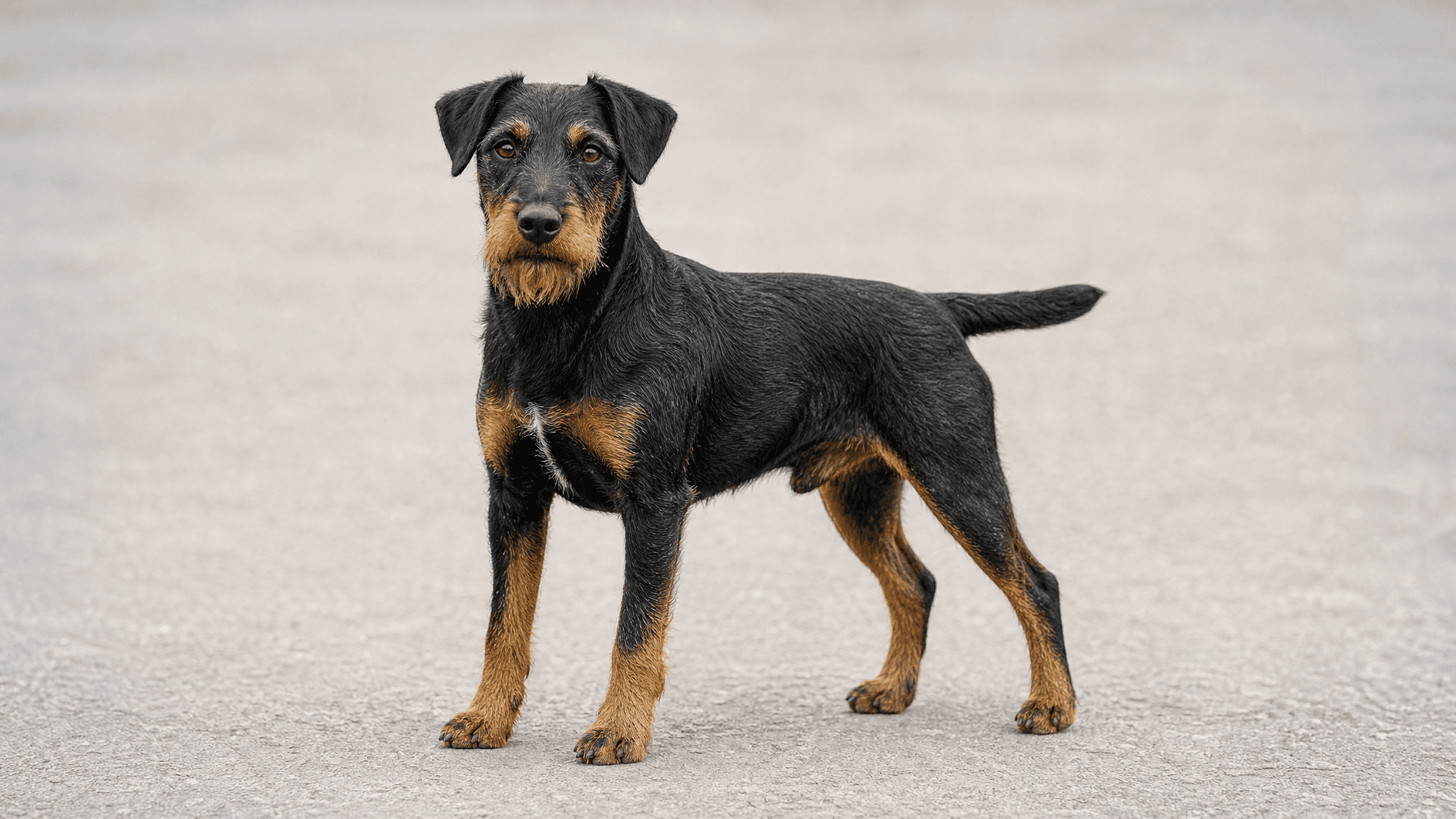
German Hunting Terrier
Summary
The Jagdterrier (literally "hunting terrier" in German) is a breed developed in Germany in the early 20th century by a group of cynologists who wanted to create the perfect hunting terrier — not a show dog, but a working machine. They crossed the Old English Wirehaired Terrier with the Welsh Terrier, producing a tough, courageous, and extraordinarily versatile dog for hunting both above and below ground. It remains primarily an active working dog to this day.
Physical Characteristics
- Size
- Small to medium
- Height (male)
- 33–40 cm
- Height (female)
- 33–38 cm
- Weight (male)
- 9–10 kg
- Weight (female)
- 7.5–8.5 kg
- Life Expectancy
- 13–15 years
- Coat
- two varieties: rough (wiry) or smooth hard coat; dense and close-fitting
- Common Colors
- black-and-tan, dark brown-and-tan, or grey-black-and-tan; small white markings on chest and feet tolerated
Temperament & Personality
The Jagdterrier is a pure working dog. It is courageous, tenacious, energetic, and with an exceptionally strong prey drive. With its owner, it can be loyal and obedient, but it is not a conventional companion dog — it needs a hunting function or demanding dog sports to be well-balanced. It can be tough and impulsive. Early and extensive socialization is absolutely essential.
Activity & Exercise
- Energy Level
- Very high
- Recommended Daily Exercise
- 90 minutes
- Suitable for Apartment
- Not recommended
Grooming & Care
- Grooming Needs
- Low to moderate
- Shedding
- Moderate
Health
- Common Health Issues
- Generally very healthy (working breed)
- Hip dysplasia may occur
- Recommended Health Tests
- Hip evaluation
- Working tests
Compatibility
- With Children
- Moderate
- With Other Dogs
- Moderate
- With Cats
- Not recommended
- For First-Time Owners
- Not recommended
Is a German Hunting Terrier right for you?
A German Hunting Terrier may suit you if:
- You can provide at least 90 minutes of vigorous daily exercise and challenging mental tasks for a very high-energy dog.
- You enjoy engaging in demanding dog sports like agility, tracking, or earthdog trials, or participating in hunting activities.
- You appreciate a courageous, tenacious, and energetic partner who thrives on purpose and strong leadership.
- You are prepared to commit to early, extensive socialization and consistent, firm training throughout their 13-15 year lifespan.
- You are willing to provide low to moderate grooming for their dense, close-fitting coat, managing moderate shedding.
- You are prepared to manage an exceptionally strong prey drive and occasional impulsive behaviors with patience and consistent training.
Think twice if:
- You expect a dog that is instinctively biddable and easily trained without a strong working purpose.
- You have a busy schedule that often leaves a dog alone for long periods, as this breed needs constant engagement.
- You have cats or other small pets, or desire a dog that is effortlessly good with all children and other dogs.
- You are unwilling to provide daily vigorous exercise for at least 90 minutes or manage their moderate grooming needs.
- You live in an apartment or cannot provide a securely fenced outdoor space for a dog with a strong hunting instinct.
- You are a first-time dog owner or are not prepared for a dog that can be tough and impulsive during adolescence.
The German Hunting Terrier is a truly remarkable working dog, offering unparalleled loyalty and drive to the right owner. However, their intense prey drive and need for constant engagement mean they are not for the faint of heart or those seeking a casual companion. They demand a lifestyle dedicated to their purpose, rewarding committed individuals with an incredibly tenacious and devoted partner.
Training a German Hunting Terrier
Training a German Hunting Terrier is a rewarding journey, but it requires understanding their unique drive. These intelligent dogs are motivated by their innate working instinct and, crucially, their exceptionally strong prey drive. Keep training sessions short, engaging, and highly positive, using high-value rewards to capture their focus. Inconsistent training or a lack of mental and physical stimulation will quickly lead to frustration for both you and your Jagdterrier, potentially manifesting as stubbornness or impulsive behaviors. Their loyalty makes them eager to please a confident and fair handler.
Begin with:
- Attention and name response
- Recall on a long line
- Loose-leash walking
- Leave it and drop it
- Calm greetings without jumping
- Settling on a mat or bed
- Cooperative handling for grooming
- Waiting at doors and gates
Prey drive and recall
The Jagdterrier's exceptionally strong prey drive is perhaps its most defining characteristic, and it poses the biggest challenge to a reliable recall. Once this breed locks onto a scent or movement, their instinct to pursue can override everything else. To build a solid recall, start in a quiet, enclosed space with no distractions, making coming to you the most exciting and rewarding experience possible. Gradually introduce low-level distractions, always using a long line for safety until your dog's response is absolutely bulletproof. Remember, consistency is key, and high-value treats are your best friend. For more in-depth advice, check out our guide on teaching recall.
Leash pulling
Despite their small to medium size (males 9-10 kg, females 7.5-8.5 kg), Jagdterriers are incredibly strong and tenacious, making leash pulling a significant challenge. Their high energy and desire to explore can lead to them dragging you along if not properly trained. Begin loose-leash walking training from day one, rewarding every moment the leash is slack. A front-clip harness can be a helpful tool to manage pulling without causing discomfort. Practice in short, frequent sessions in various environments. Patience and consistency will transform your walks into enjoyable experiences for both of you. You might find our force-free plan for stopping puppy pulling particularly useful.
Boredom behaviors
A Jagdterrier that is under-exercised or under-stimulated will quickly become a challenging companion. With a very high energy level and a recommendation of 90 minutes of exercise daily, these dogs need more than just a walk around the block. Without a suitable outlet for their intelligence and drive, they can resort to destructive chewing, excessive barking, or digging. Incorporate demanding dog sports like agility, earthdog trials, or advanced obedience, and provide plenty of mental enrichment with puzzle toys and scent games. Remember, a tired Jagdterrier is a happy Jagdterrier. Our Training feature can help you build a consistent routine to keep your dog engaged.
German Hunting Terrier — Frequently Asked Questions
What is the Deutscher Jagdterrier (German Hunting Terrier)?
The Deutscher Jagdterrier, or German Hunting Terrier, is a remarkable small to medium-sized breed originating from Germany in the early 20th century. Developed by dedicated cynologists, their goal was to create the ultimate working terrier, not a show dog. They achieved this by crossing breeds like the Old English Wirehaired Terrier and the Welsh Terrier. This breed belongs to FCI Group 3, which includes Large and Medium-Sized Terriers. Known for being incredibly courageous, tenacious, and energetic, the Jagdterrier is defined by its strong prey drive and exceptional versatility as a hunting companion.
What was the Deutscher Jagdterrier (German Hunting Terrier) originally bred for?
The Deutscher Jagdterrier was specifically bred in Germany during the early 1900s with one clear purpose: to be the perfect hunting terrier. Its creators envisioned a robust, courageous, and extraordinarily versatile working machine, capable of hunting both above and below ground. This breed was never intended to be a mere companion or show dog; its very essence is rooted in its working capabilities. To this day, the Jagdterrier remains primarily an active working dog, excelling in various demanding hunting tasks and dog sports, a true testament to its original design.
How much exercise does a Deutscher Jagdterrier (German Hunting Terrier) need?
Oh, these little powerhouses have a very high energy level and absolutely thrive on activity! A Deutscher Jagdterrier needs a significant amount of exercise to stay happy and well-balanced. We recommend at least 90 minutes of vigorous physical activity every single day. This isn't just a casual stroll; they need demanding outlets like long runs, challenging hikes, or engaging dog sports such as agility or earthdog trials. Without a proper 'job' or sufficient exercise, their intelligent minds and energetic bodies can become restless, so keeping them active is key!
Is the Deutscher Jagdterrier (German Hunting Terrier) a good family dog?
While loyal and obedient to their owners, the Deutscher Jagdterrier is first and foremost a pure working dog and not a conventional companion dog. Their exceptionally strong prey drive and tough, impulsive nature mean they require early and extensive socialization to ensure they can coexist peacefully with children and other pets. They are best suited for experienced owners who understand their working heritage and can provide consistent training and boundaries. With proper guidance and a clear role, they can be a part of a family, but they are not typically a 'cuddly' lapdog.
Is the Deutscher Jagdterrier (German Hunting Terrier) easy to train?
The Deutscher Jagdterrier is a highly intelligent and capable breed, and with their owner, they can be loyal and obedient. However, their strong will, tenacious spirit, and exceptionally high prey drive mean they are not always 'easy' to train in the conventional sense. They require a confident, consistent, and experienced handler who can channel their natural instincts. Early and extensive socialization is absolutely essential, and they thrive when given a 'job' or engaged in demanding dog sports. Positive reinforcement and clear boundaries are key to unlocking their potential.
What health issues are common in the Deutscher Jagdterrier (German Hunting Terrier)?
One of the wonderful things about the Deutscher Jagdterrier is that they are generally a very healthy and robust working breed! Their strong genetic background, focused on function rather than aesthetics, contributes to their resilience. However, like many active breeds, there is a possibility for hip dysplasia to occur. Responsible breeders will screen for this condition to help ensure the health of their lines. Regular veterinary check-ups and a healthy lifestyle are always recommended to keep your Jagdterrier in top shape.
What is the Deutscher Jagdterrier (German Hunting Terrier)'s coat like and how much grooming does it need?
The Deutscher Jagdterrier sports a practical and functional coat that is well-suited for its working life. While the specific texture can vary slightly, it's typically dense and weather-resistant, designed to protect them from the elements during their hunting endeavors. This coat is generally low-maintenance, requiring only minimal grooming to keep it in good condition. Regular brushing, perhaps once or twice a week, will help remove loose hair and keep their coat healthy and clean. It’s a coat built for action, not for extensive pampering!
What is the typical lifespan of a Deutscher Jagdterrier (German Hunting Terrier)?
The Deutscher Jagdterrier is known for being a very hardy and healthy breed, which contributes to their impressive longevity. You can typically expect a Jagdterrier to be a cherished companion for 13 to 15 years. Providing them with excellent nutrition, plenty of exercise, consistent training, and regular veterinary care will help ensure they live a full, vibrant life by your side. They truly are a testament to the resilience and vitality of a well-bred working dog!
Community
Talk to real German Hunting Terrier owners
This guide covers the breed on paper. In the app, the German Hunting Terrier community covers it in real life: photos from other owners, questions answered by people who live with the breed, and a directory of dogs you can browse.
- Photos & pollsSee what German Hunting Terrier owners are sharing today.
- Questions & answersAsk anything and hear from people who own one.
- Dog directoryBrowse German Hunting Terriers from around the world.
You join automatically when you add a German Hunting Terrier to your profile.