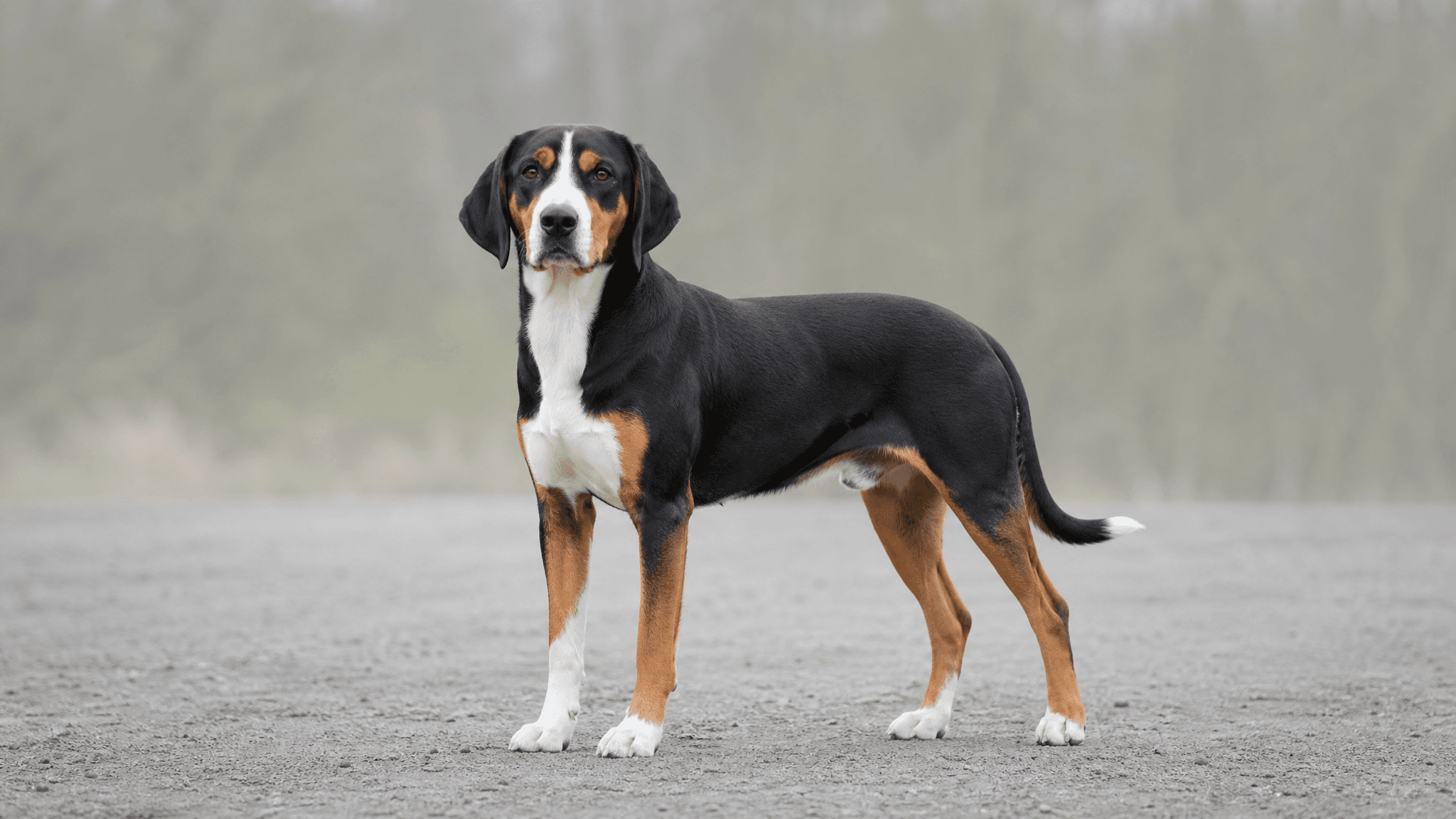
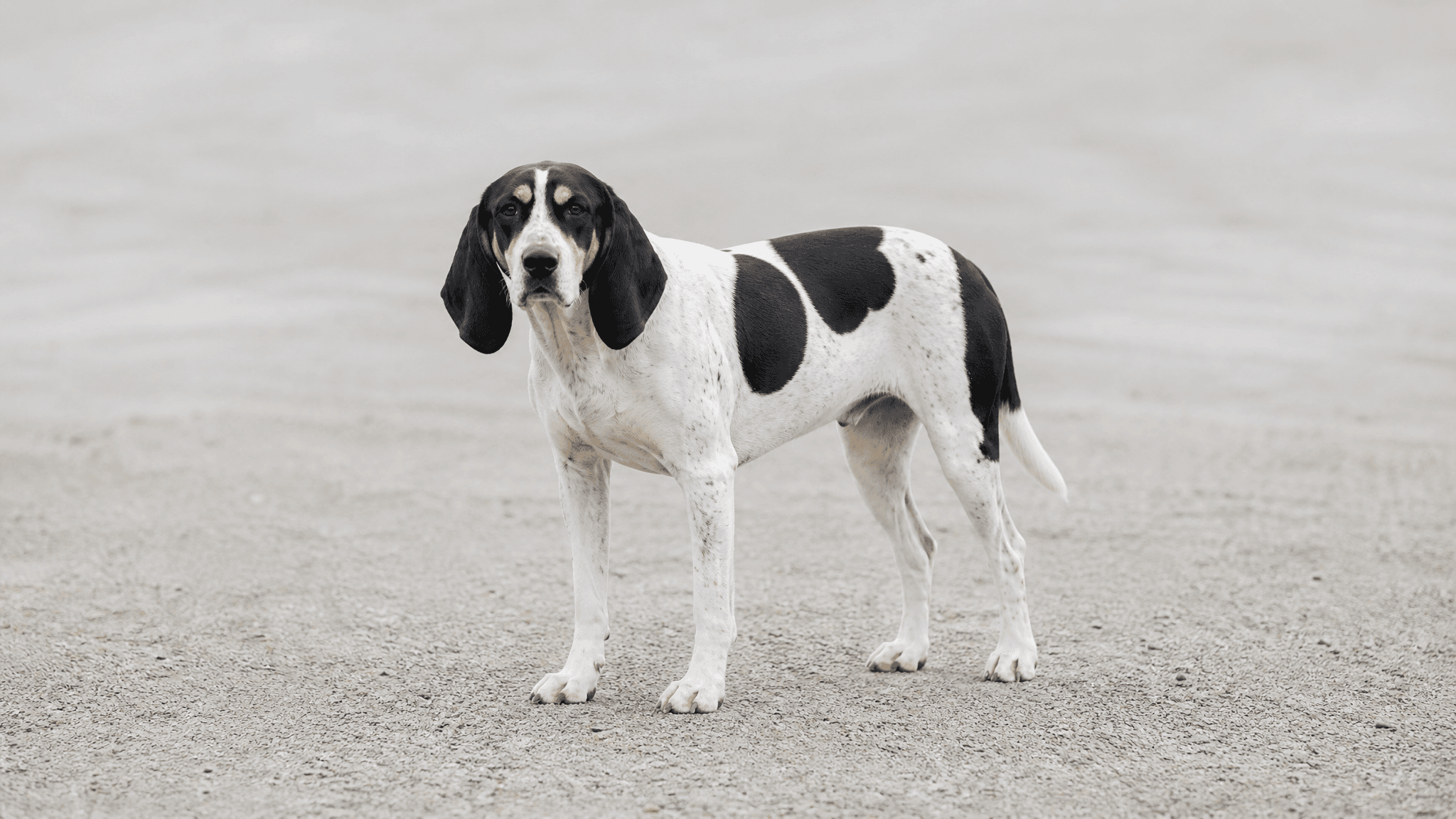
French White And Orange Hound
Summary
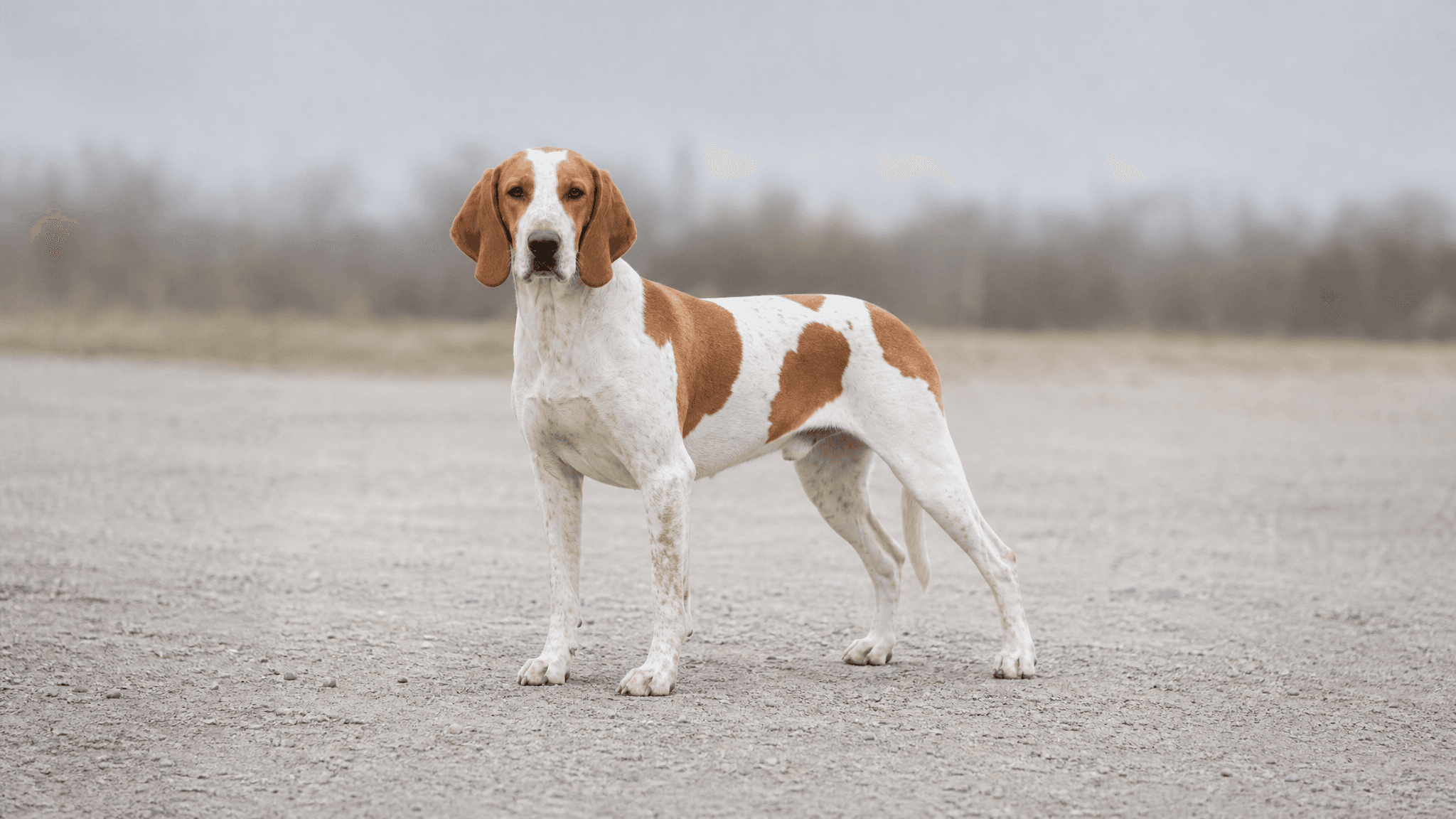
The Français Blanc et Orange is the orange and white variety of the Français family, with influence from the Billy and the Poitevin in its creation. Like the other Français varieties, it is a medium-to-large big game scent hound, used primarily for wild boar and deer.
Physical Characteristics
- Size
- Medium to large
- Height (male)
- 62–72 cm
- Height (female)
- 60–68 cm
- Weight (male)
- 30–35 kg
- Weight (female)
- 27–32 kg
- Life Expectancy
- 10–12 years
- Coat
- Short and dense
- Common Colors
- White with orange patches
Temperament & Personality
Identical to that of the other Français varieties — energetic, courageous, sociable in packs.
Activity & Exercise
- Energy Level
- Very high
- Recommended Daily Exercise
- 120 minutes
- Suitable for Apartment
- Not recommended
Grooming & Care
- Grooming Needs
- Low
- Shedding
- Moderate
- Bathing Frequency
- Every 4 weeks
Health
- Common Health Issues
- Gastric torsion
- Hip dysplasia
- Otitis
- Recommended Health Tests
- Orthopedic evaluation
Compatibility
- With Children
- Good
- With Other Dogs
- Excellent
- With Cats
- Can be difficult
- For First-Time Owners
- Not recommended
Is a French White and Orange Hound right for you?
A French White and Orange Hound may suit you if:
- You are ready to provide at least 120 minutes of vigorous exercise daily to satisfy their very high energy.
- You enjoy outdoor adventures like hiking or scent work, where your courageous French White and Orange Hound can thrive.
- You appreciate a sociable, energetic companion who loves being part of a pack, human or canine.
- You are prepared to engage in consistent, positive training, understanding their independent scent hound nature.
- You are comfortable with moderate shedding and a low-maintenance, short, dense coat needing baths every four weeks.
- You can manage a powerful scent drive and a strong desire to follow interesting smells, characteristic of a big game scent hound.
Think twice if:
- You expect instant obedience from a breed known for its independent scent hound focus.
- You have a busy schedule that would leave your energetic companion alone for long periods daily.
- You have cats in the household, as this breed can find them difficult to live with.
- You are not prepared for the significant daily exercise and mental stimulation this very high-energy breed requires.
- You live in an apartment or cannot provide a securely fenced, spacious outdoor area.
- You are not ready to manage a medium to large, powerful, and boisterous dog during its energetic adolescent phase.
The French White and Orange Hound is a magnificent, courageous companion for the right home. Their energetic, sociable nature means they thrive with active families who understand their scent hound instincts. While their low grooming needs are a plus, their need for extensive daily exercise and mental engagement is non-negotiable. Embrace their independent spirit, and you'll gain a devoted, adventurous partner for 10-12 wonderful years.
Training a French White and Orange Hound
Your French White and Orange Hound is a highly intelligent and energetic scent hound, eager to please but profoundly driven by its powerful nose. Training sessions should be short, positive, and consistent, always ending on a high note to keep their motivation soaring. They respond best to reward-based methods, especially those involving high-value treats and enthusiastic praise. Inconsistency or harsh corrections will quickly lead to confusion and disengagement, potentially making them less responsive and more prone to following their instincts over your cues. Remember, patience and understanding of their inherent breed traits are key to a successful training journey.
Begin with:
- Attention to name around distractions
- Recall on a long line
- Loose-leash walking
- Leave it and drop it
- Calm greetings without jumping
- Settling on a mat or bed
- Cooperative handling for grooming
- Waiting at doors and gates
Prey drive and recall
As a big game scent hound, your French White and Orange Hound possesses an incredibly strong prey drive, historically used for wild boar and deer. This powerful instinct means that an interesting scent or a fleeting critter can easily override even the best-practiced recall, making off-leash safety a significant concern.
To manage this, always start recall training in a low-distraction environment, gradually introducing more challenging settings. Use a long line for safety in open areas, ensuring your hound can explore scents while still being secured. Make coming to you the most rewarding thing ever with high-value treats and enthusiastic praise. Consistency is paramount, and our guide on teaching recall can provide invaluable tips for this crucial skill.
Strong leash pulling
French White and Orange Hounds are medium-to-large dogs, with males weighing 30-35 kg and females 27-32 kg, combined with a very high energy level. Their strength and natural inclination to follow scents with their nose to the ground can lead to significant pulling on the leash, making walks challenging if not addressed early.
Begin loose-leash walking training from puppyhood, focusing on rewarding a slack leash. Consider using a front-clip harness or a head collar for better control, as these tools can help redirect their pulling strength without causing discomfort. Consistent daily walks, meeting their recommended 120 minutes of exercise, are crucial, but always ensure the quality of the walk focuses on good leash manners. Our force-free plan can help you tackle pulling effectively.
Boredom and destruction
Given their very high energy and intelligent, active minds, French White and Orange Hounds require substantial physical and mental stimulation. If under-exercised, under-stimulated, or left alone for too long, they can quickly develop undesirable behaviors such as destructive chewing, excessive barking, or general restlessness. They are not recommended for apartment living for this very reason.
Ensure your hound receives at least 120 minutes of daily exercise, ideally incorporating varied activities like long walks, secure off-leash play, or scent work that engages their powerful nose. Provide puzzle toys and engage in regular, short training sessions to keep their minds sharp. If you notice signs of stress when left alone, understanding how to tell if your dog is stressed can help you address potential separation anxiety.
French White And Orange Hound — Frequently Asked Questions
What is the Français Blanc et Orange?
The Français Blanc et Orange (French White and Orange Hound) is one of three rare French large pack hunting hounds in the 'Français' group, the others being the Français Blanc et Noir and the Français Tricolore. Developed in France for hunting large game including deer, boar, and hare in large organised hunts, it takes its name from its distinctive white coat with orange markings. It descends from crosses between Poitevin hounds and Billy hounds, blending scenting ability with speed and endurance. It is recognised by the FCI but is extremely rare even in France, with only a small number of registered individuals.
How rare is the Français Blanc et Orange?
The Français Blanc et Orange is one of the rarest dog breeds in the world. Even within France, where it was developed, the breed's numbers are critically low — typically fewer than a few hundred individuals exist at any time, with annual registrations in the single or double digits. Outside of France, finding a Français Blanc et Orange is virtually impossible. It survives primarily because a small number of traditional French hunting estates still maintain working packs for organised deer and boar hunts. For prospective owners, connecting with French breed associations is the only realistic path to finding a puppy.
How much exercise does a Français Blanc et Orange need?
As a large, working pack hound bred for endurance hunting, the Français Blanc et Orange needs substantial daily exercise — a minimum of 2 hours of vigorous activity. It was bred to run for hours through varied terrain without tiring, so it has considerable stamina and energy reserves. Long runs, cycling, and extensive off-lead activity in safe enclosed areas are ideal. Without adequate exercise, this breed will be unhappy, restless, and likely very vocal. It is fundamentally not suited to urban or sedentary life — it needs space, freedom, and daily vigorous exercise to be content.
Is the Français Blanc et Orange a good family dog?
The Français Blanc et Orange has a noble, gentle, and affectionate temperament and can form warm bonds with its human family. However, it is fundamentally a working pack hound and not well-suited to typical family pet life. It has very high exercise requirements, strong pack instincts (it thrives with other hounds), a powerful hunting drive, and a resonant voice that can cause issues in residential settings. For a genuinely active family with rural property and other dogs, it could make a magnificent companion. As a pure household pet without hunting context, its needs are very challenging to meet.
How does the Français Blanc et Orange hunt?
The Français Blanc et Orange is a classic French pack hunting hound, operating in groups of 20 to 40 dogs in traditional venery (formal mounted hunting). The pack works together to find, flush, and chase large game — primarily deer and wild boar — across extensive countryside, with the hunt lasting for hours. Each individual dog contributes to the collective scenting effort and pursues game with determination and a loud, melodious voice. This highly cooperative, social hunting style has shaped the breed's deeply social nature, its strong voice, and its exceptional endurance over long distances.
Is the Français Blanc et Orange easy to train?
The Français Blanc et Orange is a cooperative and willing hound when working within its natural pack hunting context. As a companion in a domestic setting, training can be more challenging — it has an independent nature, a powerful scenting drive that overrides other instincts, and a strong pack instinct that means it is most responsive in group settings. Positive reinforcement with food rewards works best. Recall training is particularly important and challenging with any scent hound. For a domestic pet, early socialisation and consistent, patient training from puppyhood is essential to establish good manners.
What health issues affect the Français Blanc et Orange?
Due to its extremely small population, detailed breed-specific health data on the Français Blanc et Orange is limited. As a large, active working hound, the main concerns are hip and elbow dysplasia, which are common across large hunting breeds. Ear infections can be a recurring issue due to their drop ears. Bloat (gastric dilatation-volvulus) is a risk for large, deep-chested breeds and can be life-threatening — feeding multiple small meals and avoiding vigorous exercise immediately after eating are important precautions. The small gene pool creates some risk of inbreeding, making careful breeding practices essential for the breed's long-term health.
What is the typical lifespan of a Français Blanc et Orange?
The Français Blanc et Orange typically lives between 10 and 12 years, which is a standard lifespan for a large working hound. Their active working lifestyle, when properly exercised, supports cardiovascular health and muscular condition. The main longevity factors are managing weight carefully (excess weight stresses joints significantly in large breeds), providing vigorous daily exercise, monitoring for bloat and joint health, and attending regular veterinary check-ups. As a rare breed with a small gene pool, responsible breeding is also critical for the overall health of the population.
Community
Talk to real French White And Orange Hound owners
This guide covers the breed on paper. In the app, the French White And Orange Hound community covers it in real life: photos from other owners, questions answered by people who live with the breed, and a directory of dogs you can browse.
- Photos & pollsSee what French White And Orange Hound owners are sharing today.
- Questions & answersAsk anything and hear from people who own one.
- Dog directoryBrowse French White And Orange Hounds from around the world.
You join automatically when you add a French White And Orange Hound to your profile.