French Spaniel
Summary
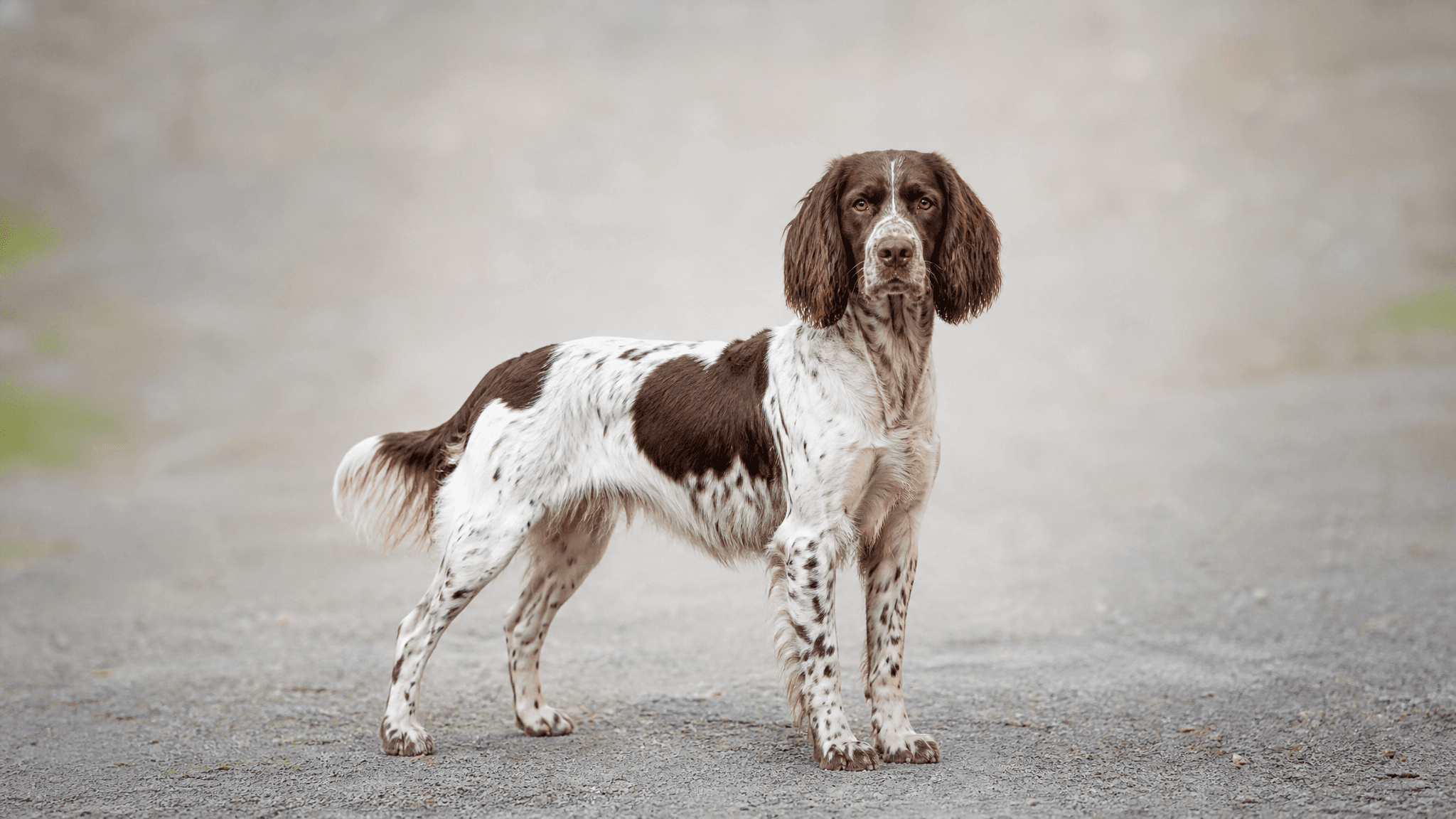
The Epagneul Français is considered one of the two oldest continental spaniels (alongside the Epagneul Picard), descending from the ancient French spaniels that dominated medieval European courts. It is one of the largest existing hunting spaniels, with a characteristic white and brown coat. In Canada, where it has a large breeder base, it is very popular as a waterfowl hunting dog. Its versatility — pointing, flushing, and retrieving — makes it a complete hunting dog.
Physical Characteristics
- Size
- Medium to large
- Height (male)
- 56–61 cm
- Height (female)
- 55–59 cm
- Weight (male)
- 20–27 kg
- Weight (female)
- 20–27 kg
- Life Expectancy
- 12–14 years
- Coat
- Medium, dense, with slight wave; long feathering on the ears, back of the legs, and tail; flat on the body
- Common Colors
- White and brown (the only color accepted by the standard); with various distributions of patches and flecking
Temperament & Personality
The Epagneul Français is a balanced, friendly, and very obedient dog, with a temperament described as "frank, gentle, calm, and docile." It is an enthusiastic hunter with great endurance, but equally an excellent family companion. It bonds deeply with the owner and learns easily through positive reinforcement. It is sociable with other dogs and generally good with children.
Activity & Exercise
- Energy Level
- High
- Recommended Daily Exercise
- 90 minutes
- Suitable for Apartment
- Not recommended
Grooming & Care
- Grooming Needs
- Moderate
- Shedding
- Moderate
- Bathing Frequency
- Every 4–6 weeks
Health
- Common Health Issues
- Acral mutilation and analgesia syndrome (rare condition)
- Entropion
- Epilepsy
- Hip dysplasia
- Recommended Health Tests
- Epilepsy test
- Eye examination
- Orthopedic evaluation
Compatibility
- With Children
- Excellent
- With Other Dogs
- Excellent
- With Cats
- Good
- For First-Time Owners
- Recommended
Is a French Spaniel right for you?
A French Spaniel may suit you if:
- You are prepared to provide at least 90 minutes of vigorous exercise daily, including engaging activities like scent work or retrieving games.
- You enjoy outdoor adventures and activities that allow your dog to use their natural instincts for pointing, flushing, or retrieving.
- You appreciate a gentle, calm, and docile companion who bonds deeply with their family and is naturally sociable.
- You are committed to consistent, positive reinforcement training, as this breed learns easily and responds well to gentle guidance.
- You are willing to commit to moderate grooming, including regular brushing to maintain their beautiful feathered coat and prevent mats.
- You are prepared to manage a dog with a strong prey drive and an innate desire to explore and work in the field.
Think twice if:
- You anticipate a dog that will ignore their strong hunting instincts in favor of constant close-range obedience in stimulating environments.
- You frequently leave your dog alone for long periods, as this deeply bonding breed thrives on companionship and can become anxious without it.
- You are unwilling to dedicate 90 minutes daily to exercise or commit to regular brushing of their moderate-shedding coat.
- You live in an apartment or do not have a securely fenced outdoor space for a medium-to-large, active dog.
- You are unprepared for potential vocalization or destructive behaviors that can arise from insufficient mental and physical stimulation.
The French Spaniel offers a wonderful blend of devoted companionship and enthusiastic working drive. While their gentle nature and deep bond make them superb family members, their high energy and innate hunting instincts demand a commitment to consistent exercise and mental engagement. Embrace their active spirit, and you'll be rewarded with a loyal, loving partner for life's adventures, but neglect it, and you may find their energy channeled in less desirable ways.
Training a French Spaniel
Your French Spaniel is a wonderfully intelligent and eager learner, thriving on positive reinforcement and the deep bond they share with you. Keep training sessions short, fun, and consistent, using high-value treats, enthusiastic praise, and playful rewards. They respond best to clear, gentle guidance. If training becomes harsh, inconsistent, or lacks engagement, your French Spaniel might become confused, disengaged, or even frustrated, making progress much slower. Remember, their enthusiastic hunting drive means they need engaging mental stimulation alongside physical exercise.
Begin with:
- Attention and response to name around distractions
- Recall on a long line
- Loose-leash walking
- Leave it and drop it
- Calm greetings without jumping
- Settling on a mat or bed
- Cooperative handling for grooming, ears, feet and teeth
- Waiting at doors and gates
Recall and prey drive
French Spaniels are pointing dogs with a strong prey drive and great endurance, making off-leash recall a significant challenge, especially in stimulating environments. Start recall training in a quiet, enclosed area, gradually adding distractions. Use high-value treats and enthusiastic praise to make coming back to you the most rewarding option. Practice with a long line in open spaces to give them freedom while maintaining safety. Remember their natural inclination to follow scents and movement; consistent, positive recall training is vital for their safety and your peace of mind. This guide can help.
Leash pulling
As medium to large dogs with high energy and an enthusiastic nature, French Spaniels can be strong pullers, especially when excited by new smells or sights. Early and consistent loose-leash training is crucial. Use a comfortable, well-fitting harness that discourages pulling, and reward calm walking with treats and praise. If your French Spaniel starts to pull, stop walking immediately and only resume when the leash slackens. This teaches them that pulling gets them nowhere. Regular, vigorous exercise (90 minutes daily) before walks can also help manage their energy levels, making them more receptive to training on the leash. Our 2-week plan offers more tips.
Boredom behaviors
French Spaniels are highly intelligent, energetic dogs that bond deeply with their families. If they don't receive their recommended 90 minutes of daily exercise and sufficient mental stimulation, or if left alone for extended periods, they can become bored and destructive. This might manifest as excessive barking, chewing inappropriate items, or digging.
To prevent this, ensure they get plenty of physical activity, including walks, play, and perhaps even dog sports. Incorporate puzzle toys, scent work, and regular training sessions to keep their minds active. A tired French Spaniel is a well-behaved French Spaniel. Consider using our training feature to help structure their routine and keep them engaged.
French Spaniel — Frequently Asked Questions
What is the Épagneul Français (French Spaniel)?
The Épagneul Français, or French Spaniel, is one of the oldest pointing and retrieving dog breeds, with records going back to 14th-century France. Bred as a versatile gun dog for upland game hunting, it was later refined by French and Canadian breeders into the elegant, athletic companion hunter it is today. Medium-to-large in size, it combines excellent nose work, a soft mouth for retrieving, and a naturally calm, devoted temperament that makes it as comfortable in the home as it is in the field.
How much exercise does a French Spaniel need?
The French Spaniel is an active working breed that needs substantial daily exercise — ideally 1.5–2 hours of varied activity. This can include long walks, off-lead running, swimming (they love water), and sessions of scent work or retrieving. They thrive when they have a job to do and become restless and anxious if confined without adequate mental and physical stimulation. While they adapt to suburban life, access to open countryside or a large garden is a significant benefit. Daily exercise is non-negotiable with this breed.
Are French Spaniels good family dogs?
Yes, the French Spaniel is an excellent family dog. It is gentle, patient, and naturally good with children — qualities that have made it a trusted companion both in working households and as a pure family pet. It forms deep bonds with its people and thrives on companionship. It tends to be friendly toward strangers once properly introduced, and generally gets along well with other dogs and household pets. They do not do well when left alone for long periods, however — they need human connection to be truly content.
Are French Spaniels easy to train?
French Spaniels are among the more trainable gun dog breeds — they are eager to please, highly sensitive, and respond beautifully to calm, positive reinforcement. Harsh or heavy-handed training methods are counterproductive; their sensitive nature means they quickly become anxious or shut down if treated roughly. They are naturally biddable and have been selectively bred to work in close cooperation with their handler, so the working partnership comes naturally. Many owners find that French Spaniels almost train themselves when the relationship is warm and rewarding.
What health issues are common in French Spaniels?
The French Spaniel is generally a healthy breed, but it has a known susceptibility to a skin condition called Acral Mutilation Syndrome (AMS), a painful progressive nerve disease that causes self-mutilation of the extremities. Responsible breeders now test for this condition and avoid affected lines. Hip dysplasia occurs at moderate rates. Their long, floppy ears make them prone to ear infections — regular cleaning and drying after swimming sessions is important. Working with a reputable breeder who carries out appropriate health screening is the most important protective step.
What is the typical lifespan of a French Spaniel?
The French Spaniel typically lives between 12 and 14 years, which is a good lifespan for a medium-to-large breed. Their relatively robust constitution and moderate size contribute to this longevity. Maintaining a healthy weight, ensuring adequate daily exercise, and attending regular veterinary check-ups are the main pillars of supporting a long, comfortable life. Ear health and monitoring for any signs of Acral Mutilation Syndrome in susceptible lines are the specific health considerations to stay on top of.
How does the French Spaniel perform as a hunting dog?
The Épagneul Français is a superb all-round gun dog, originally bred to hunt pheasant, partridge, and woodcock in varied terrain. It works as both a pointer (locating game by scent and holding a point) and a retriever (fetching shot birds from land and water). It works at a moderate pace — closer to its handler than breeds like the English Pointer — which suits hunters on foot in dense cover. Its gentle mouth and willingness to swim make it particularly valued for waterfowl hunting. In France and Canada, it remains actively used in the field.
What is the French Spaniel's coat like and how do you groom it?
The French Spaniel has a medium-length, silky, slightly wavy coat that is white with brown (liver) markings — a distinctive and elegant combination. It has feathering on the ears, legs, and tail. The coat needs brushing 2–3 times per week to prevent tangles and remove debris, particularly after outdoor activity. The feathered areas are most prone to matting and should be checked after every outing in dense cover. Professional grooming every 2–3 months helps maintain the coat's condition. Their long ears need regular cleaning to prevent moisture-related ear infections.
Community
Talk to real French Spaniel owners
This guide covers the breed on paper. In the app, the French Spaniel community covers it in real life: photos from other owners, questions answered by people who live with the breed, and a directory of dogs you can browse.
- Photos & pollsSee what French Spaniel owners are sharing today.
- Questions & answersAsk anything and hear from people who own one.
- Dog directoryBrowse French Spaniels from around the world.
You join automatically when you add a French Spaniel to your profile.