Dogue De Bordeaux
Summary
The Dogue de Bordeaux is considered the oldest French breed and one of the oldest in all of Europe. Probably descended from the Alans and the great Molossoid breeds of the Middle East, it was used in the Middle Ages to guard estates, hunt, and participate in combat. The breed nearly disappeared during the French Revolution and the world wars but was recovered and is today a cherished companion worldwide.
Physical Characteristics
- Size
- Large to giant
- Height (male)
- 60–68 cm
- Height (female)
- 58–66 cm
- Weight (male)
- 50 kg
- Weight (female)
- 45 kg
- Life Expectancy
- 5–8 years
- Coat
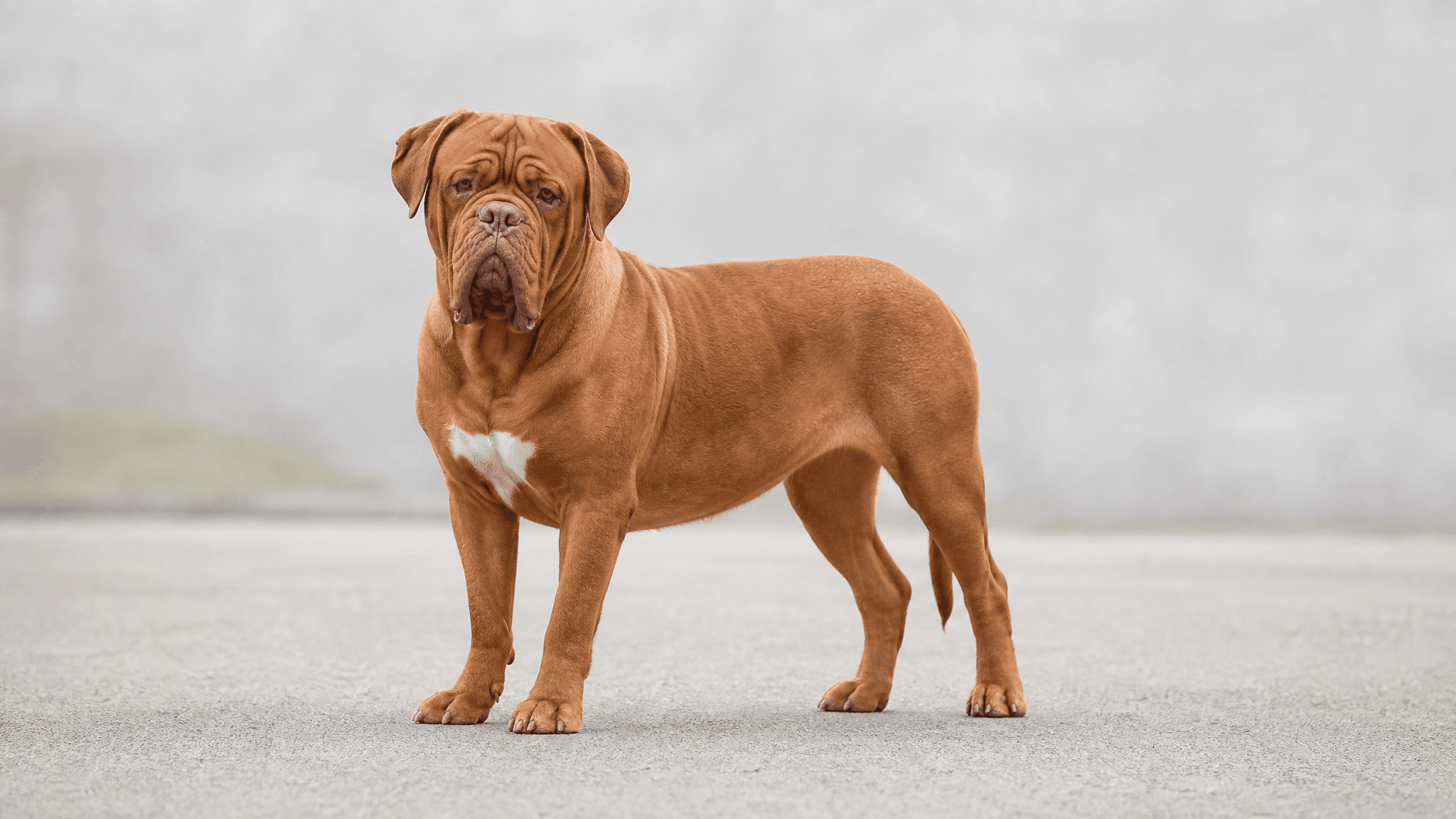
- Short, soft, fine
- Common Colors
- All shades of fawn, from light mahogany to dark red
Temperament & Personality
The Dogue de Bordeaux is a dog of typically calm and balanced temperament, very devoted to its family and especially gentle with children who grow up with it. It is courageous without being aggressive and has an imposing presence that alone deters intruders. It can be somewhat stubborn, so training should begin early and be consistent. Generous drooling is part of life with this breed.
Activity & Exercise
- Energy Level
- Moderate
- Recommended Daily Exercise
- 45–60 minutes
- Suitable for Apartment
- Not recommended
Grooming & Care
- Grooming Needs
- Low
- Shedding
- Moderate
- Bathing Frequency
- Every 6–8 weeks
Health
- Common Health Issues
- Cancer (mast cell tumors, hemangiosarcoma, lymphoma)
- Gastric dilatation/torsion
- Heart disease
- Hip and elbow dysplasia
- Respiratory problems (mild brachycephalic obstructive syndrome)
- Skin fold infections
- Recommended Health Tests
- Cardiac examination
- Orthopedic X-rays
- Respiratory evaluation
Compatibility
- With Children
- Good
- With Other Dogs
- Moderate
- With Cats
- Moderate
- For First-Time Owners
- Not recommended
Is a Dogue de Bordeaux right for you?
A Dogue de Bordeaux may suit you if:
- You are prepared to provide 45 to 60 minutes of moderate daily exercise to keep them content.
- You enjoy a calm home life where a devoted, imposing companion can relax by your side.
- You appreciate a courageous dog with a naturally imposing presence that deters without aggression.
- You are prepared for early, consistent training to gently guide a potentially stubborn but intelligent mind.
- You can manage moderate shedding and are comfortable with bathing your dog every 6 to 8 weeks.
- You don't mind a bit of drool and are prepared for the charming slobbery kisses this breed offers.
Think twice if:
- You expect immediate, unwavering obedience from a dog, as this breed can be quite stubborn.
- You have a busy schedule that often leaves your dog home alone for long stretches.
- You are unwilling to carefully introduce and supervise your Dogue de Bordeaux with other household pets.
- You are not prepared to manage moderate shedding or the generous drooling that comes with this breed.
- You live in a small apartment and cannot provide ample space for a large to giant breed.
- You are a first-time dog owner unprepared for handling a powerful, large-bodied dog during its adolescent phase.
The Dogue de Bordeaux is a truly magnificent companion, offering immense loyalty and a gentle spirit to the right family. While their imposing size and potential stubbornness require commitment and early training, their devotion and calm nature are incredibly rewarding. Be prepared for a relatively short lifespan of 5-8 years, making every moment with these loving giants precious.
Training a Dogue de Bordeaux
Training a Dogue de Bordeaux is a rewarding journey that thrives on consistency and positive reinforcement. These gentle giants, known for their calm and devoted nature, respond best to clear, patient guidance rather than harsh methods. Because they can be somewhat stubborn, short, engaging training sessions, ideally starting from puppyhood, are crucial to keep them focused and prevent boredom. Inconsistency or a lack of early, firm-but-fair training can quickly lead to a large, strong dog who decides to do things their own way, making later corrections much more challenging. Build trust and make learning fun!
Begin with:
- Attention and response to name around distractions
- Recall on a long line
- Loose-leash walking
- Leave it and drop it
- Calm greetings without jumping
- Settling on a mat or bed
- Cooperative handling for grooming, ears, feet and teeth
- Waiting at doors and gates
Guarding instincts
Your Dogue de Bordeaux's natural protective instincts, inherited from their Molossoid ancestors, mean they have an imposing presence and a strong desire to guard their home and family. While this makes them excellent deterrents, it can also lead to excessive barking or suspicion towards strangers if not managed. Early, extensive socialization with a variety of people, places, and other dogs is crucial to help them distinguish between a genuine threat and a friendly visitor. Always reward calm, appropriate responses to new stimuli.
If you notice your Dogue becoming overly protective or reactive, our Behaviour AI feature can help you understand the triggers and develop a plan to address them. Continue to expose them positively to new experiences, always ensuring they feel safe and secure, so they learn to trust your judgment.
Managing their strength
A Dogue de Bordeaux is a large to giant breed, with males weighing around 50 kg. Their sheer size and strength mean that teaching loose-leash walking from an early age is non-negotiable. An adult Dogue pulling on the leash can be incredibly challenging, even dangerous, for an owner. Start with short, positive sessions in a low-distraction environment, rewarding every step taken with a slack leash.
Invest in a comfortable, well-fitting harness that discourages pulling, and avoid retractable leashes. Consistency is key; if you allow pulling sometimes, your Dogue will learn that it's an option. For detailed guidance, check out our article on how to stop a puppy pulling on the leash. Remember, patience and positive reinforcement will build good habits.
Curbing boredom
Despite their moderate energy level and needing 45-60 minutes of exercise daily, a Dogue de Bordeaux can become bored or destructive if not adequately stimulated mentally and physically. Being a large, devoted breed, they thrive on companionship and can develop separation anxiety or exhibit stubborn, destructive behaviours like chewing furniture if left alone for extended periods without proper preparation.
Ensure they have engaging chew toys and puzzle feeders, and consider crate training to provide a safe den. Regular, consistent exercise and mental enrichment are vital. If you suspect your Dogue is stressed when left alone, look for signs like excessive drooling, pacing, or destructive chewing, and consult our guide on how to tell if your dog is stressed when you leave.
Dogue De Bordeaux — Frequently Asked Questions
What is the Dogue de Bordeaux?
The Dogue de Bordeaux (French Mastiff) is one of the oldest and most iconic French breeds, with probable origins in the ancient Molossian dogs of antiquity. They are a very large, powerfully built mastiff-type with a massive, broad, wrinkled head — one of the largest heads relative to body size of any breed — a short, fine red/fawn coat, and a characteristically serious, dignified expression softened by their deeply loyal and affectionate nature. They were historically used as guard dogs, war dogs, and for hunting large game. In character they are loyal, courageous, calm, and deeply devoted to their family — gentle giants in the truest sense.
Are Dogue de Bordeaux good family dogs?
Dogue de Bordeaux are wonderfully gentle and devoted family dogs with their own household. They are famous for their patience and tenderness with children — they seem instinctively aware of their size and adjust their behaviour accordingly. They are calm and affectionate indoors. However, they are a giant breed with natural guarding instincts — they need confident, experienced owners who establish clear boundaries, and thorough early socialisation is essential. Their loyalty and protectiveness also means they can be very suspicious of strangers. They are not suited for first-time large breed owners. For experienced, dedicated families who want a deeply loyal, impressive companion, they are exceptional.
How much exercise does a Dogue de Bordeaux need?
Despite their imposing size, Dogue de Bordeaux need moderate exercise rather than high-intensity workouts. Two walks of 30–45 minutes daily is typically sufficient — they are not a high-energy breed and should not be over-exercised, especially when young. Their heavy build and brachycephalic tendencies mean they heat up quickly: avoid vigorous exercise in warm weather, exercise in the coolest parts of the day, and always have water available. They enjoy gentle play and short outdoor explorations. Puppies should be exercised very gently — their growing joints and bones are easily stressed. After age 2 (when growth is complete), moderate adult exercise can be maintained.
What health issues affect the Dogue de Bordeaux?
The Dogue de Bordeaux has significant health challenges. Their shortened lifespan (5–8 years on average) is the most serious concern. Key health issues include: heart disease (particularly dilated cardiomyopathy and aortic stenosis) — cardiac screening of parents is critical; hip and elbow dysplasia — OFA/BVA screening is essential; bloat (GDV) — a serious, life-threatening risk for this deep-chested giant; brachycephalic obstructive airway syndrome due to their facial structure; skin fold infections from their heavy wrinkling; cancer is a leading cause of death. Choosing health-tested parents and a knowledgeable, health-focused breeder is critical.
How long do Dogue de Bordeaux live?
The Dogue de Bordeaux has one of the shortest average lifespans of any breed — typically 5–8 years. This is a significant consideration for anyone thinking about the breed. Heart disease, cancer, and bloat are leading causes of death. To maximise longevity: source from cardiac-tested, health-screened parents; feed 2–3 smaller meals to reduce GDV risk; avoid vigorous exercise in heat; keep them at a healthy (never overweight) weight; have annual vet checks including cardiac auscultation; clean skin folds regularly; monitor breathing and act quickly on any health changes. Choosing a breeder who is serious about health testing and longevity records in their lines is the most important factor.
Are Dogue de Bordeaux easy to train?
Dogue de Bordeaux are intelligent but independently minded. They are loyal and willing to please their family, but their independent, sometimes stubborn streak means training requires patience and consistency from an early age. They respond well to calm, confident, positive training — they do not respond to harsh methods, which can cause them to shut down or resist. Early puppy training (from 8 weeks) and socialisation are absolutely critical for a breed of this size and protective instinct. Leash manners must be established early — a pulling 60 kg Dogue is simply unmanageable. Despite their sometimes stubborn nature, dedicated training produces a remarkably well-mannered, gentle companion.
How do you care for a Dogue de Bordeaux's skin folds?
The Dogue de Bordeaux's deep facial wrinkles and skin folds require regular cleaning and drying to stay healthy. Moisture, food particles, and debris accumulate in the folds and create warm, moist environments where bacteria and yeast thrive, causing painful fold dermatitis (skin fold infections). Clean between every fold with a soft damp cloth or dog-safe wipes at least 2–3 times a week — ideally daily. Dry each fold thoroughly afterwards. Check for redness, odour, or discharge. The area around the muzzle, under the chin, and around the face roll are most prone to problems. Keep the area around their eyes clean. Most skin fold infections are preventable with consistent hygiene.
How much does a Dogue de Bordeaux weigh?
Dogue de Bordeaux are very large dogs. Adult males typically weigh 50–65 kg (110–145 lbs) and stand 60–68 cm at the shoulder. Females are somewhat smaller, typically 45–55 kg (99–121 lbs). Their sheer size has real practical implications: feeding costs are high, vet costs (including medications and anaesthesia) scale with weight, they need a suitable vehicle for transport, appropriate-sized beds and resting areas, and strong, well-fitted equipment. Their weight also makes it imperative that they are trained to walk calmly on leash from puppyhood — an untrained 60 kg Dogue is genuinely difficult to manage. Despite their size, they are surprisingly light-footed and agile in the home when well-managed.
Community
Talk to real Dogue De Bordeaux owners
This guide covers the breed on paper. In the app, the Dogue De Bordeaux community covers it in real life: photos from other owners, questions answered by people who live with the breed, and a directory of dogs you can browse.
- Photos & pollsSee what Dogue De Bordeaux owners are sharing today.
- Questions & answersAsk anything and hear from people who own one.
- Dog directoryBrowse Dogue De Bordeauxs from around the world.
You join automatically when you add a Dogue De Bordeaux to your profile.