Curly Coated Retriever
Summary
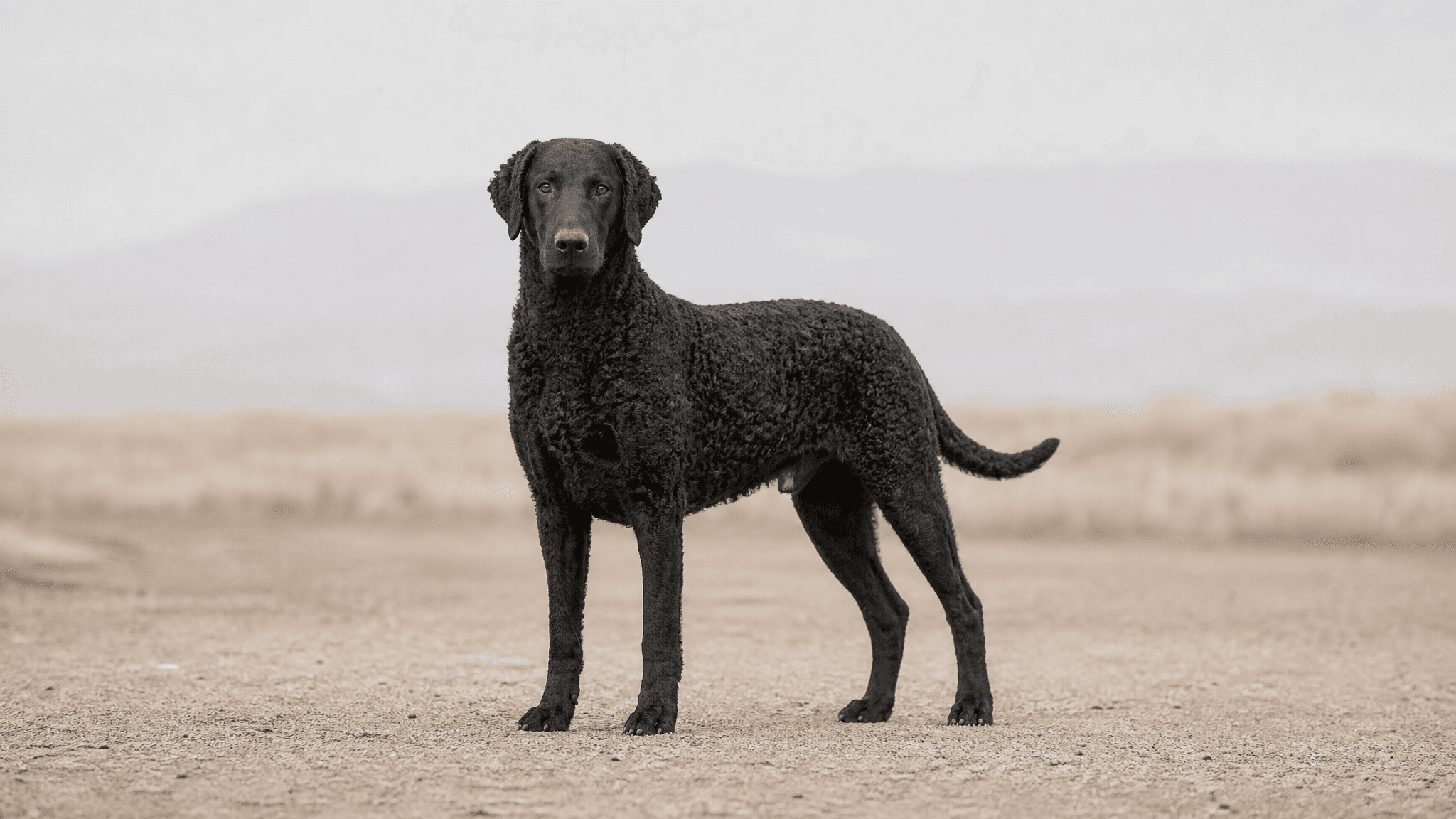
The Curly-Coated Retriever is one of the oldest retriever breeds, with references dating back to the late 18th century in England. Its coat of tight curls is its most distinctive feature, functioning as effective protection against cold, water, and thorns. It is a versatile hunting dog, excellent swimmer and retriever on land and water, with an independent and confident personality.
Physical Characteristics
- Size
- Large
- Height (male)
- 63–69 cm
- Height (female)
- 58–63 cm
- Weight (male)
- 38–45 kg
- Weight (female)
- 30–40 kg
- Life Expectancy
- 10–12 years
- Coat
- Completely covered with small, tight curls, water-resistant; no visible undercoat
- Common Colors
- Black or liver (brown)
Temperament & Personality
The Curly-Coated Retriever is an intelligent, loyal, and courageous dog, but with a marked independent streak that distinguishes it from other retrievers. It is more reserved with strangers than the Golden or the Labrador, but deeply affectionate with its family. It has a natural self-confidence and can be stubborn, requiring an experienced and consistent owner for training.
Activity & Exercise
- Energy Level
- High
- Recommended Daily Exercise
- 60–90 minutes
- Suitable for Apartment
- Not recommended
Grooming & Care
- Grooming Needs
- Low
- Shedding
- Moderate
- Bathing Frequency
- Every 6–8 weeks
Health
- Common Health Issues
- Cancer (mast cell tumors, hemangiosarcoma, lymphoma)
- Exercise-induced collapse
- Gastric dilatation/torsion
- Glycogen storage disease type IIIa
- Progressive retinal atrophy (PRA)
- Recommended Health Tests
- Genetic test for EIC and PRA
- Hip radiography
- Test for glycogen storage disease
Compatibility
- With Children
- Good
- With Other Dogs
- Good
- With Cats
- Moderate
- For First-Time Owners
- Not recommended
Is a Curly Coated Retriever right for you?
A Curly Coated Retriever may suit you if:
- You can provide 60-90 minutes of vigorous daily exercise and engaging mental challenges.
- You enjoy an active, outdoor lifestyle, including swimming, hiking, or dog sports.
- You appreciate a loyal, intelligent, and self-confident companion with a unique independent streak.
- You are prepared to commit to consistent, experienced training to manage a stubborn but brilliant mind.
- You are comfortable with moderate shedding and bathing your dog every 6-8 weeks.
- You are willing to embrace their reserved nature with strangers and deep affection for family.
Think twice if:
- You expect immediate obedience from a dog known for its independent and self-confident nature.
- You cannot provide consistent companionship, as they thrive on family interaction and dislike being alone.
- You are a first-time dog owner, as this breed requires an an experienced hand.
- You are unwilling to dedicate 60-90 minutes daily to their high energy needs.
- You live in an apartment or cannot provide ample space for a large, active dog.
- You are not prepared for a long adolescence and the consistent training required for a large, strong retriever.
The Curly Coated Retriever offers a unique blend of intelligence, loyalty, and independence. While their reserved nature and stubborn streak require an experienced owner with consistent training, the bond you forge with this self-confident, affectionate companion is incredibly rewarding. They thrive with active families who appreciate their distinct personality and are prepared for a long, engaging partnership of 10-12 years.
Training a Curly Coated Retriever
Training a Curly-Coated Retriever is a rewarding journey, but it requires a consistent and experienced hand. These intelligent dogs thrive on positive reinforcement, responding best to clear, fair guidance and engaging sessions that feel like a game. Their independent streak means they'll quickly disengage if bored or if training becomes repetitive or harsh. Keep sessions short, fun, and varied, always ending on a positive note. If you're inconsistent or lack confidence, your Curly will sense it and may decide to do things their own way, making progress challenging. Building a strong, trusting bond is paramount for success.
Begin with:
- Attention and response to name around distractions
- Recall on a long line
- Loose-leash walking
- Leave it and drop it
- Calm greetings without jumping
- Settling on a mat or bed
- Cooperative handling for grooming, ears, feet and teeth
- Waiting at doors and gates
Recall and prey drive
Your Curly-Coated Retriever's heritage as a versatile hunting dog and retriever means they possess a strong natural prey drive and a love for exploring. This independent spirit can make recall a significant challenge, especially when they're focused on a scent or a distant bird. Start recall training early and consistently in a secure area, gradually introducing distractions. Always begin with a long line to ensure safety and success, allowing them freedom to explore while you maintain control.
Practice makes perfect, and positive reinforcement for returning to you is crucial. Make coming back to you the most rewarding option available. Remember, their natural instinct to retrieve and explore is powerful, so consistent, engaging training is key to building a reliable recall. You can find more tips in our guide on how to teach a dog to come when called.
Leash pulling
Given their large size and strength, a Curly-Coated Retriever can be a handful on the leash if not properly trained. Their independent and confident nature means they'll happily lead the way if you let them, making loose-leash walking a vital skill to master from puppyhood. Consistency is paramount; every walk is a training opportunity. Use a front-clip harness or head halter for better control, as these can discourage pulling more effectively than a standard collar.
Reward every moment your Curly walks calmly by your side, even for a few steps. If they pull, stop walking immediately and only resume when the leash slackens. This teaches them that pulling gets them nowhere. For more guidance on enjoyable walks, check out our top dog walking tips.
Boredom and destructive behaviour
Curly-Coated Retrievers are high-energy dogs that require a minimum of 60-90 minutes of vigorous exercise daily, coupled with plenty of mental stimulation. If under-exercised or left alone for extended periods without adequate enrichment, their intelligence and independent nature can lead to boredom, frustration, and destructive behaviors. This isn't naughtiness; it's a sign they need more to do.
Ensure your Curly has ample opportunities for physical activity, like retrieving games, swimming, or long hikes. Incorporate puzzle toys, training sessions, and interactive play into their daily routine to keep their minds engaged. A bored Curly is often a creative (and potentially destructive) Curly! If you suspect your dog is struggling when left alone, our guide on how to tell if your dog is stressed when you leave can offer insights.
Curly Coated Retriever — Frequently Asked Questions
What is the Curly Coated Retriever?
The Curly Coated Retriever, often affectionately called a 'Curly,' is a distinguished and ancient retriever breed originating from the United Kingdom, specifically England, in the late 18th century. As part of the FCI Group 8 (Retrievers), this large and robust dog is instantly recognizable by its unique coat of tight, crisp curls. This distinctive coat isn't just for show; it provides excellent protection against cold water, harsh weather, and thorny underbrush, making them superb working dogs both on land and in the water. They are truly versatile and confident companions, known for their self-assured nature.
What was the Curly Coated Retriever originally bred for?
The Curly Coated Retriever has a rich history as one of the oldest retriever breeds, with its origins tracing back to England in the late 18th century. These dogs were specifically developed to be versatile hunting companions, excelling in retrieving game from both land and water. Their unique, tightly curled coat was a crucial feature, providing unparalleled protection against icy waters, dense undergrowth, and harsh weather conditions, allowing them to work tirelessly alongside hunters. Their natural self-confidence and intelligence made them highly effective and reliable partners in the field.
How much exercise does a Curly Coated Retriever need?
Curly Coated Retrievers are high-energy dogs that absolutely thrive on activity! To keep your Curly happy and healthy, they need a significant amount of daily exercise, typically between 60 to 90 minutes. This isn't just a casual stroll; they love vigorous activities like long runs, swimming, retrieving games, or even dog sports like agility. Their strong retrieving instincts mean they adore fetching balls or dummies. Providing them with ample physical and mental stimulation is crucial to prevent boredom and ensure they channel their energy positively, making them wonderful, well-adjusted companions.
Is the Curly Coated Retriever a good family dog?
With their family, Curly Coated Retrievers are deeply affectionate, loyal, and courageous companions. While they can be more reserved with strangers compared to some other retriever breeds, they form strong bonds with their human pack. When properly socialized from a young age, they can be wonderful with children who are taught to interact respectfully with dogs. They can also get along well with other pets, especially if raised together. Their natural self-confidence makes them a stable presence, and their devotion to their family shines through, making them cherished members of the household.
Is the Curly Coated Retriever easy to train?
Training a Curly Coated Retriever can be a rewarding experience, but it does require a consistent and experienced hand! While they are undoubtedly intelligent and loyal, Curlys possess a strong independent streak and can be quite stubborn, setting them apart from some other retriever breeds. They thrive on positive reinforcement and clear, fair guidance. Early socialization and consistent training are key to harnessing their natural self-confidence and ensuring they grow into well-behaved, courageous companions who are deeply devoted to their family. Patience and understanding will go a long way with these clever dogs.
What health issues are common in the Curly Coated Retriever?
Like all breeds, Curly Coated Retrievers can be prone to certain health conditions, and being aware of these helps us provide the best care. Some documented concerns include various forms of cancer, such as mast cell tumors, hemangiosarcoma, and lymphoma. They can also experience Exercise-induced collapse, Gastric dilatation/torsion (bloat), Glycogen storage disease type IIIa, and Progressive retinal atrophy (PRA). Regular veterinary check-ups and choosing a reputable breeder who screens their dogs can significantly help in managing these risks, ensuring your Curly lives a long and happy life.
What is the Curly Coated Retriever's coat like and how much grooming does it need?
The Curly Coated Retriever's most distinctive feature is, of course, its beautiful and functional coat! It's made up of tight, crisp, small curls that lie close to the body, providing excellent protection against cold water, thorns, and harsh weather. Despite its unique texture, the coat is surprisingly low-maintenance compared to some other breeds. Regular brushing, perhaps once or twice a week, is usually sufficient to remove loose hair and prevent matting. Occasional bathing will keep them fresh, but over-bathing can strip natural oils. Their coat is truly a marvel of nature!
What is the typical lifespan of a Curly Coated Retriever?
You'll be happy to know that Curly Coated Retrievers typically enjoy a good, long life as cherished family members! Their average lifespan is generally between 10 to 12 years. Providing your Curly with excellent nutrition, plenty of regular exercise, consistent veterinary care, and a loving home environment are all key factors in helping them reach their full potential and live a healthy, happy life by your side. These wonderful dogs bring so much joy, and we want them with us for as long as possible!
Community
Talk to real Curly Coated Retriever owners
This guide covers the breed on paper. In the app, the Curly Coated Retriever community covers it in real life: photos from other owners, questions answered by people who live with the breed, and a directory of dogs you can browse.
- Photos & pollsSee what Curly Coated Retriever owners are sharing today.
- Questions & answersAsk anything and hear from people who own one.
- Dog directoryBrowse Curly Coated Retrievers from around the world.
You join automatically when you add a Curly Coated Retriever to your profile.