Bulldog
Summary
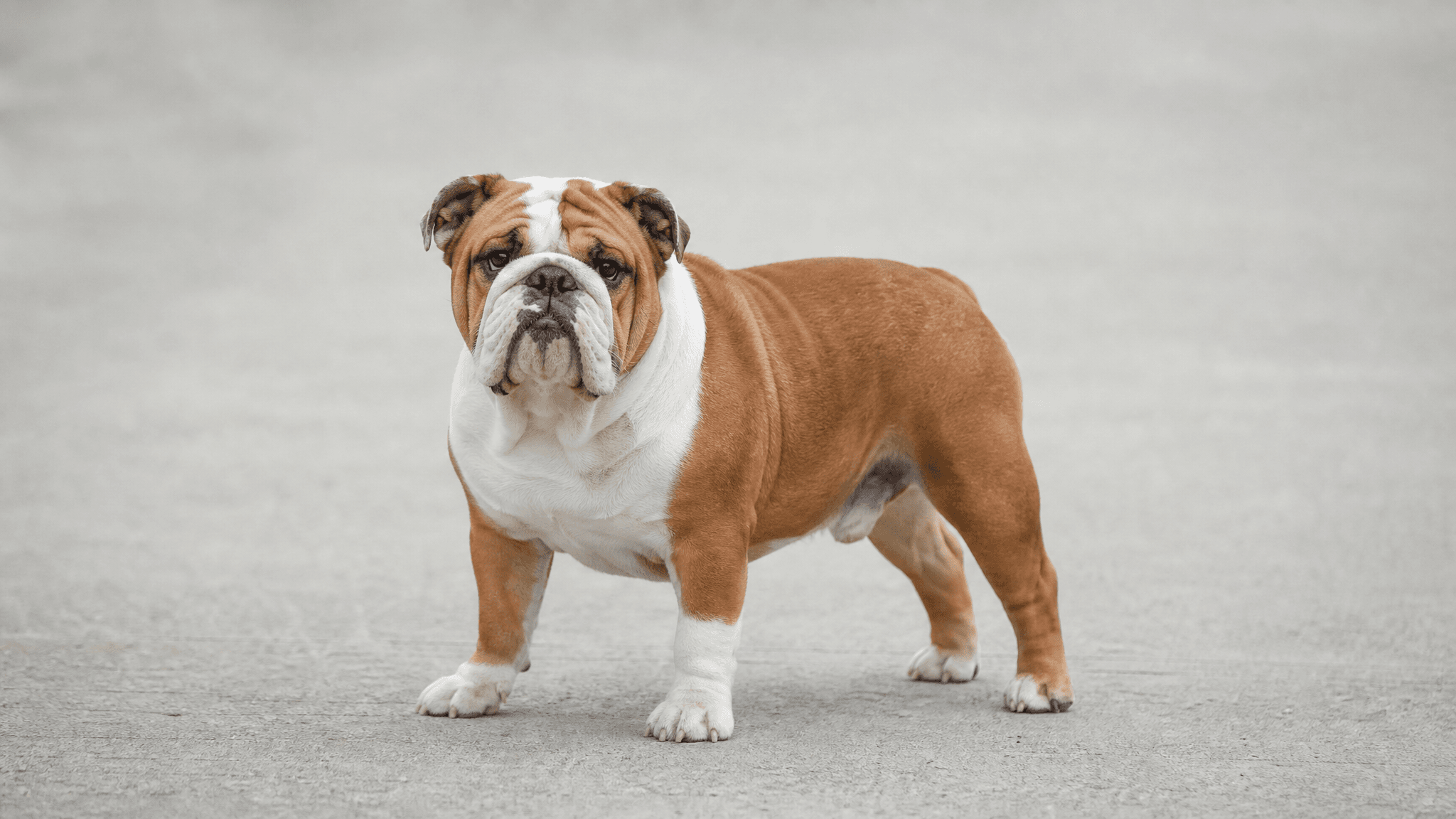
The English Bulldog has one of the most dramatic histories in the canine world: the breed was created for the brutal sport of bull-baiting, banned in 1835, and when that activity disappeared, dedicated breeders completely transformed the breed's temperament, turning it into one of the most affectionate and lazy companion dogs in the world. The Bulldog is today a British national symbol and mascot of countless institutions.
Physical Characteristics
- Size
- Medium
- Height (male)
- 31–36 cm
- Height (female)
- 31–36 cm
- Weight (male)
- 23–25 kg
- Weight (female)
- 18–23 kg
- Life Expectancy
- 8–10 years
- Coat
- Short, flat, and smooth
- Common Colors
- Brindle, red-fawn, fawn, white, or combinations with white
Temperament & Personality
The modern Bulldog is completely different from its combative ancestor — it is peaceful, gentle, and extraordinarily affectionate with its family. It loves lying on the sofa and does not have very high exercise needs. It is good with children and generally friendly with other animals. It can be stubborn during training but responds well when treats are involved.
Activity & Exercise
- Energy Level
- Low to moderate
- Recommended Daily Exercise
- 30–45 minutes
- Suitable for Apartment
- Yes
Grooming & Care
- Grooming Needs
- Moderate
- Shedding
- Moderate
- Bathing Frequency
- Every 3–4 weeks
Health
- Common Health Issues
- Airway stenosis
- Brachycephalic syndrome (severe respiratory problems)
- Dental problems (incomplete dentition in the hairless variety due to genetic linkage)
- Hip dysplasia
- Keratoconjunctivitis sicca
- Skin fold dermatitis
- Recommended Health Tests
- Cardiac examination
- Eye examination
- Hip radiography
- Respiratory evaluation
Compatibility
- With Children
- Excellent
- With Other Dogs
- Good
- With Cats
- Good
- For First-Time Owners
- Acceptable
Is a Bulldog right for you?
A Bulldog may suit you if:
- You enjoy short, leisurely walks of 30-45 minutes each day, as your Bulldog will be content with this moderate activity.
- You appreciate a calm, relaxed home environment and a companion who loves to snuggle on the sofa.
- You are looking for a gentle, affectionate family member who will be a loving companion to all.
- You are prepared to use positive reinforcement and tasty treats to motivate a sometimes stubborn but eager-to-please learner.
- You are willing to commit to moderate grooming, including regular bathing every 3-4 weeks and wrinkle cleaning.
- You are ready to manage a dog with a charmingly independent streak and a penchant for comfortable naps.
Think twice if:
- You expect immediate and unwavering obedience from your canine companion, as Bulldogs have a stubborn streak.
- You often leave your dog alone for long periods, as Bulldogs thrive on companionship and family presence.
- You are unwilling to perform the moderate grooming, including regular wrinkle cleaning and bathing, essential for their skin health.
- You are unprepared for managing a medium-sized dog weighing up to 25 kg that can be stubborn during training.
- You desire a dog with a very long lifespan, as Bulldogs typically live 8-10 years.
- You are highly bothered by moderate shedding, as Bulldogs do shed year-round.
Bulldogs are truly unique companions, transformed from their combative past into gentle, affectionate family members. While they offer immense love and a peaceful presence, their charming stubbornness and moderate care needs require a dedicated owner. Living with a Bulldog means embracing their particular quirks and ensuring their comfort, rewarding you with an extraordinarily loyal and loving friend for 8 to 10 years.
Training a Bulldog
Bulldogs are wonderfully affectionate and gentle companions, but their strong will means training requires a patient, positive approach. They are highly motivated by tasty treats and praise, so short, fun sessions are far more effective than long, repetitive drills. If training becomes a battle of wills or feels like a chore, your Bulldog will quickly disengage and become stubborn. Keep it light, rewarding, and consistent, and you'll build a strong bond and a well-behaved friend who loves to learn at their own pace.
Begin with:
- Responding to name around distractions
- Recall on a long line
- Loose-leash walking
- Leave it and drop it
- Calm greetings without jumping
- Settling on a mat or bed
- Cooperative handling for grooming
- Waiting at doors and gates
Overcoming stubbornness
Bulldogs are known for their strong will, which can sometimes be mistaken for defiance. When your Bulldog seems to dig in their heels, it's often a sign they're not motivated enough or the task is too difficult. Break down commands into tiny steps and use high-value treats to make every interaction positive.
Keep training sessions short and sweet, ending on a success, to prevent frustration for both of you. Consistency is key, so everyone in the household should use the same commands and rewards to help your Bulldog understand what's expected.
Leash pulling
Despite their low to moderate energy, a medium-sized Bulldog (males 23-25 kg, females 18-23 kg) can still be a powerful puller on the leash, especially if they catch an interesting scent. Start teaching loose-leash walking early with positive reinforcement, rewarding every moment they walk beside you without tension.
Consider a comfortable, well-fitting harness that discourages pulling rather than a collar, which can put strain on their neck. For more detailed guidance, check out our guide on stopping leash pulling.
Boredom and alone time
While Bulldogs are content with 30-45 minutes of daily exercise and love their sofa time, they are also highly affectionate and thrive on companionship. If left alone for extended periods without mental stimulation, they can become bored, which might manifest as increased stubbornness or even destructive chewing.
Provide puzzle toys, rotate their toys regularly, and ensure they have a comfortable, safe space when you're away. If you notice signs of stress when you leave, such as excessive drooling or pacing, it's worth exploring how to address separation anxiety.
Bulldog — Frequently Asked Questions
Why do English Bulldogs have so many health problems?
English Bulldogs are heavily affected by their extreme physical conformation — the very features that make them visually distinctive cause serious health problems. Their severely shortened skull (brachycephaly) causes breathing difficulties. Skin folds trap moisture and cause infections. Their compact, heavy body with narrow hips makes natural birth almost impossible (most litters require C-sections). Hip and elbow issues, heart conditions, cherry eye, and intervertebral disc disease are also common. Responsible breeders work to improve health metrics, but the breed faces significant welfare challenges.
Are English Bulldogs good with children?
English Bulldogs are famously gentle, patient, and affectionate with children — they have a calm, tolerant nature that makes them excellent family companions. They tend to be sturdy enough to handle moderate play and rarely react badly to the chaos of family life. They form deep bonds with their family members and are often particularly soft with young children. Their low energy means they won't overwhelm toddlers with boisterous play, making them one of the more naturally gentle family breeds.
How much exercise does an English Bulldog need?
English Bulldogs need only moderate, gentle exercise — two short walks of 15–20 minutes daily is generally sufficient. Their brachycephalic anatomy means they simply cannot sustain vigorous exercise, especially in heat or humidity. Even on a warm day, a short walk can leave them dangerously overheated. Watch closely for heavy panting, stumbling, or distress. In hot weather, exercise is best limited to the coolest hours, and they should be kept in air-conditioned environments whenever possible.
Do English Bulldogs have skin problems?
Yes — the skin folds on Bulldogs' faces, around their tails, and in their armpits are prone to infections (intertrigo) if not cleaned regularly. Moisture, heat, and friction in the folds create ideal conditions for bacterial and yeast infections. Daily cleaning of folds with a dry or slightly damp cloth, followed by thorough drying, is essential maintenance. Bulldogs are also prone to general skin allergies that may manifest as itching, redness, or hotspots. Your vet can recommend appropriate cleaning solutions and treatments.
How long do English Bulldogs live?
English Bulldogs unfortunately have one of the shortest lifespans of any breed, typically 8–10 years. Their numerous structural health issues significantly impact quality and length of life. Choosing from breeders who prioritise health testing (BOAS assessment, hip scores, heart checks, eye tests), having BOAS surgery if indicated, meticulous skin fold care, managing weight carefully (obesity dramatically worsens all their conditions), and regular veterinary oversight all contribute to a longer, more comfortable life.
Are English Bulldogs lazy?
Bulldogs have a well-earned reputation for being laid-back and preferring their sofa to strenuous activity. Their low-to-moderate energy level is partly temperament and partly physical necessity — their anatomy limits how much exercise they can safely do. They enjoy short bursts of play and a gentle stroll, then are quite content to lounge. This suits some owners perfectly; others find it underwhelming. If you want an active exercise partner, a Bulldog is not the right breed — but if you want a warm, affectionate lap dog who makes you laugh daily, few breeds compare.
Do English Bulldogs snore?
Bulldogs snore — often loudly, and sometimes impressively so. Their brachycephalic anatomy means their soft palate, narrowed nostrils, and throat tissue create turbulent airflow that produces the characteristic Bulldog sounds: snoring, snorting, wheezing, and reverse sneezing. Most Bulldog owners find these sounds endearing; they become part of the dog's personality. However, if breathing sounds are very laboured, the dog seems to struggle for breath, or sleep is visibly disturbed, a vet assessment for BOAS is important.
Are English Bulldogs good for first-time owners?
English Bulldogs can be suitable for first-time owners who go in fully informed about the breed's health needs. Their gentle, calm temperament makes them manageable, they're not difficult to train, and they don't need intensive exercise. What first-time owners must be prepared for is the health commitment: daily skin fold cleaning, heat management, potential vet bills for BOAS surgery or other health issues, and the emotional reality of a shorter lifespan. Research thoroughly and find a vet who knows the breed before committing.
Community
Talk to real Bulldog owners
This guide covers the breed on paper. In the app, the Bulldog community covers it in real life: photos from other owners, questions answered by people who live with the breed, and a directory of dogs you can browse.
- Photos & pollsSee what Bulldog owners are sharing today.
- Questions & answersAsk anything and hear from people who own one.
- Dog directoryBrowse Bulldogs from around the world.
You join automatically when you add a Bulldog to your profile.