Bull Terrier
Summary
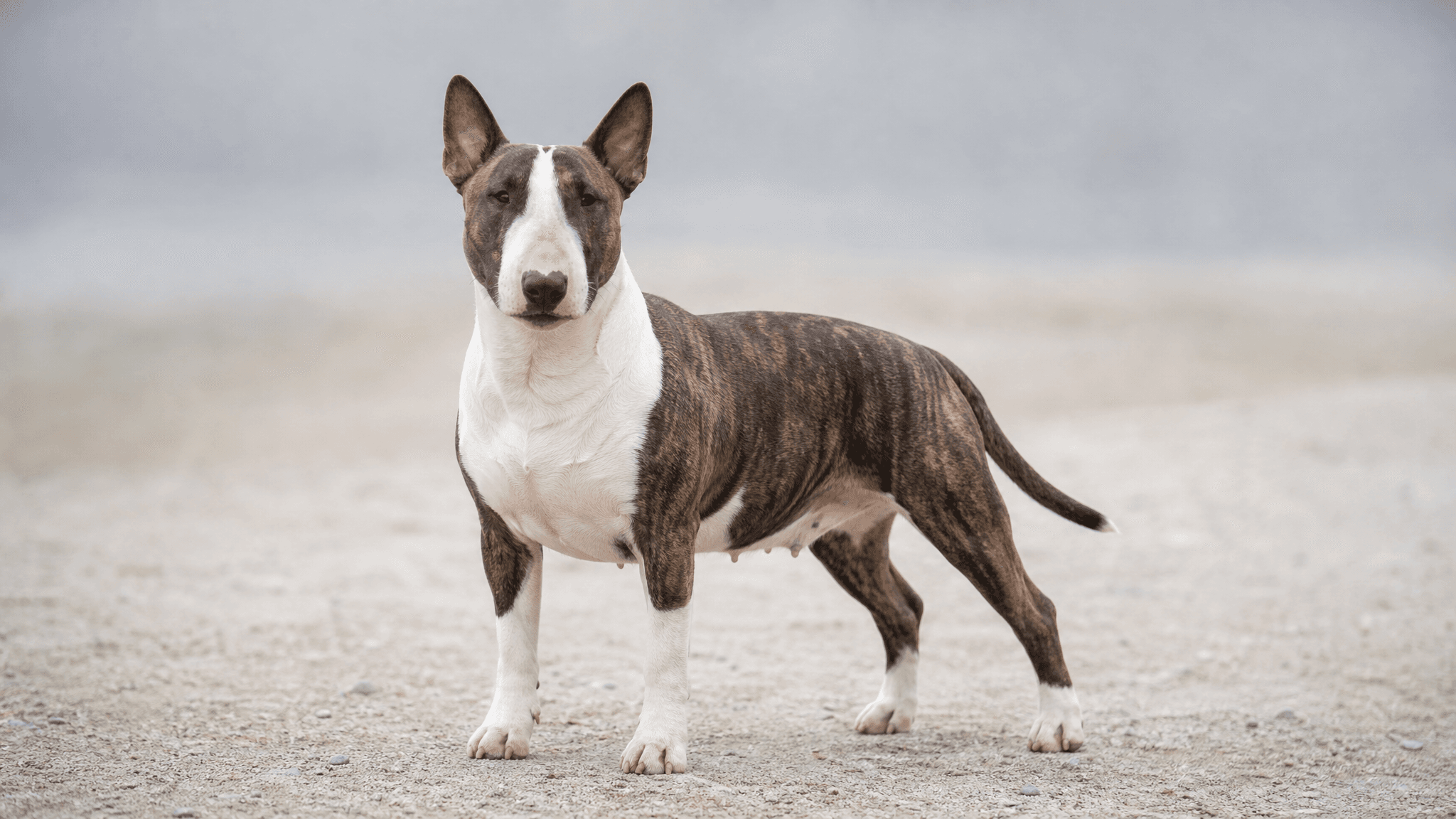
The Bull Terrier is possibly the dog with the most singular silhouette in the world: its oval ("egg-shaped") head, completely without stop, is one of the most immediately recognizable traits in the entire animal kingdom. Developed in the mid-19th century by James Hinks in Birmingham from the crossing of the old Bull-and-Terrier with the Dalmatian and the English White Terrier (extinct), the modern Bull Terrier is a deliberate creation that united strength, elegance, and a completely unique head. It exists in two varieties: White and Colored.
Physical Characteristics
- Size
- Medium to large
- Height (male)
- 53–56 cm
- Height (female)
- 46–51 cm
- Weight (male)
- 23–32 kg
- Weight (female)
- 20–25 kg
- Life Expectancy
- 10–14 years
- Coat
- short, smooth hair, hard to the touch and with a fine sheen
- Common Colors
- Pure white (markings on the head accepted); Colored — brindle preferred; also red, fawn, tricolor, and black-brindle
Temperament & Personality
The Bull Terrier is often called "the clown of the canine kingdom" — it is exuberant, mischievous, extremely affectionate, and with a sense of humor that delights its owners. It is stubborn but "particularly good with people," as the FCI standard states. Very loyal and protective of the family, especially of children it is raised with. It needs early socialization and consistent training. Its stubbornness and physical strength require an experienced owner.
Activity & Exercise
- Energy Level
- High
- Recommended Daily Exercise
- 60–90 minutes
- Suitable for Apartment
- Not recommended
Grooming & Care
- Grooming Needs
- Low
- Shedding
- Moderate
- Bathing Frequency
- Every 4–6 weeks
Health
- Common Health Issues
- Cardiomyopathy
- Cataracts
- Hereditary deafness
- Hereditary nephropathy
- Patellar luxation
- Recommended Health Tests
- BAER hearing test
- Cardiac examination
- Kidney evaluation
Compatibility
- With Children
- Good
- With Other Dogs
- Can be difficult
- With Cats
- Can be difficult
- For First-Time Owners
- Not recommended
Is a Bull Terrier right for you?
A Bull Terrier may suit you if:
- You can provide 60 to 90 minutes of engaging daily exercise and mental challenges.
- You enjoy an active lifestyle that includes playful interactions and a good sense of humor.
- You appreciate a loyal, protective, and extremely affectionate companion with a delightful sense of humor.
- You are prepared to commit to early socialization and consistent, positive training to manage their stubborn streak.
- You are comfortable with moderate shedding and a low-maintenance grooming routine of a short, smooth coat.
- You are ready to embrace a mischievous and exuberant personality that loves being the center of attention.
Think twice if:
- You expect immediate obedience from a dog, as Bull Terriers are known for their stubborn independence.
- You cannot provide consistent companionship, as this breed thrives on interaction and dislikes being left alone.
- You already have other dogs or cats and are unwilling to commit to extensive, careful introductions.
- You are not prepared for a dog with high energy that requires daily vigorous activity and engagement.
- You live in an apartment or cannot provide a securely fenced outdoor space for their energetic antics.
- You are a first-time dog owner or prefer a dog that doesn't demand firm, consistent handling during adolescence.
The Bull Terrier offers a unique blend of playful joy and unwavering loyalty, making them truly special companions. While their spirited nature and independent streak require dedication to training and socialization, the rewards are immense. For those ready to embrace their distinct personality and provide consistent guidance, a Bull Terrier brings a lifetime of laughter and devoted affection.
Training a Bull Terrier
Bull Terriers are wonderfully unique learners, often described as the 'clowns of the canine kingdom' due to their exuberant and mischievous nature. They thrive on positive reinforcement, especially when training is framed as a fun, engaging game with plenty of praise, treats, and play. Their intelligence is undeniable, but it's often coupled with a stubborn streak, meaning short, upbeat training sessions are far more effective than long, repetitive drills. Inconsistency or harsh methods will quickly lead to disengagement, resistance, or even a playful defiance, so patience and a firm but gentle approach are key to success with your delightful companion.
Begin with:
- attention and response to name around distractions
- recall on a long line
- loose-leash walking
- leave it and drop it
- calm greetings without jumping
- settling on a mat or bed
- cooperative handling for grooming, ears, feet and teeth
- waiting at doors and gates
Prey drive and focus
Bull Terriers, with their terrier heritage, often possess a strong prey drive. This instinct can make them incredibly focused on squirrels, cats, or other small, fast-moving creatures, making recall a significant challenge, especially off-leash. It's crucial to begin recall training early and consistently, starting in low-distraction environments and gradually increasing the difficulty. Always use a long line in unfenced areas to ensure safety while practicing, making yourself the most exciting thing in their world.
Pulling on leash
Given their medium to large size and high energy level, a Bull Terrier can be a powerful puller on the leash. This isn't just uncomfortable for you; it can make walks less enjoyable and even unsafe. Establishing good loose-leash walking habits from puppyhood is essential. Use a front-clip harness or head halter if needed, and reward generously for walking calmly by your side. Remember, consistency on every walk is vital to teach them that a loose leash means forward motion and fun.
Managing high energy
A Bull Terrier's high energy means they need a substantial outlet for their physical and mental vitality, typically 60-90 minutes of exercise daily. Without adequate stimulation, these clever and often mischievous dogs can become bored, leading to undesirable behaviors like excessive chewing, digging, or general naughtiness around the house. They are not recommended for apartment living and thrive when they have space and plenty of interaction.
Ensure their days are filled with engaging activities, puzzle toys, and quality time with you to prevent frustration and keep their 'clown' side charming, not destructive. If you suspect your dog is struggling when left alone, look for signs of stress.
Bull Terrier — Frequently Asked Questions
Are Bull Terriers good family dogs?
Bull Terriers can be wonderful family dogs for the right household — they are playful, clownish, and deeply devoted to their people. They tend to love children and have a high tolerance for rough play. However, they are powerful, energetic, and stubborn dogs that require consistent training and an experienced owner. They can be dog-aggressive, particularly same-sex aggressive, and their boisterous nature can accidentally knock over small children. Early socialisation and structured training are non-negotiable.
Do Bull Terriers have behaviour problems?
Bull Terriers are prone to obsessive-compulsive behaviours — tail chasing, self-directed spinning, and pacing are documented in the breed. These behaviours are partly hereditary and partly exacerbated by boredom or frustration. They can also be dog-aggressive and stubborn. However, the majority of Bull Terrier behaviour problems stem from inadequate exercise, mental stimulation, and training rather than the breed itself. A well-exercised, properly trained Bull Terrier is a joy — funny, loyal, and endlessly entertaining.
How much exercise does a Bull Terrier need?
Bull Terriers need 60–90 minutes of vigorous exercise daily. They are athletic, energetic dogs that thrive on play, runs, and interactive activities. Without adequate exercise, they develop destructive behaviours and may channel their energy into obsessive patterns. They enjoy fetch, tug of war, and structured play sessions. Standard Bull Terriers can run and rough-play for extended periods; Miniature Bull Terriers need slightly less but are still energetic little dogs. A securely fenced yard is a significant asset.
Are Bull Terriers aggressive?
Bull Terriers have a history rooted in bull-baiting and dog fighting, but as a modern companion breed they are not inherently human-aggressive. Well-bred, properly socialised Bull Terriers are affectionate and clownish with people. However, they can be dog-aggressive, particularly toward dogs of the same sex, and have a prey drive toward small animals. The breed requires responsible ownership — early socialisation, consistent training, and secure fencing. Poorly managed Bull Terriers can be dangerous, but this is true of many powerful breeds.
Are Bull Terriers good for first-time owners?
Bull Terriers are not typically recommended for first-time dog owners. Their stubbornness, strength, high energy, potential dog-aggression, and tendency toward obsessive behaviours require an owner who is knowledgeable, consistent, and patient. They are not the type of dog that trains itself. That said, a first-time owner who is committed to learning, investing in training classes, and providing structure can absolutely succeed with a Bull Terrier — with proper preparation and support.
What health problems do Bull Terriers have?
Bull Terriers have several known health concerns. Deafness — particularly in white Bull Terriers — is common and can be tested with BAER testing. Heart disease, including mitral valve disease and aortic stenosis, occurs in the breed. Kidney disease (hereditary nephritis) is a breed-specific condition that can be DNA-tested. Skin conditions, including allergies and zinc-responsive dermatosis, affect many Bull Terriers. Obsessive-compulsive tendencies have a hereditary component. Regular vet check-ups and health-tested breeding stock are important.
How long do Bull Terriers live?
Bull Terriers typically live 10–14 years. Their lifespan is significantly influenced by genetics, particularly the presence of hereditary kidney disease or heart conditions. Choosing a puppy from health-tested parents (kidney function, cardiac screening, BAER hearing test) gives the best chance of a long life. Maintaining a lean weight, regular exercise, dental care, and annual vet check-ups all contribute to longevity. Miniature Bull Terriers tend to live slightly longer than standard-sized ones.
Do Bull Terriers get along with other pets?
Bull Terriers can be challenging with other animals. They often have a strong prey drive and can be aggressive toward cats, small animals, and other dogs — particularly dogs of the same sex. That said, many Bull Terriers live happily with other pets they've been raised with from a young age. Introductions should be slow, supervised, and managed carefully. Same-sex pairings carry the highest risk. Always err on the side of supervision and management rather than assuming good intentions from all sides.
Community
Talk to real Bull Terrier owners
This guide covers the breed on paper. In the app, the Bull Terrier community covers it in real life: photos from other owners, questions answered by people who live with the breed, and a directory of dogs you can browse.
- Photos & pollsSee what Bull Terrier owners are sharing today.
- Questions & answersAsk anything and hear from people who own one.
- Dog directoryBrowse Bull Terriers from around the world.
You join automatically when you add a Bull Terrier to your profile.