Borzoi - Russian Hunting Sighthound
Summary
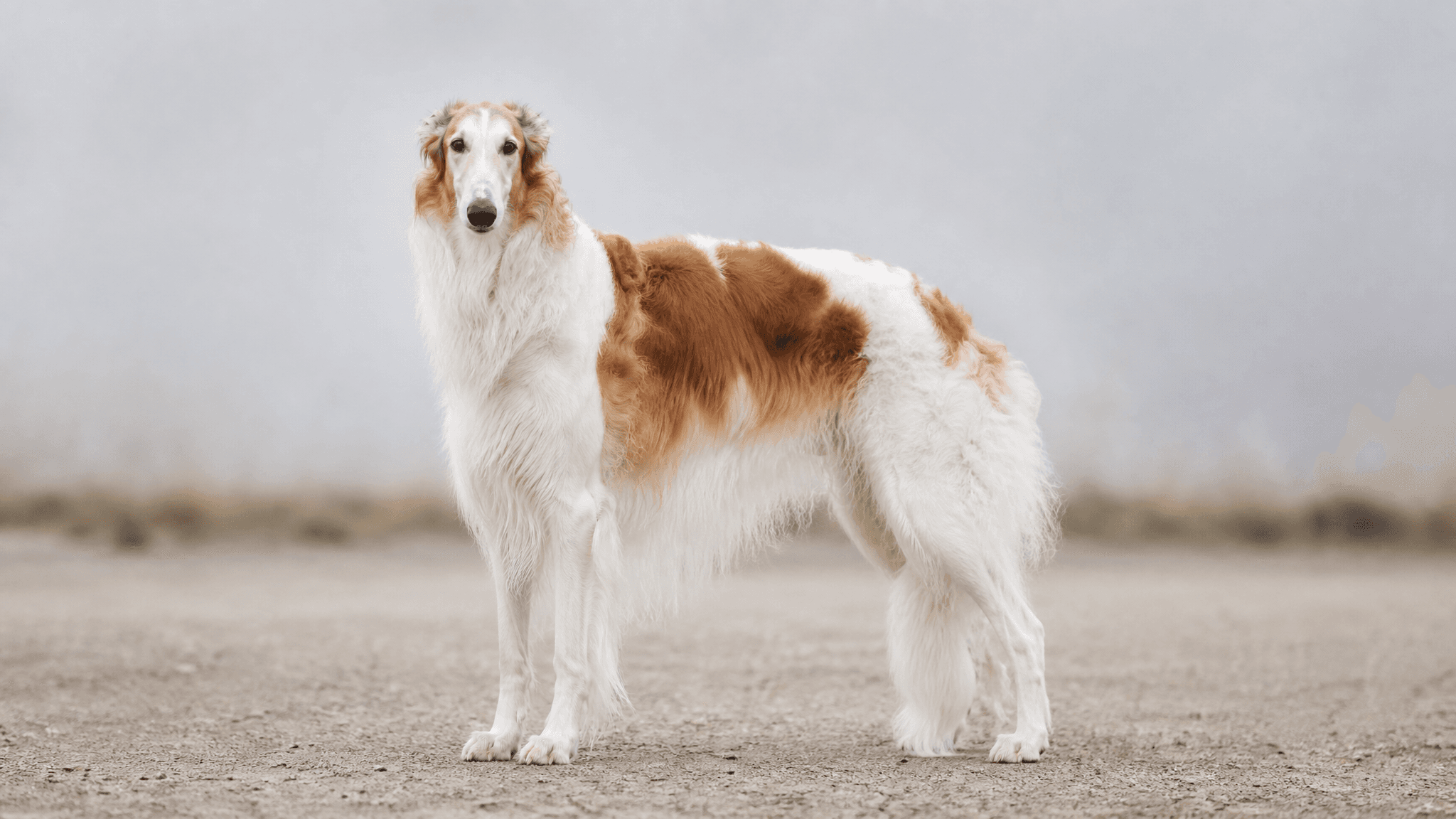
Formerly called the _Russian Greyhound_ or _Russian Wolfhound_, the Borzoi was bred by Russian nobility to hunt wolves on horseback across the vast Russian plains, being released in pairs to bring down prey. Its elegant silhouette, silky and wavy coat, and regal character made it a symbol of Tsarist aristocratic splendor. Today it is an affectionate, calm, and surprisingly adaptable companion for family life.
Physical Characteristics
- Size
- Large
- Height (male)
- 75–85 cm
- Height (female)
- 68–78 cm
- Weight (male)
- 34–48 kg
- Weight (female)
- 27–40 kg
- Life Expectancy
- 9–14 years
- Coat
- Silky, flat or slightly wavy; abundant fringes on the neck, flanks, and tail; may present slight curling
- Common Colors
- Any color except merle; white, gold, fawn, black and silver, solid or combined with markings
Temperament & Personality
The Borzoi is a dog of serene and aristocratic personality, affectionate with the family but reserved with strangers. It appreciates domestic tranquility and can be an excellent couch companion, as long as it receives regular exercise. Despite its imposing appearance, it is sensitive and does not tolerate harsh treatment well. It possesses a strong chase instinct that can lead it to run after any small animal.
Activity & Exercise
- Energy Level
- Moderate
- Recommended Daily Exercise
- 45–60 minutes
- Suitable for Apartment
- Yes with exercise
Grooming & Care
- Grooming Needs
- Moderate to high
- Shedding
- Moderate
- Bathing Frequency
- Every 4–6 weeks
Health
- Common Health Issues
- Anesthesia sensitivity
- Gastric dilatation-volvulus (GDV) — primary concern
- Hip and elbow dysplasia
- Hypothyroidism
- Osteosarcoma
- Progressive retinal atrophy (PRA)
- Recommended Health Tests
- Always inform the veterinarian of anesthesia sensitivity
- Eye examination
- Hip and elbow evaluation (OFA)
- Thyroid analysis
Compatibility
- With Children
- Good
- With Other Dogs
- Good
- With Cats
- Can be difficult
- For First-Time Owners
- Acceptable
Is a Borzoi - Russian Hunting Sighthound right for you?
A Borzoi - Russian Hunting Sighthound may suit you if:
- You are prepared to provide 45 to 60 minutes of daily exercise to keep their moderate energy level balanced.
- You enjoy a serene home life and appreciate a calm companion who is also up for a good run.
- You value an aristocratic yet affectionate temperament that is reserved with new acquaintances.
- You are committed to consistent, gentle training methods, as they are sensitive and do not tolerate harshness.
- You are willing to commit to moderate to high grooming needs for their beautiful silky, fringed coat.
- You can manage a strong chase instinct, ensuring secure off-leash areas for safe running.
Think twice if:
- You expect immediate, eager obedience, as their independent sighthound nature means they think for themselves.
- You have a chaotic household or expect your dog to be left alone for long stretches frequently.
- You already have cats, as their strong prey drive can make cohabitation very challenging.
- You are unwilling to dedicate 45-60 minutes daily to exercise or regular grooming for their luxurious coat.
- You do not have a securely fenced yard or plan to walk them exclusively on a leash due to their chase instinct.
- You are not prepared for a large, powerful dog, weighing up to 48 kg, during their boisterous adolescent phase.
Bringing a Borzoi into your life is a commitment to both serene elegance and exhilarating bursts of speed. While they are wonderfully calm and affectionate family members indoors, their deep-seated hunting heritage means they thrive when given opportunities to run freely and safely. Balancing their regal tranquility with their sighthound instincts is the key to a truly harmonious life together, offering a unique and rewarding companionship for 9 to 14 years.
Training a Borzoi - Russian Hunting Sighthound
Borzoi are sensitive and intelligent dogs who respond best to positive reinforcement, gentle guidance, and short, engaging training sessions. Their aristocratic nature means they appreciate respect and fairness; harsh corrections or a heavy hand will cause them to shut down or become resistant, damaging your bond and hindering progress. Keep training fun and rewarding, focusing on building a strong, trusting relationship. Consistency and patience are key to unlocking their cooperative spirit, making them wonderful, well-mannered companions. Remember, they thrive on mental stimulation as much as physical activity, even with their moderate energy level.
Begin with:
- Attention and response to name around distractions
- Recall on a long line
- Loose-leash walking
- Leave it and drop it
- Calm greetings without jumping
- Settling on a mat or bed
- Cooperative handling for grooming, ears, feet and teeth
- Waiting at doors and gates
Prey Drive and Recall
Borzoi possess a powerful chase instinct, bred into them for hunting wolves. This means any small, fast-moving object—a squirrel, a cat, or even a blowing leaf—can trigger an immediate, intense pursuit. Off-leash reliability, especially in unfenced areas, is extremely difficult to achieve and often unsafe. Focus on recall training in secure, enclosed spaces first, gradually introducing distractions. Always use a long line or leash in open areas to keep your Borzoi safe. Mastering a reliable recall is crucial for their safety and your peace of mind.
Leash Manners and Strength
Despite their serene nature, Borzoi are large, strong dogs (males 34-48 kg, females 27-40 kg) that can pull with surprising force when motivated. Early and consistent training in loose-leash walking is essential to prevent them from dragging you down the street. Use positive reinforcement and a comfortable, well-fitting harness that discourages pulling, rather than a collar that could strain their delicate neck. Practice in quiet areas before gradually introducing more stimulating environments. For extra help, explore our guide on stopping leash pulling.
Boredom and Destructive Habits
While Borzoi are adaptable and can be excellent couch companions, they still require their recommended 45-60 minutes of daily exercise and mental stimulation to prevent boredom. An under-exercised or under-stimulated Borzoi, especially if left alone for extended periods, may resort to destructive behaviors like chewing furniture or excessive barking. Provide puzzle toys, regular training sessions, and consistent exercise to keep their minds and bodies engaged. Consider using our training feature to build a routine that prevents boredom and fosters good behavior.
Borzoi - Russian Hunting Sighthound — Frequently Asked Questions
Are Borzoi good family pets?
Borzoi can be gentle and affectionate family companions in the right household. They are quiet, elegant dogs that bond closely with their families. They tend to be reserved rather than exuberant, and they coexist well with calm, older children. However, their strong prey drive means they can be dangerous around small animals, and their large size and speed require a securely fenced environment. They are sensitive dogs that thrive on calm, loving homes rather than busy, chaotic ones.
Do Borzoi need a lot of exercise?
Borzoi are sprinters, not endurance runners — they are built for short bursts of extreme speed rather than hours of sustained exercise. Daily exercise should include a moderate walk plus regular off-leash running in a safely enclosed area. A securely fenced field is ideal — they can reach speeds of 60 km/h and have an incredibly strong chase instinct. At home, they are often calm and enjoy lounging. Without regular running outlets, they can become restless and develop destructive habits.
Are Borzoi easy to train?
Borzoi are intelligent but independently minded, which makes them moderately challenging to train. Like many sighthounds, they were bred to think and act quickly without human direction — a trait that translates into selective listening in a training context. They respond poorly to repetitive drills and harsh corrections. Short, engaging sessions with high-value rewards work best. They can learn excellent manners but are unlikely to ever be "off-switch" obedience dogs. Patience and a sense of humour help enormously.
Can Borzoi live with cats or small animals?
Borzoi have a very strong prey drive and should be carefully introduced to cats and small animals. A Borzoi raised with cats from puppyhood often learns to distinguish them as part of the family, but any small, fast-moving animal can trigger the chase instinct. Introductions should be slow, supervised, and controlled. Never assume a Borzoi that is friendly with one cat will be safe with all cats — particularly strange ones outside the home. Small dogs, rabbits, and rodents are at significant risk.
Are Borzoi sensitive dogs?
Yes — Borzoi are exceptionally sensitive dogs, both physically and emotionally. They are deeply attuned to the emotions of their owners and respond to a calm, gentle home environment. Harsh words, tense atmospheres, and rough handling can cause anxiety and shut them down completely. They also have thin skin and lower pain tolerance than many breeds. This sensitivity makes them wonderful companions for quiet, emotionally aware households, but challenging in high-stress or noisy environments.
What health conditions are Borzoi prone to?
Borzoi are generally healthy but have some breed-specific concerns. Bloat (Gastric Dilatation-Volvulus / GDV) is a serious risk in all deep-chested breeds — feeding smaller meals twice daily and avoiding vigorous exercise around mealtimes helps prevent it. Cardiac issues, including dilated cardiomyopathy, can occur. They are sensitive to anaesthesia due to their low body fat, so inform your vet. Osteosarcoma (bone cancer) affects large breeds at higher rates. Annual vet check-ups are important.
How long do Borzoi live?
Borzoi typically live 9–14 years. Despite their size, they are a relatively long-lived large breed when properly cared for. Maintaining a lean weight, managing the risk of bloat (GDV) with careful feeding practices, regular cardiovascular monitoring, and dental hygiene all support longevity. Their quiet, relatively low-stress lifestyle at home may contribute to their ability to age gracefully. Regular vet check-ups are essential for monitoring cardiac health and catching issues early.
Do Borzoi shed a lot?
Yes — Borzoi have a long, silky double coat that sheds moderately year-round and more heavily during seasonal shedding periods. Regular brushing (2–3 times per week) is essential to prevent tangles and manage loose hair. Their fine coat is generally easier to manage than it looks, and they are naturally clean dogs. Despite the long coat, Borzoi are not known to be particularly smelly — they have relatively low odour compared to many other breeds. Professional grooming a few times a year helps maintain coat health.
Community
Talk to real Borzoi - Russian Hunting Sighthound owners
This guide covers the breed on paper. In the app, the Borzoi - Russian Hunting Sighthound community covers it in real life: photos from other owners, questions answered by people who live with the breed, and a directory of dogs you can browse.
- Photos & pollsSee what Borzoi - Russian Hunting Sighthound owners are sharing today.
- Questions & answersAsk anything and hear from people who own one.
- Dog directoryBrowse Borzoi - Russian Hunting Sighthounds from around the world.
You join automatically when you add a Borzoi - Russian Hunting Sighthound to your profile.