Australian Silky Terrier
Summary
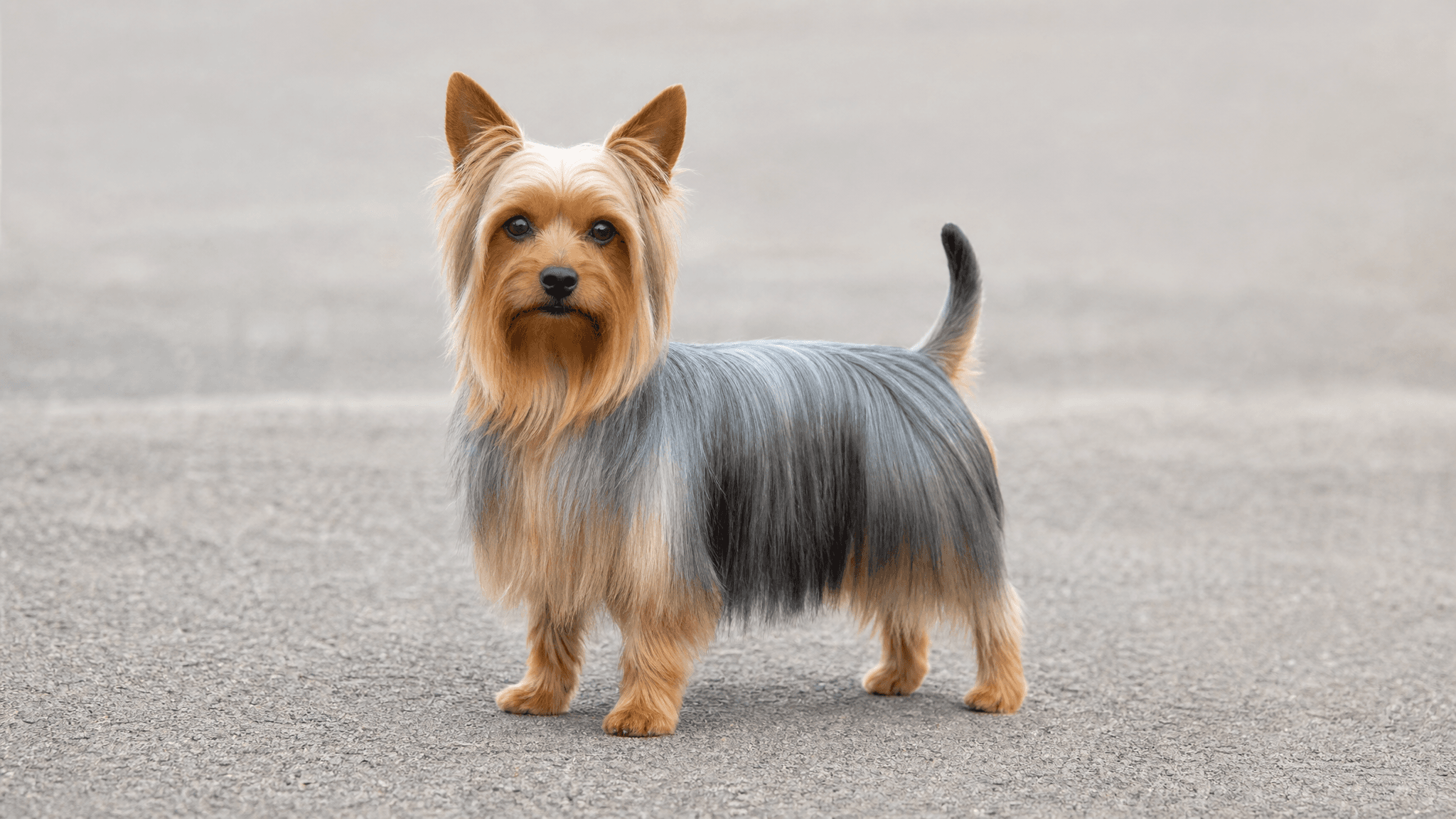
The Australian Silky Terrier — called simply "Silky Terrier" outside of Australia — was developed in Sydney and Melbourne in the late 19th century from the crossing of the Australian Terrier with the Yorkshire Terrier, resulting in a dog longer than the Yorkie, with silky but not as long a coat, and with a character that combines toy elegance with terrier energy and instinct. Within Australia it is known as "Australian Silky Terrier"; outside, as "Silky Terrier."
Physical Characteristics
- Size
- Small
- Height (male)
- 23–25 cm
- Height (female)
- 23–26 cm
- Weight (male)
- 3–5 kg
- Weight (female)
- 3–4 kg
- Life Expectancy
- 12–15 years
- Coat
- single coat (no undercoat), straight, silky, shiny; length of 13–15 cm in adult; should not drag on the ground
- Common Colors
- blue-and-tan; the "blue" can range from silver-grey to slate blue; intense tan on the muzzle, paws, chest, and under the tail
Temperament & Personality
The Silky Terrier has a toy appearance but a terrier's heart. It is active, alert, curious, and with a well-present prey drive (it will hunt any rodent it encounters). It is loyal to its owner, tends to be reserved with strangers, and can be vocal. Unlike the Yorkie, it has more muscle and more working instinct. Excellent alarm dog. It needs more exercise than its appearance suggests.
Activity & Exercise
- Energy Level
- Moderate to high
- Recommended Daily Exercise
- 30–45 minutes
- Suitable for Apartment
- Yes
Grooming & Care
- Grooming Needs
- High
- Shedding
- Minimal
- Bathing Frequency
- Every 1–2 weeks
Health
- Common Health Issues
- Diabetes mellitus
- Epilepsy
- Legg-Calvé-Perthes disease
- Patellar luxation
- Tracheal collapse
- Recommended Health Tests
- Diabetes screening in senior adults
- Joint evaluation
Compatibility
- With Children
- Moderate
- With Other Dogs
- Moderate
- With Cats
- Can be difficult
- For First-Time Owners
- Acceptable
Is an Australian Silky Terrier right for you?
An Australian Silky Terrier may suit you if:
- You are prepared to provide at least 30-45 minutes of engaging daily exercise and mental stimulation.
- You enjoy an active lifestyle and appreciate a loyal companion who thrives on being part of family activities.
- You appreciate a spirited, curious, and alert personality with a true terrier's zest for life.
- You are committed to consistent, positive training to channel their intelligence and working instinct effectively.
- You are prepared for regular grooming, including weekly brushing and baths every 1-2 weeks, to maintain their silky coat.
- You are willing to manage a strong prey drive and appreciate a dog that will enthusiastically announce visitors.
Think twice if:
- You expect a dog that will always prioritize your commands over their strong, independent terrier instincts.
- You have a very busy schedule that frequently leaves a dog alone for long periods each day.
- You have small pets, especially cats, or very young children who may not respect a terrier's boundaries.
- You are unwilling to commit to daily exercise and the significant grooming needs of their long, silky coat.
- You prefer a dog that can roam freely without secure containment, given their pronounced prey drive.
- You are not prepared for the spirited and sometimes stubborn nature of a true terrier during their adolescent phase.
The Australian Silky Terrier truly embodies the "toy appearance, terrier heart" description. While their elegant looks might suggest a lap dog, they possess a robust energy and keen intelligence that demand engagement. Living with a Silky means embracing their spirited nature, enjoying their loyalty, and understanding that beneath the silky exterior lies a true terrier ready for adventure.
Training an Australian Silky Terrier
Training an Australian Silky Terrier is a delightful journey when approached with understanding and patience. These intelligent, active, and curious dogs thrive on positive reinforcement, responding wonderfully to tasty treats, favorite toys, and enthusiastic praise. Keep training sessions short, fun, and engaging, ideally lasting 5-10 minutes to match their attention span and prevent boredom. Inconsistency, harsh corrections, or overly long, repetitive sessions will quickly disengage your Silky Terrier, leading to frustration for both of you and potentially making them more vocal or resistant. Remember, their 'terrier heart' means they appreciate clear, consistent guidance.
Begin with:
- Attention and response to name around distractions
- Recall on a long line
- Loose-leash walking
- Leave it and drop it
- Calm greetings without jumping
- Settling on a mat or bed
- Cooperative handling for grooming, ears, feet and teeth
- Waiting at doors and gates
Prey Drive and Recall
The Australian Silky Terrier possesses a well-present prey drive, meaning they are naturally inclined to hunt any rodent they encounter. This strong instinct can make recall challenging, especially in environments with tempting small critters. To counteract this, practice recall in a variety of safe, enclosed spaces, gradually increasing distractions. Always keep your Silky Terrier on a leash or long line in unfenced areas where their prey drive might kick in, ensuring their safety and preventing them from darting off.
Focus on making yourself the most exciting thing in their world, using high-value treats and enthusiastic praise when they choose to come to you over a potential distraction. Consistent, positive reinforcement will help build a strong recall foundation, but always be mindful of their natural instincts when out and about.
Leash Pulling
Despite their small size, Silky Terriers have moderate to high energy levels and a strong working instinct, which can translate into pulling on the leash during walks. They need a good 30-45 minutes of daily exercise to keep them happy and well-behaved. To address pulling, start early with loose-leash walking training, using positive reinforcement to reward them for walking nicely by your side.
Avoid pulling back or yanking, as this can be counterproductive and uncomfortable for your sensitive Silky. Instead, stop walking every time they pull, resuming only when the leash is slack. This teaches them that pulling gets them nowhere, while a loose leash means forward movement. Consistent practice and patience will lead to enjoyable walks for both of you.
Boredom and Vocalization
An under-exercised or under-stimulated Silky Terrier can quickly become a bored Silky Terrier, leading to undesirable behaviors such as excessive barking, destructive chewing, or digging. They are excellent alarm dogs and can be vocal, so channeling this energy positively is key. Ensure they receive their recommended daily exercise and incorporate mental stimulation through puzzle toys, interactive games, and short training sessions throughout the day.
Don't leave your Silky Terrier alone for extended periods without adequate enrichment. If you must be away, provide engaging toys and consider a dog walker or pet sitter to break up their day. Addressing their physical and mental needs proactively will help prevent boredom-induced behaviors and keep their vocal tendencies in check.
Australian Silky Terrier — Frequently Asked Questions
What is the Australian Silky Terrier?
The Australian Silky Terrier (known simply as the Silky Terrier in the USA and Silky in Australia) is a small terrier breed developed in Australia in the late 19th century, primarily by crossing Yorkshire Terriers with Australian Terriers to produce a fine-boned, silky-coated companion terrier. Despite its glamorous appearance, it retains genuine terrier character: alert, energetic, feisty, and intelligent. It is distinctly different from the Yorkshire Terrier — larger, with a more erect stance, and bred in Australia. It was officially standardised and recognised as a distinct Australian breed in the early 20th century and is recognised by the AKC in the Toy Group.
Is the Australian Silky Terrier a good companion dog?
The Australian Silky Terrier makes a wonderful companion for the right owner — it is loyal, affectionate, lively, and engaging. It bonds closely with its family and loves being involved in daily life. It is spirited and entertaining, with a strong personality for a small dog. It can be reserved with strangers and may alert bark — socialisation helps moderate this. It does best with older children or adults who understand how to interact respectfully with a small, feisty dog. It can live with other dogs and cats when properly introduced, though its terrier prey drive means small rodents are not safe companions for it.
How much exercise does an Australian Silky Terrier need?
The Australian Silky Terrier is an energetic, active terrier that needs more exercise than its small size suggests. Two walks of 20–30 minutes per day, plus active indoor and outdoor play sessions, keep it happy and well-behaved. It enjoys exploring, chasing, fetch games, and agility-style activities. Despite its companion dog classification, it has real terrier energy and does not thrive as a sedentary lap dog. Without adequate daily exercise and mental stimulation, it can become restless, bark excessively, or develop destructive habits. It is well-suited to apartment living when its daily activity needs are consistently met.
How do you groom an Australian Silky Terrier?
The Australian Silky Terrier's coat is its most striking feature — long, fine, straight, and silky, falling naturally along the body contour. It is parted down the back from head to tail. The coat does not have an undercoat, which reduces shedding but requires regular care. Daily or every-other-day brushing prevents tangles and mats, particularly around the ears, armpits, and legs. Bathing every 1–2 weeks with a gentle shampoo and a conditioning rinse keeps the coat silky and healthy. The coat should be trimmed around the face and ears regularly. Nail trimming, ear cleaning, and dental brushing complete the grooming routine.
What health issues are common in the Australian Silky Terrier?
The Australian Silky Terrier is generally a healthy and long-lived small breed. Legg-Calvé-Perthes disease (deterioration of the hip joint) is a known concern in small breeds and has been observed in Silky Terriers. Patellar luxation is common in small breeds and should be monitored. Diabetes mellitus occurs at higher than average rates in the breed — weight management and diet are important preventive factors. Tracheal collapse is a risk for small breeds with fine tracheas. Dental disease is a universal concern in small breeds — regular brushing and professional dental cleaning are essential. Reputable breeders screen for orthopedic conditions. Regular veterinary check-ups support early detection of developing conditions.
Is the Australian Silky Terrier easy to train?
The Australian Silky Terrier is intelligent and can be trained effectively, but retains genuine terrier independence and stubbornness. It has its own agenda and will test limits if allowed to. Positive reinforcement using treats and praise works very well — it is motivated by food and by engaging with its owner. Harsh corrections are counterproductive and damage the relationship. Housetraining can take patience. It learns tricks and obedience commands readily when training is made fun and rewarding. Early socialisation and consistent training from puppyhood are essential to channel its terrier energy constructively and prevent persistent nuisance behaviours such as excessive barking or bossiness.
What is the typical lifespan of an Australian Silky Terrier?
The Australian Silky Terrier typically lives between 12 and 15 years, making it one of the longer-lived small terrier breeds. Its generally robust health profile contributes to longevity. The most important longevity factors are maintaining a healthy weight (small breed obesity accelerates aging significantly), regular dental care throughout its life (dental disease is the most common small-breed health issue), monitoring for diabetes and orthopedic conditions, appropriate daily exercise, and routine veterinary check-ups. A well-loved, active, and properly maintained Australian Silky Terrier is a rewarding long-term companion with a lively personality that persists well into its senior years.
Does the Australian Silky Terrier bark a lot?
The Australian Silky Terrier is an alert and vocal breed — it will bark to alert its family to visitors, unusual noises, and anything that captures its attention. This alert barking is part of its terrier nature and can make it a useful small watchdog. However, without proper training and adequate daily exercise, it can develop excessive or nuisance barking. Consistent training from puppyhood to establish 'enough' commands, ensuring its exercise and mental stimulation needs are met daily, and providing enrichment activities help manage vocality. It is not suitable for apartment buildings with thin walls or strict noise rules without a committed training programme to manage its barking tendency.
Community
Talk to real Australian Silky Terrier owners
This guide covers the breed on paper. In the app, the Australian Silky Terrier community covers it in real life: photos from other owners, questions answered by people who live with the breed, and a directory of dogs you can browse.
- Photos & pollsSee what Australian Silky Terrier owners are sharing today.
- Questions & answersAsk anything and hear from people who own one.
- Dog directoryBrowse Australian Silky Terriers from around the world.
You join automatically when you add a Australian Silky Terrier to your profile.