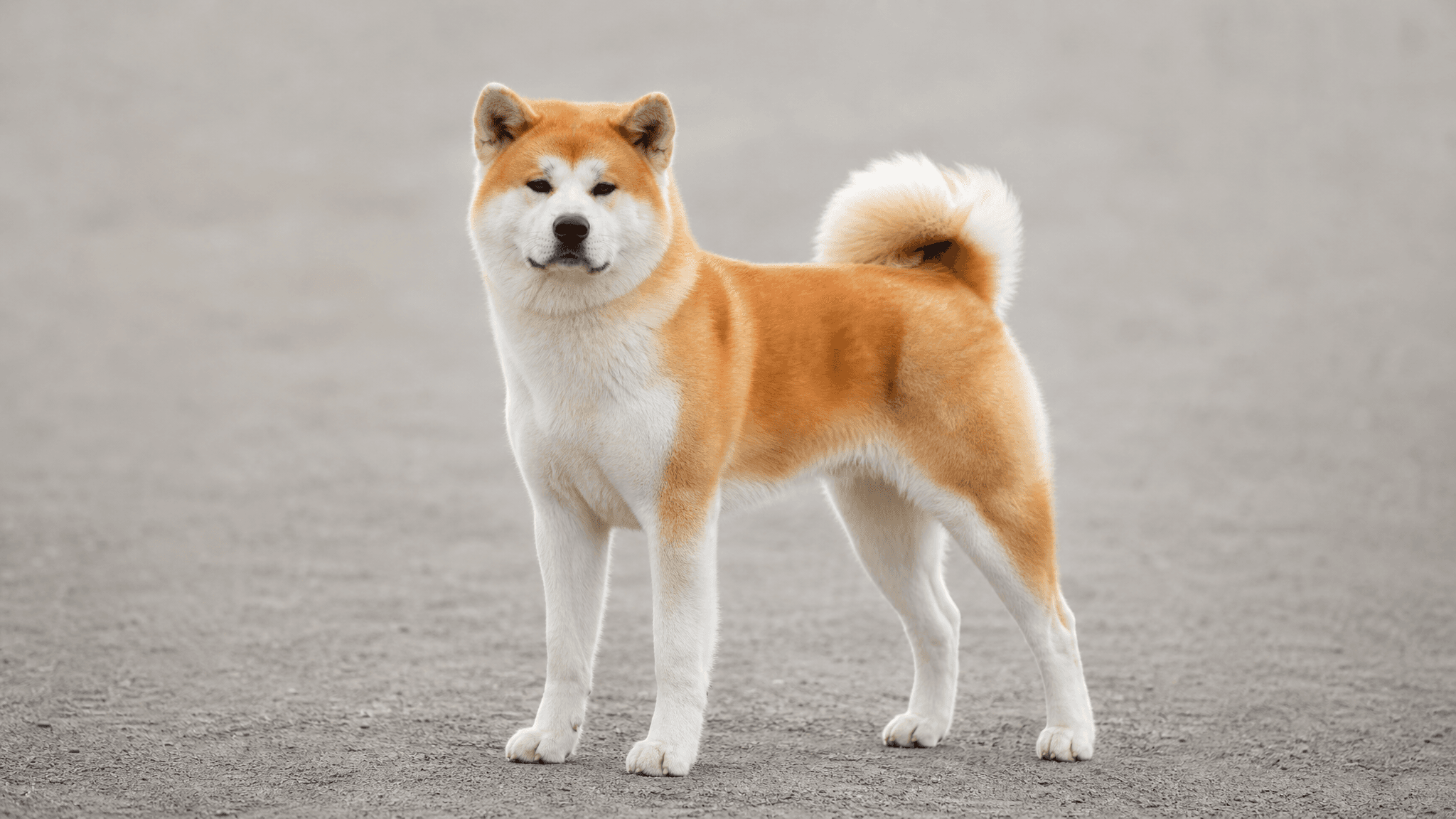
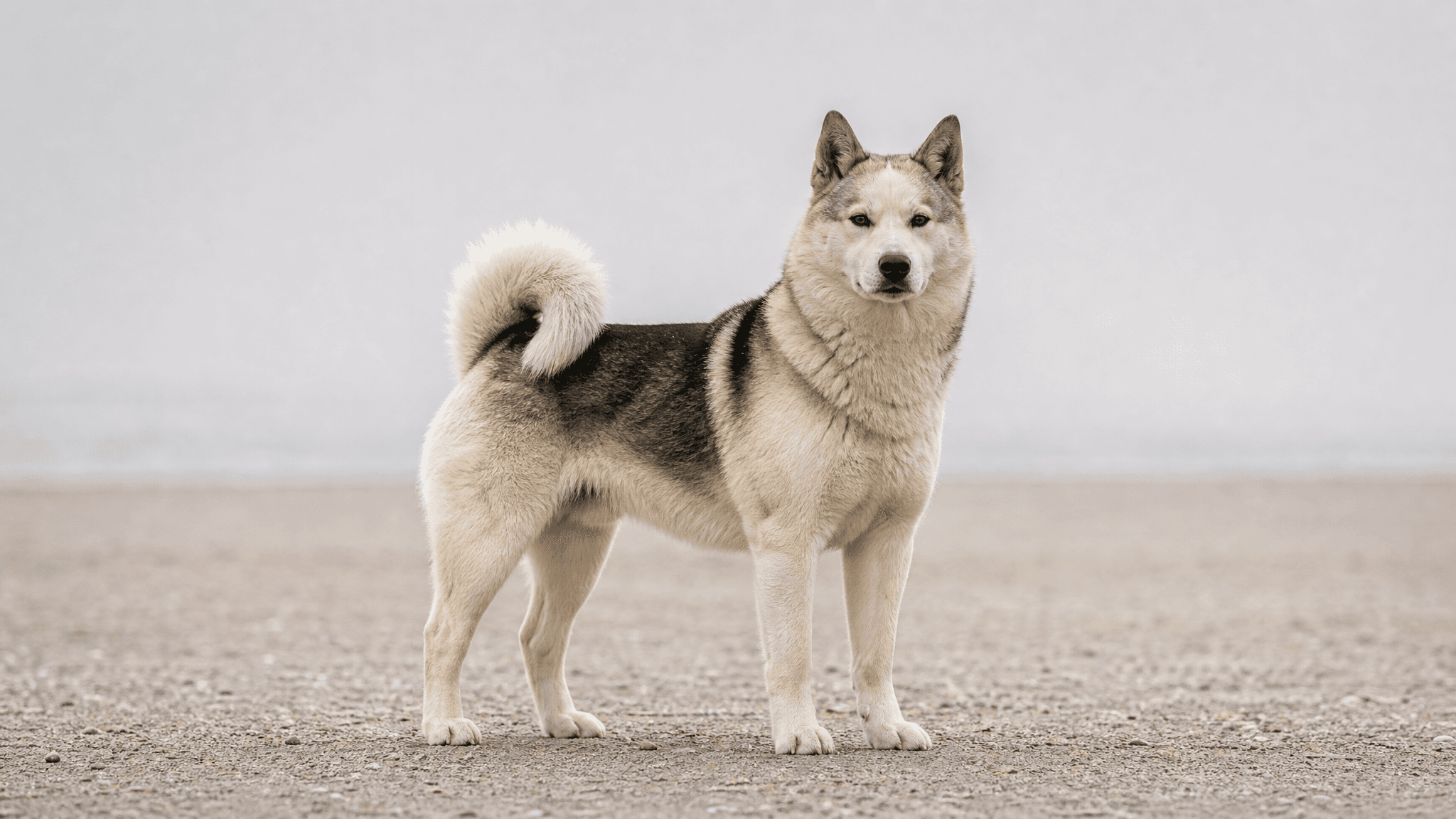
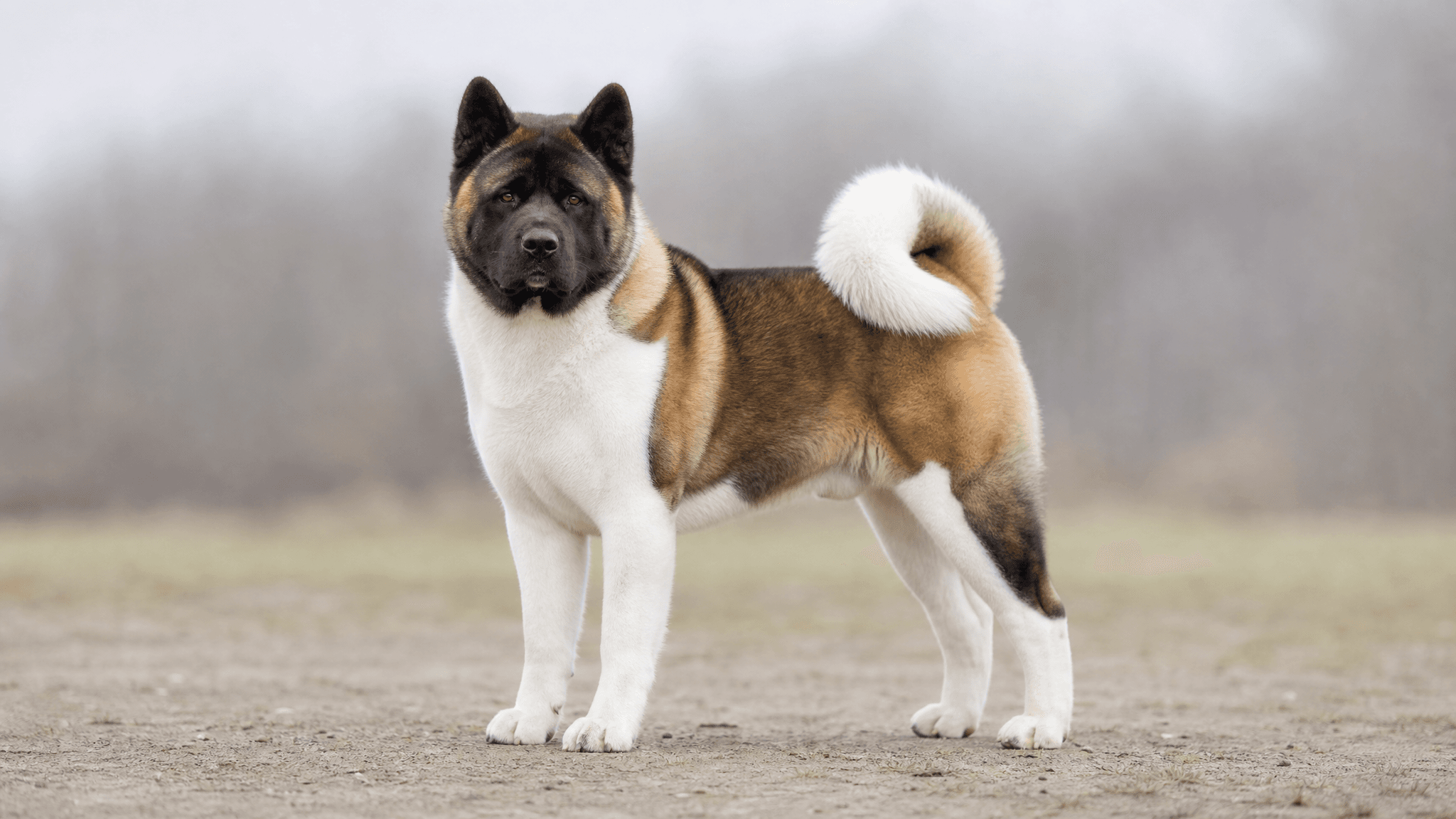
American Akita
Summary
The American Akita developed separately from the Akita Inu after World War II, when American soldiers brought Akitas from Japan to the United States and crossed them with other breeds. While Japan reconsolidated the original Akita (Akita Inu), the American Akita pursued its own development path in the USA, becoming a distinct breed by the FCI in 1999. It is larger, heavier, and accepts all colors, including a black mask — not permitted in the Akita Inu.
Physical Characteristics
- Size
- Large
- Height (male)
- 66–71 cm
- Height (female)
- 61–66 cm
- Weight (male)
- 45–60 kg
- Weight (female)
- 32–45 kg
- Life Expectancy
- 10–13 years
- Coat
- Double; coarse and straight outer coat; soft and dense undercoat
- Common Colors
- All colors, including pinto (white with patches covering more than one third of the body); black mask permitted
Temperament & Personality
The American Akita shares many temperament characteristics with the Akita Inu: it is courageous, loyal, dominant, and reserved with strangers. It is typically more tolerant of children and larger families than the Akita Inu, but maintains the same territorial instinct and tendency toward dominance with other dogs. It is a naturally protective dog.
Activity & Exercise
- Energy Level
- Moderate
- Recommended Daily Exercise
- 60–90 minutes
- Suitable for Apartment
- Not recommended
Grooming & Care
- Grooming Needs
- Moderate
- Shedding
- Heavy
- Bathing Frequency
- Every 6–8 weeks
Health
- Common Health Issues
- Hip and elbow dysplasia
- Hypothyroidism
- Myasthenia gravis
- Sebaceous adenitis
- Uveodermatologic syndrome (VKH)
- Recommended Health Tests
- Eye examination
- Hip and elbow evaluation (OFA)
- Thyroid evaluation
Compatibility
- With Children
- Moderate
- With Other Dogs
- Can be difficult
- With Cats
- Can be difficult
- For First-Time Owners
- Not recommended
Is an American Akita right for you?
An American Akita may suit you if:
- You are prepared to provide 60 to 90 minutes of daily exercise and engaging mental challenges.
- You enjoy a loyal companion who thrives on being an integral part of your family life.
- You appreciate a courageous, protective, and dignified companion who is reserved with strangers.
- You are committed to consistent, firm training and early socialization for a dominant breed.
- You can manage moderate grooming needs and are prepared for heavy seasonal shedding of a dense double coat.
- You understand and are willing to manage a natural territorial instinct and protective tendencies.
Think twice if:
- You expect immediate obedience from a dog known for its independent and dominant nature.
- You have a busy schedule that often leaves a dog alone for long periods, as Akitas need companionship.
- You have young children or other small pets and are unwilling to commit to careful management and supervision.
- You are not prepared to dedicate 60 to 90 minutes daily to exercise or regular grooming for heavy shedding.
- You live in an apartment or cannot provide secure, spacious containment for a large, territorial dog.
- You are a first-time dog owner or are uncomfortable managing a physically strong and dominant adolescent.
The American Akita offers profound loyalty and protection, forming an unbreakable bond with their chosen family. However, their independent spirit and strong will require an owner who is equally strong, patient, and consistent. Living with an Akita is a rewarding journey for those prepared to embrace their unique blend of affection and assertiveness.
Training an American Akita
Training an American Akita is a rewarding journey that requires patience, consistency, and a deep understanding of their unique temperament. These intelligent and loyal dogs thrive on positive reinforcement and clear, fair leadership. They are motivated by seeing the benefit of cooperation, so make training sessions short, engaging, and fun, always ending on a positive note. Avoid harsh corrections or repetitive drills, as these can quickly lead to disinterest, stubbornness, and a breakdown of trust. Inconsistency will only reinforce their dominant tendencies, making training much more challenging. Building a strong bond based on mutual respect is paramount for success with this magnificent breed.
Begin with:
- Attention around distractions
- Recall on a long line
- Loose-leash walking
- Leave it and drop it
- Calm greetings without jumping
- Settling on a mat or bed
- Cooperative handling for grooming
- Waiting at doors and gates
Prey Drive and Reactivity
American Akitas possess a strong prey drive and a natural dominance, especially towards other dogs and smaller animals. This can make walks challenging and derail recall training if not addressed early. Always keep your Akita on a secure leash and harness in unfenced areas, and work extensively on a reliable 'leave it' command to redirect their focus from potential triggers. Early, positive socialization with a variety of calm dogs under strict supervision is crucial, but remember their tendency to be difficult with other dogs means not all interactions will be positive.
Focus on building a rock-solid recall in distraction-free environments before gradually introducing more stimuli. Use high-value treats and make coming back to you the most rewarding option. For managing reactivity on walks, consider counter-conditioning techniques where you reward calm behavior in the presence of triggers from a distance. Our guide on reactive dogs can offer more in-depth strategies.
Leash Pulling
Given their large size and considerable strength, an American Akita who pulls on the leash can quickly become unmanageable. It's vital to establish loose-leash walking habits from puppyhood. Use a front-clip harness or head halter for better control, and consistently reward your Akita for walking calmly beside you. Any tension on the leash should signal a stop, waiting for the leash to slacken before moving forward again.
Practice in quiet areas first, gradually introducing more distractions as your Akita masters the skill. Remember, their daily exercise needs are 60-90 minutes, so consistent loose-leash practice is a great way to meet this requirement. For more detailed steps, check out our guide on stopping leash pulling.
Boredom and Destructive Habits
While their energy level is moderate, American Akitas still require 60-90 minutes of daily exercise and plenty of mental stimulation to prevent boredom and destructive behaviors. If under-exercised or left alone for too long without engagement, they can resort to chewing furniture, excessive barking, or developing separation-related distress. Provide a variety of puzzle toys, engage in regular training sessions, and ensure they have a consistent routine to feel secure.
Remember, they are not recommended for apartment living, so a secure yard where they can explore (under supervision) is ideal. If you suspect your Akita is experiencing stress when left alone, our article on signs of stress can help you identify and address the issue proactively.
American Akita — Frequently Asked Questions
How is the American Akita different from the Japanese Akita Inu?
While both share the same ancestral roots in Japan, the American Akita and Japanese Akita Inu are now recognised as two separate breeds. American Akitas are significantly larger and heavier, with a bear-like head and a broader, more powerful build. They accept a wider range of coat colours including pinto and black mask. Japanese Akita Inus are more refined, smaller, and have strict colour standards (red, brindle, white). In temperament, American Akitas tend to be somewhat more willing around strangers than their Japanese counterparts, though both are notably reserved with those they don't know.
Are American Akitas good family dogs?
American Akitas can be loyal, devoted family protectors, but they are not a breed for inexperienced owners. They are naturally reserved with strangers and deeply bonded to their own family. They tend to be good with children in the family when raised with them, but their size and strength mean interactions with very young children must always be supervised. They do not enjoy rough handling. Their strong-willed, independent nature requires a confident, experienced owner who provides firm, consistent guidance from puppyhood.
Are American Akitas good with other dogs?
American Akitas are not naturally dog-friendly. They were originally bred as fighting and hunting dogs in Japan and retain strong same-sex aggression and dominance tendencies. They are most reliably kept as the only dog in the household, particularly same-sex pairings, which can be dangerous. Some Akitas raised alongside other dogs from early puppyhood coexist peacefully, but this requires careful management and supervision. Their prey drive can also trigger aggressive responses toward smaller dogs that move erratically. This is one of the most significant factors to consider before getting an Akita.
How much exercise does an American Akita need?
American Akitas need moderate exercise — around 60–90 minutes daily. Despite their imposing size, they are not as high-energy as some other large working breeds. They enjoy daily walks, hiking, and play sessions. They are not built for long-distance running and can struggle in hot weather given their thick double coat. Mental stimulation through training and scent work is important. They are calm and quiet indoors when their exercise needs are met, but can become restless and destructive without adequate daily activity. A large, securely fenced yard is ideal.
What are the health issues in American Akitas?
American Akitas have several notable health concerns. Hip dysplasia is common given their size — OFA certification of parents is important. Hypothyroidism is frequently documented in the breed, causing lethargy, weight gain, and coat changes. Autoimmune conditions, particularly Vogt-Koyanagi-Harada (VKH) syndrome, pemphigus, and sebaceous adenitis (a skin condition), are known in Akitas. Progressive Retinal Atrophy (PRA) can cause vision loss. Gastric dilatation-volvulus (bloat) is a risk. Regular vet monitoring including thyroid checks is recommended.
Are American Akitas easy to train?
American Akitas are intelligent but challenging to train due to their independent, dominant nature. They were bred to work independently in difficult conditions — they don't naturally look to their handler for direction. They respond to calm, consistent, confident leadership and positive reinforcement, but will not respond to harsh or forceful methods. Early socialisation and puppy training are not optional for this breed — they become significantly harder to manage if training is delayed. Experienced owners who understand working-dog instincts achieve the best results with Akitas.
How long do American Akitas live?
American Akitas have an average lifespan of 10–13 years. Their size is the primary limiting factor — larger dogs generally have shorter lifespans than smaller breeds. Key factors for a long healthy life include maintaining a lean body weight (obesity significantly shortens lifespan in large breeds), managing thyroid health through regular monitoring, annual vet check-ups including orthopaedic assessments, preventing bloat (GDV) through careful feeding practices, dental care, and sourcing from health-tested breeding lines. Dogs from reputable breeders with health-screened parents tend to live at the upper end of the range.
Do American Akitas make good guard dogs?
American Akitas make exceptional natural guard dogs. Their imposing size, natural wariness of strangers, and fierce loyalty to their family combine to create a highly effective deterrent. They are instinctively alert and will not hesitate to protect their territory and family if they perceive a genuine threat. Importantly, they are typically calm and quiet indoors with their family — they don't bark unnecessarily. Their dignified, reserved nature means they are not excitable or prone to false alarms. They are one of the most naturally suited breeds to the guardian role.
Community
Talk to real American Akita owners
This guide covers the breed on paper. In the app, the American Akita community covers it in real life: photos from other owners, questions answered by people who live with the breed, and a directory of dogs you can browse.
- Photos & pollsSee what American Akita owners are sharing today.
- Questions & answersAsk anything and hear from people who own one.
- Dog directoryBrowse American Akitas from around the world.
You join automatically when you add a American Akita to your profile.