Yorkshire Terrier
Summary
The Yorkshire Terrier is, worldwide, one of the most popular dog breeds of all time — and, paradoxically, one that has most distanced itself visually from its origins. Developed in the 19th century in the industrial city of Bradford, Yorkshire, by Scottish textile workers who immigrated to England bringing their terriers, the Yorkie was initially a rat hunter in mines and textile factories. Today it is the symbol of the luxury miniature dog, with its silky floor-length coat, but retaining the courageous heart of a true terrier.
Physical Characteristics
- Size
- Very small
- Height (male)
- 18–20 cm
- Height (female)
- 18–20 cm
- Weight (male)
- 2–3 kg
- Weight (female)
- 2–3 kg
- Life Expectancy
- 13–16 years
- Coat
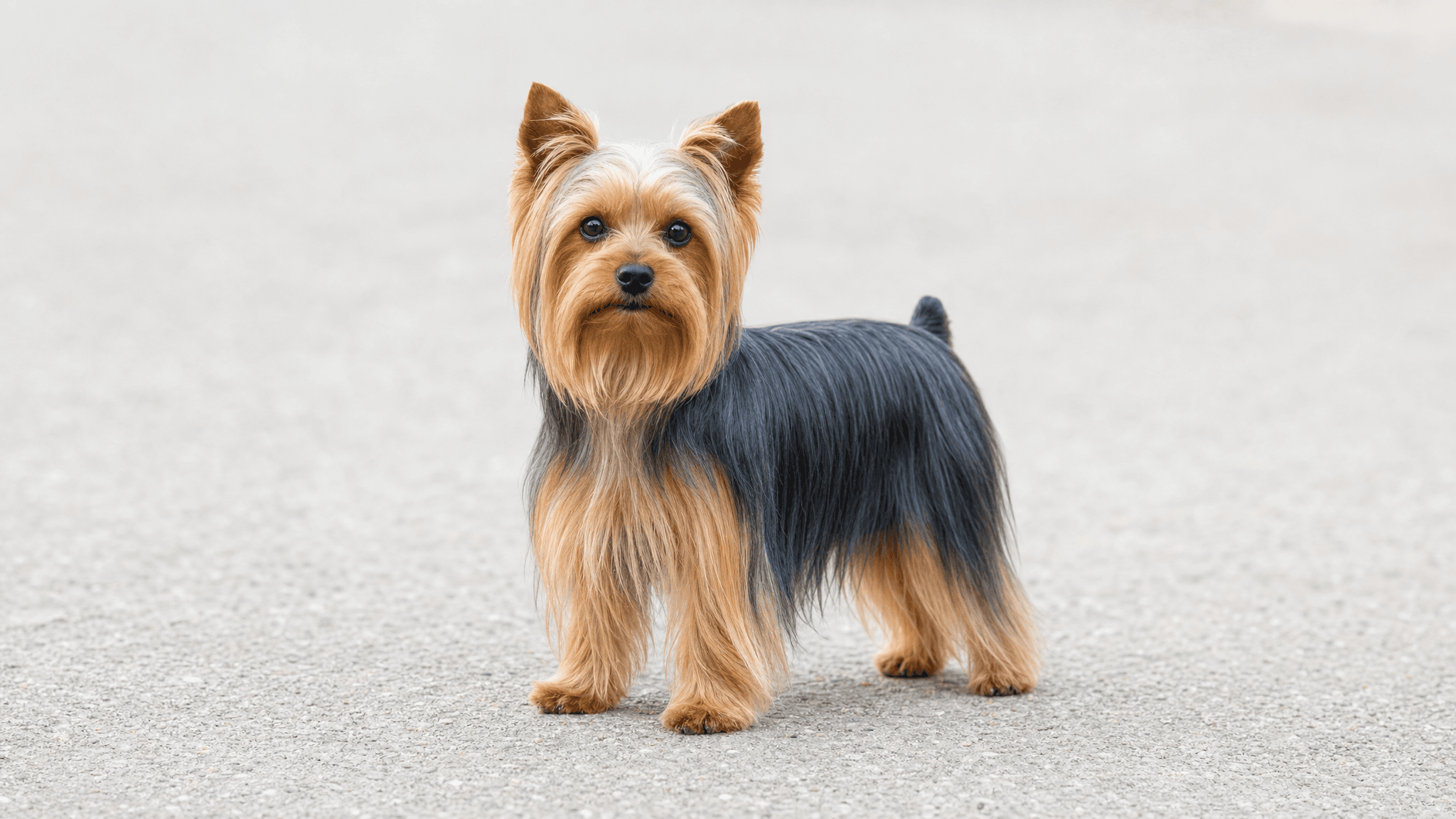
- very long, straight, shiny, fine, and silky hair (silk texture); falls straight on both sides of the body
- Common Colors
- dark steel blue (not silver, not mixed) on the body; bright tan on the head, chest, and limbs; puppies are born black-and-tan
Temperament & Personality
The Yorkshire Terrier is, in equal parts, an elegant parlor dog and an impenitent terrier. It is courageous, lively, very loyal, and protective of its owner — frequently disproportionately confident for its size. It learns easily (has excellent memory) but uses that intelligence to test limits. It can develop "small dog syndrome" if not treated as a real dog and subjected to consistent training. Excellent alarm dog.
Activity & Exercise
- Energy Level
- Moderate to high
- Recommended Daily Exercise
- 30–45 minutes
- Suitable for Apartment
- Yes
Grooming & Care
- Grooming Needs
- Very high
- Shedding
- Minimal
- Bathing Frequency
- Every 1–2 weeks
Health
- Common Health Issues
- Chronic bronchitis
- Hypoglycemia
- Keratoconjunctivitis sicca
- Patellar luxation
- Portosystemic shunt
- Progressive retinal atrophy (PRA)
- Tracheal collapse
- Recommended Health Tests
- ECG in senior adults
- Eye examination
- Joint evaluation
- Liver evaluation
Compatibility
- With Children
- Moderate
- With Other Dogs
- Good
- With Cats
- Good
- For First-Time Owners
- Acceptable
Is a Yorkshire Terrier right for you?
A Yorkshire Terrier may suit you if:
- You are prepared to provide 30 to 45 minutes of daily exercise and engaging mental games for a lively companion.
- You enjoy a dynamic lifestyle that includes both cozy indoor time and adventurous outings with a confident, curious friend.
- You appreciate a spirited, loyal, and intelligent companion who will bravely protect their beloved family.
- You are committed to consistent, positive training to channel their clever terrier instincts and build good habits.
- You are prepared for the very high grooming needs, including daily brushing and bathing every one to two weeks, to maintain their silky coat.
- You understand and are prepared to gently guide a small dog with a big, brave terrier personality.
Think twice if:
- You expect a dog that is always eager to please and will unquestioningly follow every command.
- You frequently leave your pet alone for long periods throughout the day.
- You have very young children who are not yet taught how to interact gently with a delicate, small dog.
- You are unwilling to commit to daily walks and the significant, regular grooming their long, silky coat requires.
- You are not prepared to consistently supervise a curious, tiny terrier who might slip through small gaps or chase after small critters.
- You are uncomfortable with a dog that needs firm, consistent handling and socialization, despite its small size.
The Yorkshire Terrier offers a unique blend of sophisticated charm and spirited terrier spunk. Living with one for their 13-16 year lifespan means embracing both their luxurious side and their courageous, clever nature. They are loyal companions who thrive with owners prepared to celebrate their big personality in a small package, balancing pampering with consistent guidance. It's a rewarding journey for those who understand their spirited heart.
Training a Yorkshire Terrier
Your Yorkshire Terrier is a spirited little companion, brimming with intelligence and a surprisingly tenacious terrier spirit. They learn quickly, thanks to their excellent memory, but will also cleverly test boundaries. The key to successful training is short, engaging, and consistent sessions, fueled by positive reinforcement like tasty treats and enthusiastic praise. Avoid harsh methods or inconsistency, as this can lead to a 'small dog syndrome' where they become overly demanding or protective, missing out on the joy of being a well-adjusted, confident dog.
Begin with:
- attention and response to name around distractions
- recall on a long line
- loose-leash walking
- leave it and drop it
- calm greetings without jumping
- settling on a mat or bed
- cooperative handling for grooming, ears, feet and teeth
- waiting at doors and gates
Prey Drive Instincts
Remember, your elegant Yorkie descends from rat hunters! This means they often have a strong prey drive, making them incredibly focused on small, fast-moving objects. This instinct can make recall a real challenge, especially outdoors. Always use a long line in unsecured areas, and practice your recall in varied environments, rewarding generously with high-value treats when they choose you over a distraction. Consistency is key to building a reliable response. For more guidance, check out our guide on teaching recall.
Because of their size, it's easy to underestimate the strength of this drive. Even a tiny Yorkie can dart away surprisingly fast. Keep training fun and engaging to compete with the exciting world of smells and movements around them. Positive reinforcement will make you the most rewarding thing in their environment.
Small Dog Confidence
Yorkies are known for being disproportionately confident for their very small size (typically 2-3 kg), which can sometimes manifest as 'small dog syndrome' if not managed with consistent training. This means treating them like a real dog, not a fragile accessory. Avoid constantly carrying them or letting them get away with behaviors you wouldn't tolerate from a larger dog. Teach them good manners, such as not jumping on guests or barking excessively at every sound.
Loose-leash walking is another important skill. Even though they are light, a Yorkie pulling on the leash can still be frustrating and potentially unsafe for them if they get tangled or pull into danger. Start practicing early with a comfortable harness and make walks a positive, structured experience. Our guide on stopping leash pulling can offer fantastic tips.
Boredom and Barking
Despite their size, Yorkshire Terriers have a moderate to high energy level and need around 30-45 minutes of exercise daily. If under-exercised, under-stimulated, or left alone for too long, their lively and protective temperament can lead to undesirable behaviors like excessive barking, destructive chewing, or even anxiety. They are intelligent and need mental engagement as much as physical activity.
Ensure your Yorkie gets their daily walk and plenty of opportunities for mental stimulation through puzzle toys, training games, and interactive play. If you must leave them alone, make sure they have safe, engaging toys and consider practicing short absences to build their comfort. A tired, mentally stimulated Yorkie is a happy, well-behaved Yorkie!
Yorkshire Terrier — Frequently Asked Questions
Are Yorkshire Terriers good apartment dogs?
Yorkshire Terriers are one of the best small breeds for apartment living — they're tiny, relatively low-energy for short periods, and don't need a garden. However, their terrier spirit means they have a bigger personality than their size suggests, and without training, they can become yappy and difficult. A well-trained, well-exercised Yorkie is an ideal apartment companion; a bored, under-stimulated one will make its displeasure known to the whole building.
Do Yorkshire Terriers need a lot of grooming?
Yorkies have a fine, silky coat that grows continuously and requires significant grooming. If kept in the traditional long show coat, daily brushing is essential to prevent tangles and matting. Many owners opt for a practical 'puppy cut' that keeps the coat short (around 3–5 cm), which only requires brushing every few days and professional trimming every 6–8 weeks. Their coat is similar in texture to human hair and doesn't shed much, but the grooming commitment is real regardless of the length chosen.
Are Yorkshire Terriers good with children?
Yorkies can be great companions for older children who understand how to handle small, delicate dogs gently. Their terrier personality means they won't tolerate rough handling — they'll snap to protect themselves if grabbed or squeezed. They're better suited to households with children aged 8 and above. In families with very young toddlers, interactions always need close supervision. Their small size makes them vulnerable to accidental injury even in enthusiastic, well-intentioned play.
What health problems are Yorkshire Terriers prone to?
Yorkies are prone to several small-breed health concerns. Dental disease is significant — their small jaws mean teeth are crowded and tartar builds fast, making daily brushing essential. Patellar luxation (slipping kneecaps), tracheal collapse (especially on a collar rather than harness), hypoglycaemia in puppies, and a liver condition called portosystemic shunt are all seen in the breed. Using a harness rather than a neck collar is strongly recommended to protect their delicate trachea.
How long do Yorkshire Terriers typically live?
Yorkies are one of the longer-lived small breeds, typically reaching 13–16 years and sometimes beyond. Their longevity is supported by their small size (smaller dogs generally live longer), proactive dental care (preventing the chronic infections that can shorten lives), and keeping them at a healthy weight. Well-cared-for Yorkies in their mid-teens are genuinely common, which is one of the rewards of investing in this breed's health needs from the start.
Do Yorkshire Terriers have big personalities for their size?
Yes — Yorkies are famous for punching well above their weight in terms of personality. They're bold, curious, feisty, and often completely unaware that they're one of the smallest dogs around. This confidence is part of their appeal but also means they need training and boundaries, or they can develop 'small dog syndrome' — bossing people around, excessive barking, and resource-guarding. A Yorkie that knows its place in the family structure is a delightful, spunky companion.
Are Yorkshire Terriers easy to train?
Yorkies are intelligent and respond well to positive reinforcement — they can learn a wide range of commands and tricks. The challenge is their terrier stubbornness: they may understand a command perfectly well but choose not to comply if they don't see the point or if something more interesting is happening. Keeping training sessions short (5–10 minutes), using high-value food rewards, and making it feel like a game rather than a drill works best. Consistency is crucial — Yorkies will exploit any inconsistency in the rules they're given.
Are Yorkshire Terriers hypoallergenic?
Yorkies are often listed as one of the more allergy-friendly breeds — their silky, human-hair-like coat sheds very little and produces less dander than many other breeds. However, as with all dogs, no breed is truly hypoallergenic since the allergen (Can f 1 protein) is present in saliva and skin cells, not just fur. Allergy sufferers who react less to Yorkies do so because of reduced dander spread, not zero allergens. Spending time with the breed before committing is always recommended for anyone with allergies.
Community
Talk to real Yorkshire Terrier owners
This guide covers the breed on paper. In the app, the Yorkshire Terrier community covers it in real life: photos from other owners, questions answered by people who live with the breed, and a directory of dogs you can browse.
- Photos & pollsSee what Yorkshire Terrier owners are sharing today.
- Questions & answersAsk anything and hear from people who own one.
- Dog directoryBrowse Yorkshire Terriers from around the world.
You join automatically when you add a Yorkshire Terrier to your profile.