White Swiss Shepherd Dog
Summary
The White Swiss Shepherd Dog descends directly from the German Shepherd — specifically from the white specimens that existed in high proportions in the early 20th century, before the white color was excluded from the German standard. The white German Shepherds were preserved in Canada and the USA, and later in Switzerland, where the breed was developed independently and recognized by the FCI in 2002 as a distinct breed. It shares with the German Shepherd intelligence and versatility, but with a generally softer and more sensitive temperament.
Physical Characteristics
- Size
- Large
- Height (male)
- 60–66 cm
- Height (female)
- 55–61 cm
- Weight (male)
- 30–40 kg
- Weight (female)
- 25–35 kg
- Life Expectancy
- 12–14 years
- Coat
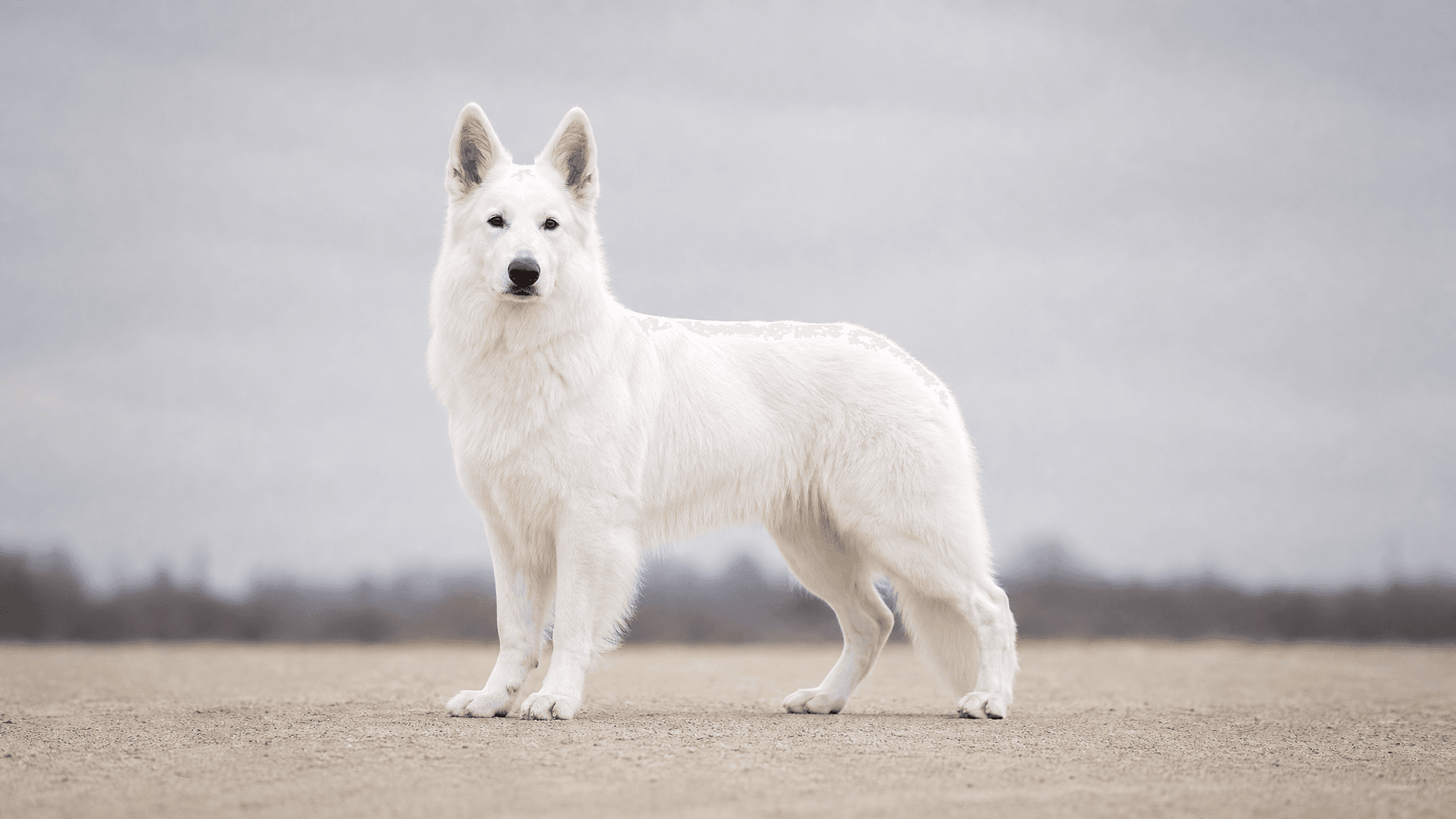
- Two varieties — medium coat and long coat; both with dense undercoat; always white
- Common Colors
- White exclusively
Temperament & Personality
The White Swiss Shepherd is generally considered calmer and more sensitive than the German Shepherd, while maintaining its intelligence and versatility. It is extremely loyal and affectionate with the family, tolerant with children and good with other animals. It is a balanced dog, with self-confidence but without unnecessary aggression. It responds very well to positive training and is an excellent choice for people who want the qualities of the German Shepherd but in a slightly softer package.
Activity & Exercise
- Energy Level
- High
- Recommended Daily Exercise
- 90 minutes
- Suitable for Apartment
- Not recommended
Grooming & Care
- Grooming Needs
- Moderate to high
- Shedding
- Heavy
- Bathing Frequency
- Every 4–6 weeks
Health
- Common Health Issues
- Degenerative myelopathy
- Hip and elbow dysplasia
- Pigmentation issues
- Skin problems (some are prone to allergies)
- Recommended Health Tests
- Dermatological examination
- Genetic test for degenerative myelopathy
- OFA orthopedic evaluation
Compatibility
- With Children
- Excellent
- With Other Dogs
- Excellent
- With Cats
- Good
- For First-Time Owners
- Acceptable
Is a White Swiss Shepherd Dog right for you?
A White Swiss Shepherd Dog may suit you if:
- You are prepared to provide at least 90 minutes of vigorous exercise and engaging mental challenges daily.
- You enjoy an active lifestyle that includes training, dog sports, or outdoor adventures with your loyal companion.
- You appreciate a highly intelligent, loyal, and affectionate dog that forms a strong bond with its family.
- You are committed to consistent, positive reinforcement training to nurture their balanced and intelligent nature.
- You are willing to commit to moderate to high grooming needs, including regular brushing to manage their heavy shedding.
- You are ready to manage a large, self-confident dog with a strong desire to be an active part of family life.
Think twice if:
- You expect a dog that will always obey instantly without question, as their intelligence comes with self-confidence.
- You have a routine that requires your dog to be left alone for long periods, as they thrive on companionship.
- You are unwilling to consistently supervise and guide interactions between a large, energetic dog and very young children or other small household pets.
- You are unwilling to commit to at least 90 minutes of daily exercise or regular grooming for their dense coat.
- You live in an apartment or do not have a securely fenced outdoor space for a large, energetic dog.
- You are not prepared for the physical demands of handling a large, strong, and energetic dog, especially during adolescence.
Bringing a White Swiss Shepherd Dog into your life is a commitment to an intelligent, loyal, and active companion. While they offer immense affection and thrive on being part of the family, their high energy and need for engagement require a dedicated owner. They are wonderful dogs for those prepared to meet their needs, offering a rewarding and deep bond.
Training a White Swiss Shepherd Dog
The White Swiss Shepherd is a wonderfully intelligent and versatile companion, eager to please and highly responsive to positive reinforcement. Being more sensitive than their German Shepherd cousins, they thrive on clear, consistent, and reward-based training sessions that are kept short, fun, and engaging. They are motivated by praise, treats, and play, and will quickly lose confidence or become anxious if faced with harsh corrections or an inconsistent approach. A positive and patient handler will find their White Swiss Shepherd a joy to train, building a strong, trusting bond that lasts their entire 12-14 year lifespan.
Begin with:
- attention and response to name around distractions
- recall on a long line
- loose-leash walking
- leave it and drop it
- calm greetings without jumping
- settling on a mat or bed
- cooperative handling for grooming, ears, feet and teeth
- waiting at doors and gates
Boredom and mischief
White Swiss Shepherds are highly intelligent and possess a high energy level, requiring around 90 minutes of exercise daily. Without sufficient physical activity and mental stimulation, they can quickly become bored and resort to finding their own "fun," which often translates into destructive chewing, digging, or excessive barking. To prevent this, ensure their daily exercise needs are met with varied activities like long walks, fetch, or dog sports.
Incorporate regular training sessions and puzzle toys to keep their bright minds engaged. Teach them new tricks, practice obedience commands, or engage them in scent work. For example, a strong recall is vital for their safety and enjoyment of off-leash time; learn more with our guide on teaching recall. A stimulated White Swiss Shepherd is a happy, well-behaved companion, eager to learn and participate in family life, rather than creating their own entertainment.
Leash pulling challenges
Given their large size and strength, a White Swiss Shepherd pulling on the leash can be a significant challenge for any owner. This breed is also known for its sensitivity, meaning harsh leash corrections are not only ineffective but can damage your bond and make them anxious or fearful of walks. Focus on teaching loose-leash walking from an early age using positive reinforcement.
Reward your dog frequently for walking nicely by your side, and change direction often to encourage them to pay attention to you. Consider using a front-clip harness, which can help redirect their momentum without causing discomfort. Consistency is key, and with patience, your White Swiss Shepherd will learn to enjoy calm, comfortable walks with you. For more detailed guidance, check out our guide on stopping leash pulling.
Alone time troubles
White Swiss Shepherds are extremely loyal and affectionate with their families, forming strong bonds. While this is a wonderful trait, it can sometimes lead to separation anxiety if they are not gradually accustomed to being left alone. Signs like destructive behavior, excessive barking, or inappropriate urination when you're out can indicate distress. They are not recommended for apartment living, partly because their high energy needs space, but also because they thrive on companionship.
To help your White Swiss Shepherd cope with alone time, start with very short absences and gradually increase the duration. Ensure they've had plenty of exercise and mental stimulation before you leave. Provide engaging toys or a long-lasting chew to occupy them. If you suspect your dog is struggling with being left alone, understanding the signs is the first step towards helping them feel more secure.
White Swiss Shepherd Dog — Frequently Asked Questions
What is the Berger Blanc Suisse (White Swiss Shepherd Dog)?
The Berger Blanc Suisse, also known as the White Swiss Shepherd Dog, is a truly magnificent breed originating from Switzerland. Belonging to FCI Group 1 (Sheepdogs), this large and intelligent canine descends directly from the white specimens of early German Shepherds. They are renowned for their versatility and are generally considered to be calmer and more sensitive than their German Shepherd relatives, while still possessing that incredible intelligence and loyalty that makes them such wonderful companions. Their striking white coat and balanced temperament are among their most defining characteristics.
What was the Berger Blanc Suisse (White Swiss Shepherd Dog) originally bred for?
The Berger Blanc Suisse descends from the white German Shepherds that were prevalent in the early 20th century before the white color was excluded from the German Shepherd standard. These beautiful white dogs were preserved and further developed in Canada and the USA, and later in Switzerland, where the breed was independently established and recognized by the FCI in 2002. Like their German Shepherd ancestors, they were valued for their intelligence and versatility, making them excellent working dogs, often used for herding, guarding, and various other tasks requiring a smart and capable canine partner.
How much exercise does a Berger Blanc Suisse (White Swiss Shepherd Dog) need?
As a large breed with a high energy level, the Berger Blanc Suisse needs a good amount of exercise to stay happy and healthy. We recommend at least 90 minutes of daily activity for these athletic dogs. This isn't just a quick walk around the block; they thrive on varied activities like brisk walks, jogging, hiking, playing fetch, or engaging in dog sports. Providing ample physical and mental stimulation will help channel their energy positively and prevent boredom, ensuring your White Swiss Shepherd remains a well-behaved and contented companion.
Is the Berger Blanc Suisse (White Swiss Shepherd Dog) a good family dog?
Absolutely! The Berger Blanc Suisse is an excellent family dog, known for being extremely loyal and affectionate with their human companions. They are generally tolerant and gentle with children, making them wonderful playmates and guardians. Furthermore, they tend to get along well with other animals when properly socialized, thanks to their balanced and self-confident temperament, which is free from unnecessary aggression. Their sensitive and calm nature, combined with their loyalty, makes them a devoted and loving addition to almost any family home.
Is the Berger Blanc Suisse (White Swiss Shepherd Dog) easy to train?
Yes, the Berger Blanc Suisse is generally considered very easy to train! They are highly intelligent and versatile dogs, eager to please their owners. Their temperament is such that they respond exceptionally well to positive reinforcement training methods. They thrive on clear communication, consistency, and reward-based approaches, making them a joy to teach. Their natural desire to work and their quick minds mean they excel in obedience, agility, and various other dog sports, quickly picking up new commands and tasks with enthusiasm.
What health issues are common in the Berger Blanc Suisse (White Swiss Shepherd Dog)?
Like many large breeds, the Berger Blanc Suisse can be prone to certain health concerns, and it's good to be aware of them. Documented issues include degenerative myelopathy, a progressive disease affecting the spinal cord, and hip and elbow dysplasia, which are common joint conditions. Some individuals may also experience pigmentation issues or be prone to various skin problems, including allergies. Regular veterinary check-ups and a healthy lifestyle can help manage and potentially mitigate these concerns, ensuring your furry friend lives their best life.
What is the Berger Blanc Suisse (White Swiss Shepherd Dog)'s coat like and how much grooming does it need?
The Berger Blanc Suisse boasts a beautiful, dense white coat, which can be either medium-length or long, often with a soft undercoat. This stunning coat requires regular grooming to keep it healthy and free from mats, especially during shedding seasons. Weekly brushing, using a slicker brush and an undercoat rake, will help remove loose hair, distribute natural oils, and reduce shedding around your home. While their white color might suggest more upkeep, consistent grooming is key to maintaining their pristine appearance and overall coat health.
What is the typical lifespan of a Berger Blanc Suisse (White Swiss Shepherd Dog)?
The Berger Blanc Suisse is a robust and generally healthy breed, and with proper care, they can enjoy a long and fulfilling life. The typical lifespan for a White Swiss Shepherd Dog is between 12 and 14 years. Providing them with a balanced diet, regular exercise, routine veterinary check-ups, and plenty of love and mental stimulation will contribute significantly to their longevity and overall well-being, allowing you to cherish many wonderful years with your loyal companion.
Community
Talk to real White Swiss Shepherd Dog owners
This guide covers the breed on paper. In the app, the White Swiss Shepherd Dog community covers it in real life: photos from other owners, questions answered by people who live with the breed, and a directory of dogs you can browse.
- Photos & pollsSee what White Swiss Shepherd Dog owners are sharing today.
- Questions & answersAsk anything and hear from people who own one.
- Dog directoryBrowse White Swiss Shepherd Dogs from around the world.
You join automatically when you add a White Swiss Shepherd Dog to your profile.