Porcelaine
Summary
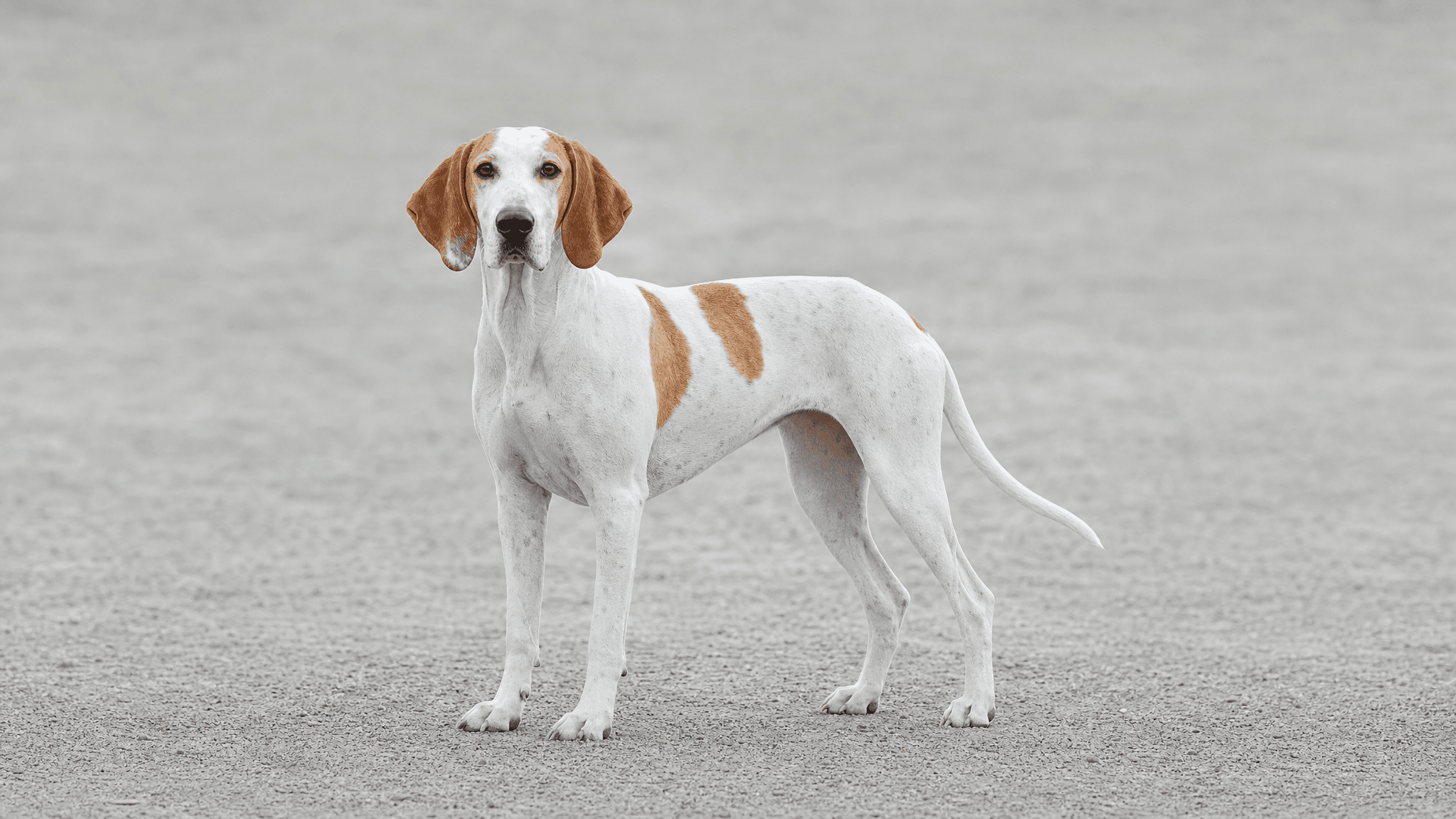
The Porcelaine is one of the most elegant French scent hounds, famous for its shiny white coat that gives it the appearance of a porcelain figurine — hence the name. Descended from the English Harrier, Swiss scent hounds, and the extinct Montaimboeuf, it has documentary records in France since 1845. It nearly disappeared during the French Revolution and was subsequently reconstituted. It is used for hunting hare, roe deer, and in the north, wild boar.
Physical Characteristics
- Size
- Medium
- Height (male)
- 55–58 cm
- Height (female)
- 53–56 cm
- Weight (male)
- 25–28 kg
- Weight (female)
- 22–25 kg
- Life Expectancy
- 12–14 years
- Coat
- Incredibly short, fine, and very glossy (giving the porcelain effect)
- Common Colors
- White with rounded orange patches, frequently on the ears; the skin should be white with black mottling visible through the coat
Temperament & Personality
The Porcelaine is an energetic, courageous dog with great enthusiasm for hunting. Outside the field, it can be affectionate, sociable, and excellent with children and active families. It is a surprisingly good candidate as a companion dog, provided it receives adequate daily exercise. Its melodious vocalization is one of its most appreciated characteristics.
Activity & Exercise
- Energy Level
- High
- Recommended Daily Exercise
- 60–90 minutes
- Suitable for Apartment
- Not recommended
Grooming & Care
- Grooming Needs
- Low
- Shedding
- Low to moderate
- Bathing Frequency
- Every 4 weeks
Health
- Common Health Issues
- Generally a healthy breed
- Hip dysplasia and otitis are the most common risks
- Recommended Health Tests
- Orthopedic evaluation
Compatibility
- With Children
- Excellent
- With Other Dogs
- Excellent
- With Cats
- Moderate
- For First-Time Owners
- Acceptable
Is a Porcelaine right for you?
A Porcelaine may suit you if:
- You are eager to provide at least 60 to 90 minutes of vigorous daily exercise and engaging mental challenges.
- You enjoy an active, outdoor lifestyle that includes long walks, runs, or even scent work activities.
- You appreciate an affectionate, sociable companion who will happily join in family activities.
- You are prepared to consistently train a clever scent hound with a strong independent streak.
- You are happy with minimal grooming, needing only occasional brushing and bathing every four weeks.
- You don't mind a dog with a melodious vocalization, as they love to express themselves with characteristic hound sounds.
Think twice if:
- You expect instant, unwavering obedience from a dog, as their independent hunting instincts are strong.
- You have a routine that leaves a dog alone for long periods, as Porcelaines thrive on companionship.
- You have cats who are not accustomed to living with a dog with a moderate prey drive.
- You are unwilling to commit to daily vigorous exercise for a high-energy dog.
- You live in an apartment or do not have a securely fenced yard to contain a determined scent hound.
- You are not prepared to manage a medium-sized, energetic dog during its boisterous adolescent phase.
The Porcelaine is a truly elegant and affectionate companion for the right family. While their striking beauty and sociable nature are undeniable joys, their heritage as a dedicated scent hound means they require consistent engagement and ample exercise. Be prepared to embrace their energetic spirit and unique vocalizations, and you'll find a loyal friend for 12 to 14 years.
Training a Porcelaine
The Porcelaine is an intelligent and eager-to-please scent hound, motivated by positive reinforcement and engaging activities, especially those that involve their keen nose. Keep training sessions short, fun, and consistent, ideally lasting 5-10 minutes several times a day to match their high energy. They thrive on clear, kind guidance. If training is inconsistent or relies on harsh methods, a Porcelaine can become confused, disengaged, or even develop unwanted behaviors, as their energetic and courageous spirit needs positive direction rather than suppression. Building a strong bond through positive training is key to unlocking their potential as a wonderful companion.
Begin with:
- Attention and response to name around distractions
- Recall on a long line
- Loose-leash walking
- Leave it and drop it
- Calm greetings without jumping
- Settling on a mat or bed
- Cooperative handling for grooming, ears, feet and teeth
- Waiting at doors and gates
Scent-driven recall
As a true scent hound with a great enthusiasm for hunting, your Porcelaine's nose will often lead the way, making recall a significant challenge, especially when they catch an interesting scent. Start recall training in a quiet, low-distraction environment, making coming back to you the most rewarding experience ever with high-value treats or a favorite toy. Gradually introduce distractions as your dog's reliability improves.
Always use a long line in unfenced areas until their recall is rock-solid, as their prey drive for hare, roe deer, or wild boar can be incredibly strong. Consistency and making yourself more exciting than any scent trail are crucial. For more detailed steps, check out this guide on recall.
Leash pulling
Porcelaines are medium-sized dogs with high energy and a strong, enthusiastic stride, which can quickly translate into pulling on the leash. It's important to start loose-leash training from an early age, rewarding every step your dog takes calmly by your side. Avoid pulling back or yanking the leash, as this often teaches them to pull harder against the pressure.
Consider using a front-clip harness, which can provide better control and discourage pulling without causing discomfort. Patience and consistency are your best friends here; remember that every walk is an opportunity to practice. Our guide on stopping leash pulling offers a force-free plan to help.
Energy and boredom
With their high energy level, Porcelaines require a significant amount of activity, ideally 60-90 minutes of exercise daily. This isn't just about physical exertion; these intelligent scent hounds also need mental stimulation. Incorporate scent games, puzzle toys, and regular training sessions to keep their minds engaged and prevent boredom.
If a Porcelaine is under-exercised, under-stimulated, or left alone for extended periods, they may develop unwanted behaviors such as excessive barking (using their melodious vocalization), destructive chewing, or digging. Ensuring they get enough appropriate activity is key to a happy, well-behaved companion. You can even track your walks to ensure they're getting enough outdoor time.
Porcelaine — Frequently Asked Questions
What is the Porcelaine?
The Porcelaine is a truly elegant and captivating medium-sized French scent hound, renowned for its stunning, shiny white coat that gives it the appearance of a delicate porcelain figurine – hence its charming name! Originating from France and Switzerland, this breed is a proud member of the FCI Group 6 (Medium-sized Hounds). Descended from the English Harrier, Swiss scent hounds, and the extinct Montaimboeuf, the Porcelaine is an energetic and courageous dog with a distinctive, melodious vocalization that is one of its most appreciated characteristics. They are a beautiful blend of grace and athleticism!
What was the Porcelaine originally bred for?
With a rich history dating back to documentary records in France since 1845, the Porcelaine was originally bred with a singular passion: hunting! These dogs possess a great enthusiasm for the chase, and their keen scenting abilities made them invaluable partners in the field. Historically, they were primarily used for hunting hare and roe deer, and in the northern regions, they even excelled at tracking wild boar. This breed faced near extinction during the tumultuous French Revolution but was lovingly reconstituted, ensuring their incredible hunting legacy continued for generations to come. They are truly dedicated working dogs at heart!
How much exercise does a Porcelaine need?
The Porcelaine is a dog with a high energy level, so they definitely need a good amount of activity to stay happy and healthy! To keep your Porcelaine in prime condition and prevent boredom, you should plan for a recommended 60 to 90 minutes of vigorous exercise every single day. This could include long, brisk walks, energetic games of fetch, or even joining you on runs or hikes. Providing adequate daily exercise is absolutely crucial for this breed; it helps channel their natural drive and ensures they are a calm, well-behaved, and surprisingly good companion dog when at home.
Is the Porcelaine a good family dog?
Absolutely! Despite their strong hunting instincts, the Porcelaine can be a wonderfully affectionate and sociable addition to an active family. They are known to be excellent with children, often displaying a gentle and patient demeanor, especially when properly socialized from a young age. Their energetic nature means they thrive in environments where they can be part of family adventures and playtime. While they can get along with other pets, especially if raised together, their hound heritage means introductions should always be managed carefully. With enough exercise and love, they truly shine as loyal family companions!
Is the Porcelaine easy to train?
The Porcelaine is an intelligent and courageous breed, and while they possess a strong will and an innate enthusiasm for hunting, they are certainly trainable with the right approach! Their high energy and keen scenting abilities mean that consistent, positive reinforcement training is key. Early socialization and engaging training sessions that tap into their natural drives will help channel their focus. They thrive on having a "job" to do, so activities like scent work or obedience can be incredibly rewarding. Patience, consistency, and making training fun will help you build a strong bond and a well-behaved companion.
What health issues are common in the Porcelaine?
Thankfully, the Porcelaine is generally considered a healthy and robust breed, which is always wonderful news for dog parents! However, like all breeds, there are a couple of health concerns that are more common and worth being aware of. The most frequently documented risks for the Porcelaine are hip dysplasia, a condition affecting the hip joints, and otitis, which refers to ear infections. Regular veterinary check-ups, a healthy diet, and keeping their ears clean and dry can go a long way in managing these potential issues and ensuring your Porcelaine lives a long, happy, and comfortable life.
What is the Porcelaine's coat like and how much grooming does it need?
The Porcelaine's most distinctive feature is undoubtedly its short, incredibly shiny white coat, which truly gives them the appearance of a delicate porcelain figurine! This elegant coat is surprisingly low-maintenance, making grooming a relatively easy task. Regular brushing, perhaps once or twice a week, is usually sufficient to keep their coat gleaming, remove any loose hairs, and distribute natural oils for a healthy shine. It's also a fantastic opportunity for some bonding time with your furry friend! While their white coat might show dirt easily, a quick wipe-down usually does the trick to keep them looking pristine.
What is the typical lifespan of a Porcelaine?
It's always lovely to know how long you can expect to share your life with your beloved canine companion! For the beautiful Porcelaine, you can generally anticipate a typical lifespan of 12 to 14 years. With proper care, a nutritious diet, regular veterinary check-ups, and plenty of love and exercise, your Porcelaine has a great chance of living a full and vibrant life within this range. They truly are a joy to have around, and knowing their typical lifespan helps you plan for many wonderful years together!
Community
Talk to real Porcelaine owners
This guide covers the breed on paper. In the app, the Porcelaine community covers it in real life: photos from other owners, questions answered by people who live with the breed, and a directory of dogs you can browse.
- Photos & pollsSee what Porcelaine owners are sharing today.
- Questions & answersAsk anything and hear from people who own one.
- Dog directoryBrowse Porcelaines from around the world.
You join automatically when you add a Porcelaine to your profile.