Dutch Shepherd Dog
Summary
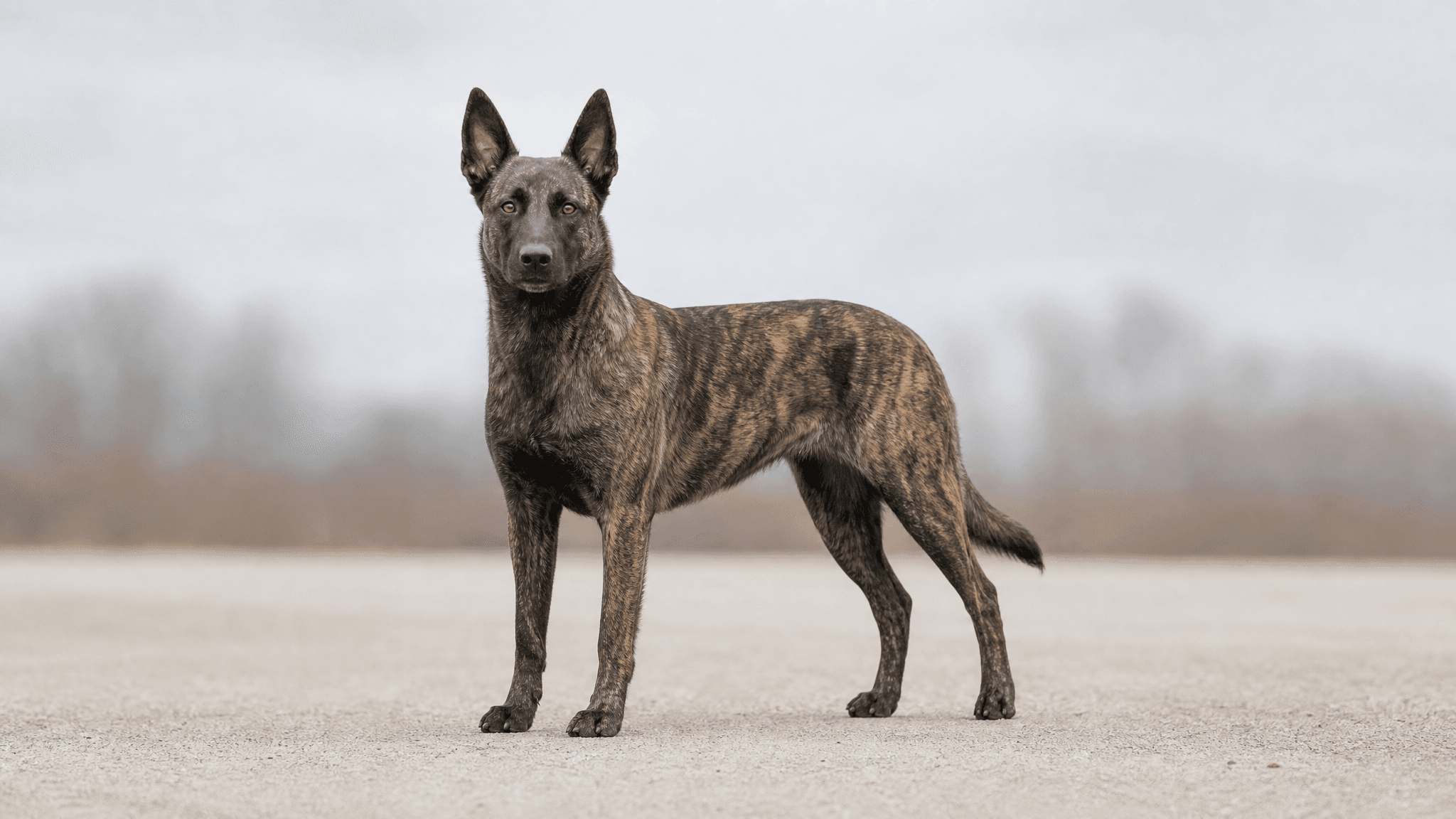
The Dutch Shepherd is a shepherd breed from the Netherlands that, despite being less well-known than its cousin the Belgian Shepherd, is equally capable and versatile. Existing in three coat varieties (short, long and rough), it is easily identifiable by its brindle coat pattern, which distinguishes it from other European shepherd breeds. Today it is widely used as a police, military and service dog, although it is still rare outside the Netherlands and Belgium.
Physical Characteristics
- Size
- Medium
- Height (male)
- 57–62 cm
- Height (female)
- 55–60 cm
- Weight (male)
- 23–32 kg
- Weight (female)
- 20–25 kg
- Life Expectancy
- 12–15 years
- Coat
- Three varieties — short coat (dense and harsh), long coat (straight and close-fitting), and rough coat (woolly and curly)
- Common Colors
- Golden brindle, silver brindle, blue-grey brindle (in short and long coat varieties); grey salt and pepper (rough coat)
Temperament & Personality
The Dutch Shepherd is an active, intelligent and extremely versatile dog, combining devotion to its owner with the independence necessary for work. It is energetic, alert and quick to learn — qualities that make it excellent for police and military work. With the family it is affectionate, but can be reserved with strangers. Its high energy and need for work require a committed owner.
Activity & Exercise
- Energy Level
- High
- Suitable for Apartment
- Not recommended
Grooming & Care
- Grooming Needs
- Moderate
- Shedding
- Moderate to heavy
- Bathing Frequency
- Every 4–8 weeks
Health
- Common Health Issues
- Hip and elbow dysplasia
- Inflammatory myopathy (necrotizing — breed-specific)
- Progressive retinal atrophy (PRA)
- Recommended Health Tests
- Eye examination
- Myopathy test
- OFA orthopedic evaluation
Compatibility
- With Children
- Good
- With Other Dogs
- Good
- With Cats
- Moderate
- For First-Time Owners
- Not recommended
Is a Dutch Shepherd Dog right for you?
A Dutch Shepherd Dog may suit you if:
- You are prepared to provide daily vigorous exercise and engaging mental challenges for an intelligent, high-energy companion.
- You enjoy activities like dog sports, advanced obedience, or working roles where your dog can thrive and use its natural abilities.
- You appreciate a devoted family dog that is affectionate with its own people but can be reserved and watchful with strangers.
- You are committed to consistent, positive reinforcement training from a young age to channel their quick intelligence effectively.
- You are willing to commit to moderate grooming needs, including regular brushing to manage its moderate to heavy shedding.
- You understand and are prepared to manage a dog with natural herding instincts and an alert, watchful nature.
Think twice if:
- You expect a dog to be instantly biddable and always follow commands without independent thought.
- You have a busy schedule that often leaves a high-energy dog alone for long periods during the day.
- You have cats and are unwilling to commit to careful, supervised introductions and ongoing management.
- You are unwilling to provide significant daily exercise or manage moderate to heavy shedding.
- You live in an apartment or do not have a securely fenced yard for a medium-sized, active dog.
- You are a first-time dog owner seeking an easy-to-manage puppy or adolescent dog.
Living with a Dutch Shepherd is a deeply rewarding journey for the right person. They offer unparalleled loyalty and intelligence, but this comes with a significant commitment to their physical and mental needs. Be prepared for an active, engaging partnership, and you'll gain a devoted companion for their 12 to 15-year lifespan.
Training a Dutch Shepherd Dog
Dutch Shepherds are highly intelligent and energetic, thriving on clear, consistent positive reinforcement. They learn best through short, engaging sessions that leverage their natural drive for work and problem-solving, motivated by praise, play, and high-value treats. Inconsistent, harsh, or boring training can quickly lead to frustration, disengagement, or the development of unwanted behaviors. Their quick learning ability means they pick up bad habits as fast as good ones, so precision and patience from the handler are key to harnessing their versatile nature.
Begin with:
- Attention and response to name around distractions
- Recall on a long line
- Loose-leash walking
- Leave it and drop it
- Calm greetings without jumping
- Settling on a mat or bed
- Cooperative handling for grooming, ears, feet and teeth
- Waiting at doors and gates
Prey Drive and Recall
Dutch Shepherds are working dogs with strong instincts. Their high energy and history as herders and police dogs mean they often have a significant prey drive. This can make recall challenging, especially in environments with squirrels, birds, or other fast-moving stimuli. It's crucial to build a rock-solid recall in varied environments, starting in low-distraction areas and gradually increasing complexity. Always use a long line for safety until their recall is absolutely reliable, and make yourself more exciting than the distraction.
Practice regularly, using high-value rewards for success. If your Dutch Shepherd struggles with recall, revisit the basics in a controlled environment. This guide offers excellent tips for strengthening your dog's "come" command.
Leash Pulling
Given their medium size and strength (males 23-32 kg, females 20-25 kg) combined with high energy, a Dutch Shepherd can easily pull an unprepared owner off balance. This breed needs to feel engaged and understand that pulling doesn't get them where they want to go faster. Start training loose-leash walking early and be consistent. Use a front-clip harness or head halter if needed, but focus on teaching the skill, not just managing the symptom.
Make walks stimulating with sniffing opportunities and changes of pace, but always reward walking politely. If your dog starts to pull, stop walking immediately. Only resume when the leash slackens. Consistency is vital. For more detailed strategies, check out our guide on stopping leash pulling.
Destructive Boredom
Dutch Shepherds are highly intelligent and possess high energy; they are not recommended for apartment living and require significant mental and physical stimulation. Without adequate exercise and engagement, they can quickly become bored, leading to undesirable behaviors like excessive barking, chewing furniture, or digging. Ensure they receive plenty of physical activity, such as long walks, running, or dog sports, daily.
Mental stimulation is equally important. Incorporate puzzle toys, scent work, obedience training, or even advanced trick training into their routine. A bored Dutch Shepherd is a destructive Dutch Shepherd. Consider using our training feature to help structure their learning and engagement.
Dutch Shepherd Dog — Frequently Asked Questions
What is the Dutch Shepherd Dog?
The Dutch Shepherd (Hollandse Herdershond) is a versatile, athletic, highly capable Dutch working dog with origins as a general-purpose farm dog in the Netherlands, used for herding, guarding, pulling small carts, and a variety of other farm tasks. They come in three coat varieties: short-haired, long-haired, and wire-haired — all sharing the characteristic brindle pattern (golden brindle or silver brindle) which makes them instantly recognisable. They are closely related to the Belgian Shepherd and German Shepherd. In character they are energetic, highly intelligent, loyal, alert, and strongly work-driven — exceptional police, military, search and rescue, and sport dogs.
Are Dutch Shepherd Dogs good family pets?
Dutch Shepherds can be exceptional family dogs for the right home — but they are emphatically not a breed for everyone. They are intensely loyal, deeply bonded to their family, and playful. However, their very high energy, drive, and intelligence means they need significant daily exercise and mental challenge; without it they become frustrated and destructive. They need experienced owners who understand working breeds. They can be reserved or watchful with strangers. Early, thorough socialisation is essential. For active, experienced families who enjoy working dog activities — agility, tracking, obedience, protection sports — the Dutch Shepherd is an extraordinary companion. They are outstanding with children when well socialised.
How much exercise does a Dutch Shepherd need?
Dutch Shepherds need 2+ hours of vigorous daily exercise and significant mental stimulation. They are working dogs with exceptional stamina and drive — a short walk simply won't satisfy them. Long runs, off-leash work in secure areas, agility, tracking, obedience trials, protection sports, flyball, and nose work are ideal. They also need mental challenges: training sessions, puzzle toys, and structured activities engage their exceptional working intelligence. An under-exercised Dutch Shepherd becomes destructive, anxious, and vocal. They are absolutely not suited for sedentary households. Their ideal life includes daily purposeful work, structured exercise, and a motivated handler who engages their working drive consistently.
Are Dutch Shepherds easy to train?
Dutch Shepherds are among the most trainable dogs in the world. They are used extensively by police forces, military, and search and rescue organisations globally precisely because of their combination of intelligence, drive, versatility, and responsiveness to training. They learn extremely quickly, have extraordinary memory for trained behaviours, and genuinely love working with their handler. They respond best to experienced, confident trainers who channel their drive productively. Their high drive means they need an outlet — if not given structured work, they create their own. For the right handler, they are capable of virtually limitless training achievement. They excel at protection sports, agility, obedience, tracking, and detection.
What health issues affect Dutch Shepherd Dogs?
Dutch Shepherds are generally a healthy, robust breed with fewer hereditary problems than many popular breeds. Key health concerns include: hip and elbow dysplasia — OFA/BVA screening of parents is recommended. Progressive Retinal Atrophy (PRA) has been documented — DNA testing is available. Masticatory Muscle Myositis (MMM) — an inflammatory condition affecting the jaw muscles — has been reported. Inflammatory Bowel Disease (IBD) occurs in some lines. Hypothyroidism has been noted. Their overall constitutional robustness is good, but health-tested parents and regular vet check-ups remain important. Their working-dog heritage gives them generally better physical soundness than many show-bred breeds.
How long do Dutch Shepherds live?
Dutch Shepherds have an average lifespan of 12–15 years — excellent for a medium-to-large working breed. Their relatively clean health profile and working-dog constitution supports good longevity. Key longevity factors include health-tested parents (particularly hip/elbow and PRA screening), daily vigorous exercise (maintaining healthy, lean muscle mass), healthy weight, annual vet check-ups, dental care, and consistent mental engagement (active, stimulated dogs age better). Their working lines tend to have better constitution than show lines. Dutch Shepherds who receive appropriate exercise, structure, and veterinary care commonly remain active and capable well into their early teens.
What colours do Dutch Shepherds come in?
Dutch Shepherds are recognised in a very specific and distinctive colour pattern. The breed standard recognises only brindle — a pattern where dark stripes overlay a lighter base. There are two accepted brindle variants: golden brindle (yellow/gold base with dark brindle stripes) and silver brindle (lighter/silver base with dark brindle stripes). The brindle pattern appears on all three coat varieties (short, long, and wire-haired). Solid colours, bicolours, or non-brindle patterns are not accepted in the breed standard and are not considered typical Dutch Shepherds. The characteristic brindle pattern instantly distinguishes the Dutch Shepherd from the similar-looking Belgian and German Shepherds.
Do Dutch Shepherd Dogs shed a lot?
Shedding varies significantly by coat type. The short-haired variety is a moderate shedder year-round, with heavier shedding twice a year during seasonal coat blows. Weekly brushing manages this well. The long-haired variety sheds more and requires brushing 2–3 times per week, with daily brushing during heavy shedding periods; their long coat can accumulate in significant quantities on furniture and clothing. The wire-haired variety sheds the least of the three — their rough outer coat holds dead hair, and hand-stripping 1–2 times per year removes it without the mess of normal shedding. For all coat types, regular grooming significantly reduces loose hair in the home and keeps the coat and skin in good condition.
Community
Talk to real Dutch Shepherd Dog owners
This guide covers the breed on paper. In the app, the Dutch Shepherd Dog community covers it in real life: photos from other owners, questions answered by people who live with the breed, and a directory of dogs you can browse.
- Photos & pollsSee what Dutch Shepherd Dog owners are sharing today.
- Questions & answersAsk anything and hear from people who own one.
- Dog directoryBrowse Dutch Shepherd Dogs from around the world.
You join automatically when you add a Dutch Shepherd Dog to your profile.